








How Do Properties of Coffee Beans Relate to Cappuccino Milk Temperature?
Cappuccino milk foam works well when the milk is steamed to roughly 55–65°C. In that range the milk's properties stay stable, the foam mixes evenly with the liquid, and the finished drink keeps a balanced mouthfeel with latte art that holds its shape longer.
Above 70°C the liquid milk and the foam separate, because the foam layer of fine bubbles has not reached the same temperature as the liquid. Steaming is often dragged out to keep a drink hot, but that costs texture; a classic Italian blend coffee helps recreate shop-level results at home.
The temperature and texture of the milk foam play a decisive role in a delicious cappuccino. As orders for hot milk coffee rise in autumn and winter, how to control the steaming temperature of milk becomes a key issue. This article will analyze the suitable temperature range for milk foam, the changes that occur in milk after it exceeds 70°C, and practical temperature control techniques, while also explaining the difference in milk foam layer thickness between cappuccino and latte. At the end, it also recommends Front Street Coffee's classic Italian blend coffee beans to help you recreate coffee shop-level cappuccino flavor at home.
For more specialty coffee knowledge, please follow: Front Street Coffee (Frontsteet Coffee)
After the weather turns cooler, the number of customers choosing hot milk coffee at Front Street Coffee stores has clearly increased. Sweet, mellow milk heated by steam mixed with espresso turns into a warm, smooth latte that truly drives away a lot of chill.
Some friends, in order to keep a hot latte warm for longer after it is served, tend to steam the milk hotter. At this point, finding a suitable milk temperature becomes especially important.
—The suitable temperature for milk foam
Judging when to stop steaming milk foam mainly depends on whether the temperature has reached the target. Generally speaking, when cafes make hot milk coffee, the steaming temperature of milk is controlled within the range of 55–65°C. The milk foam produced during steaming needs to be fully mixed and textured with the liquid milk, so after air is introduced into the milk, it must quickly form a vortex and enter the heating stage.
50–70°C happens to be the stage in which the properties of milk have not yet undergone irreversible changes, so stability is relatively ideal. Milk foam steamed within this temperature range gives the most balanced mouthfeel when used to make hot milk coffee, and latte art patterns can also last longer.
—When milk foam is steamed above 70°C
If the milk temperature is too high, you can notice a sense of separation between the coffee liquid and the milk foam as soon as you take a sip. This is because the foaming time has been dragged out too long; although the temperature of the liquid milk has risen, the milk foam layer, which has already formed a large number of fine air bubbles, has not reached the same temperature.
It is precisely this temperature difference that makes people feel the liquid and the milk foam are going their separate ways, and too high a temperature also makes the tongue lose the ability to perceive the dense, velvety texture of the milk foam. The hotter the milk coffee, the more pronounced this temperature difference becomes.
In addition, when the milk temperature rises above 70°C, it may smell very milky, but when drunk it tastes weak, even with a fishy odor, and the mouthfeel becomes rough. When it is integrated into the coffee liquid, latte art also easily falls apart.
The reason is that excessively high temperature causes the proteins in milk to break down, weakening the stable structure of the milk foam, so it quickly ruptures and dissipates.
How to control the steaming temperature of milk?
Beginners can use a thermometer together with the palm of the hand to sense the milk temperature.
Milk usually begins to feel warm at around 40°C, and the actual heating rate depends on the temperature of the steam wand, the amount of steam, and the volume of liquid in the milk pitcher. When the palm clearly feels hot, it means the temperature has already exceeded 55°C; at this point, remember this sensation.
If you have already accumulated some experience in steaming milk foam, you can judge the temperature range entirely by feel. After the milk foam has been textured, immerse the steam wand back into the milk and continue heating to the target temperature.
In autumn and winter, the ambient temperature is low, and hot drinks cool down faster. In terms of equipment, you can pre-warm the cup, or choose a material with better heat retention, such as a ceramic cup.
When Front Street Coffee (FrontStreet Coffee) baristas make drinks in daily service, they raise the milk foam temperature to 65°C, that is, after reaching the basic temperature, they continue heating for another 3–5 seconds. In this way, the flavor and aroma of a hot latte remain balanced, and the drinking experience is not affected by it being too hot.
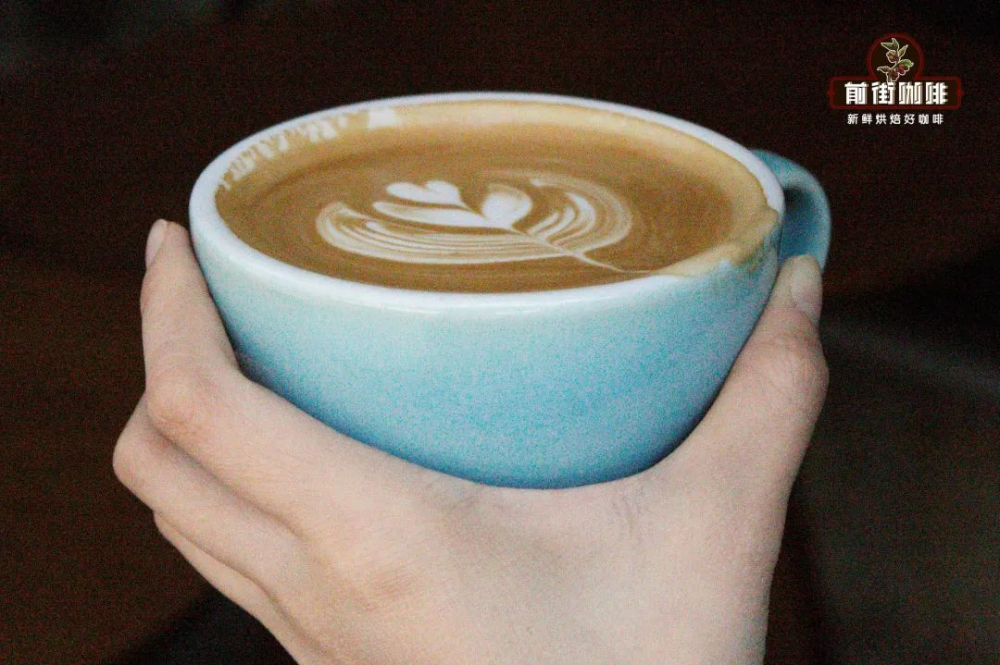
Unlike a latte, a cappuccino is covered with a thick layer of milk foam about 1.5–2 cm on the surface, and those who drink it often seek a more pronounced foam texture. Front Street recommends controlling the milk temperature for cappuccino below 60°C, so it can be drunk in big mouthfuls without worrying about burning your mouth.

Of course, in addition to controlling the milk temperature, the choice of coffee beans is equally crucial to the final taste of a cappuccino. To make the same cappuccino as in a coffee shop, it is recommended to use Front Street classic Italian blend coffee. This recipe is composed of beans from three origins: Brazil, Indonesia, and Vietnam. It uses a deep roast, which can maximize the coffee's rich aroma and also makes it easy for everyone to extract thick, dense crema. Whether making an Americano diluted with water or a latte paired with milk, it is very suitable, and can be purchased and ordered at the Front Street Taobao store or the Front Street Tmall flagship store.
The above content is compiled by CoffeeHunters, a coffee news website.


