







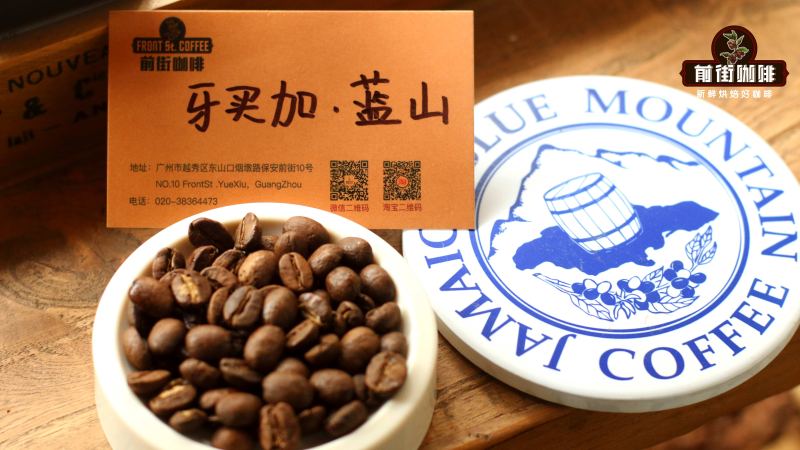
Is Blue Mountain Coffee Still Rare and Expensive Today?
Before 2012, Japan held preferential purchasing rights on Jamaican Blue Mountain coffee, and nearly 90 percent of the beans went there, which kept market supply small and prices high. Since Jamaica canceled that arrangement in 2012, importing authentic Blue Mountain has become easier and the price, while still above many origins, is no longer out of reach.
Authentic Jamaican Blue Mountain No. 1 is not the same as products labeled Blue Mountain flavor or Blue Mountain blend. Blue Mountain No. 1 carries specific origin, grading, and green bean certification. One example is Clifton Estate Blue Mountain No. 1 at 158 yuan per 100g, roughly 60 yuan a cup, brewed with balanced acidity, sweetness, and bitterness and a rich, smooth body.
Blue Mountain coffee is often labeled as "expensive" and "rare," but is that really the case? This article starts with the historical background of Blue Mountain coffee, tracing the rise and fall of Japan's former preferential purchasing rights and the changes in market supply after this arrangement ended in 2012. At the same time, the article will clearly distinguish the essential differences between authentic Jamaican Blue Mountain No. 1 and the "Blue Mountain flavor" and "Blue Mountain blend" products on the market, and introduce the production area, grading standards, and green bean certification methods of Blue Mountain No. 1. Front Street Coffee (FrontStreet Coffee) selects Clifton Estate Blue Mountain No. 1, sold at 158 yuan/100g, with each cup costing about 60 yuan. At the end of the article, Front Street's recommended pour-over parameters and pouring techniques are also included to help readers brew a cup of Blue Mountain coffee with balanced acidity, sweetness, and bitterness, and a rich, smooth body.
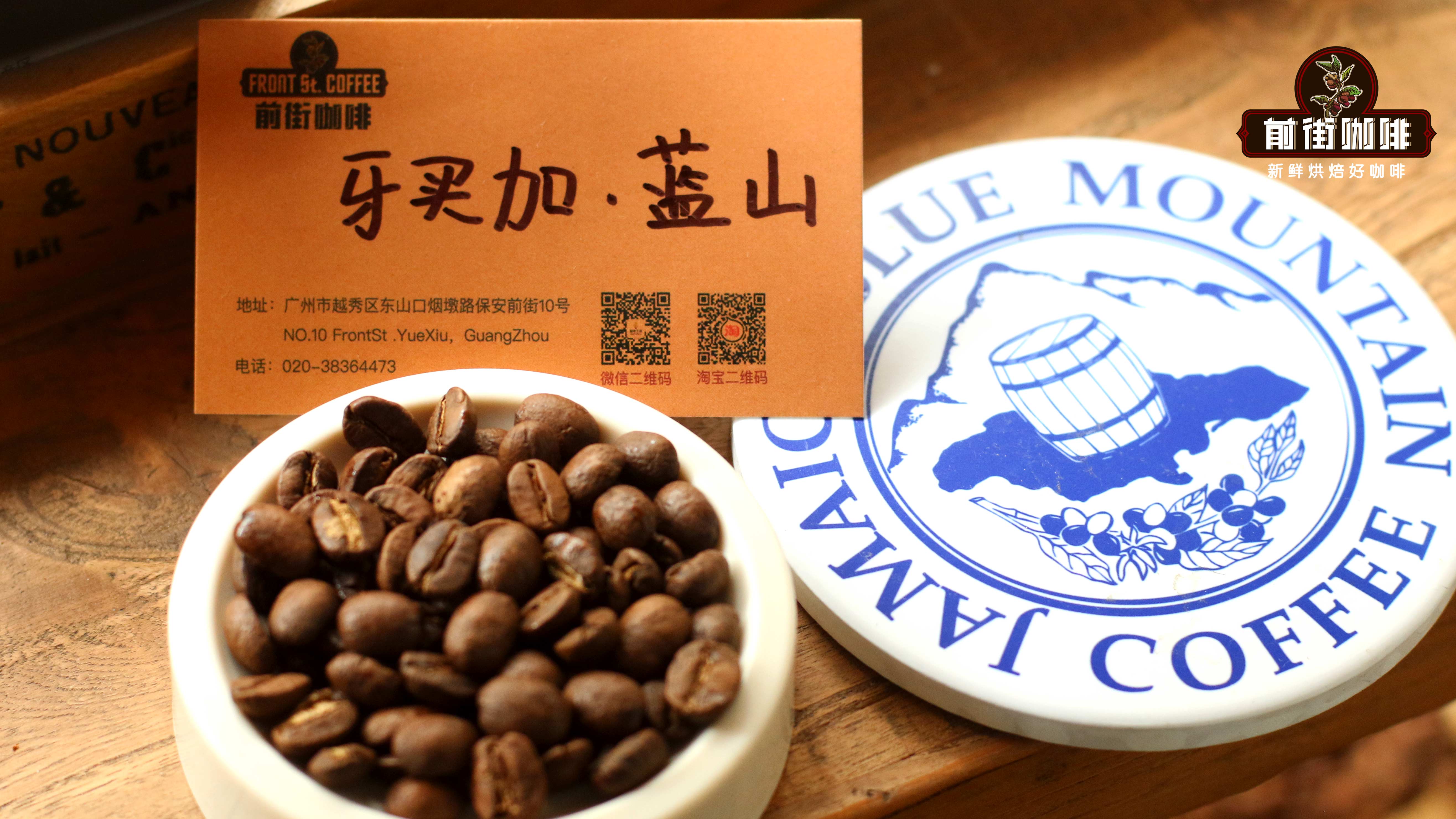
"Authentic Blue Mountain coffee must be quite expensive, right?"
Before 2012, because Blue Mountain coffee production was already limited and the Japanese government had once assisted the Jamaican government in dealing with crop failure caused by severe weather, Jamaica granted Japan preferential purchasing rights. As a result, nearly 90% of Blue Mountain coffee beans were bought by Japan, so naturally very few Blue Mountain coffee beans could be seen on the ordinary market, and prices were pushed very high.
However, in 2012, the Jamaican government canceled Japan's preferential purchasing rights, making it much easier for other countries and regions to import authentic Blue Mountain coffee beans. Although the price of Blue Mountain coffee is still higher than coffee beans from many popular producing areas, it is no longer impossible to find, and ordinary people can buy it too.
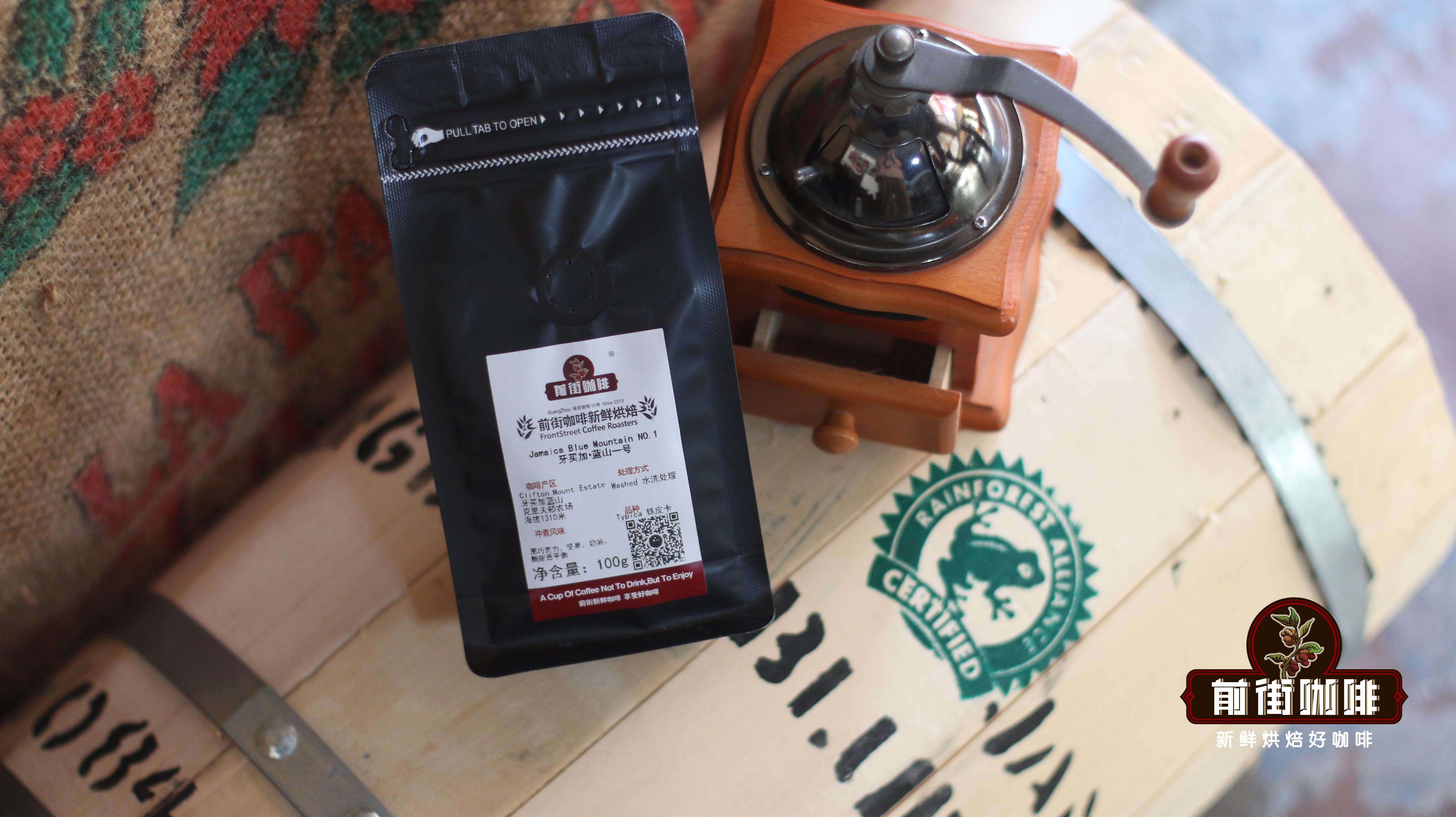
Front Street Coffee (FrontStreet Coffee) hopes to let more people experience the unique charm of Blue Mountain coffee with its balanced acidity, sweetness, and bitterness and its rich, solid mouthfeel. To this end, the team consulted a large amount of material and finally selected Blue Mountain No. 1 coffee beans produced by Clifton Estate, the oldest coffee-growing area in Jamaica's Blue Mountains, sold at 158 yuan/100g; if you want to first taste a cup of the classic "King of Coffee," a single cup is only 60 yuan~
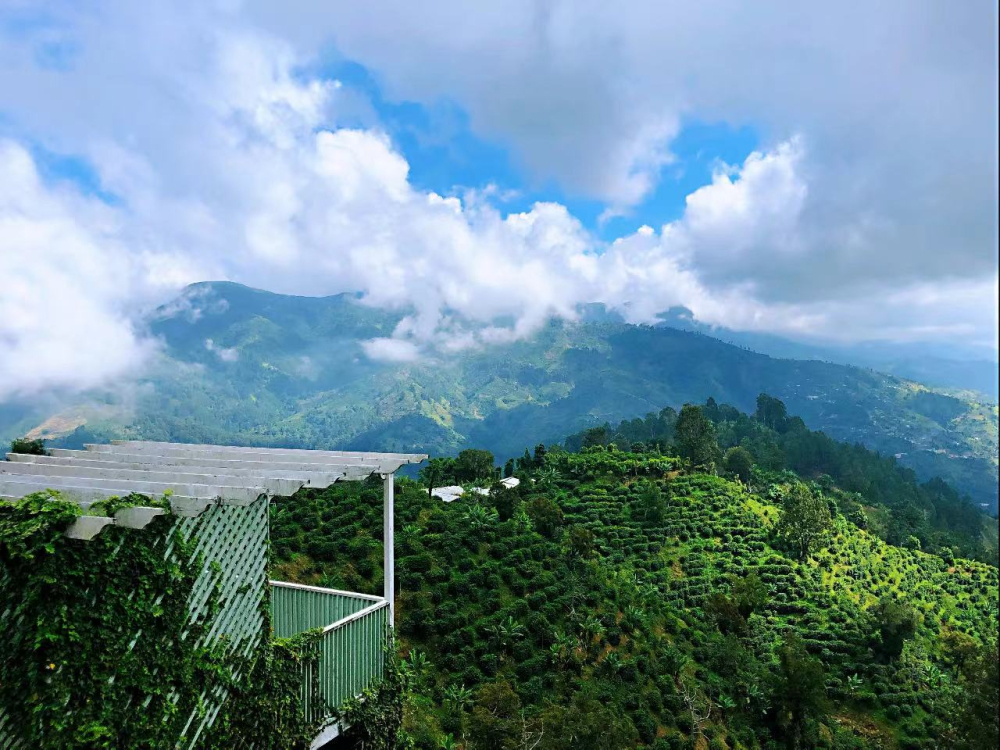
So-called authentic Blue Mountain coffee refers to the Typica variety grown at elevations between 910 and 1,700 meters in Jamaica's Blue Mountains. These coffee beans are plump and have a clean, delicate, and balanced flavor. The Blue Mountain No. 1 grade requires beans sized between 17 and 18 mesh, with a defective bean ratio of no more than 2%, generally uniform and plump, and semi-oval in shape.
Many ready-to-drink, instant, or blended coffee products on the market labeled "Blue Mountain coffee flavor" or "Blue Mountain blend" are not authentic Blue Mountain coffee.
Blue Mountain coffee green beans are all exported in whole barrels. First-hand green bean buyers who purchase Blue Mountain coffee beans can apply to the Jamaican CIB or the estate for a Blue Mountain coffee bean certification certificate, which is also an effective way to prove whether Blue Mountain coffee beans are authentic. At Front Street Coffee's (FrontStreet Coffee) offline store, you can see the relevant certificates as well as the barrels~
To ensure that Blue Mountain coffee's richness and balanced flavor can be fully expressed, all Blue Mountain No. 1 coffee beans sold by Front Street Coffee (FrontStreet Coffee) use a medium-dark roast and are shipped within 5 days after roasting is completed, ensuring that the coffee beans consumers receive are 100% freshly roasted.
To brew a cup of fragrant, balanced Blue Mountain coffee, Front Street recommends the following parameters: water temperature 88°C, 15 grams of coffee powder, powder-to-water ratio 1:15, medium-coarse grind (70% passing through a No. 20 sieve), and a Kono dripper for brewing.
The pouring technique is as follows: first bloom with twice the amount of water as the coffee powder, that is, 30 grams of water for 30 seconds. The purpose of the bloom is to allow the coffee powder to release internal carbon dioxide gas, making the subsequent extraction more stable. Then pour in a circular motion with a small stream of water, pause in stages when reaching 125 grams, and continue pouring until 225 grams, then stop. After the water in the dripper has dripped through, remove the dripper. Starting timing from the beginning of pouring, the extraction time is 2 minutes 10 seconds. Finally, pick up the entire cup of coffee and swirl it to mix evenly, then pour it into a cup and taste.
Pour-over flavor of Jamaican Blue Mountain No. 1 coffee beans: rich dark chocolate and nutty flavors, a creamy-smooth mouthfeel, and balanced acidity, sweetness, and bitterness.
The above content is compiled by CoffeeHunters, a coffee news website.


