







How did coffee culture in Australia create the Flat White?
Flat White started in Australia when Italian immigrants brought espresso machines to Melbourne in the 1950s. Locals wanted more coffee flavor in milk drinks, and cappuccino foam at the time was a thick hamburger-style layer, so the foam was made thinner and flatter until it sat level with the cup rim. Flat means flat, White means coffee with milk.
The drink uses a double ristretto in a small cup with thin milk foam, which keeps the bean's vanilla, chocolate, whiskey liqueur, and berry notes readable. Long Black, Latte, and Cappuccino were the standard menu items before it. Starbucks added it to its own line in 2015 and pushed it worldwide, turning a niche Australian order into a mainstream one.
Flat White is often called 馥芮白, 澳白, or 小白 in China, but many people are not clear about its essential differences from latte and cappuccino. This article starts from the evolution of Australian milk coffee, sorting out how Flat White was born in the coffee culture of Italian immigrants and how it was pushed globally by Starbucks. At the same time, combined with the production practices of Front Street Coffee, it introduces key methods such as double Ristretto, small cup volume, and thin milk foam, as well as the vanilla, chocolate, whiskey liqueur, and berry flavors brought by the "Sunflower Warm Sun Blend," helping you find the correct way to order and taste 馥芮白.

If you prefer milk coffee, wanting to experience the delicate flavors of specialty coffee beans while not giving up the smooth mouthfeel of milk coffee, Front Street thinks Flat White is a choice well worth considering. To truly understand Flat White, it is better to first return to Australia and see how this cup of coffee became popular step by step.
In Australia, milk coffee is collectively called Flat White
In the 1950s, a large number of Europeans immigrated to Australia, and Italians brought the espresso machines they relied on for their livelihood to Melbourne, and espresso took root in Australia from then on. Melbourne gathered many Italian immigrants, and the local coffee industry grew rapidly along with it. At that time, the most common products in cafes were Long Black, Latte, and Cappuccino, which are today's Americano, latte, and cappuccino on the menu.
Compared with traditional lattes, Australians wanted the coffee flavor in milk drinks to stand out a bit more. In addition, cappuccino at that time had a "hamburger-style" milk foam layer at least three centimeters thick on the surface, so someone proposed making the milk foam thinner and flatter (Flat). When the foam on the surface of milk coffee became thinner and thinner, eventually leaving only a fine layer and sitting completely level with the rim of the cup, it formed what we now call Flat White. Flat means "flat," while White refers to white coffee after milk is added.
For a long time, Flat White was a relatively niche choice in China, until Starbucks included it in its own product line in 2015, named it "馥芮白," and promoted it around the world. Only then did Flat White leap to become one of the most popular drinks in the mainstream coffee market. On the Starbucks menu, "馥芮白" has a "TM" mark at the upper right, indicating that the name has been registered as a trademark. Therefore, other coffee shops can only use different names: COSTA calls it 醇艺白, luckin coffee calls it 澳瑞白, and in China there are also different names such as 澳白, 平白, and 小白.
Several different understandings of Flat White
In Italy, "Caffè Latte" refers to coffee made with espresso brewed in a moka pot plus milk; Latte means milk. Latte emphasizes the balance between coffee and milk: you should taste the coffee flavor as well as the sweet, rich milk, with the two working together, neither overpowering the other. Cappuccino, on the other hand, is a cup of espresso plus thick milk foam, usually presenting a "hamburger shape" 1 to 2 centimeters thick, and before drinking the coffee liquid you have to first take a big sip of foam.
The method of Flat White is to highlight coffee flavor by adding milk; coffee is the protagonist, and milk only plays a supporting role, so its coffee flavor is fuller and more intense. The surface milk foam is light and thin, allowing every sip of strong coffee liquid to carry dense foam. Combined with a moderate temperature and a relatively small cup volume, it can be finished quickly before the milk foam separates. When New Zealand baristas make Flat White, they are used to presenting it in a small cup volume: the amount of coffee remains unchanged, the amount of milk decreases accordingly, the coffee ratio increases, and the taste is naturally stronger. Therefore, Flat White is also called "small latte."
With the arrival of the specialty coffee era, more and more people began to use single-origin coffee for espresso extraction, which is commonly called SOE (Single Origin Espresso). Compared with large-volume lattes and thick-foam cappuccinos, Flat White better showcases the origin flavors of the coffee beans themselves. In Melbourne cafes, baristas also replace the espresso base with a double Ristretto, blending milk foam similar in thickness to that of a latte into a 150-milliliter cup. Ristretto refers to extracting espresso with the same dose of coffee powder but a smaller liquid yield; it can be understood as a reduced version of espresso, with flavor more concentrated in the early and middle stages of extraction and a richer mouthfeel, so it also places higher demands on coffee bean quality.
Making Flat White this way tastes better
Front Street believes that the emergence of Flat White comes from everyone's pursuit of the flavor and mouthfeel of specialty coffee beans, so there are many ways to make it, depending on the beans used by the coffee shop and also on the barista's understanding of Flat White. Generally speaking, baristas start from the directions of small cup volume, thin milk foam, and a refined espresso base to present the unique mouthfeel of Flat White.
The espresso blend used by Front Street is the self-roasted "Sunflower Warm Sun Blend," composed of 70% Honduras Sherry coffee and 30% Yirgacheffe sun-dried Red Cherry coffee. The whiskey, vanilla, and cream flavors brought by Sherry, paired with the tropical fruit and fermented notes of Red Cherry, make the whole cup of coffee rich in aroma layers and soft in mouthfeel.
For the coffee base, Front Street Coffee uses a double ristretto, extracting 30 grams of coffee liquid from 20 grams of coffee powder, with an extraction time of 22 to 24 seconds. However, Front Street Coffee also reminds that the extraction plan for each coffee bean will differ slightly; this plan is a parameter adjusted by the barista before opening each day according to the Warm Sun Blend used in the store.
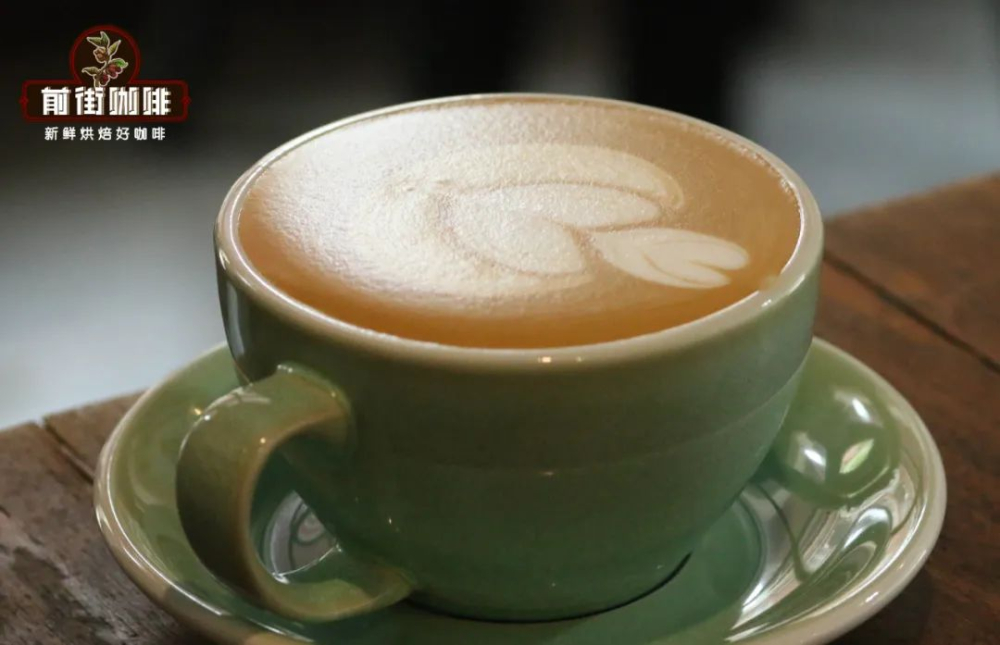
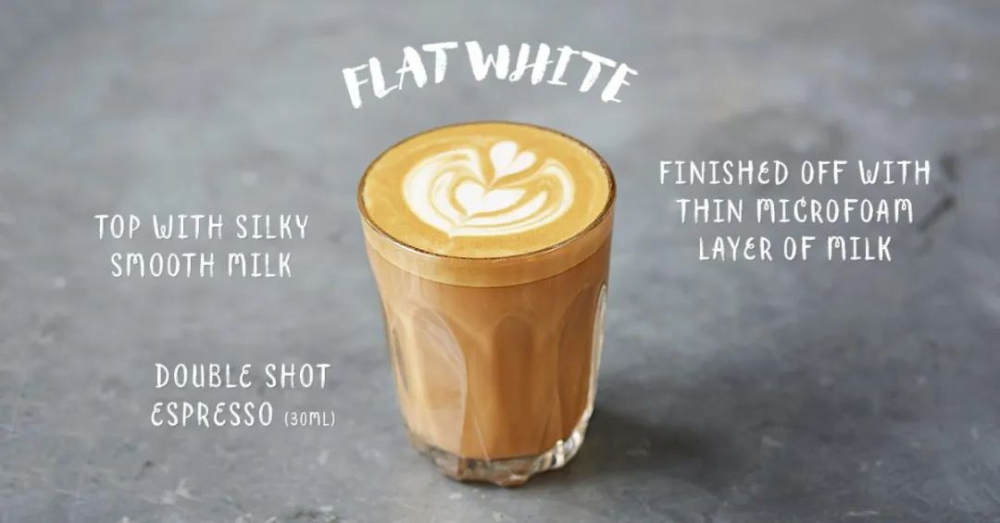
Pour the extracted coffee liquid into a pre-prepared cup, then take 150 milliliters of milk and pour it into a milk pitcher to steam. When steaming milk, incorporate less air than for a latte, so the foam layer is thinner and denser, and the temperature is best controlled at 55 to 60 degrees Celsius for a more comfortable sip. Finally, pour the steamed milk into the coffee; whether or not you make latte art is fine. Because the milk foam is thin, the liquid surface is not level with the coffee cup, and the appearance looks rather flat.
Front Street's Flat White presents aromas of vanilla, chocolate milk, and whiskey liqueur chocolate, along with the sweet-and-sour notes of berries. It is silky, fragrant, and mellow on the palate, with a very long finish.
Professional coffee knowledge exchange For more coffee bean information, please follow Coffee Workshop (WeChat public account cafe_style)
For more specialty coffee beans, please add the private WeChat of Front Street Coffee, WeChat ID: qjcoffeex
The above content is compiled by CoffeeHunters, a coffee news website.


