








Why Is Cappuccino Called Cappuccino and How Is the Foam Made?
The name cappuccino traces to the Capuchin monks, whose brown hooded robes matched the drink's color when coffee, milk and a thick cap of foam were combined. The drink itself is defined by that foam: a cappuccino carries a noticeably thicker and drier foam layer than a latte.
Good foam starts with cold milk and ends around 60 to 65 degrees Celsius, the range where the milk tastes sweet rather than scalded. Overheating separates foam from liquid, so the first sip is airy and the next is thin. Texture matters as much as volume: fine bubbles blend with the coffee, while large ones sit on top.
Wanting to enjoy a cappuccino at home but lacking professional tools, can a whisk replace a steam wand to produce ideal milk foam? What temperature is best for heating milk? This article focuses on four core points in cappuccino making—milk temperature, foam density, foam quantity, and milk texture—explaining one by one how to create fine, silky milk foam that fully releases the coffee's own sweetness. It also shares Front Street Coffee's hands-on experience with steaming temperature control, foaming rhythm, and pouring technique, helping you make a cappuccino close to café quality even without professional equipment.

When ordering at a café, both lattes and cappuccinos are popular choices. If you've paid attention to the difference between the two, you'll notice that a cappuccino's foam layer is clearly thicker than a latte's. Front Street Coffee has previously discussed how to make a latte, so this time we'll talk about the details to pay attention to when making a cappuccino.
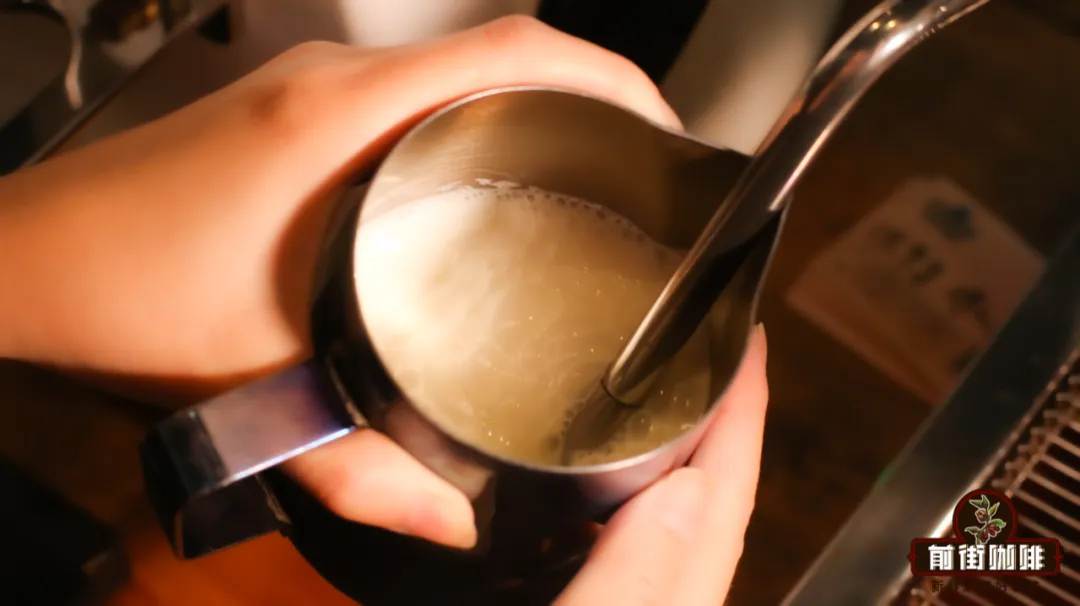
Front Street Coffee uses a steam wand when making milk foam. Simply put, using a steam wand to heat milk and introduce air bubbles—this process is called steaming milk.

When high-quality coffee and milk blend together, the drinker can experience "the sweetness that coffee itself carries." The sweetness of a cappuccino does not come from the milk itself; rather, the milk serves as a backdrop that lets you more clearly capture the coffee's own sweetness. To draw out this sweetness and deliciousness, there are four aspects that require special attention.
1. Milk temperature
To create fine, tight milk foam, be sure to use refrigerated milk. Front Street Coffee (FrontStreet Coffee) typically stores milk in the refrigerator, keeping it chilled at all times except when in use. The milk temperature should be judged by "the temperature at which it is easy to drink as a beverage"—that is, the comfortable range after proper heating.
If a cappuccino's milk is overheated, you will clearly feel that the foam and the liquid are separated when drinking. First you taste the foam on top, and then suddenly you encounter the liquid below.
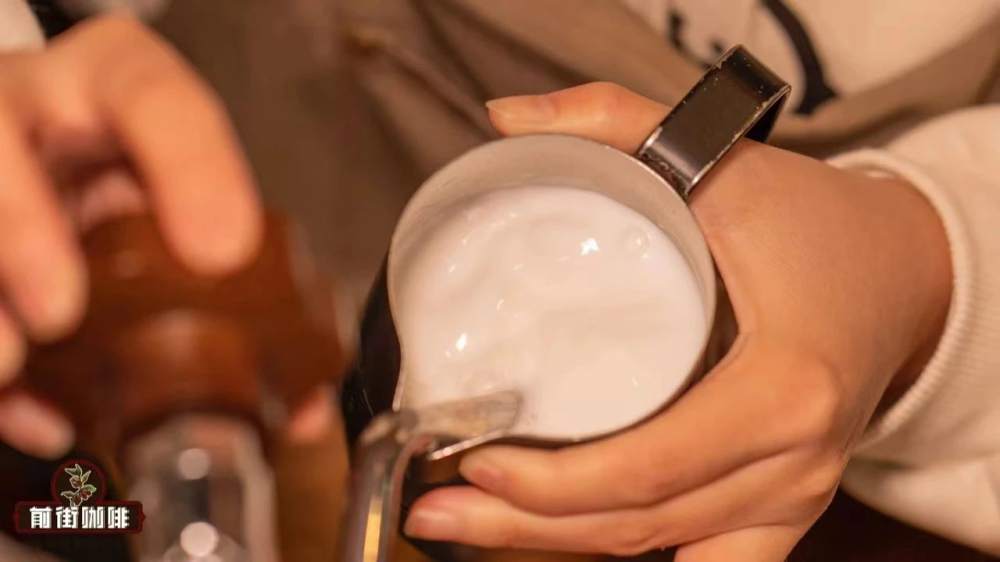
The steamed liquid rises in temperature, but milk foam is essentially a collection of air bubbles—no matter how much it is heated, it is still foam, meaning the temperature of the foam and the air does not rise. So at first sip the foam is not hot, but when you drink down to the liquid deeper in the cup, the temperature suddenly increases—this is the reason for that sensation of separation.
Excessive temperature brings another problem—the coffee's bitterness becomes more pronounced. When the temperature exceeds the proper range, the coffee's delicate sweetness and mouthfeel become hard to perceive, replaced by bitterness, because bitterness is the most easily detected flavor in coffee. In addition, too high a temperature risks scalding your tongue.
The best moment to drink a cappuccino is the instant it is made, so drinking it immediately after preparation is the most recommended approach. At that point the foam is extremely fine; after sitting for a while, the liquid and foam gradually separate, and that unique mouthfeel and texture no longer exist. This is also why Front Street Coffee is unwilling to serve coffee to guests at a high temperature.
The so-called "drinking moment" of a cappuccino means letting the guest, at a temperature they can sip immediately, feel the liquid and foam merged into one while also experiencing the delicate sweetness that coffee possesses as an ingredient. This temperature is not judged by a thermometer but grasped through hearing and other bodily senses. During steaming, feel the temperature with your palm while listening to the sound of the steam—the higher the temperature, the sharper the sound.
The heat felt in your palm, the sound of the steam, the duration of steaming—what will a cappuccino taste like when made by comprehensively controlling these factors? Front Street baristas must confirm this every single time during training, repeatedly practicing these steps, feeling the temperature with their palms while steaming and predicting temperature changes from the sound of the steam. In this way you can find the optimal temperature for milk; Front Street Coffee considers the ideal temperature range for steaming milk to be 55–65°C.

2. Foam density
Fine milk foam is the key element that gives a cappuccino its wonderful mouthfeel and texture, and for latte art it is also an indispensable condition for creating a beautiful appearance.
So how can you produce highly finished milk foam? Front Street Coffee (FrontStreet Coffee) suggests focusing on two points: "gradually folding air into the milk bit by bit" and "fully utilizing the steam ejected from the nozzle."
Front Street Coffee visually checks the fineness of the foam while steaming. After making a cappuccino, the color contrast makes it easier to see; the finer the foam, the better the texture, and the appearance of the finished product will be quite beautiful.
If the surface of the steamed milk has uneven bubbles, this may be a state where the injected steam has turned into bubbles and escaped from the milk's surface—meaning the steam ejected from the nozzle was not fully utilized. Since both the heat and the air from the steam are being lost, foaming requires more time. The steam ejected from the nozzle contains moisture; the longer it takes, the higher the water content in the milk. Because this is a beverage served to guests, besides finishing as early as possible, once it becomes watery the coffee's flavor suffers.
Therefore, when steaming milk foam, introduce air slowly, so that almost all of the nozzle's air and heat are fully utilized, and you can clearly see that no bubbles are surfacing on the foam. Because all the introduced air is used, the time is compressed as much as possible, and the milk does not become watery.
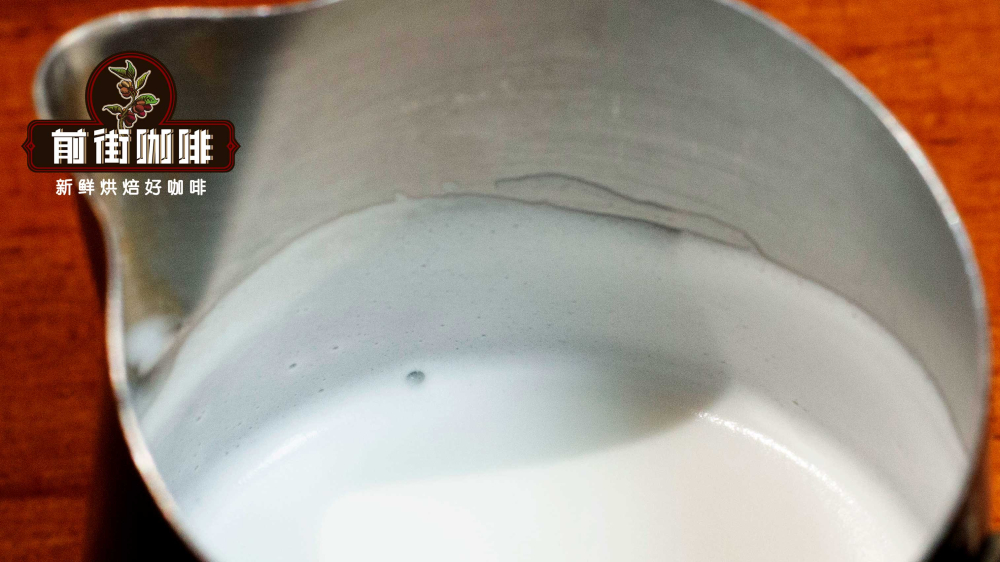
"Milk foam is not made all at once but built up bit by bit. Yet the surface will not be uneven, heat will not be lost, and the work is efficient and time is shortened." Please keep this key point in mind when steaming milk, and practice while watching the foam's condition with your eyes. During steaming, do not let the surface bubble; proceed quietly. It is not impossible to inject air all at once, but doing so makes the foam coarse, loses heat along with the escaping bubbles, and increases the time required.
3. Amount of milk foam
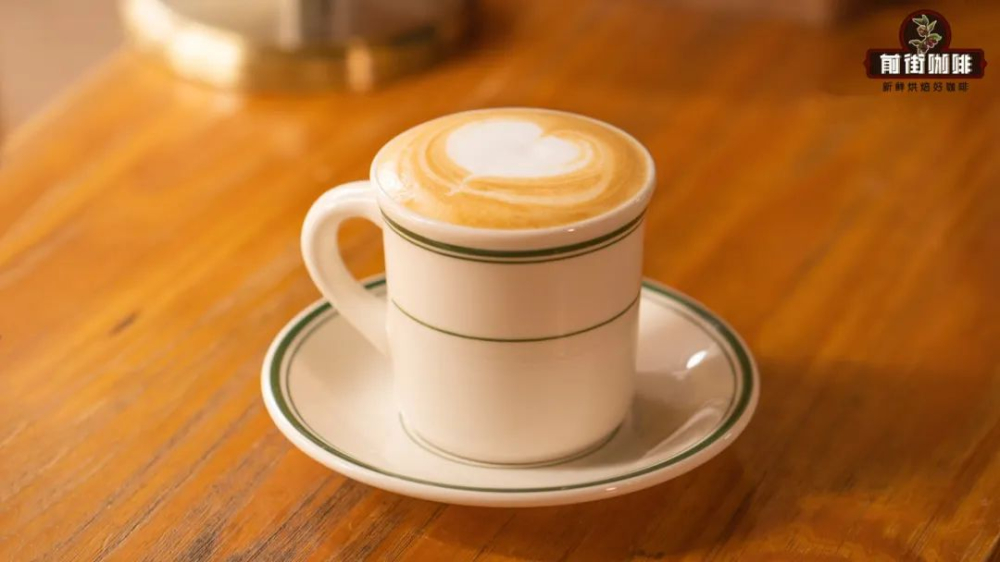
An appropriate amount of milk foam is crucial for a cappuccino. A certain amount of beautiful foam brings mouthfeel and a soft texture when drinking. When the foam is too thin, the liquid and foam separate quickly after pouring, and you can feel it as soon as you sip. In that case you cannot experience the delicious characteristic of a cappuccino—"the sense of oneness between foam and liquid"—so when Front Street Coffee makes a cappuccino, the foam is steamed a bit thicker than for a latte.
A cappuccino consists of milk foam, milk, and espresso. Less foam means more liquid milk, which means an increased proportion of milk relative to espresso. When a large amount of milk is added, the espresso is diluted, and the coffee's own flavor becomes hard to perceive. To enjoy the silky texture and to maintain the proper concentration of milk and espresso, an appropriate amount of foam is necessary.
4. Milk texture
The English word for texture refers to the feel when touched, the surface sensation visually or tactilely, appearance, grain, etc. The feel and texture of coffee or espresso are called mouthfeel, while the feel and texture of milk are described as texture.
There are two key points regarding milk texture. First, create milk foam with a fine grain. A silky mouthfeel and texture come from finely textured foam. Second, improve efficiency and complete the foaming quickly. Generally, Front Street Coffee (FrontStreet Coffee) aims to "produce finely textured milk foam in a short time," which is very important for milk texture. Pouring milk to create a cappuccino that balances well with the coffee's flavor is one of the important factors in a cappuccino's flavor composition. There are two points to note here.
Pour while stirring. Front Street Coffee suggests that when pouring milk into espresso, try to "mix evenly with the espresso." While stirring, the "foam," "liquid milk," and "espresso" fully blend, which avoids unevenness in flavor.
In addition, beautiful latte art does not equal a high-quality cappuccino, but it is also one of the quite important factors. Besides valuing contrast or latte art, be careful not to pour milk into only one spot, and do not make a cappuccino by focusing only on the surface's beauty.
The above content is compiled by CoffeeHunters, a coffee news website.


