







What is the Vienna coffee origin story behind cream coffee?
Viennese coffee is one of the earliest drinks to bring cream into coffee. Locals call it Einspänner, after the one-horse carriage whose driver it is tied to. Accounts say a driver added cream either to stay awake and stave off hunger on winter nights, or to keep the coffee from spilling when the carriage jolted.
After 1684, Blue Bottle House founder Kulczycki worked on localizing coffee in Vienna, and cream coffee spread from there across Europe. The name Vienna rarely appears on local café menus, yet the drink persists under Einspänner, a small piece of coffee history in Europe that connects carriage culture with modern cream coffee.
When did someone first think to add cream to coffee, and who was it? This article begins with the origins of Viennese coffee, traces its connection to the carriage driver's Einspänner, and follows the coffee localization efforts of Blue Bottle House founder Kulczycki after 1684, revealing how cream coffee spread from Vienna to the world. It includes both detailed brewing and preparation steps for traditional Viennese coffee and an introduction to the diverse modern ways of making cream coffee, along with product suggestions and brewing parameters for Front Street Black Cocoa Blend, PWN Golden Mandheling, and others, balancing historical interest with practical reference.
In coffee drinks, dairy cream is almost everywhere. It provides a silky, dense mouthfeel while carrying a rich yet gentle sweetness, so it is often used to balance bitterness, decorate the final product, and add layers of flavor. For this reason, cream appears frequently in all kinds of made-to-order coffee. Today Front Street wants to talk about Viennese coffee, which is precisely an early representative of bringing cream into coffee.
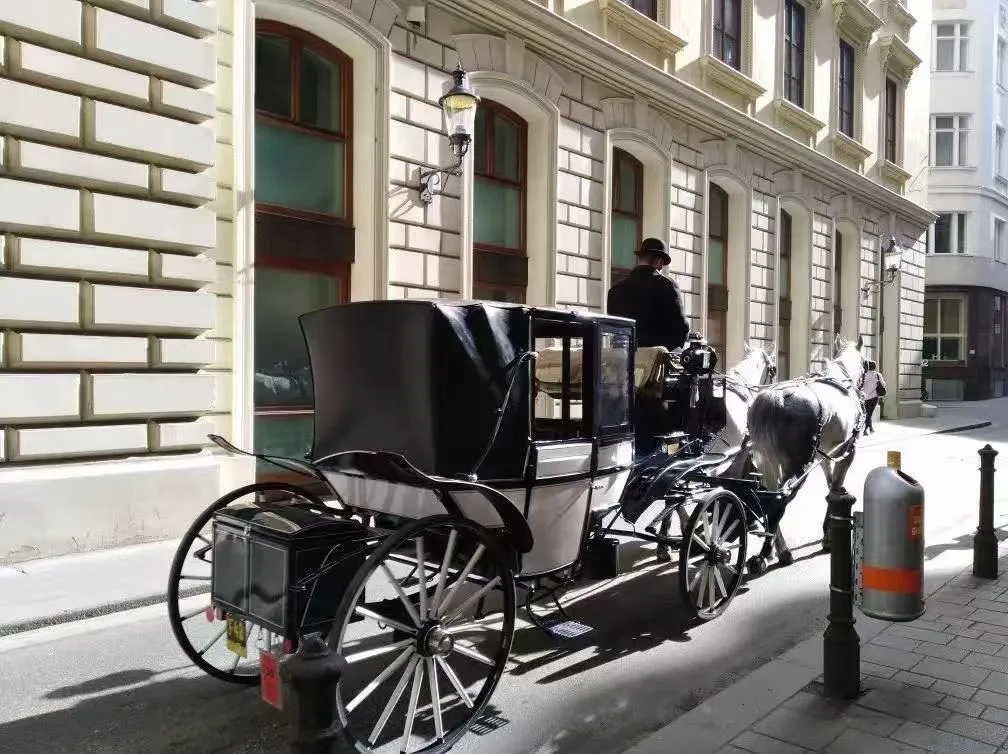
Although the name contains "Vienna," like many coffee products, this term basically does not appear on local café menus. This does not mean the drink does not exist locally; it is just that locals are more accustomed to calling it "Einspänner," meaning a one-horse carriage or carriage driver's coffee. In German, Einspänner originally refers to a light carriage that seats only one driver. From the 19th to the early 20th century, this means of transport was quite common in European cities and is now one of Austria's cultural symbols. Because the seat of a one-horse carriage was only enough for the driver alone, Einspänner also developed the extended meanings of carriage driver and single person.
From the name alone, one can see that this coffee is closely tied to carriage drivers. Searching online for Viennese coffee turns up many versions of the story with different plots, but the protagonist is always a carriage driver. One account says that to stay awake and stave off hunger on winter nights, a driver added cream to coffee, thus creating Viennese coffee; another says the cream was added to reduce the coffee's fluidity and keep it from spilling when the carriage jolted.
(Image from the internet)
In short, this coffee with cream is often regarded as the ingenious creation of carriage drivers, hence the name carriage driver's coffee. However, after checking the sources, Front Street found that about two hundred years before the carriage driver story took place, someone had already tried adding cream to coffee. This person should be familiar to everyone: the founder of Blue Bottle House, Kulczycki (Jerzy Franciszek Kulczycki). In 1684, Kulczycki was rewarded with a substantial sum of money and coffee beans left behind by the defeated Turks for his merit in breaking the siege of Vienna. With this money and the coffee beans, he opened the second coffeehouse in history in Vienna: Blue Bottle House.
At first, the coffee in Kulczycki's shop followed the Turkish method: water and ground coffee were boiled together in a pot, then poured into a cup with the grounds and drunk, which is also a method Front Street often shares. But Austrians found it hard to accept this bitter black drink with sediment. To cater to local tastes, Kulczycki then localized and improved the coffee.
He first filtered out the coffee grounds with a cloth bag, then added honey, milk, cream, spices, and more to balance the bitterness. Thus the first versions of latte and cream coffee appeared, and coffee successfully became part of Austrians' daily lives. Later, although Blue Bottle House closed after Kulczycki's death, the practice of adding various "extras" to coffee had already spread locally. For example, Café Tomaselli, which opened in Salzburg in 1703, attracted the musical prodigy Mozart almost every day with its cream coffee, allowing it to still stand more than three hundred years later and become the world's second-oldest coffeehouse. Cream coffee thus became a signature item that tourists must order when they visit.
(Image from the internet)
In summary, Viennese coffee has a very long history. Next, Front Street will share two versions of cream coffee: traditional and modern.
Traditional Viennese coffee
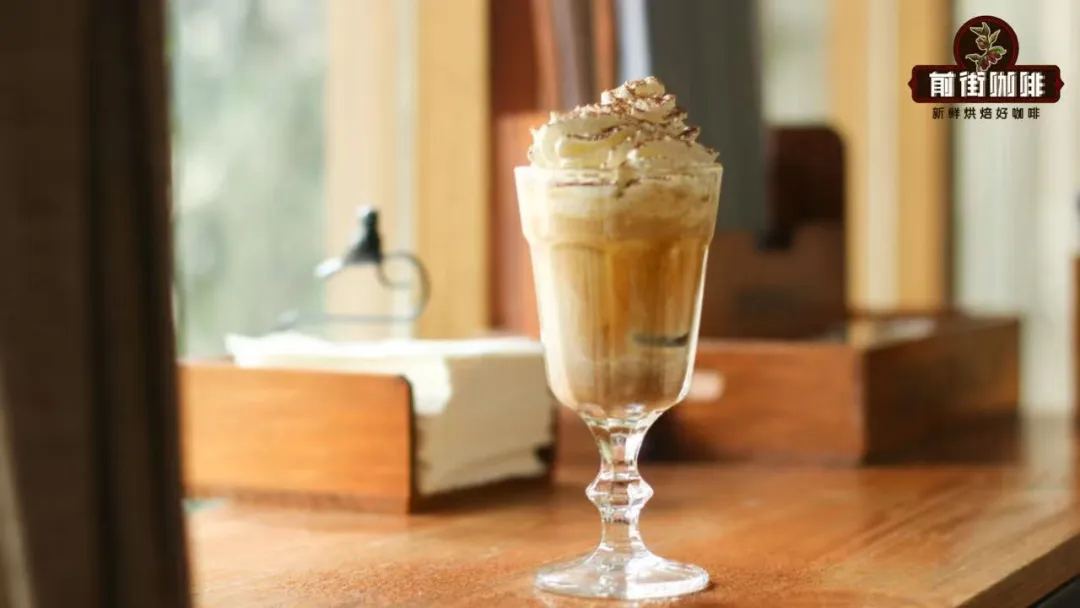
Traditional Viennese coffee is very simple to make. According to information Front Street has found, you only need to spread whipped cream over the surface of black coffee; if you want to be more refined, you can serve it in a tall glass; and if you do not like bitterness, you can also add granulated sugar, sweet liqueur, and so on to the coffee to balance the bitter taste.
There are no restrictions on the black coffee: pour-over, espresso diluted with water to make an Americano, or a Long Black are all fine. If you want to recreate the classic as closely as possible, Front Street recommends choosing beans with a darker roast and rich roasted aroma, with Front Street Black Cocoa Base Blend as the first choice. This 100% Arabica espresso blend made of Yunnan small-bean coffee and Brazilian Red Bourbon has an espresso with abundant nutty aroma and is very suitable for pairing with smooth foods such as milk, toffee, and cream.
For black coffee with a distinctive taste, you can buy the single-origin Front Street PWN Golden Mandheling, which has flavors of spices, herbs, toasted bread, caramel, and dark chocolate.
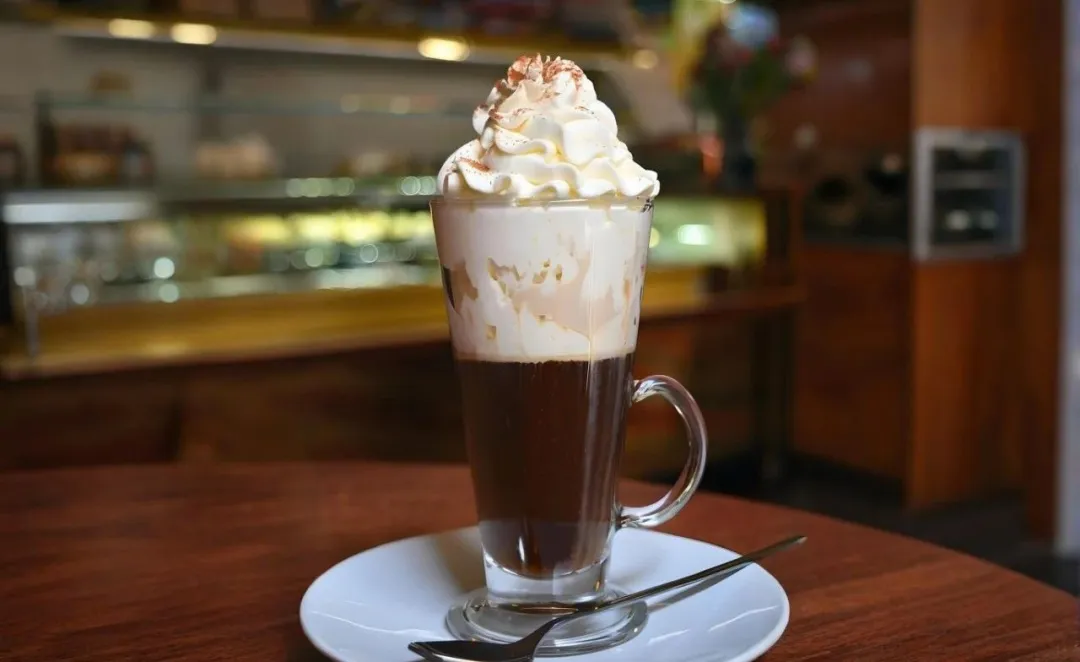
The preparation order for traditional Viennese coffee is: first whip a portion of cream, then make a cup of pour-over or Americano, and finally spread the whipped cream over the coffee.
Front Street's coffee extraction parameters are as follows (Front Street Golden Mandheling brewing parameters): 15g coffee dose, 1:15 coffee-to-water ratio, 88°C water temperature, Ek43 grind setting 11, 75% pass-through rate on a No. 20 sieve, caster-sugar grind, Kono dripper, and a three-stage brewing method.
Front Street has always shared the brewing process, so it is skipped here. After the coffee is brewed, an appropriate amount of sugar can be added to reduce bitterness, so that when you taste the cream and coffee together, the bitterness will not be amplified by too great a contrast. Finally, spread on the whipped cream, and a cup of traditional Viennese coffee is complete.
When drinking, you can gently stir with a spoon or straw to let part of the cream blend with the coffee, making it more pleasant to drink.
Viennese coffee today
Now that supplies are no longer scarce, there are more variations in coffee-making. For example, the base of Viennese coffee is no longer limited to black coffee; it can be milk coffee, mocha, or various flavored milk coffees; the cream topping is also more varied, and can be garnished with chocolate, chopped nuts, or shaped into all kinds of designs. In short, there is a lot of room for creativity.
It is also very easy to make: simply add cream to any iced coffee as a base. For example, to make a toffee-flavored Viennese coffee, you can first use the original recipe to make a toffee latte, then spread whipped cream on top for decoration and shaping, and finally sprinkle on some cocoa nibs and chopped nuts to add layers. Very simple.
It is worth mentioning that regular cream only tastes of dairy and may seem monotonous, so when whipping it you can add flavored syrup to give the cream flavor. If you want vanilla flavor, add vanilla syrup; if you want caramel flavor, add caramel syrup, and so on. In short, as always, you can use your imagination and play "very elaborately."
The above content is compiled by CoffeeHunters, a coffee news website.


