








Should pour-over coffee be enjoyed hot or iced? Many coffee lovers hesitate when making this choice. Front Street Coffee has always recommended: if you want to experience a more complete flavor profile, it's best to choose hot pour-over. This article uses a comparative experiment, employing the same coffee beans and brewing technique while only changing the coffee-to-water ratio and grind size, to intuitively demonstrate the differences between hot and iced pour-over in extraction yield, flavor layering, and mouthfeel. The article details the specific parameters for both hot and iced pour-over, analyzes the impact of water volume and grind size on extraction, and explains why iced pour-over requires parameter adjustments, why coffee shops charge extra for iced pour-over, and why you should drink it hot if you want to taste the flavors.
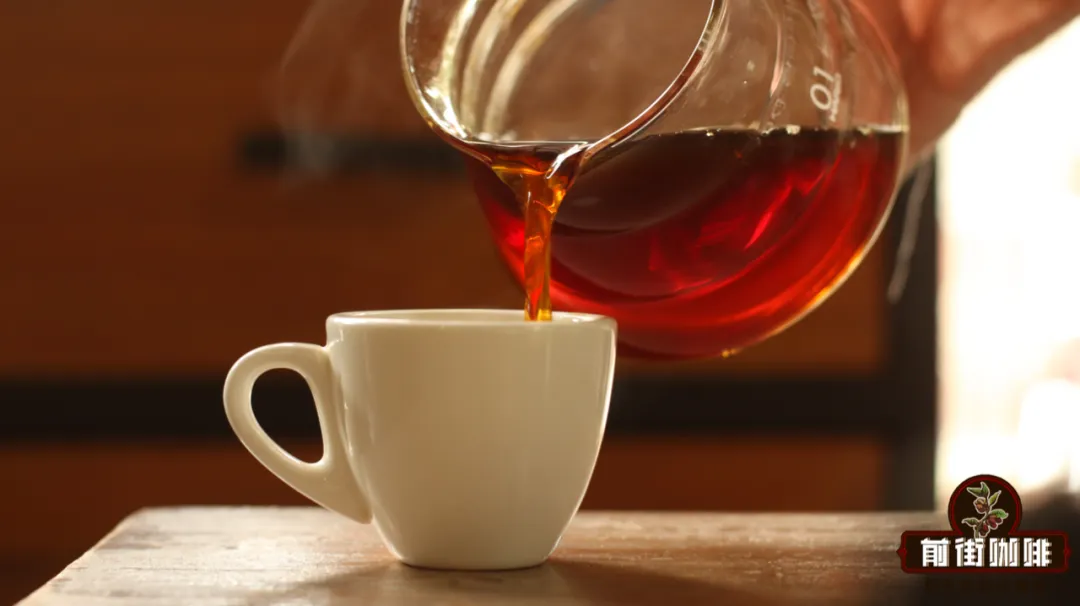
Whenever guests and friends are torn between iced and hot pour-over, Front Street typically offers this advice: "If you want to experience a more comprehensive flavor profile, then pour-over coffee is best enjoyed hot."
Front Street has shared the reasons why pour-over should be drunk hot several times before, but because it wasn't intuitive enough, quite a few friends didn't grasp the difference. So today Front Street will do a side-by-side comparison to make it more intuitive: why you need to drink pour-over hot if you want to taste the flavors! It's worth mentioning that this is also closely related to why some coffee shops charge extra for iced pour-over. Let's first take a look at the parameters Front Street uses when brewing both.
The parameters for hot pour-over are: 15g coffee, Ek43 setting 10, 92°C water temperature, 1:15 coffee-to-water ratio (meaning 15g coffee with 225ml hot water), brewing time of about 2 minutes.
The parameters for iced pour-over are: 15g coffee, Ek43 setting 9.5, 92°C water temperature, 1:10 coffee-to-water ratio (meaning 15g coffee with 150ml hot water), coffee-to-ice ratio of 1:6 (meaning 15g coffee requires 90g of ice, but this ice won't fully melt), brewing time of about 2 minutes.
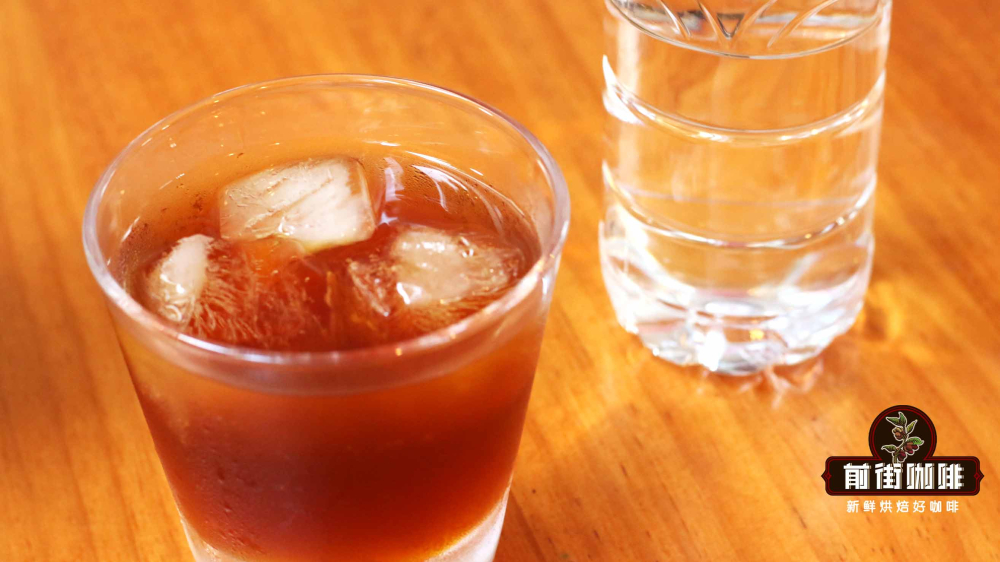
As you can see, the main differences between the two lie in the water volume and grind size. Iced pour-over uses less water because it needs ice to achieve rapid cooling. For this reason, we need to reduce the water volume to increase the concentration of the coffee liquid, so it won't become a bland "coffee water" due to the melting ice.
But because of the reduced water volume, the same brewing method can no longer achieve sufficient extraction from the coffee. So Front Street adjusts the grind finer to appropriately increase the extraction yield. Therefore, we can conclude that the source of the difference mainly comes from the different amount of water used.
Since pour-over coffee doesn't have the pressure assistance that an espresso machine provides, when the water volume is insufficient, it's very difficult to fully bring out all the flavor compounds we need through dripping alone. So Front Street will now use a comparative experiment to help everyone better understand this. Of course, friends can also try this at home if they have time, because it really does directly demonstrate the difference between the two.
Comparative Experiment
Next, Front Street will brew one pot of coffee each using 1:15 and 1:10 coffee-to-water ratios, with parameters consistent with those listed above. The difference is that the 1:10 pot won't have ice added; instead, hot water will be added for dilution. The purpose of this is to make both pots of coffee similar in temperature and concentration, better demonstrating the differences caused by different extraction water volumes.
The coffee beans used this time are Front Street's Gutingting Cooperative, one of the most representative single-origin coffees from Yirgacheffe, with highly recognizable jasmine, lemon, honey, and green tea flavors. It's perfect for those who enjoy floral and fruity types and are afraid of bitter coffee.
Besides Front Street Gutingting, light-to-medium roast coffee beans rich in floral and fruity aromas also pair very well with iced coffee. Top choices include Front Street Huakui, Front Street Strawberry Candy, Front Street Sidra, and Front Street Big Belly. They not only fill iced pour-over with sweet and tart flavors but even deliver a surprising juice-like quality.
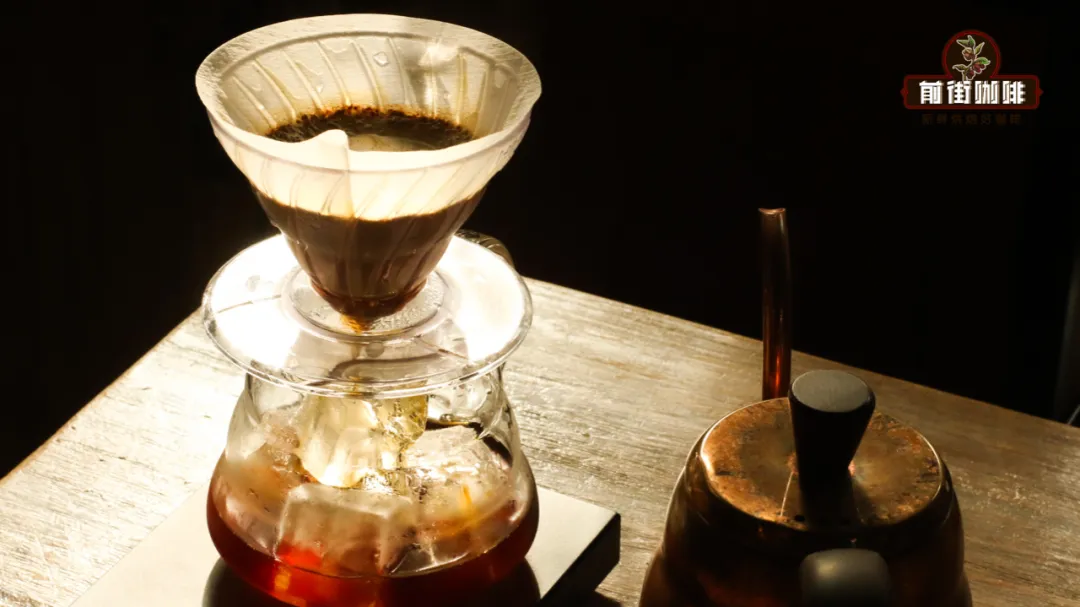
After brewing is complete, we need to measure the liquid weight of both pots separately.
Through measurement, the pot using the 1:15 coffee-to-water ratio yielded 195ml of liquid, while the pot using the 1:10 coffee-to-water ratio yielded 120ml.
We take one spoonful of coffee liquid from each to check their extraction yields, then add 70ml of 65°C hot water to the pot that used the 1:10 ratio to dilute it, making its concentration similar to the 1:15 pot, and finally taste them.
No joke, it's really very obvious. The pot using the 1:15 coffee-to-water ratio had an extraction yield of 20.6%. Its layers are very rich, with a full sweet-and-tart taste. The flavor profile: citrus, strawberry, cream, berries. After swallowing, there's a distinct sweet aftertaste—the taste of honey.
The pot using the 1:10 coffee-to-water ratio had an extraction yield of 18.1%. Its layers are relatively less rich, with the taste being more prominently sweet and tart, with almost no bitterness. The flavor profile: strawberry, berries, citrus. After swallowing, there's no sweet aftertaste, but even so, it still falls into the category of being enjoyable.
Front Street then poured both pots for guests at the shop to taste and blind-select, and everyone unanimously chose the 1:15 pot. The conclusion is that both are enjoyable, but the 1:15 coffee-to-water ratio pot has a fuller, more complete flavor and is a bit more delicious.
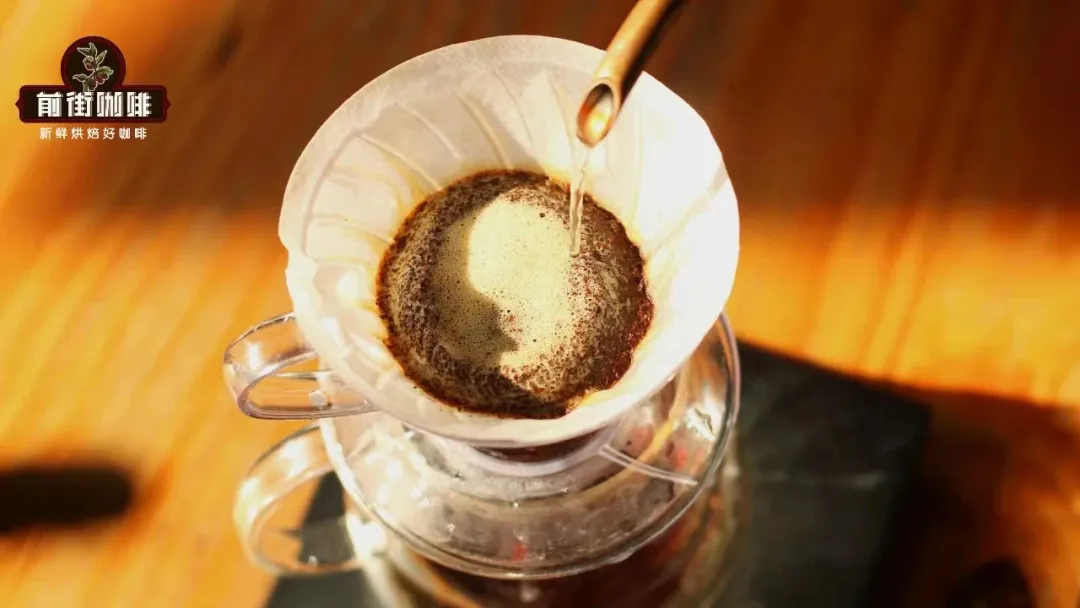
Reading this, some friends might ask: since it's the insufficient water volume that causes inadequate dissolution of compounds, couldn't we just grind much finer and raise the water temperature much higher to compensate for the extraction efficiency lost due to insufficient water?
In terms of extraction logic alone, that's indeed correct. But in actual practice, we not only need to consider the relationships between parameters but also worry about issues beyond the parameters, such as: fines.
A finer grind gives coffee grounds more surface area to contact water, but it also produces more fines. Fines dissolve compounds faster than regular particles, meaning they're more likely to dissolve out all the bitter compounds.
Front Street once tested adjusting the grind to Ek43 setting 7, keeping all other parameters unchanged, and brewing with a 1:10 ratio. The result was an extraction yield of 20%, which falls within the Golden Cup extraction range. Although it looks like it would be a delicious cup of coffee, in reality the taste was not like that at all. Because it didn't exhibit any distinct flavors—mostly just bitterness and off-tastes.
So when the grind is too fine, the coffee can easily over-extract due to excessive fines. And the extraction yield meeting the standard is only because the calculated extraction yield is an average—it can't measure how much sweet, tart, or bitter compounds are in there (which is why the Golden Cup is only a reference). Therefore, most coffee shops, in order to maintain consistency in their iced pour-over, only make slight adjustments to the original hot pour-over recipe and won't attempt extremely unstable extraction methods just for a more pronounced flavor.
Some coffee shops, in order to achieve more complete extraction, increase the amount of coffee grounds to increase the water volume used for extraction. The result naturally achieves the goal, but this raises both cost and price, so most coffee shops won't adopt this method for making iced pour-over.
In summary, everyone can now understand why you should drink pour-over hot if you want to taste the flavors. Because hot pour-over has sufficient water volume to dissolve out the flavor compounds in the coffee, resulting in a more complete flavor profile.
The above content is compiled by CoffeeHunters, a coffee news website.


