







The "plain coffee" often heard in Hong Kong dramas is actually what we call black coffee. But black coffee is not simply coffee without sugar or milk; according to the brewing process, it can be divided into two major categories: drip-style pour-over coffee and Americano made with an espresso machine. The former is a representative of the third wave of coffee, while the latter originates from the second wave of coffee. How did Americano get its name, and what is the connection with the United States? What is the proper way to drink it? From the perspective of a Front Street Coffee barista, this article reviews the development history of espresso machines, provides a detailed analysis of the origin of the name Americano, the key points of preparation and extraction parameters, and compares the flavor differences between espresso and Americano, helping you understand this seemingly simple cup of coffee more comprehensively.
For more specialty coffee knowledge, please follow our WeChat official account: FrontStreet Coffee
Watching Hong Kong dramas, you often see a scene: "Give me a cup of plain coffee, thanks." The term "plain coffee" here refers to black coffee. When it comes to drinking coffee, everyone knows it is the kind of coffee without sugar or milk. In the view of Front Street baristas, black coffee is not just coffee without sugar or milk; it can also be divided into two categories.
Black coffee is divided into two major categories according to the brewing method: one is drip-style pour-over coffee, and the other is Americano made with an espresso machine. Pour-over coffee was brought about by the third wave of coffee, while espresso is the core of the second wave of coffee.
History of Espresso Machines
As early as the mid-1880s, the first espresso machine appeared. This machine was exhibited at the Turin Expo in Italy, and a patent was registered for it. The emergence of the first espresso machine became an important turning point in world coffee culture. However, this machine was not put into industrial production.
It was not until 1901 that a Milanese designer first registered a patented technology for an espresso machine that could be used for commercial production. In 1905, La Pavoni first used this technology to officially produce espresso machines, and the first truly meaningful espresso machine was born. Pavoni made many adjustments to the machine, adding multiple group heads, portafilters, and more.
In the 1930s, a Milanese barista improved the design of the espresso machine by adding a piston lever. From then on, the iconic crema of espresso appeared, and the coffee liquid also had more aroma and rich substances.
In 1961, Faema launched the world-famous commercial espresso machine Faema E61. The Faema E61 is called the "father of the modern espresso machine." It was the world's first semi-automatic espresso machine. This machine does not require a pressure lever and can freely control extraction pressure, time, and various other parameters. A horizontal boiler was also installed in the machine, allowing baristas to communicate with customers. It was precisely the appearance of the Faema E61 that caused Italy's espresso culture to grow explosively.
Origin of the Name Americano
From the name Americano, it is not hard to find that Americano has a certain connection with the United States. Front Street reviewed materials and found that the name Americano comes from the period of World War II, when American soldiers went to the battlefields of Europe, while Europeans' coffee was very strong. American soldiers could not drink it, so later they could only pour water into the espresso. Europeans also despised this diluted coffee with water, so they called this light coffee that suited American tastes "Americano."
The Proper Way to Drink Americano
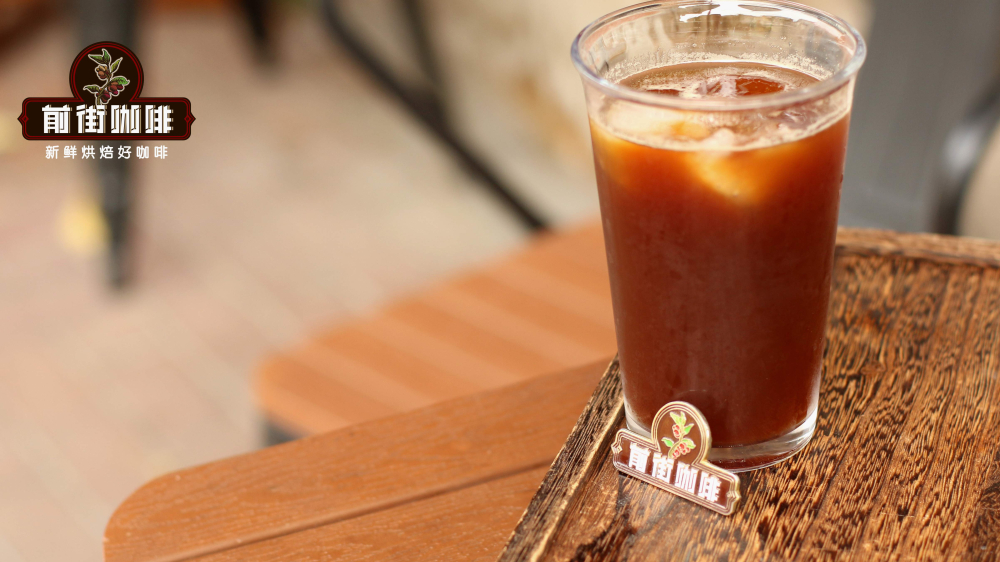
After introducing the origin of the name Americano, it is time to tell everyone the proper way to drink Americano. As for the method of making Americano, Front Street has mentioned in many previous articles that making Americano is espresso diluted with water.
Making espresso may seem simple, but it is full of knowledge. The factors involved include water temperature, pressure, grind size, dose, brew ratio, time, and crema.
[Pressure]
Generally speaking, a pressure of around 9 bar can extract an ideal emulsified espresso. If the pressure is lower than 9 bar, relatively less crema is extracted, and the aroma is difficult to balance; if the pressure is higher than 9 bar, such as 11 to 14 bar, too much coffee structure will be destroyed, causing over-extraction of oily components. Because the movement of water and other substances is intense, the extraction rate of many undesirable flavor substances also increases, making the coffee bitter with a rough mouthfeel.
[Grind Size]
If the grind size used for espresso is too coarse, it easily causes under-extraction; if the coffee grounds are too fine, it easily causes over-extraction and undesirable bitterness.
[Dose]
The amount of coffee grounds used is generally determined by the size of the portafilter basket. The portafilter used in FrontStreet Coffee stores uses a 20-gram basket, so Front Street also uses 20 grams of coffee grounds when making espresso.
[Brew Ratio]
When other factors are fixed, the more coffee grounds used, the more soluble substances are extracted, the stronger the aroma intensity, and the stronger the concentration; the less coffee grounds used, the fewer soluble substances, the weaker the concentration, and the aroma loses its character and appears flat and tasteless. Front Street's Americano water-to-coffee ratio uses 20 grams of coffee to yield 40 grams of espresso, and finally the espresso is mixed with water at a ratio of 1:6.
[Crema]
What is commonly called crema refers to a light-colored layer covering the top of espresso. This is a foam layer composed of countless carbon dioxide bubbles, containing a large amount of volatile aromatic substances. After extraction is completed, as time passes, this layer of foam will slowly dissipate. This also indirectly reflects the freshness of the coffee beans. Because the coffee beans used in FrontStreet Coffee stores are freshly roasted, the extracted coffee liquid has rich crema and is smooth and dense on the palate.
The Process of Making Espresso at FrontStreet Coffee
① First place the portafilter on an electronic scale and tare it to zero, then dose 20 grams of coffee grounds.
② Use a distributor to ensure the coffee grounds are evenly distributed in the basket.
③ Tamp. The tamping force should be moderate. If the tamping force is too light, the puck structure will be loose and the flow rate will be too fast; if the tamping force is too heavy, the puck will be too compact and water will have difficulty passing through the coffee bed, causing over-extraction. In addition, it should be noted that the tamper must be perpendicular to the basket, otherwise the puck will tilt and cause uneven extraction.
④ Extract. After locking the portafilter, start extraction and also start timing. Generally, extract 40 grams of coffee liquid, taking about 25 to 30 seconds.
⑤ After extraction is completed, clean the portafilter basket.
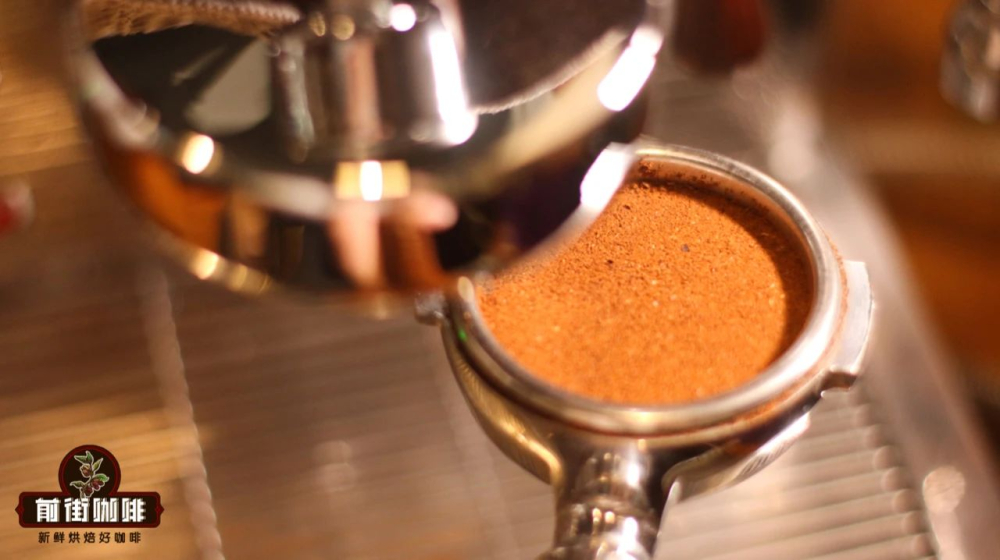
Front Street uses the Lelit V3 espresso machine. The extraction parameters are as follows:
Pressure: 9 bar ± 2
Temperature: 90.5~96°C
Time: 20~30 sec
Brew ratio: 1:1.7~1:2
Dose: 12g (single espresso) 20g (double espresso)
Extraction yield: 20ml (single) 40ml (double)
When Front Street makes espresso, it uses Front Street Classic Espresso Blend, a recipe combining beans from Brazil, Indonesia, and Vietnam. It uses a dark roast, which can maximize the coffee's rich aroma and also allow everyone to easily extract rich and dense crema. It is very suitable whether for making Americano diluted with water or latte paired with milk. It can be purchased at the Front Street Taobao store or the Front Street Tmall flagship store.
Which Tastes Better, Espresso or Americano?
Because the brew ratio of Americano is different from that of espresso, the flavor and mouthfeel will also be greatly different. Espresso has a rich flavor. If you are new to coffee, it may scare you off at once. When Front Street serves espresso, it also provides a glass of ice water and a spoon. Before tasting, you can clean your palate, and the spoon is used for stirring to make the espresso mix more evenly. Because Americano has water added, the espresso is diluted, and some flavors become clearer, making it easier for beginners to accept.
The above content is compiled by CoffeeHunters, a coffee news website.


