







Why do espresso blends include robusta coffee beans?
Espresso is usually made from blends rather than single origins because the drink is mixed with milk, cream or water afterward and needs strong, bitter-capable flavor. Espresso beans are roasted darker, generally past second crack, unlike the lighter roast used for pour-over. Blending lets origins complement one another, and robusta coffee beans add body and crema that Arabica alone may not deliver.
Front Street lists four espresso blend products, each with its own recipe and flavor profile. The guide also covers how water pressure, water temperature, dose, grind size and extraction time affect the shot, plus what soe meaning coffee refers to: a single-origin espresso pulled from one bean instead of a blend. Both paths suit lattes, Americanos and cappuccinos.
Why is espresso commonly made with blended beans rather than single-origin beans? What are the key differences between espresso beans and pour-over beans in terms of roast level and blending logic? This article systematically sorts out the selection approach for espresso beans from the perspectives of roast degree, blending methods, and the proportion of Robusta beans, introduces the recipes and flavor characteristics of Front Street Coffee's four espresso blend products, and provides a detailed analysis of key variables affecting Espresso output such as water pressure, water temperature, dose, grind size, and extraction time, helping coffee enthusiasts and shop owners find espresso beans suitable for lattes, Americanos, and cappuccinos.
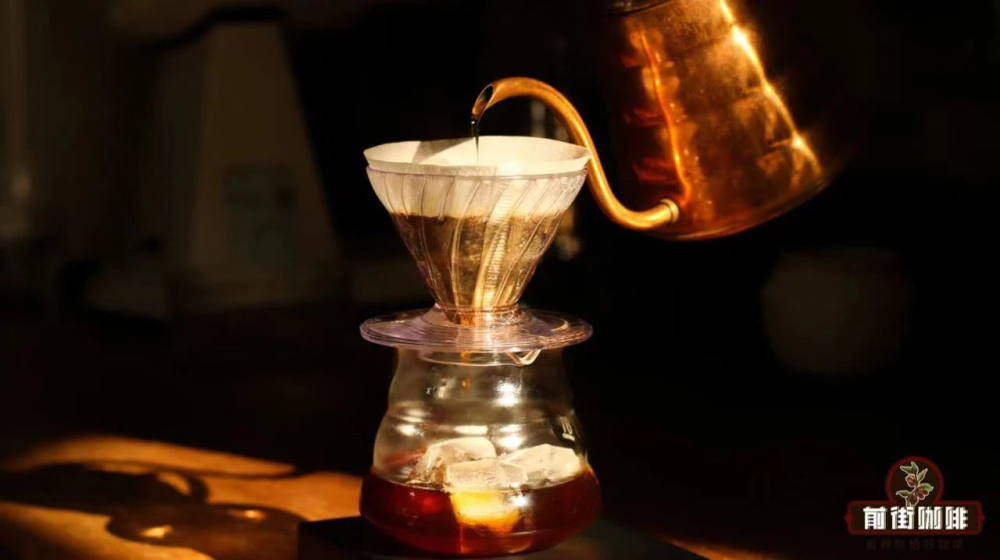
Those who brew pour-over coffee have probably all had this experience: the range of options is extremely wide, with different countries and different origins each presenting distinctly different flavor profiles. The clean mouthfeel brought by washed processing and the full-bodied texture presented by natural processing each have their own merits, while honey-processed beans often have more pronounced sweetness than the previous two, and washed processing has an edge in mouthfeel cleanliness, while natural processing has more vivid aroma expression and sweetness than washed.
But when it comes to espresso, the situation changes—most of the time what we see is blended beans. What is the reason behind this?
Espresso beans, as can be understood from the name, refer to coffee beans specifically used to make espresso. What are the core differences between them and general coffee beans? Front Street Coffee has summarized the following key points.
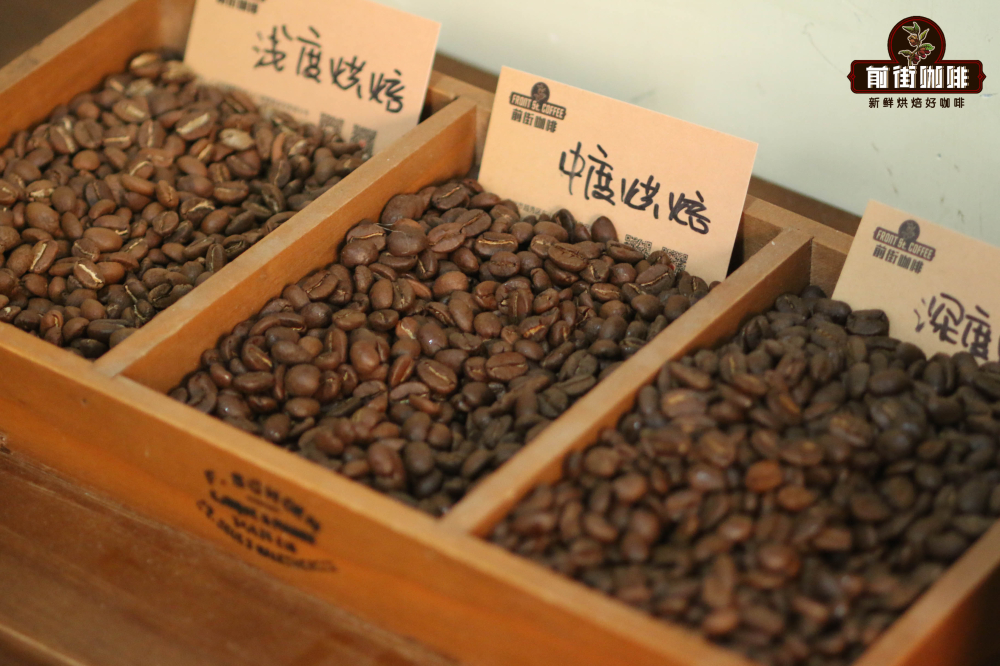
First, the roast level is different. Taking the output of a coffee shop as an example, if drip (pour-over) extraction is used, the beans selected are usually on the lighter side of roasting, with the aim of fully releasing floral and fruity aromas. Beans used for espresso, however, usually do not come out until after second crack, meaning the roast level is on the darker side. The reason is that after espresso is completed, it needs to be mixed with milk, cream, or water for balancing, so the flavor needs to be strong enough and carry bitterness.
Second, single origin or blend. Espresso beans are still mainly blends at present, which forms a clear contrast with single-origin coffee beans. It should be specially noted that blended beans are not equivalent to espresso beans, and single-origin beans can also be used to make espresso. The core consideration for why espresso beans are mainly blends lies in output consistency and cost control.
What kind of coffee beans are suitable for espresso?
FrontStreet Coffee would like to remind you that before starting to formulate a blend, you must first understand what flavor characteristics different varieties of coffee from around the world each possess. Beans show their own characteristics depending on the origin, which requires roasters to have a sufficiently clear understanding of the characteristics of coffee beans from multiple origins in order to adjust the roasting curve accordingly. Due to differences in variety and origin, different coffee beans have subtle distinctions in acidity, bitterness, sweetness, aroma, and body, while single-origin coffee beans often focus more on showcasing the unique characteristics of a certain type of coffee.
The SOE trend of single origin
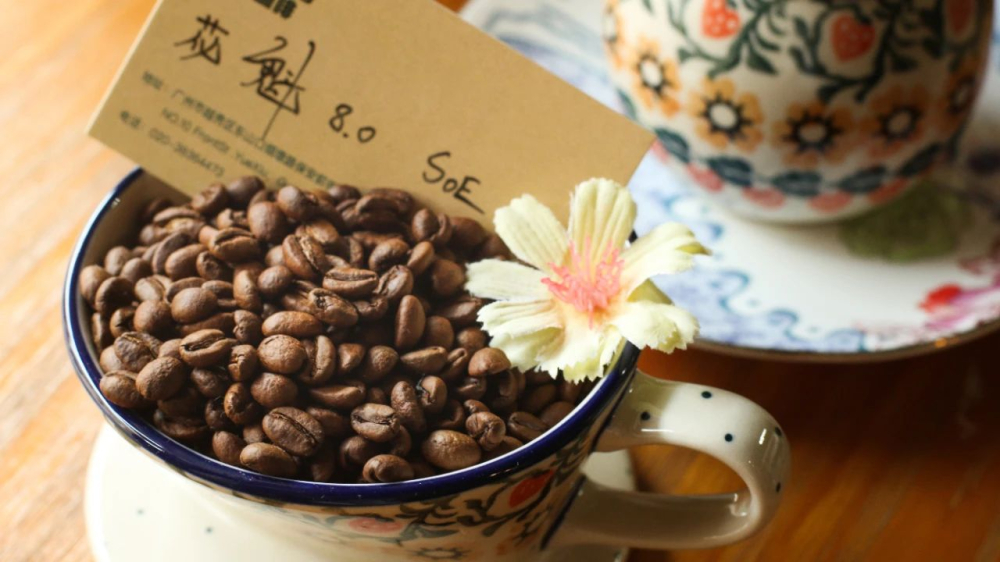
In recent years, SOE has become increasingly popular. SOE means single origin espresso. Although SOE is not necessarily equivalent to specialty coffee, if single-origin beans with high flavor recognition are chosen to make SOE, it is entirely possible to make espresso with distinct and typical flavor. For example, the signature citrus notes of Front Street Yirgacheffe and the fruity flavor of Front Street Kenya, combined with the fact that espresso extraction itself amplifies the taste of coffee, mean that these specific flavors are actually less prominent in pour-over than in espresso. However, although SOE has highlights, because it is single origin, its defects are also easily amplified. Factors such as roast level and grind coarseness directly affect the final flavor, so SOE is not necessarily tastier than blended beans.
How does Front Street choose espresso blends? What coffee beans are suitable for espresso?
Espresso beans are usually selected from two major categories, namely Robusta and Arabica. The blending method is generally Robusta paired with Arabica, or Arabica combined with Arabica.
[Robusta]
In espresso blends, it is mainly used to enhance body and bring rich crema. Robusta coffee beans are oval, spherical, or nearly spherical in shape, with a straight center line.
[Arabica]
Arabica coffee produced in different regions, at different altitudes, and under different climate conditions each has its own characteristics and can display vastly different individual flavors. When unroasted, it smells fresh like grass. After proper roasting, it can present fruity notes at medium-light roast or caramel flavors at dark roast, and is suitable for single origin and various blending schemes, as well as multiple extraction methods.
Arabica coffee beans are elongated oval and flat in shape, with an S-shaped或C-shaped center line.
[How much Robusta is suitable to add to an espresso blend]
FrontStreet Coffee's view is that it is more appropriate to control the proportion of Robusta beans in espresso beans within 10% to 20%. Once this ratio is exceeded, a rubber-like taste is likely to appear.
FrontStreet Coffee currently offers four Front Street espresso blend coffee beans with different flavor emphases, which can cover the taste needs of most people.
(1) Front Street Specialty Espresso Blend Coffee Beans: Colombian coffee beans and Brazilian coffee beans, ratio 3:7, 100% Arabica
Flavor characteristics: comfortable bittersweetness, very smooth on entry; with a slight grassy aroma, mildly bitter within the fresh fragrance; sweet and smooth, with a pleasant finish; using medium-dark roast, the espresso shows soft slight acidity, light sweetness, and nutty aftertaste, overall not too aggressive, with a mild style and medium crema. It is an espresso blend bean that can meet the daily output needs of a coffee shop.
(2) Front Street Commercial Espresso Blend Coffee Beans: Colombian coffee beans, Brazilian coffee beans, and Robusta coffee beans, ratio 3:6:1
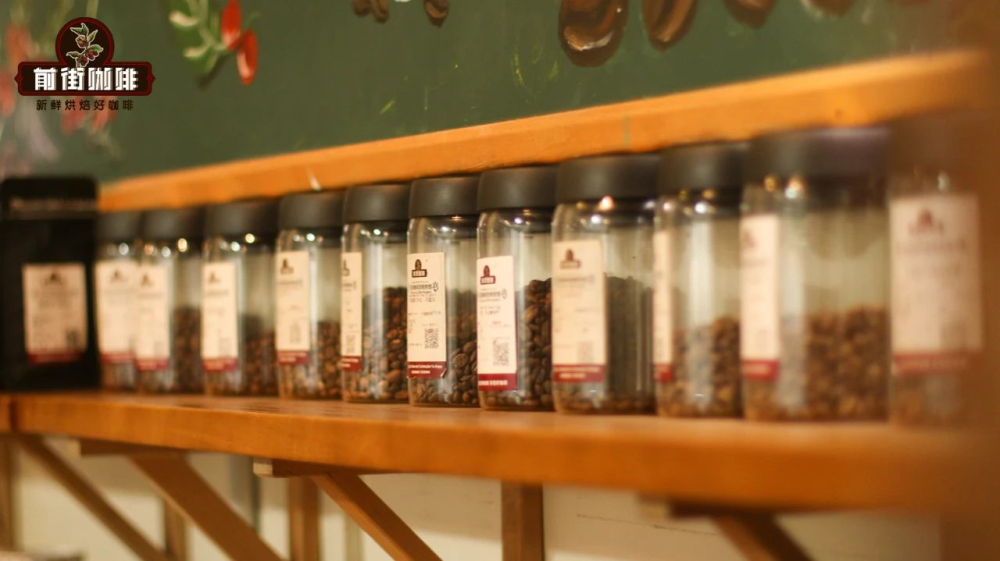
In terms of the flavor of a single bean type, the coffee taste of commercial beans is indeed much inferior to specialty coffee beans. Commercial beans are usually selected as raw materials for espresso blends, and after blending they can also make coffee of decent quality, suitable for making lattes, cappuccinos, and other espresso drinks. When FrontStreet Coffee uses this Front Street Commercial Blend Espresso Coffee Bean to make Espresso, because it contains Robusta beans, the crema is richer, the taste is classic, and it is suitable for daily shop use. Flavor characteristics: caramel sweetness, nutty and cocoa-like, dark chocolate flavors, balanced acidity and sweetness, slightly bittersweet, with a lasting finish.
(3) Front Street Basic Espresso Blend Coffee Beans: Yunnan coffee beans and Brazilian coffee beans, ratio 3:7
Flavor characteristics: with soft fruit acidity, caramel sweetness, nutty and dark chocolate flavors, smooth and viscous mouthfeel, but relatively light in taste. This relatively cost-effective coffee bean is suitable for shop users and home users who prioritize cost and are not too demanding about flavor.
(4) Front Street Sunflower Warm Sun Espresso Blend Coffee Beans: Front Street Honduras Sherry coffee beans and Front Street Yirga Red Cherry coffee beans, ratio 7:3
Flavor characteristics: obvious fruit acidity, with a faint berry aroma lingering throughout, rich winey and chocolate flavors, and a comfortable sweet aftertaste.
In fact, FrontStreet Coffee has found that adding Robusta beans to an espresso recipe can bring more caffeine while also helping to improve crema and richness.
What factors affect espresso extraction?
(1) Water pressure
Modern espresso machines use a pump to control water output and adjustable water pressure. The ideal water pressure for Espresso is generally 9 BAR, which is also the industry-recognized optimal pressure value.
(2) Boiler pressure
Boiler pressure is directly related to the water temperature and the strength of steam pressure when making coffee. The higher the boiler pressure, the higher the water temperature and the stronger the steam pressure; conversely, the lower the water temperature and the weaker the steam. Boiler pressure is usually maintained at around 1 BAR. Of course, this value is still quite controversial to this day, and every barista understands it differently.
(3) Water temperature
Water temperature needs to be set according to the specific needs of the coffee beans being used. Some are constrained by boiler pressure, while others can be adjusted more flexibly and precisely. According to the practical experience of most baristas, the water temperature is between 90 and 92 degrees Celsius. Every barista can flexibly adjust according to their own understanding and needs, and through their own operation make an Espresso with a personal style.
(4) Tamping force
There are various styles of tamping, and it is almost impossible to find two people in the world whose tamping methods are exactly the same. Generally speaking, if it is a heavy tamp, the pressure needed is about 25kg/m², but tamping is indeed the most freely chosen parameter among the golden rules. FrontStreet Coffee uses a calibrated tamper, so the tamping force is basically kept consistent.
(5) Espresso bean grind size
Espresso uses extremely fine grounds. The finer the grind, the slower the water flows through the coffee bed; the coarser the grind, the faster the water flows through the coffee bed. Adjusting the grind size can flexibly change the extraction time while achieving the target extraction yield. Imagine this situation: using a fixed dose of 20g to extract 40g of Espresso, taking 25 seconds. Everything seems ideal, but upon tasting you find the body is very thin and sharply acidic. Obviously, this Espresso is under-extracted and has low concentration. At this point, grinding the coffee beans finer can solve the problems of under-extraction and low concentration, while also reducing sharp acidity and increasing body.
(6) Dose
At FrontStreet Coffee, the dose for a single espresso is 12 to 14 grams of coffee grounds, and for a double it is 20 to 22 grams.
(7) Extraction time
The extraction time stipulated by the golden rule is between 25 and 28 seconds, but extraction time is actually a comprehensive reflection of tamping, dose, and grind size, and baristas need to adjust it according to their understanding.
(8) Extraction yield
At FrontStreet Coffee, a single shot extracts 20 to 21g of liquid, and a double shot extracts 40g of liquid. Combined with the dose, this is the key to the espresso extraction brew ratio.
How does Front Street make the base espresso?
First wipe the portafilter dry, then add 20g of coffee grounds into the basket, then use a distribution tool to level the coffee grounds, and then use a tamper to press the puck tightly. Lock the portafilter onto the group head and start the extraction button (for a lever machine, pull the lever). Stop extraction after the coffee liquid reaches 40g. Control the extraction time between 28 and 32 seconds.
An ideal cup of Espresso should achieve a balance among all elements, with a vivid taste, and after drinking it, the throat should feel sweet and mellow rather than bitter. More specifically, it should have moderate acidity, bitterness, and sweetness, rich flavor, solid and full-bodied consistency that lingers, and a finish with a refreshing citrus-like acidity.
Blended beans are mostly used for Espresso, Americano, Latte, or Cappuccino and other espresso coffees. The coffee taste is more balanced and easier to drink, and the output is more consistent. It can be said that the flavor is more mass-oriented.
The above content is compiled by CoffeeHunters, a coffee news website.


