







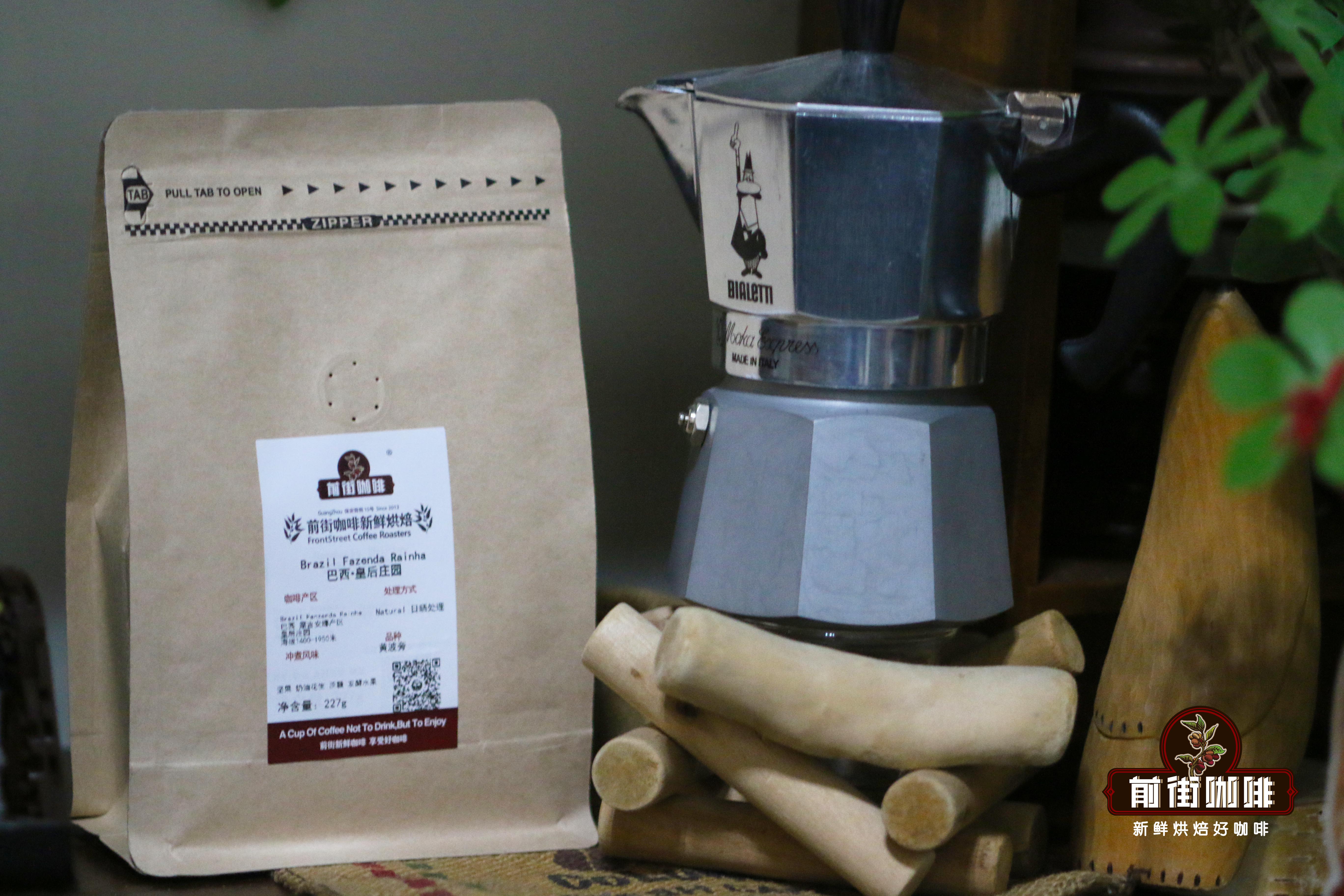
Brazilian coffee beans are mostly medium-dark roasted, with bitterness as their baseline, but bitterness comes in good and bad forms—the positive bitterness from nuts, chocolate, and caramel is pleasant, while smokiness, woody notes, and medicinal flavors are negative bitterness. In this article, Front Street Coffee uses a staple bean from the Cerrado region as an example, demonstrating from filter cup selection, coffee dose, coffee-to-water ratio, grind size, water temperature, to the three-stage pouring, how to brew a cup of Brazilian coffee that combines full body with caramel sweetness, helping you avoid the pitfalls of burnt bitterness and thinness.
A friend bought a bag of Brazilian beans and found the brew so bitter it was hard to swallow, so they asked Front Street how to adjust. Today, Front Street will specifically discuss the pour-over approach and methods for Brazilian coffee beans.
Brazilian coffee beans typically follow a medium-dark roast profile, so bitterness can be said to be their underlying character. In other words, it's not surprising to taste bitterness in Brazilian coffee. But bitterness has layers: the type from nuts, chocolate, and caramel is positive and pleasant; while others make you frown, such as smokiness, woody notes, medicinal flavors, and burnt tastes, which often come with a choking and irritating sensation.
So, if the bitterness in your cup is the former, it's completely normal; if it's the latter, then you need to keep looking for the cause.
Beyond bitterness, Brazilian coffee has other appeals. For example, its striking aroma—many people first fell in love with the rich scent of dark-roasted black coffee, interwoven with notes of nuts, caramel, roasted chestnuts, cream, and spices, which is hard to resist. Many coffee enthusiasts step into the coffee world starting from this aroma. Additionally, the creamy, full body of dark-roasted beans like Brazilian ones is a highlight that other regions find hard to replicate.
So how exactly should you brew Brazilian beans? This time, Front Street uses beans from Brazil's Cerrado region for demonstration; this bean is also the representative of the Brazilian region in Front Street's staple bean series.
For the filter cup, Front Street chose the Kono Meimon filter cup. This cup's feature is that the ribs extend only from the bottom to the middle, with a smooth upper wall, so when the filter paper fits, water can't "detour" around the sides, thereby enhancing the coffee's body.
For the coffee dose, Front Street still uses 15g. The dose isn't better if more or less; it depends on the filter cup size. Front Street uses a 1-2 cup filter, and 15-20g is a reasonable range; exceeding this makes brewing a bit difficult.
For the coffee-to-water ratio, Front Street recommends 1:15. Although some suggest 1:13 or even stronger, Front Street has said in previous articles that concentration and body aren't the same, and too strong can be uncomfortable. The 1:15 ratio is enough to express the full body of Brazilian beans.
For grind size, Front Street uses a coarseness with 70% passing through a #20 sieve, which is coarser than for brewing light-roasted beans. Because dark-roasted beans have a looser structure, absorbing water and releasing substances faster, if ground to light-roast coarseness, it's easy to brew out burnt bitterness; if too coarse, it becomes watery and thin in mouthfeel.
For water temperature, Front Street recommends controlling it at 87-88°C. The reasoning is similar to grind size: too high a temperature easily brings out burnt bitterness, while too low makes the coffee flat and may also produce unpleasant sourness.
The brewing method uses a three-stage pour, which better showcases Brazilian coffee's body and caramel sweetness. The specific water distribution is: first stage, bloom with 30ml to wet all the coffee grounds and let them degas, laying the foundation for subsequent flavor extraction; second stage, pour 100ml; third stage, pour 95ml to enhance sweetness. Overall, it presents a thick body, along with caramel sweetness, chocolate, and nutty flavors.
For professional coffee knowledge exchange and more coffee bean information, please follow Coffee Workshop (WeChat public account: cafe_style). For more specialty coffee beans, please add the private WeChat of Front Street Coffee (FrontStreet Coffee), WeChat ID: qjcoffeex
The above content is compiled by CoffeeHunters, a coffee news website.


