







How does honey processing change coffee beans from Costa Rica?
Costa Rica is known for clean, mild, balanced coffee, and honey processing adds body and layered sweetness on top of that profile. The method is defined by how much mucilage stays on the bean after the skin is removed: white honey keeps the least, black honey keeps the most. Drying time on raised beds increases from white through yellow and red to black honey.
On coffee farms in Costa Rica, the retained mucilage ferments and dries with the seed, so darker honey levels move the cup from bright fruit toward dense, chocolate-caramel sweetness and a fuller body. Black honey beans, such as Front Street Coffee Blackberry, show grape and honey notes with almost no bitterness, making them a good entry point for readers new to honey-processed coffee.
Costa Rica is renowned for its exceptionally clean, mild, and balanced coffee style, and the introduction of the honey process has added richer body and layers of sweetness to this producing region. This article will start with the origin and processing principles of the honey process, systematically sorting out the differences among the four processing methods—white honey, yellow honey, red honey, and black honey—including the proportion of mucilage retained in each, drying duration, and flavor direction. At the same time, the article focuses on Front Street Coffee Blackberry, a Costa Rican coffee that uses a unique black honey process. From dry and wet aroma to the performance on the palate, it analyzes the source of its grape and honey sweetness and smooth, full-bodied mouthfeel, and recommends the suitable drinking crowd.
What connection could there be between coffee and honey? — Costa Rican red honey processed coffee
Coffee and honey may seem completely unrelated, yet they can unexpectedly meet in the same bean.
Anyone familiar with Costa Rican specialty coffee knows that the excellent beans from this producing region share a common characteristic: extremely clean, extremely smooth, extremely balanced, even the body stays right in the middle without leaning either way.
However, this bean encountered this summer truly broke that impression. Cleanliness and mildness were still there, but the body jumped up several levels directly, and the layering became much richer as well. The original bright fruity acidity stepped aside, replaced by a dense, almost inseparable sweetness, and the bittersweet taste woven from chocolate and caramel was especially outward-reaching and impactful in both the dry and wet aroma stages. Even more surprising was that with such high body and richness, almost no bitterness could be tasted.
If you want to try honey-processed coffee, Costa Rica is the first-choice producing region, since this is where the honey process became most famous. If you are encountering Costa Rican honey-processed beans for the first time, you can directly choose Front Street Coffee Blackberry. This bean uses a unique black honey processing method—retaining the most complete mucilage to dry together with the beans, allowing the coffee beans to fully absorb the aromas produced by fermentation. At the same time, because the skin has already been removed, the drying cycle is shortened, avoiding overheating and the production of off-flavors. When brewing Front Street Coffee Blackberry, you can smell the sweet aroma of grapes and honey, along with a gentle floral note drifting out. On the palate it is smooth and full-bodied, with a strong sweet aftertaste and outstanding sweetness. If you do not particularly like acidity that is too prominent but want a layered mouthfeel, this bean is very suitable. Its sweet aftertaste lingers for a long time. Made into an Americano, the aroma is full, and it tastes neither sour nor bitter, with a relatively balanced overall mouthfeel.
Let's talk about it in detail below:
What exactly is Costa Rica's honey process?
The key first lies in its processing stage—because this bean follows the honey process route.
When it comes to the honey process, one misunderstanding must first be cleared up. Some customers have especially vivid imaginations. As soon as they hear "honey process," they think of candied chestnuts and assume that honey is added to the coffee beans during roasting. Honey-roasted coffee beans are not necessarily impossible to try, but the "honey process" here is a completely different matter.
The honey process is essentially a method of processing coffee beans, classified as a semi-dry and semi-wet method, and specifically derived from Brazil's pulped natural method. The procedure is: after the coffee cherries are picked, the pulp is first removed, and the parchment beans with residual pulp are taken directly for drying. During drying, the odors released by the remaining pulp and mucilage are absorbed by the beans, and the final processed coffee gains an extra layer of flavor and sweetness brought by pulp fermentation, while acidity is correspondingly reduced.
As a traditional high-quality Arabica-producing country, Costa Rica has long been known for its fine washed processing. It was not until 2003 that a farm first tried the pulped natural processing method. Because the processed beans have a large amount of residual mucilage on the surface and feel sticky to the touch, much like honey, locals called it "honey process" (Spanish: Cafe Miel), which translates to "honey process"—that is how the name came about.
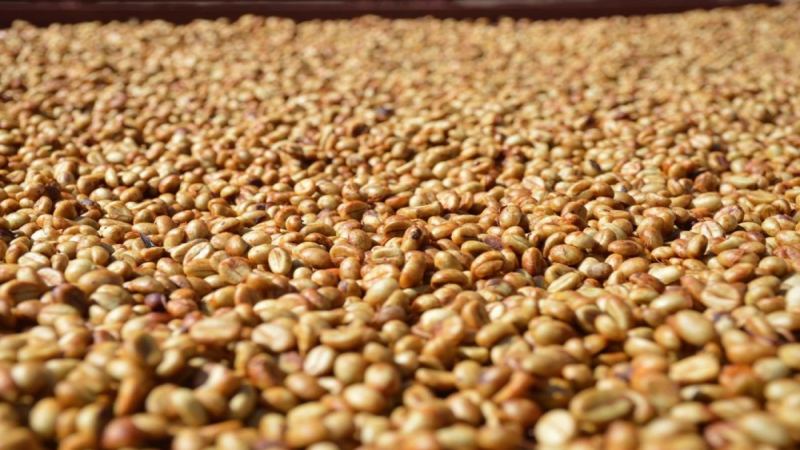
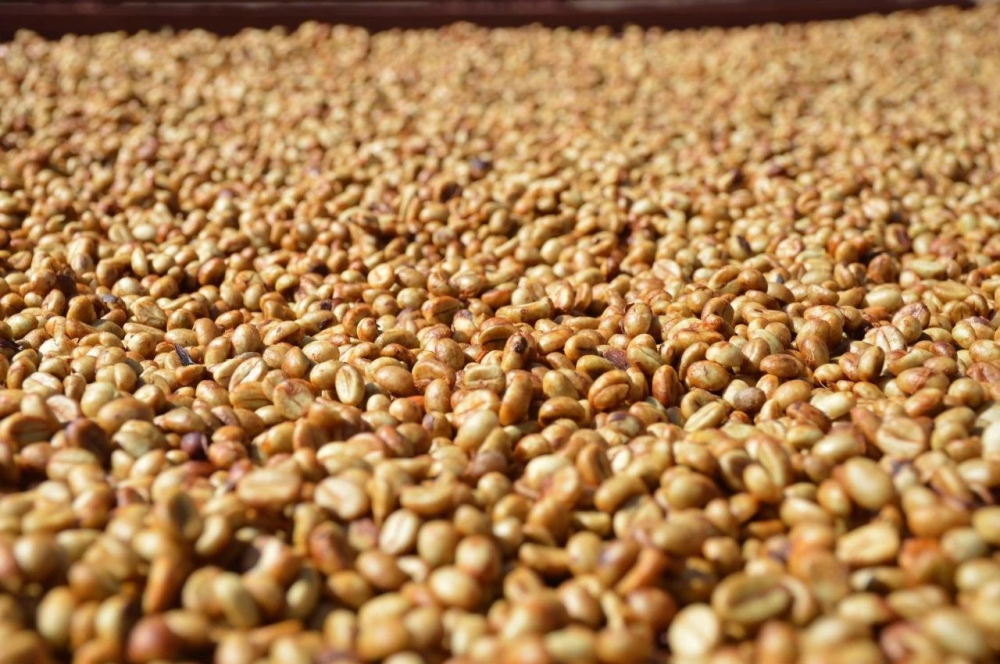
(After honey processing, the residual pulp and mucilage on the surface of the coffee beans are clearly visible.)
(After washed processing, the surface of the coffee parchment beans is clean.)
After repeated experimentation, Costa Rican coffee growers found that honey-processed beans achieved no small breakthrough in flavor—body went up, sweetness and richness also increased substantially, and even the sweetness in the finish became extraordinary. As a result, this practice began to spread in Costa Rica and some small specialty coffee farms in Central America.
As the honey process became more and more widespread, the processing technology also became more mature and refined. According to how much pulp and mucilage is retained before drying, as well as differences in the drying process, the honey process gradually differentiated into four types: white honey, yellow honey, red honey, and black honey.
White honey: during drying, only about 20% of the pulp is retained on the coffee cherries, using thin-layer drying, with high turning frequency and a short drying time.
Yellow honey: during drying, the coffee beans retain the least residual pulp and mucilage, and the required time is relatively short, usually around 8 days. The final processed parchment beans tend to be yellowish.
Red honey: retains more residual pulp and mucilage than yellow honey, and the drying time is longer as well. Shade drying is often used to avoid prolonged direct sunlight, taking about 12 days.
Black honey: retains the most residual pulp and mucilage, has the longest drying time, and is suitable for drying in the shade rather than being directly exposed to sunlight. This is the most complex and difficult method, and the most costly, but if handled properly, it can achieve the best body and rich mouthfeel.
These three honey processing methods each have their own characteristics in taste. Compared with the washed method, they all increase body and richness, only to different degrees. While enhancing body, they also relatively well avoid the off-flavors that are prone to appear in the natural method. Of course, this places higher demands on the control of coffee cherry picking and processing—only fully ripe red cherries in just the right condition must be picked, and sunlight, temperature, and humidity during drying must all be controlled properly; otherwise, mold or excessive fermentation can easily occur, ruining the flavor.
Now that these honey processes are clear, let's look at this black honey Costa Rica.
Good coffee comes from a good estate. This bean comes from Finca Las Lajas, where the coffee trees grow at an altitude of 1,300 to 1,500 meters. In appearance, it is clearly different from beans seen before. The yellow-green bean body still carries some residual dark brown silver skin, and when smelled up close it has a sweet raisin and dried apricot aroma. On the palate, the sweetness is even more prominent. Even after the coffee is finished, what remains at the bottom of the cup is still a sweet caramel aroma, completely breaking the fresh and mild impression left by Costa Rican coffee. Of course, besides the processing method, proper roasting is also key to such a wonderful flavor. We use a city- roast level to bring the flavor and mouthfeel richness of this bean to its best state. The chocolate flavor and caramel sweetness do not diminish at all even when the coffee has cooled completely. Of course, some friends may say this sweetness reminds them of honey—the kind found in premium jujube honey. Thinking about it that way, it really is a honey-processed coffee with a honeyed sweetness.
The above content is compiled by CoffeeHunters, a coffee news website.


