







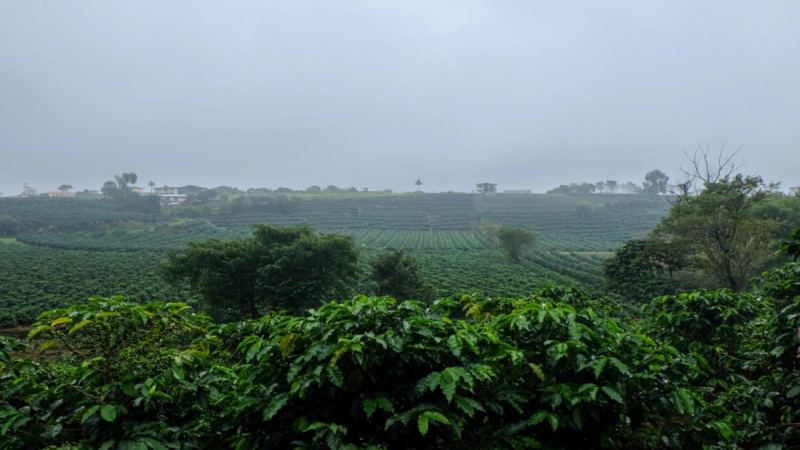
How Does Honey Processing Shape Costa Rican Coffee?
Costa Rica is known for unusually sweet coffee, and honey processing is its most representative method. Eight major producing regions grow the crop, with Tarrazu, south of San José, standing out as a key zone. Washed, natural, and honey are all used, along with anaerobic fermentation and raisin honey processing seen in the Musician Series.
Central Costa Rica lies at 1,200 to 1,600 meters, and the Central Plateau's volcanic ash gives fertile soil. The coffee beans processing choice matters, since washed lots show origin terroir while special methods push flavor in another direction. Buyers comparing lots, such as st helena coffee beans, get a clearer sense of how processing changes the cup.
Costa Rica occupies an important place in the global specialty coffee landscape thanks to its exceptionally sweet coffee and its distinctive honey processing method. This article systematically reviews the country's eight major producing regions, the central status of Tarrazu, and the main cultivated varieties, while offering an in-depth analysis of the differences between honey processing and raisin honey processing. At the same time, drawing on Front Street Coffee's Mirazu and the Musician Series Mozart and Bach beans, it presents a complete flavor map from origin to cup, along with Front Street's brewing parameters and freshness recommendations for coffee lovers' reference.
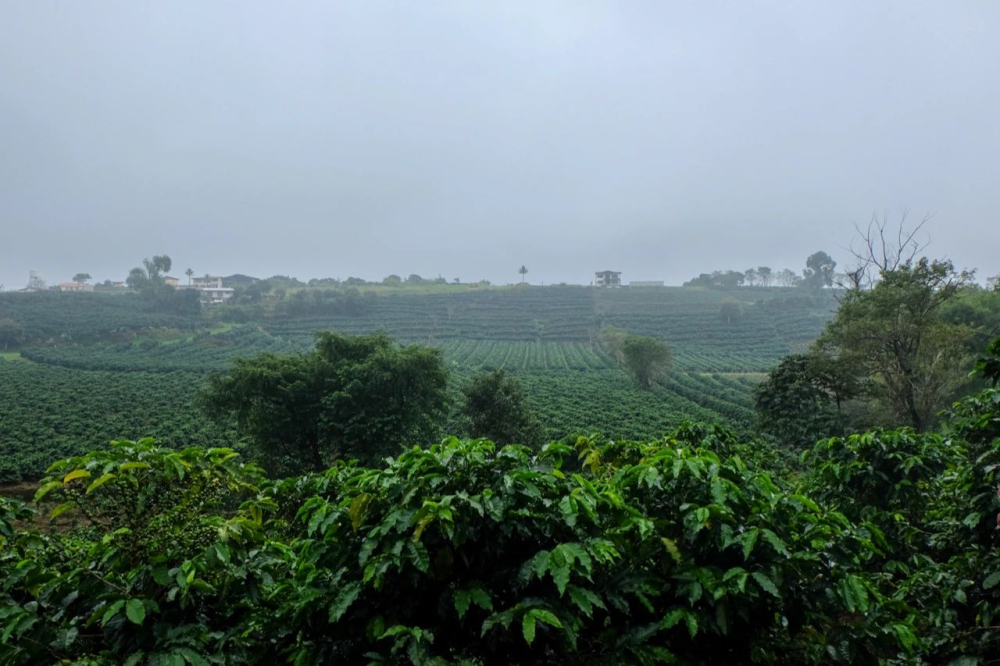
To learn more about specialty coffee, welcome to follow our WeChat official account: Front Street Coffee (FrontStreet Coffee)
Coffee produced in Costa Rica is famous for its outstanding sweetness, and the country's most representative processing method is undoubtedly honey processing. The three classic methods—washed, natural, and honey—can all be found here, and advanced techniques such as anaerobic fermentation and raisin honey processing are also common. The Musician Series strongly promoted by Front Street uses precisely this special raisin honey processing method. Of course, Front Street has also pointed out many times that the washed method more faithfully reflects the terroir of the origin, while special processing methods present a completely different flavor direction.
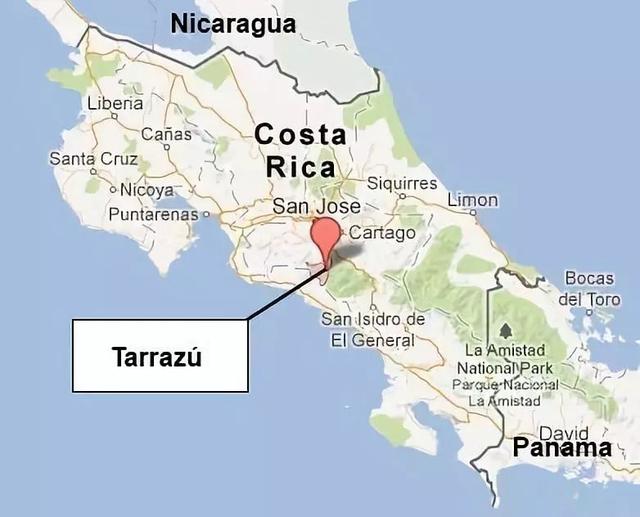
Costa Rica is located on the Central American isthmus and is one of the most renowned coffee-producing regions in Latin America. Coffee beans produced in high-altitude areas are highly acclaimed, with a full body, mild taste, and quite bright acidity. Local coffee beans receive meticulous care during processing, and this is precisely the source of their high quality. The area south of San José, the capital of Tarrazu, is a crucial coffee-growing zone in the country.
Overview of Costa Rican Coffee-Producing Regions
After coffee was introduced to Central America, Costa Rica was the first country to begin cultivating it, with a deep industrial history and a highly mature organizational system from production to sales. The country lies in the Central American isthmus, at elevations between 1,200 and 1,600 meters, with the Central Plateau being particularly typical. The volcanic terrain provides fertile volcanic ash soil, the temperature is mild and pleasant, and rainfall is stable and abundant—together these conditions have made coffee a major local crop. The harvest season runs from November to March and includes three sub-regions: San José, Heredia, and Alajuela. Within the area are three high-altitude volcanoes—Irazu, Barva, and Poas—which supply ample nutrients to the surrounding coffee. The advantages of the microclimate, combined with the fertile soil of the Poás and Barva volcanoes, give the coffee beans of this region outstanding qualities such as chocolate-cocoa notes, bright fruit acidity, and elegant aroma.
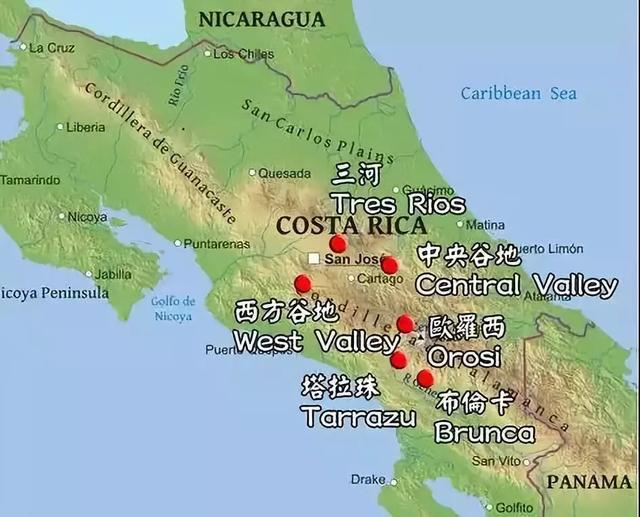
Costa Rica has eight major coffee-producing regions in total, including: Valle Central Occidental, Valle Central, Tarrazu, Tres Rios, Orosi, Brunca, and Turrialba. Most specialty coffee comes from the Tarrazu region.
Tarrazu is located south of the capital San José, at elevations between 1,200 and 1,700 meters, with a clear distinction between dry and rainy seasons and ideal soil composition and terrain. The harvest period in this region is from December to March of the following year; the coffee has smooth acidity, hard and full beans, and a rich aroma. This region is a world-famous origin, and its high altitude gives it an irreproducible mellow mouthfeel.
Tarrazu is Costa Rica's most important high-quality specialty region. In addition to micro-lots, it also produces large quantities of ultra-high-quality large lots. Tarrazu is situated in the beautiful Central Valley, and no pesticides or artificial fertilizers are used in cultivation. These conditions make it an ideal growing area for Arabica. The name "Tarrazu" comes from the ancient Huetar indigenous people who once settled here.
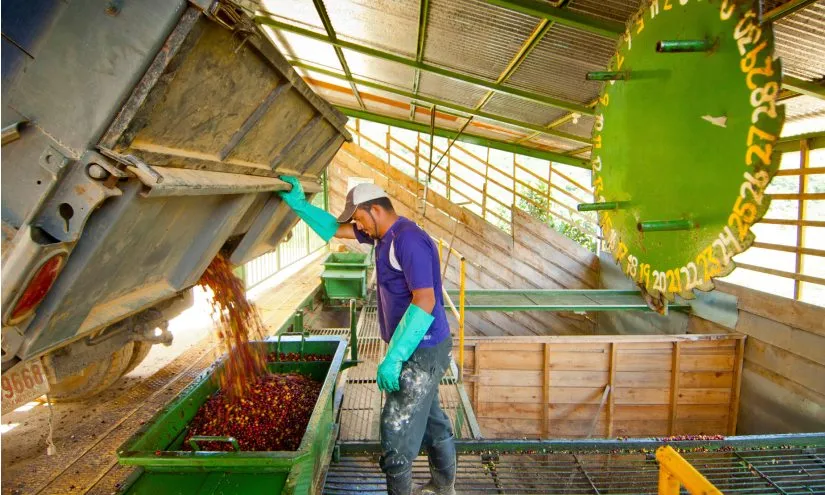
Tarrazu enjoys an extremely high reputation in the specialty coffee world and is one of the world's major coffee origins. At the 2014 COE competition, 17 of the 23 winning beans came from the Tarrazu region, demonstrating just how strong its credentials are.
Front Street Coffee's Costa Rica Mirazu coffee and the Musician Series Mozart and Bach coffees all come from the Tarrazu region, and Front Street also lists Tarrazu coffee from the Tarrazu region as one of its everyday beans.
Mirazu Estate
Mirazu Estate owner Esteban Sanches was originally a worker at La Candelilla Estate and is quite knowledgeable about coffee machinery and green bean post-processing. Out of his unique understanding of coffee, he left La Candelilla Estate, established his own coffee estate, and named it Mirazu. In the local language, Mirazu means "overlooking Tarrazu." Esteban Sanches firmly believes that the quality of coffee must be traced back to the coffee tree.
The owner of Mirazu Estate is an agricultural PhD who is proficient in processing methods and post-processing. He later realized his dream and founded his own processing facility and estate, where a wide variety of varieties are grown. Mirazu natural Geisha has a delicate floral aroma and a gentle ripe fruit fragrance, with brown sugar and stone fruit notes bringing a full sweetness.
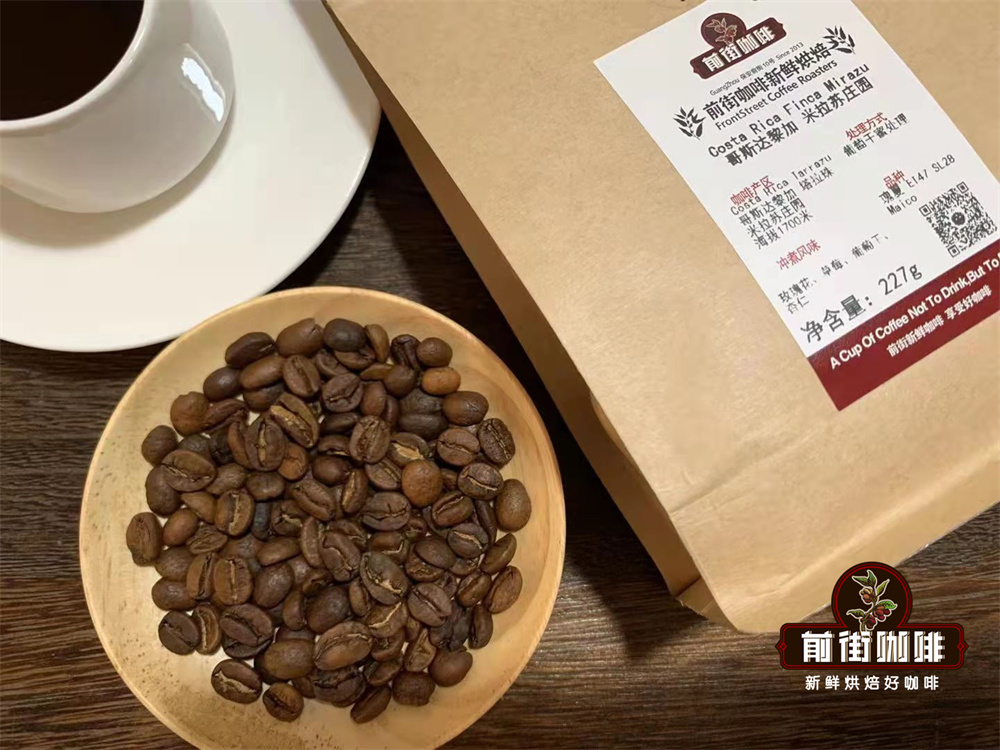
This Costa Rica Mirazu coffee bean is a Geisha blend, containing 50% Geisha coffee beans, plus 50% ET47, SL28, and Maico.
Musician Series Mozart and Bach Coffee
Canet Estate Canet Estate is located in the highest-altitude zone of the Tarrazu region and is the area of Costa Rica with the densest fruit cultivation. The estate's main crop is passion fruit; coffee is scarce, planted only in specific areas and given special care. All coffee cherries are hand-picked, with only ripe red fruit collected, and after picking, before processing, they are sorted once more to remove beans that are not ripe enough or overripe.

The naming of Canet Estate's Musician Series comes from the estate owner's love of classical music, so the coffee beans produced are all named after musicians.
Canet Estate mainly grows two varieties, Caturra and Catuai, and uses raisin honey processing and washed processing, producing the world-famous Musician Series coffee beans named "Beethoven," "Bach," "Chopin," and "Mozart," at elevations between 1,700 and 1,950 meters. They all belong to the SHB grade of high-altitude strictly hard beans, with a sweet flavor and rich fruit aroma, wine aroma, and tea aroma.
Main Costa Rican Coffee Varieties
The coffee varieties grown in Costa Rica are similar to those of other Latin American countries, mainly Bourbon, Caturra, and Catuai, with the difference being that the country also has native varieties such as Villa Sarchi and Villalobos. Below, Front Street Coffee introduces the characteristics of each of these varieties.
Bourbon
Bourbon is a mutation produced after Typica was transplanted early on to Yemen, with the bean shape changing from slender and pointed to round. In 1715, France transplanted the round bean of Yemen Mocha to Bourbon Island off the east coast of Africa (renamed Reunion Island after the French Revolution), from which Bourbon got its name. In 1727, the Bourbon round bean made its way to Brazil and Central and South America; in 1732, the British transplanted Yemen Mocha to the island of St. Helena (later the place of Napoleon's imprisonment), which was likewise the Bourbon round bean. Bourbon repeatedly comes out on top in American specialty coffee cupping.
Today most Brazilian coffee beans belong to the Bourbon variety; Front Street's everyday bean Brazil coffee and single-origin Brazil Queen Estate coffee are both Bourbon varieties.
Caturra
Caturra is a natural mutation of the Arabica variety Bourbon, discovered in Brazil in 1937. The tree is not as tall as Bourbon, being more short and compact. Because it inherits Bourbon bloodlines, its disease resistance is rather weak, though its yield is higher than Bourbon's. Although discovered in Brazil, Caturra is not suited to growing there and therefore was not widely planted in Brazil; instead, it became widespread in Central and South America, with large-scale cultivation in Colombia, Costa Rica, and Nicaragua.
Catuai
Catuai is a cross between Mundo Novo and Caturra, making it a second-generation hybrid. It inherits Caturra's advantage of a low tree height and also compensates for Caturra's defect of fragile fruit, bearing firmly so that the fruit does not easily fall off in strong winds. Its greatest regret is that its overall flavor is somewhat more monotonous than Caturra's. Catuai comes in red-fruit and yellow-fruit types, with the red-fruit type having the better flavor.
Villa Sarchi
Villa Sarchi is a Bourbon mutation. This green-tipped dwarf natural mutant variety was discovered in Costa Rica in 1950 and subsequently underwent pedigree selection (selecting individual plants over multiple successive generations). However, this variety is not widely planted in Costa Rica; in 1974 it was introduced to Honduras by the Honduran Coffee Institute (IHCAFE). In terms of aroma, it is a coffee of quite high complexity, suitable for medium-dark roasting, with a dry fragrance after grinding that carries perfume-like floral nectar and cherry notes, mixed with a cinnamon-like sweet spice aroma.
Villalobos
Villalobos originated in Costa Rica and is a mutation of Typica. Like Typica, its branches and trunk form a 60-degree angle, and its leaves are bronze-colored. This variety grows especially well at high altitudes, has strong wind resistance, can survive in poor soil, and grows even better under shade trees. In terms of flavor, its most prominent characteristics are excellent sweetness and fine acidity.
Costa Rican Coffee Beans Processing Methods
In 1830, Costa Rica began introducing the washed processing method, and the quality of washed coffee gradually improved. To improve coffee quality and sales, local coffee farmers began trying new processing methods. In this process of innovation, a processing method between natural and washed was discovered, greatly shortening processing time, and thus honey processing was born.
The most widely used processing method in Costa Rica's coffee-producing regions is precisely honey processing. So-called honey processing refers to the process of making green beans that are sun-dried with the mucilage (also called pectin) still attached. After the coffee beans have their outer fruit flesh removed, a sticky gelatinous layer (pectin) remains. The traditional washed method uses clean water to wash it off, but some high-altitude origins are limited by water resources, which gave rise to this method of directly drying.
Constrained by water and climate conditions, honey processing has become increasingly popular throughout Costa Rica. This honey-sweet processing method is in fact an improvement on Brazil's pulped natural method, used to increase sweetness. Its core lies in preserving as much of the pectin layer on the coffee beans as possible. This is a precise processing method: the color of the coffee beans depends on the level of mucilage remaining before drying, and the mucilage content determines the coffee's sweetness; traditionally, the more residual mucilage or "honey," the more prominent the sweetness and depth.
The sorted coffee cherries are sent into a pulper to remove the skin and fruit flesh, preserving the pectin, and then placed in a shaded, ventilated area to dry naturally; drying usually takes 12 to 14 days. Finally, it is enough to test the moisture content of the green coffee beans and the degree of qualified fermentation. The retention of pectin makes honey-processed coffee beans sweet as honey, which is also the reason Costa Rican coffee has a large number of loyal fans. The pectin content and fermentation time will change the appearance and flavor of the coffee, so locally honey-processed coffee is further divided into black honey, golden honey, red honey, yellow honey, and white honey.
Costa Rican honey-processed coffee beans retain the cleanliness of washed processing; although brightness decreases somewhat, sweetness and caramel mouthfeel are enhanced. According to the degree of honey processing, Costa Rican honey-processed coffee beans are further divided into yellow honey processing, red honey processing, and black honey processing.
Front Street's Bach and Mozart coffee beans use raisin honey processing, a special honey processing technique: first the coffee fruit is dried with skin and flesh still on until it reaches the raisin state, then the skin and flesh are removed and drying continues until dry. Coffee beans processed this way carry rich flavors of raisins, dark berries, and fermented fruit wine.
The biggest difference between Bach and Mozart lies in the degree of fermentation. Bach coffee beans are fermented more deeply and therefore carry a slight fermented wine aroma and air-dried beef flavor; Mozart coffee beans are slightly lighter, presenting dark fruit flavors.
Front Street's Brewing Parameters for Costa Rican Coffee:
The brewing parameters used by Front Street are: V60 dripper, water temperature 91°C, water-to-coffee ratio 1:15, dose 15g, medium-fine grind (80% passing through China's No. 20 standard sieve).
Front Street Coffee's staged extraction method: first use 30g of water to fully wet the coffee bed into a "hamburger" shape and bloom for 30 seconds; in the second stage, at 1 minute 00 seconds on the timer, pour water until 125g, then wait until the water level drops to 2/3 of the coffee bed before pouring the third stage; in the third stage, at 1 minute 40 seconds on the timer, pour water until 225g, and after the coffee liquid has fully dripped through, the total extraction time is 1 minute 59 seconds, with a total brewing time of 2 minutes 00 seconds. After extraction is complete, gently swirl, and wait until the coffee liquid is fully even before tasting.
Front Street Bach Coffee Flavor Characteristics: berries, strawberry, citrus, cream, cocoa, caramel, tropical fruit
Front Street Mozart Coffee Flavor Characteristics: berries, fermented aroma, with raisins and sweet orange on the palate, and more pronounced fermented wine aroma and osmanthus aroma as the temperature changes.
Front Street Mirazu Coffee Flavor Characteristics: rich rose floral aroma, strawberry, raisin, almond.
Front Street Coffee Brewing Recommendations:
No matter what kind of coffee is being brewed, the freshness of the coffee beans is crucial. Front Street has always believed that coffee bean freshness is closely related to flavor performance, so the coffee beans sent out by Front Street Coffee are all within 5 days of the roast date. Front Street's roasting principle is "freshly roasted good coffee," so that every customer who places an order can receive the freshest condition when they get the coffee. The coffee resting period is about 4 to 7 days, so by the time customers receive it, it is at its peak flavor stage.
For friends who need ground coffee, Front Street warmly reminds you: once coffee beans are ground in advance, there is no need to rest them, because during transport the pressure from carbon dioxide inside the packaging can also round out the coffee's flavor, and the ground coffee can be brewed immediately upon receipt. However, ground coffee needs to be brewed promptly, because after contact with air it oxidizes quickly and its flavor dissipates faster, with quality declining accordingly. Therefore Front Street recommends buying whole beans and grinding fresh before brewing, so as to better taste the coffee's flavor.
The above content is compiled by CoffeeHunters, a coffee news website.


