







Why Is Huehuetenango Central American Coffee Worth Trying?
Guatemala sits in Central America and its coffee is often described with a smoky note, though that smokiness comes from the terroir rather than additives. The Huehuetenango region, the highest and driest of Guatemala's three non-volcanic areas, is known for intense fruity flavors. Its altitude passes 2,000 meters, yet warm winds from the Tehuantepec plain protect the trees from frost.
Other Guatemalan regions each bring their own profile. Antigua, the most favored area, draws fertile soil from minerals deposited by the active Fuego Volcano, giving it light smokiness and rich fruity aroma. As a typical Central American coffee, Guatemalan beans show a full body with nutty and chocolate notes, alongside regions such as Cobán, San Marcos, and Atitlán.
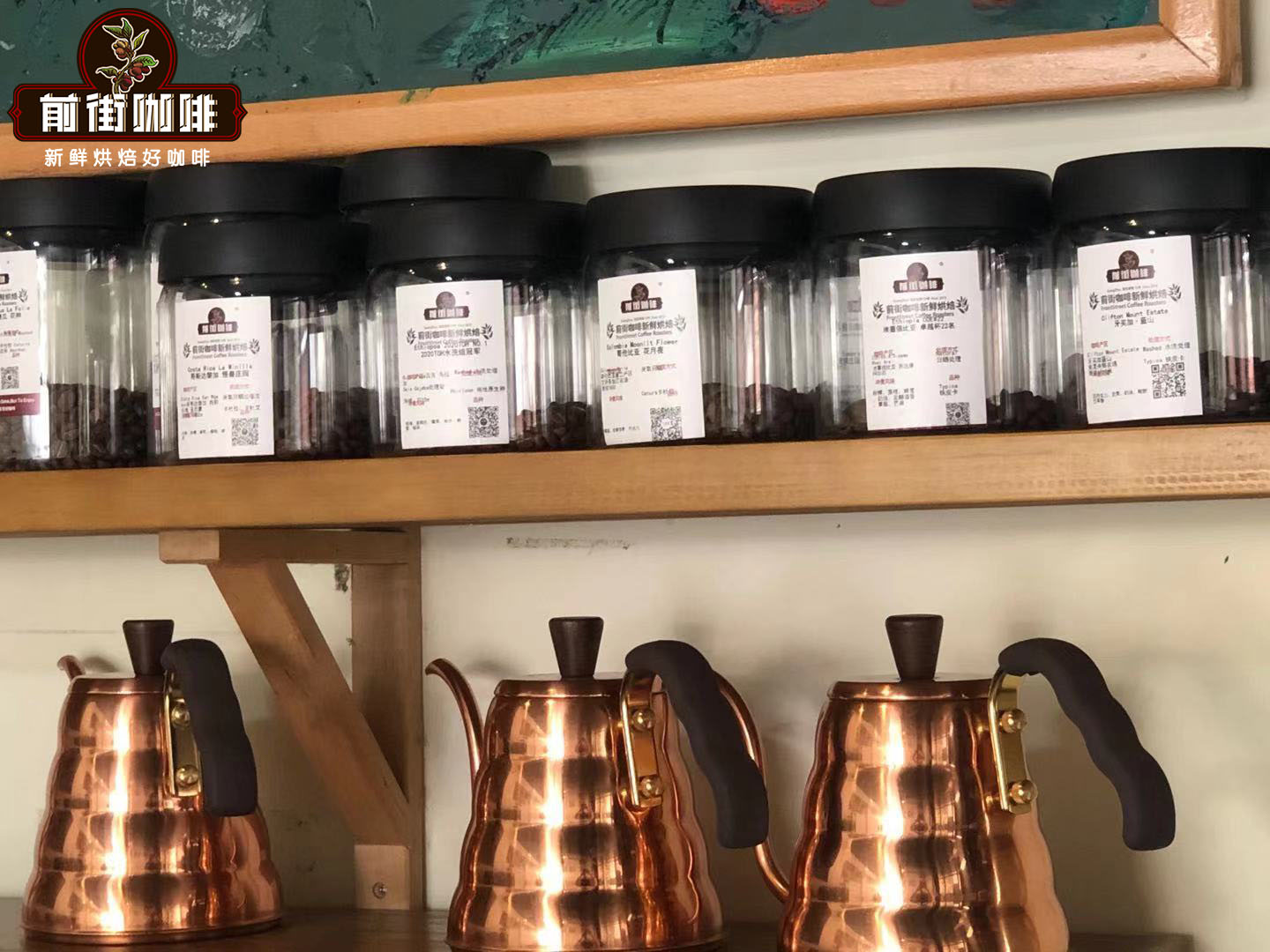
Guatemala is a representative coffee-producing country in Central America, often described as having a smoky "uncle-style" flavor, but this smokiness comes from the terroir rather than artificial additives, and combined with nutty and chocolate notes, it is full of charm. The country is home to producing regions such as Antigua, Huehuetenango, Cobán, San Marcos, Atitlán, Acatenango, Fraijanes, and New Oriente, each with unique climate and soil conditions. Among them, Huehuetenango is known for its intense fruity flavors, while Antigua is famous for its light smokiness and rich fruity aroma. On Front Street Coffee's bean list, the Huehuetenango daily drinker bean and La Minita La Flor del Café represent the classic styles of these two regions respectively. This article will go through the characteristics of each region one by one and share the brewing approach and specific parameters for the La Flor del Café beans.
When it comes to Guatemalan coffee beans, many people's first reaction is that smoky character reminiscent of an uncle's temperament. This smokiness does not stop it from winning countless fans, just as smoked meat also has a large following. It should be noted that the smokiness of Guatemalan coffee is not artificially added, but an inherent flavor of the beans. Overall, Guatemalan coffee has a full body, often accompanied by nutty and chocolate notes, making it a typical representative of Central American coffee.
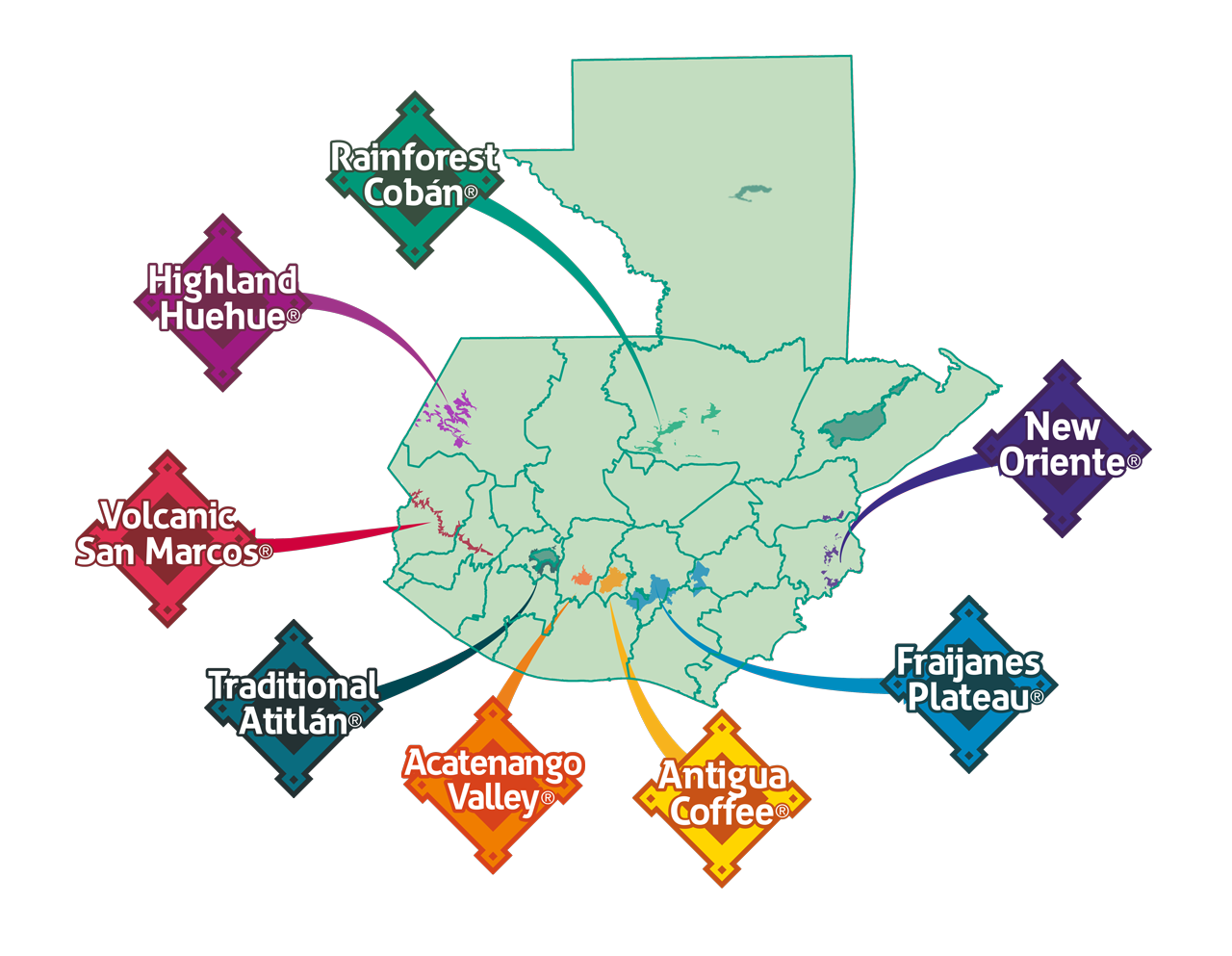
Guatemala's coffee-growing regions include: Antigua, Huehuetenango, Cobán, San Marcos, Atitlán, Acatenango, Fraijanes, and New Oriente.
【Antigua】
The Antigua region is widely recognized as Guatemala's most favored coffee-producing area. The soil here is rich in nutrients, thanks to minerals deposited by nearby volcanic eruptions. The still-active Fuego Volcano continuously brings new minerals, keeping the soil fertile. Fertile soil, abundant rainfall, and stable temperatures together have earned Antigua coffee its renowned reputation.
【Huehuetenango】
Coffee from Guatemala's Huehuetenango region is known for its intense fruity flavors. Among Guatemala's three non-volcanic producing regions, Huehuetenango has the highest altitude and the driest climate. Although its altitude exceeds 2,000 meters, the area still receives warm winds from the mountainous terrain of the Tehuantepec Mexican plain, protecting it from frost.
【Cobán】
Cobán is rainy year-round with relatively low temperatures, completely different from those sun-drenched volcanic producing regions. The air humidity here is high, and coffee trees grow in soil composed of clay and limestone. Coffee beans produced in this subtropical environment are generally more balanced, with a medium body, brightness, and relatively low acidity.
【San Marcos】
San Marcos is Guatemala's hottest region and also its wettest. The rainy season arrives early, and coffee blooms faster. To cope with the often early rainy season, local producers use a "pre-drying" method: before sending the beans to the Guardiola dryer, they first dry the coffee beans in the sun for a period of time.
【Atitlán】
The Atitlán coffee-growing region surrounds Lake Atitlán in Guatemala, near three volcanoes and close to the Pacific Ocean. The area receives abundant rainfall throughout the year, with average monthly rainfall exceeding 50 millimeters. Atitlán coffee grows at altitudes between 4,000 and 5,900 feet, where coffee diseases and pests are rare, and humidity is around 75%. Most coffee farms are about 12 hectares in size.
Atitlán coffee is known for its full body, spicy or floral flavors, and intense aroma.
【Acatenango】
Acatenango's growing altitude is above 2,000 feet, and the producing region is densely forested, also possessing mineral-rich soil that gives the coffee from this region a unique flavor and excellent quality.
【Fraijanes】
The coffee from this region has a distinctive flavor, thanks to the nearby active Pacaya Volcano, whose volcanic ash is rich in mineral nutrients such as potassium. The growing altitude is about 4,500 feet, with abundant rainfall, and the coffee produced has a rich aroma.
【New Oriente】
Since the 1950s, coffee in the New Oriente region has traditionally come almost entirely from small plantations. However, in recent years, large plantations in the area have noticeably increased. New Oriente's climate is usually rainy and cloudy, and its mineral-rich soil provides ideal conditions for coffee cultivation—the coffee shows acidity and has a strong aroma.
On Front Street Coffee's bean list, there are two coffees from Guatemala, one of which is the Guatemala Huehuetenango from the daily drinker series. This bean is washed-processed, designed to present the most basic flavors of the region.
Front Street Coffee Guatemala Huehuetenango
Region: Huehuetenango, Guatemala
Altitude: 1,500–2,000 meters
Varieties: Bourbon, Caturra, Catuai
Processing Method: Washed
The other is the La Flor del Café coffee bean from the La Minita group. Front Street's Guatemala La Flor del Café coffee beans come from the Antigua region.
Front Street Coffee Guatemala Antigua La Flor del Café Coffee Beans
Region: Antigua, Guatemala
Estate: La Minita
Varieties: Bourbon, Caturra
Altitude: 1,200 meters
Processing Method: Washed
The Antigua region receives relatively little rainfall in summer, and in winter, frost occasionally forms due to severe cold. When lightweight volcanic pumice from nearby active volcanoes falls into the soil and cools, this pumice is full of tiny pores, which is very helpful for water retention. Combined with the shade of shade trees, coffee trees are able to survive the harsh winter. The large temperature difference between day and night creates Antigua's unique microclimate, giving the coffee beans here a light smoky flavor and rich fruity aroma.
La Minita Estate is known for its excellent cultivation and processing techniques, as well as extremely strict quality control. No pesticides are used on the estate, and soil nutrient content is tested twice a year. Because La Minita Estate is at a higher altitude, the incidence of pests and other coffee diseases is reduced, allowing coffee plants to devote more energy to fruit growth. In addition, the application of trace elements such as zinc, boron, and copper supplements the coffee trees with more nutrients and prevents disease. Thanks to this scientific management, the coffee produced by La Minita Estate has remained consistently outstanding in quality for many years.
After workers at La Minita Estate pick the ripe coffee cherries, they are sent to Las Pastores, the largest washing station in Antigua, for processing. This batch of coffee beans processed by the Las Pastores washing station was also named "La Flor del Café" by the La Minita group.
After receiving this high-quality Guatemala La Flor del Café coffee bean, Front Street Coffee's roaster immediately formulated a roasting approach. In order to present elegant floral notes, tea-like character, and fruity aromas, the caramelization time after first crack was shortened, and a medium roast was used.
When brewing this bean, Front Street Coffee used a higher water temperature and a finer grind to maximize the aroma, while choosing a faster-flow dripper to avoid over-extraction.
Dripper: Hario V60
Water Temperature: 91°C
Dose: 15 grams
Coffee-to-Water Ratio: 1:15
Grind Size: 80% passing through a No. 20 sieve
First pour 30 grams of water to completely wet the coffee grounds and bloom for 30 seconds, then slowly pour the second stage in circles up to 125 grams for a staged pour. When the water level in the dripper drops to the point where the coffee bed is about to be exposed, continue pouring. For the third stage, pour up to 225 grams and stop immediately. Total extraction time is about 2 minutes.
Front Street's Guatemala La Flor del Café has a fairly pronounced citrus acidity on entry, a juicy acidity, rich floral notes, pleasant sweetness, medium body, and a slight caramel and smoky note in the finish, with a balanced, lively, and layered flavor.
For more coffee bean information, please follow Coffee Workshop (WeChat public account: cafe_style)
For professional coffee knowledge exchange, please add WeChat ID: kaixinguoguo0925
The above content is compiled by CoffeeHunters, a coffee news website.


