







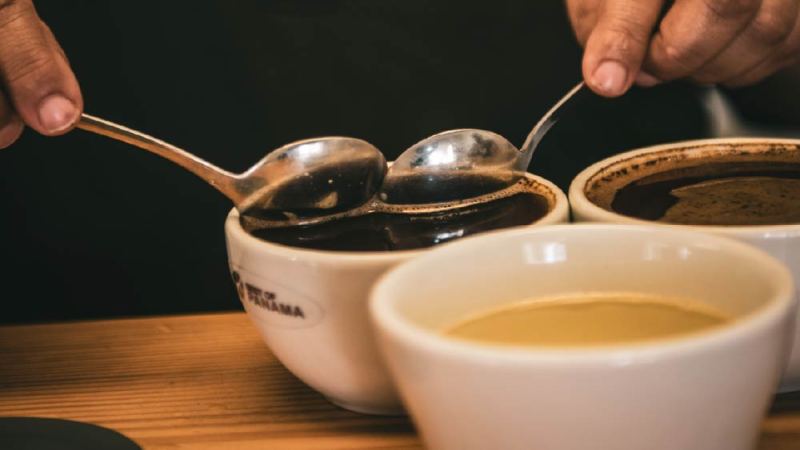
Geisha coffee is widely recognized as the most noble variety in specialty coffee, and Panama's Elida Estate set a historical record at the 2016 BOP auction with a score of 94.15. From the perspective of Front Street Coffee, this article systematically reviews the origin and flavor characteristics of the Geisha variety, focusing on the growing conditions of Elida Estate in the Boquete region of Panama, the ASD anaerobic slow dry processing method, and the specific brewing parameters and flavor descriptions of two Geisha lots—washed and anaerobic natural—to give you a comprehensive understanding of the story and tasting points behind this legendary coffee bean.
For more specialty coffee knowledge, please follow our WeChat public account: Front Street Coffee
The vast majority of specialty coffee belongs to the Arabica species, and among the many Arabicas, Geisha is widely regarded as the most precious. When introducing Geisha to customers, Front Street Coffee often mentions a bean-selection logic: within the same region, washed processing usually represents the baseline flavor direction of a bean, while natural processing layers richer aromas on top of the washed foundation; for example, Blue Mountain is best chosen as washed, while beans pursued for aroma are recommended as natural—and Geisha is exactly such a case. For this reason, Geisha has always been a specialty coffee that never disappears from Front Street's bean list.
The Origin of Geisha Coffee
Geisha coffee beans are also called "Geisha," but they do not come from Japan. The name comes from a mountain in Ethiopia called Gesha, whose pronunciation happens to be the same as the Japanese traditional geisha, and thus the name stuck. In recent years, Chinese-speaking circles have more often transliterated it as "瑰夏."
The Geisha variety was discovered in 1931 in the Gesha forest of Ethiopia and subsequently sent to a coffee research institution in Kenya; in 1936 it was introduced to Uganda and Tanzania, in 1953 Costa Rica began introducing it, and Panama did not begin growing Geisha until the 1970s, after Mr. Francisco Serracín of Hacienda Don Pachi obtained seeds from CATIE in Costa Rica.
Although Geisha's homeland is Mount Gesha in southwestern Africa, after being introduced to Panama, local coffee farmers were initially not keen on planting this variety due to its low yield. The turning point came in 2004, when Panama's La Esmeralda shone brilliantly in that year's cupping competition with this bean, and Geisha's fame spread rapidly from then on. Another contributing factor was likewise its scarce yield—when the market is accustomed to linking price with quality, Geisha naturally became a legend.
Characteristics of Geisha Coffee
Geisha coffee beans have a very beautiful blue-green color, usually referring to washed beans, with a texture as warm and smooth as jade and an elongated bean shape. The dry aroma carries fresh grassy notes, peach, berry, and the milky sweetness unique to oolong tea that most coffee beans do not possess. Perceiving aroma and flavor often requires association, but that faint tea-like quality can be clearly detected.
It is often said in the market that Yirgacheffe tastes somewhat similar to Geisha, but Yirgacheffe's depth of flavor is not as great as Geisha's. Geisha has its own unique flavor signature—clear floral notes and bright, clean citrus acidity. However, Geisha from different origins has its own emphases, and the differences may stem from the growing environment or processing methods.
Since Geisha's flavor expression varies by location, Front Street Coffee will now show you the respective flavor profiles of several Panama Geisha coffees.
Panama Geisha
Elida Estate is located in the well-known coffee-producing town of Boquete in Panama, at an extremely high altitude, with some plots even within the Volcan Baru National Park reserve. Baru is one of the highest volcanoes in Central America and Panama's only volcanic terrain; thanks to its superior growing environment, the planting altitude ranges from about 1,670 to 1,825 meters. Elida mainly cultivates three varieties: CATUAI, GEISHA, and CRLOLLO.
The Geisha Green Tip Natural coffee beans grown at Elida Estate won the Geisha Washed category championship at the 2016 "Best of Panama" green bean auction (BOP), with international judges giving an incredible score of 94.15. This not only set the highest score in BOP history, but that lot of green beans also achieved a record price for Geisha Washed beans at international auction of about NT$9,000 per pound, the highest ever in BOP history for Geisha Washed. The 2016 All-Japan Barista Championship winner also won the title using coffee beans produced by Elida Estate.
Front Street Coffee: Panama Elida Estate
Country: Panama
Region: Boquete
Altitude: 1850M
Processing Method: Washed
Variety: Geisha
Variety: Geisha Flavor Description: Citrus, honey, berries, green tea, round and smooth mouthfeel.
However, when it comes to the post-harvest processing methods of Elida Estate, Front Street must mention the particularly popular ASD in recent years.
ASD is the abbreviation of Anaerobic Slow Dry, which translates into Chinese as anaerobic slow-dry natural. It was first proposed by Mr. Wilford, the owner of a famous Panamanian coffee estate. Fully ripe coffee cherries picked by hand undergo a first round of washing and sorting, then are placed in sealed tanks for anaerobic fermentation ranging from 3 to 7 days, after which the fermented coffee cherries are removed.
By regulating the "drying rate" to create the level of activity of specific types of microorganisms, thereby controlling the type and degree of fermentation to a certain extent—this is the specialty of current estate owner Wilford Jr. After the coffee fruit completes fermentation, it is then dried; if a continuous sunlight process can be maintained, drying typically takes 10 to 20 days. This method allows the moisture within the fruit to gradually dissipate and enables the coffee to highlight better floral and tropical fruit notes.
The low-temperature slow natural processing method requires producers to invest more time and energy. Nurtured by time, slow drying allows the coffee cherries to develop optimal water activity during this process, which on one hand leads to excellent flavor development, and on the other hand allows the green beans to maintain their quality longer during storage through production season cycles. But at the same time, this method not only depends on the weather and requires climatic cooperation, but also extends the time needed for each batch of production, increasing the cost of green beans.
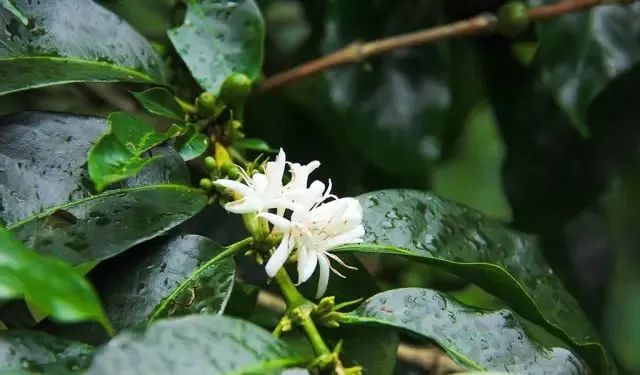
Panama Elida Estate
Panama · Elida Estate
Region: Boquete, Panama
Estate: Elida Estate
Altitude: 1900 meters
Variety: Geisha
Processing Method: Anaerobic fermentation low-temperature slow natural
Recommended Brewing Method: Pour-over
Dripper: Hario V60
Water Temperature: 90-91℃
Grind Size: Medium-fine (BG 5R: China standard 20 mesh passing rate 58% )
Coffee-to-Water Ratio: 1:15
Technique: Pulse pouring. 15 grams of coffee powder, bloom with 30 grams of water for 30 seconds, pour in a small stream in circles to 125 grams as the first pulse, then when the water level is about to expose the coffee bed continue pouring to 226 grams and stop, and when the water level is about to expose the coffee bed again remove the dripper. (Start timing from the beginning of the bloom) Total extraction time is 1' 50 " .
Flavor: A faint fermentation aroma and floral notes on the nose; on the palate, grapefruit, lemon, and guava flavors, with honey sweetness in the mid-palate and a black tea finish.
The above content is compiled by CoffeeHunters, a coffee news website.


