








What makes Yirgacheffe coffee beans taste so floral?
Yirgacheffe coffee beans deliver bright citrus acidity, fresh floral notes, and a tea-like sweetness. Three factors explain the profile: high-altitude growing conditions, naturally mixed native varieties, and traditional coffee processing that keeps the cup clean. Yirgacheffe began as a small town in Sidamo, Ethiopia, and after the 1995 administrative redraw it fell under the Gedeo Zone, yet the name stayed on export labels.
Washed and natural lots differ in clarity and fruit weight, so brewing should follow the bean. For a medium-light roast such as the Gotiti Cooperative, a three-pour hand brew keeps the florals intact, while iced hand brewing preserves the citrus and honey sweetness. Planting coffee trees at these elevations slows cherry ripening, which concentrates sugars and acids in the seed.
Yirgacheffe is a region well known to coffee lovers worldwide, famous for its bright citrus acidity, fresh floral notes, and tea-like sweetness. This article starts with Yirgacheffe's geographical evolution and grading certification, analyzes the three major flavor causes behind its high-altitude cultivation, native mixed varieties, and traditional processing methods, and compares the differences between washed and natural processes. It also explains in detail the brewing parameters of Front Street Coffee's recommended medium-light roast Gotiti Cooperative coffee beans, including the specific steps for three-pour hand brewing and iced hand brewing, helping you recreate a cup of Yirgacheffe full of floral and fruity notes at home.
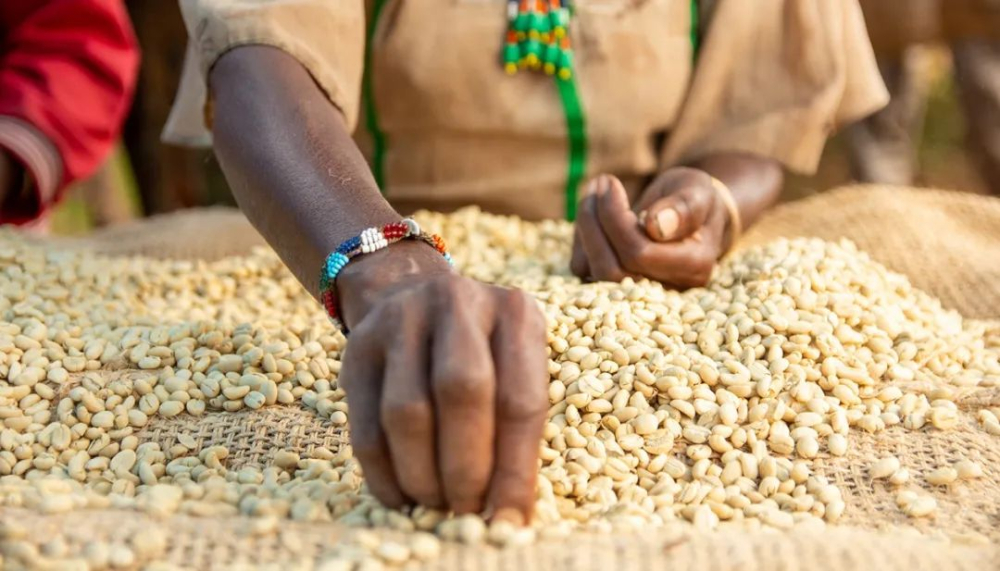
Yirgacheffe was originally just a small town under the Sidamo Province in Ethiopia, but because the coffee produced there had a refreshing taste and bright acidity, it captured the hearts of a large number of coffee lovers, and today it is one of the important regions on the global coffee map.
In the past, the traditional coffee people imagined often had only a heavy, bitter richness, but the arrival of Yirgacheffe gave many people a completely new understanding of coffee flavor. Its bright citrus acidity, elegant floral notes, honey-like sweetness, and the tea-like finish after swallowing made many domestic consumers who grew up steeped in tea culture fall in love at first sip.
Behind the charm of Yirgacheffe coffee beans , Front Street Coffee (FrontStreet Coffee) summarized three major factors: a sufficiently high-altitude growing environment, naturally mixed coffee varieties, and pure and traditional green bean processing methods.
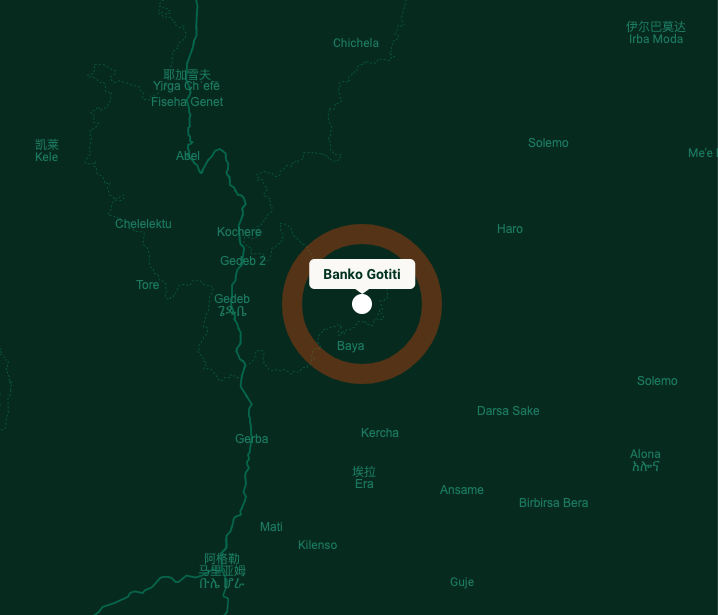
As Front Street said above, Yirgacheffe was originally a small town under Sidamo Province in Ethiopia. When Ethiopia redrew its administrative divisions in 1995, Sidamo no longer existed as an independent administrative region, and Yirgacheffe was accordingly placed under the administration of the Gedeo Zone.
Afterward, coffee traders gradually discovered that the beans produced around Yirgacheffe had very unique white floral aromas and lemon and citrus notes, and were extremely popular in the consumer market. As a result, many people would deliberately single out beans from the Yirgacheffe production area during export in order to obtain a higher selling price.
By 2009, the Ethiopian Commodity Exchange implemented a certification in several specific production areas such as Wenago, Yigacheffe, Kochere, and Gelena~Abaya, dividing them into Yigacheffe A, which has the classic Yirgacheffe flavor, and Yigacheffe B, which does not. In other words, the Yirgacheffe you order in a cafe today may not actually come from the place called Yirgacheffe, yet it still bears the name Yirgacheffe, just as Yonghe soy milk may not necessarily come from Yonghe.
Most of the Yirgacheffe we can drink today refers to a production area or region. Within the Yirgacheffe area, there are a large number of cooperatives that centrally process coffee beans, among which names such as Kochere, Worka, Gotiti, Chelelektu, Misty Valley, and Konga are more prominent and are often mentioned.
When green bean traders buy and sell these beans, they generally use the labeling method of Yirgacheffe plus the cooperative name to indicate which village and which cooperative in Yirgacheffe the beans come from. Most Ethiopian coffee is linked to place names, but not all categories are divided by place name. For example, the Sidamo Huakui 8.0 on Front Street's bean list is a clever name chosen by a domestic green bean trader to highlight its selling point.
Ethiopia is the birthplace of coffee varieties worldwide, so to this day there are still a large number of wild or native coffee varieties in the region that have not yet been discovered and certified. Because the number of varieties is huge and their composition is complex, most local farmers do not distinguish varieties when planting coffee trees, but instead plant and harvest them mixed together, and uniformly call these varieties Heiroom (heirloom).

Because the varieties differ, the size of the coffee fruit also varies. Front Street Coffee (FrontStreet Coffee) observed that coffee beans from the Ethiopian region are often of uneven size, which is normal and also a characteristic of coffee beans from this production area.
In Ethiopia, limited by the regional climate and conditions, people usually use the most traditional processing methods when obtaining coffee beans: washed and natural.
Yirgacheffe's ability to form such a distinct style is due not only to its innate terroir conditions, but also to a large extent to the washed processing technology introduced by the Ethiopian government from Central and South America in 1972. Farms using the washed method must build washing pools and be able to introduce a continuous supply of running water, so production costs are relatively higher. During processing, the fermented beans are placed in the pool and pushed back and forth, using the friction between the beans and the force of the water flow to wash the coffee beans until they are smooth and clean. Every step removes impurities and defective beans, so the quality of the green beans is more uniform, and the final transaction price is also higher than that of coffee processed by the natural drying method.
The processing flow for washed coffee beans is: after the fruit is harvested, first pick out the bad fruit, then remove the peel and pulp, then place them in a clean water pool to ferment and break down the pectin, and afterward rinse with clean water and dry them in the sun. Front Street Coffee (FrontStreet Coffee) found through cupping that coffee beans obtained by the washed processing method have clean and bright acidity and clear flavor, allowing people to clearly perceive the quality level of the coffee beans.
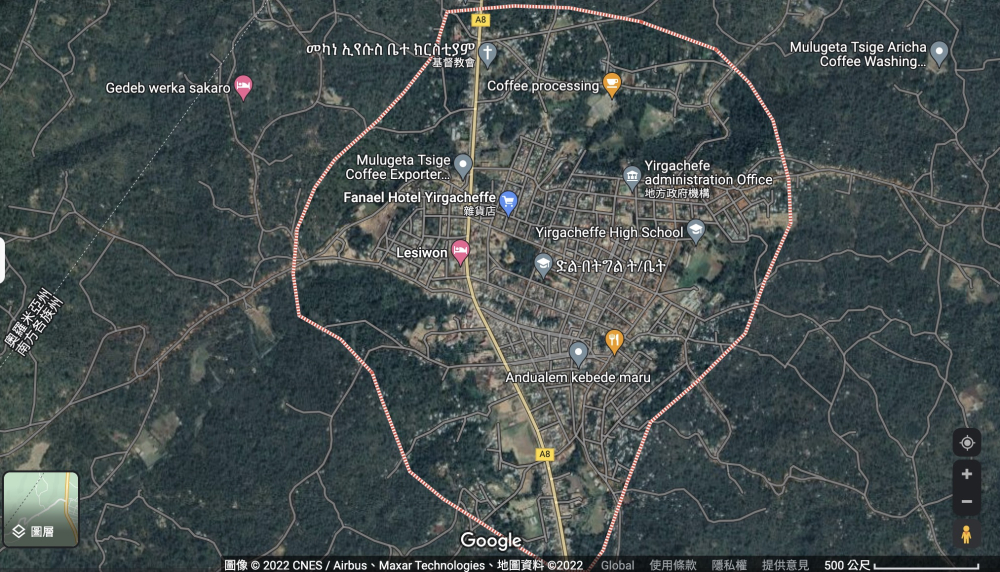
For natural coffee beans , after the coffee fruit is harvested, the bad fruit is first picked out, and then it is directly dried in the sun until the moisture content reaches the appropriate standard before being bagged and packed. After cupping, Front Street Coffee (FrontStreet Coffee) found that coffee beans processed by the natural method have a very full sweet-and-sour sensation and also carry a soft fermented aroma.
The Yirgacheffe area is quite rich in water resources, so most coffee beans from this production area are mainly washed. Among them, the most representative is the "medium-light roast - Yirgacheffe Gotiti Cooperative coffee beans" sold by Front Street Coffee (FrontStreet Coffee).
Front Street Coffee (FrontStreet Coffee) - Yirgacheffe Gotiti Cooperative Coffee Beans Region: Yirgacheffe Gedeo Zone production area Producer: Gotiti Cooperative Altitude: 1900-2300m Variety: local native species (Heirloom) Processing method: washed processing
Because Yirgacheffe coffee beans grow in high-altitude areas, the beans are relatively hard, and a medium-light roast will not cause too much change to the structure of the coffee beans themselves. Therefore, for high-altitude floral and fruity beans like Yirgacheffe, Front Street uses a water temperature of 90-91°C and a grind size like fine granulated sugar (80% passing rate on the Chinese No. 20 standard sieve).
Three-pour extraction: for the first pour, use 30g of water to bloom for 30 seconds; for the second pour, add 95g of hot water; when the coffee bed drops halfway, begin pouring the third pour of 100g, until all the coffee has finished dripping. Note to start pouring from the center point, maintain a small stream and gentle force in circles throughout, and avoid uneven extraction.
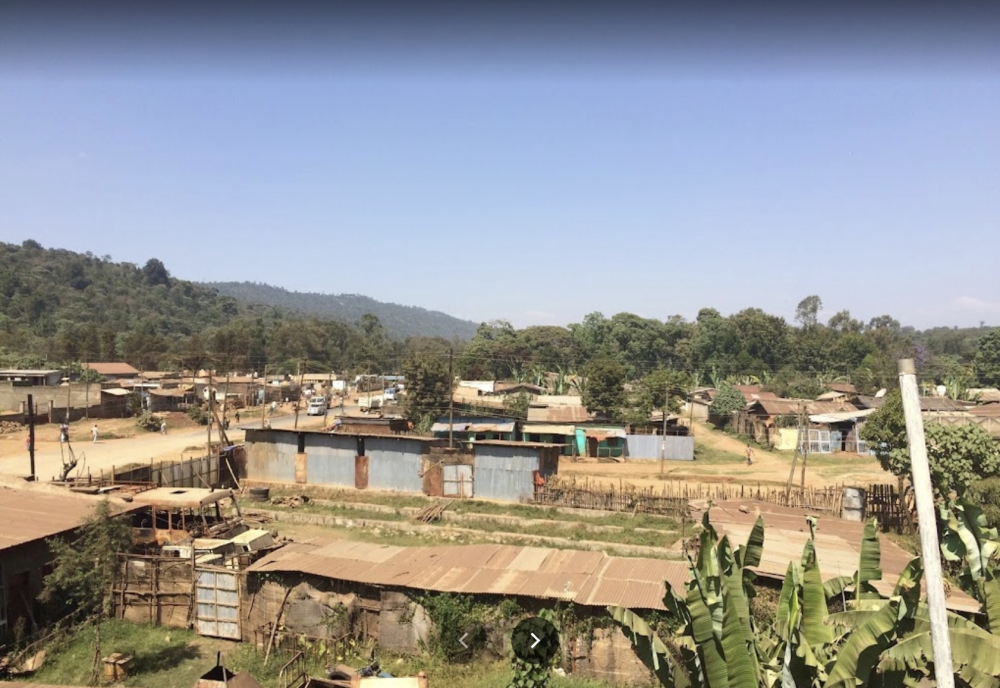
Flavor performance of Gotiti hand-brewed coffee: after grinding, it has elegant jasmine and citrus-like acidity. After extraction, the first sip reveals a clear bright lemon acidity, with prominent sugarcane sweetness; as the temperature drops, it presents a green tea-like mouthfeel and a long finish.
Sharing the parameters for iced hand-brewed coffee
Regarding what parameters to use for iced hand brewing, Front Street once mentioned a formula in an article: iced hand brew = coffee grounds (fine grind) + 10 times hot water + 5 times ice cubes . Here, by combining medium-light roasted coffee beans of the fruity-acid type with a water temperature of 91-93°C, small-stream circular pouring, and a three-pour technique, and letting the extraction time fall between 1 minute 50 seconds and 2 minutes, you can easily brew a pot of iced coffee with excellent flavor.
The juicy sensation that appears in coffee is usually the rich fruity aroma smelled combined with the sweet-and-sour juiciness felt in the mouth while drinking, reminding people of the experience of eating a certain fruit. When applied to today's iced hand brew theme, it means obtaining both the acidic aromatic substances in the front section and pursuing the sweetness in the middle and back sections, so as to satisfy a sweet-and-sour juicy mouthfeel. This requirement cannot be met by the agitation of the water flow alone, so Front Street also added one action: stirring.
Coffee beans: Ethiopia · washed Gotiti Cooperative
Dose: 15 grams
Coffee-to-water ratio: 1:11 (160 grams hot water)
Ice: 75 grams
Grind size: EK43s setting 9.5 (about 22 clicks on C40)
Dripper: Hario V60
Three pours: 30 grams, 90 grams (+ stirring), 45 grams
Before pouring, still place the ice cubes in the server first, then add all the coffee grounds. The first bloom remains unchanged: keep a small stream and pour 30 grams in circles from the center outward.
After 30 seconds, begin pouring 90 grams of hot water in circles with a larger stream while raising the water level. When the timer scale shows 120 grams, stop pouring, use a small spoon to draw 5 circles along the dripper wall in one direction, then wait for the coffee liquid to slowly flow down.
When the water in the dripper is about to run out, use the small-stream small-circle pouring method from the first pour to finish the remaining 45 grams of hot water, until all the coffee liquid has dripped through. Then you can remove the dripper and end extraction; the time will roughly fall within the range of 1 minute 55 seconds to 2 minutes 5 seconds.
The washed Gotiti brewed this way first delivers a mouth-watering sweet-and-sour sensation like yellow peach, sweet orange, and pomelo on the first sip, with an overall tendency toward yellow stone fruit notes. Because of the added stirring action, in addition to rich fruit acidity, the coffee also carries a clear, moist sweetness, and under the cooling effect of the ice cubes, it is like drinking a cup of floral and fruity tea, very pleasant.
The above content is compiled by CoffeeHunters, a coffee news website.


