







For more specialty coffee knowledge, please follow: Front Street Coffee (Frontsteet Coffee)
Most people's impression of espresso is that it is bitter and astringent. If this happens, it is likely that there was a problem in the production process. At this point, some people will ask Front Street Coffee, isn't making espresso a very simple thing? As long as you have hands, anyone can do it, right? Well, it's undeniable, yes. But it is not possible to casually produce a satisfying cup of espresso; there is a lot of knowledge behind it. Next, Front Street Coffee will talk to you about what kind of knowledge is involved in extracting a shot of espresso.
The First Generation of Espresso Machines
Thanks to the wave of innovation from the European Industrial Revolution, the first generation of machine-made espresso was born around 1901. The original concept of the espresso machine was to prepare coffee quickly.
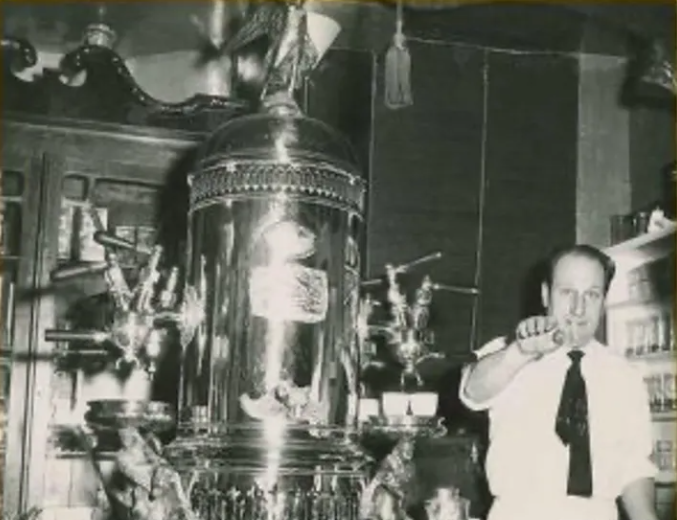
Milanese inventor Luigi Bezzara registered a patent for a machine with multiple independent brewing heads, onto which portafilters filled with coffee grounds could be attached. This was the first time coffee was quickly made for customers by machine. This patent was bought in 1905 by Desidero Pavoni, who invested in producing the first commercial espresso machine: the Ideale.
According to Front Street Coffee's review of the materials, the parameters of the first commercial espresso machine were very different from those we use today. The brewing head of the first commercial espresso machine had a temperature as high as 140°C, a pressure of 7.5 bar, and an extraction time of about 45 seconds.

Here, Front Street would like to explain to everyone the working principle of a modern espresso machine. It uses 92°C hot water and 9 bar of high pressure to rush through coffee ground very finely to extract coffee. The beautiful layer of crema on top of freshly extracted espresso is produced by the pressure of 9 bar, while the pressure of the world's first commercial espresso machine was only 7.5 bar, which means that the espresso of that time was close to modern drip coffee in strength and taste.
With the emergence and spread of new machines, the word "espresso" was included in Italian dictionaries around 1920. The dictionary definition was "coffee made by forcing water through a pressurized machine or filter, now very common."
Modern Espresso Machines
In the 1930s and 1940s, coffee consumption in Italy declined, but technical improvements to espresso machines continued. In 1947, the appearance of the manual pressure espresso machine allowed more oils and colloidal substances from the coffee grounds to be extracted, and from then on, crema became the soul of espresso. In 1961, the Faema E61 espresso machine was released. The Faema E61 was the world's first semi-automatic machine and is also the father of modern espresso.
After discussing its history, next I will tell everyone how Front Street makes a shot of espresso, using Front Street Classic Espresso Blend for extraction. This is a recipe composed of three origins: Brazil, Indonesia, and Vietnam. It uses a dark roast, which can maximize the rich aroma of the coffee and also allow everyone to easily extract rich and dense crema. Whether making an Americano diluted with water or a latte paired with milk, it is very suitable.
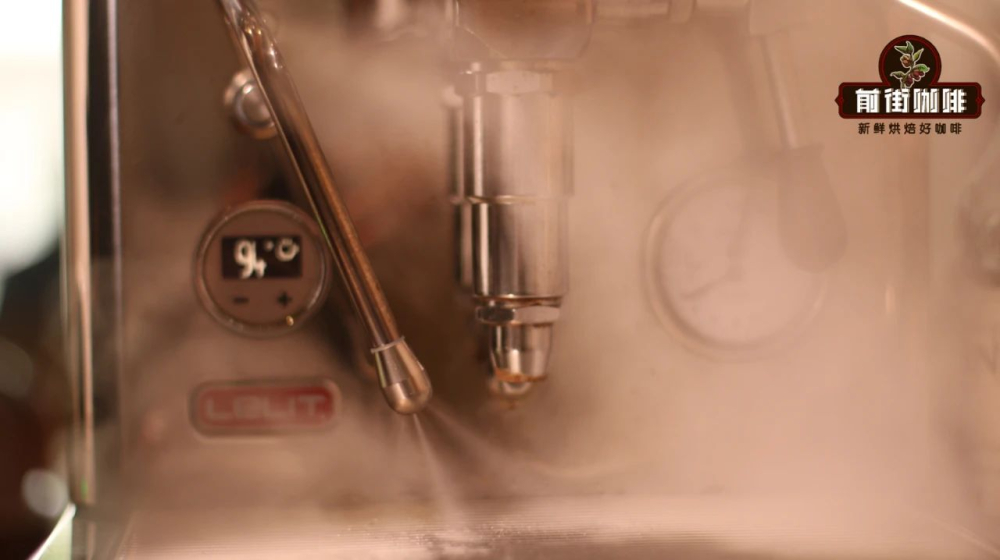
Front Street uses a Lelite V3 espresso machine:
Temperature: 90.5~96°C
Time: 25~33 seconds
Coffee-to-water ratio: 1:1.7~1:2
Dose: 20g
Espresso yield: 20ml (single) 40ml (double)

Step one, turn on the grinder and let the grounds fall into the portafilter basket. Determine the dose according to the capacity of the basket. For example, if Front Street chooses to fill 20 grams of coffee grounds as the standard, then each extraction should maintain 20 grams of coffee grounds (accurate to 0.1 grams).
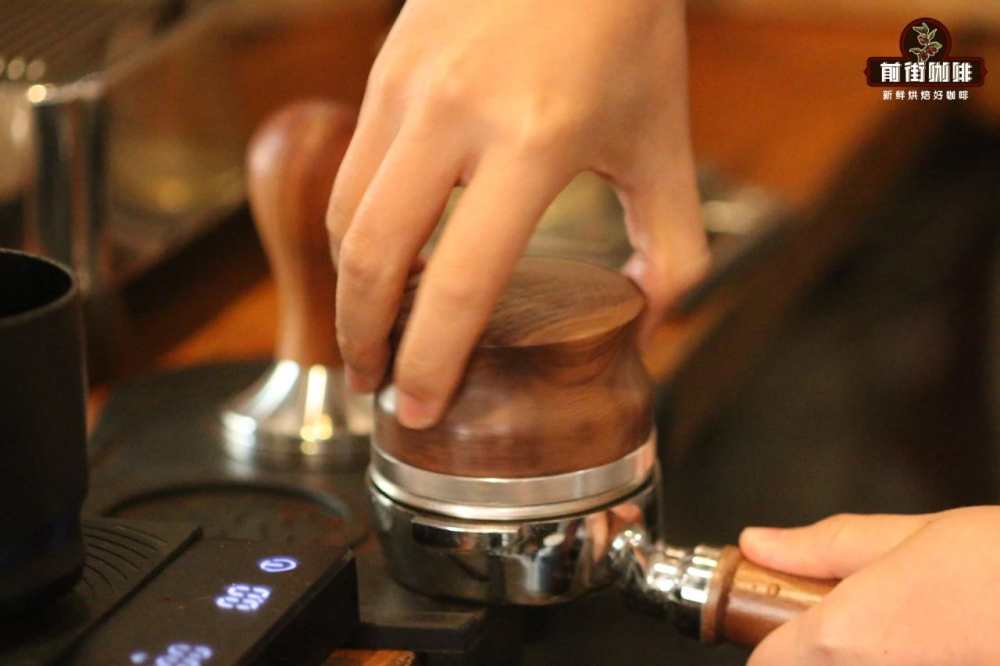
Step two, distribute the grounds. After the coffee grounds are ground, manually transfer the coffee grounds into the portafilter basket and distribute them evenly.
The ultimate goal of distribution is to spread the coffee evenly throughout the entire basket before tamping, not only making the surface level, but also ensuring the inside and edges of the basket are even with no gaps.
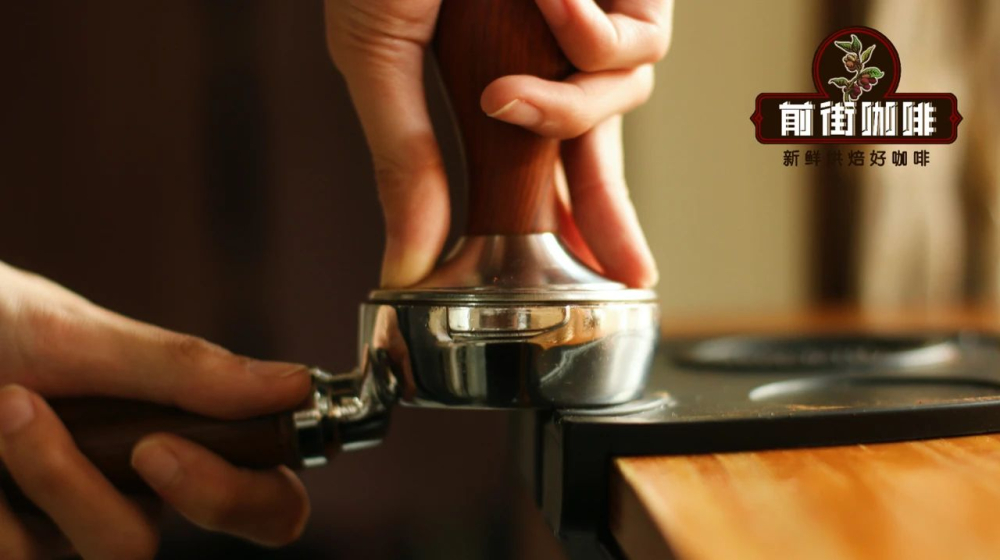
Step three, lock the portafilter basket in place, and then begin extraction.
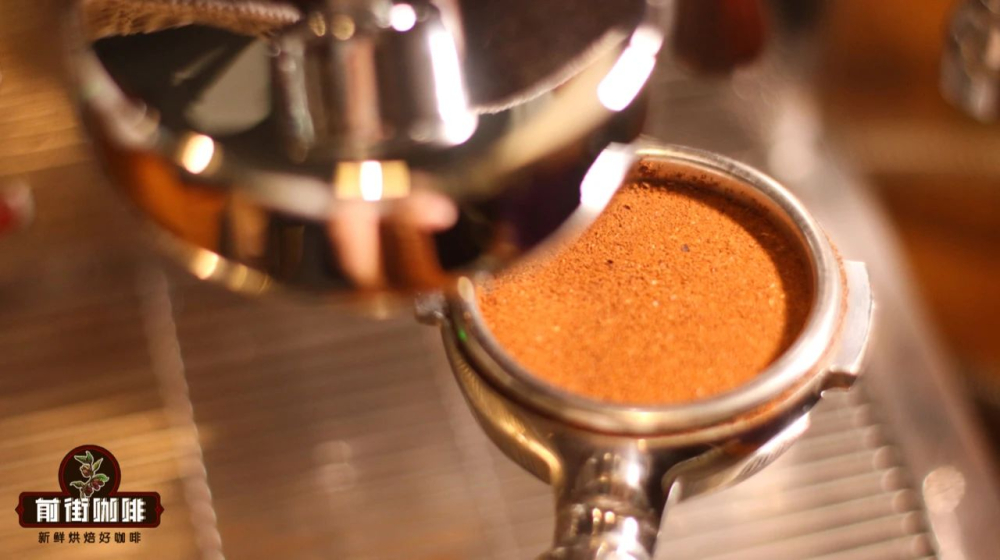
Doesn't it look simple? Don't rush. There is a lot of knowledge behind it. There are nine factors that can affect the taste of a cup of espresso.
[Water Pressure]

Front Street Coffee has always talked about the principle of extracting a cup of espresso. The ideal water pressure for espresso is generally around 9 BAR, and this is also the most ideal pressure universally recognized.
[Boiler Pressure]
Boiler pressure is related to the water temperature for making coffee and the force of the steam. The higher the boiler pressure, the higher the water temperature, and the greater the force of the steam; conversely, the lower the water temperature, and the weaker the steam. Boiler pressure is generally around 1 BAR. Of course, this value is still highly debated, and every barista understands it differently.
[Water Temperature]
Water temperature needs to be determined according to the requirements of different coffee bean varieties. Some are constrained by boiler pressure, while others can be set more flexibly and precisely. According to the experience of most baristas, the water temperature is between 90 and 92°C. Every barista can make flexible adjustments according to their own understanding and needs, and can use their own hands to make an Espresso in their own style.
[Tamping Force]
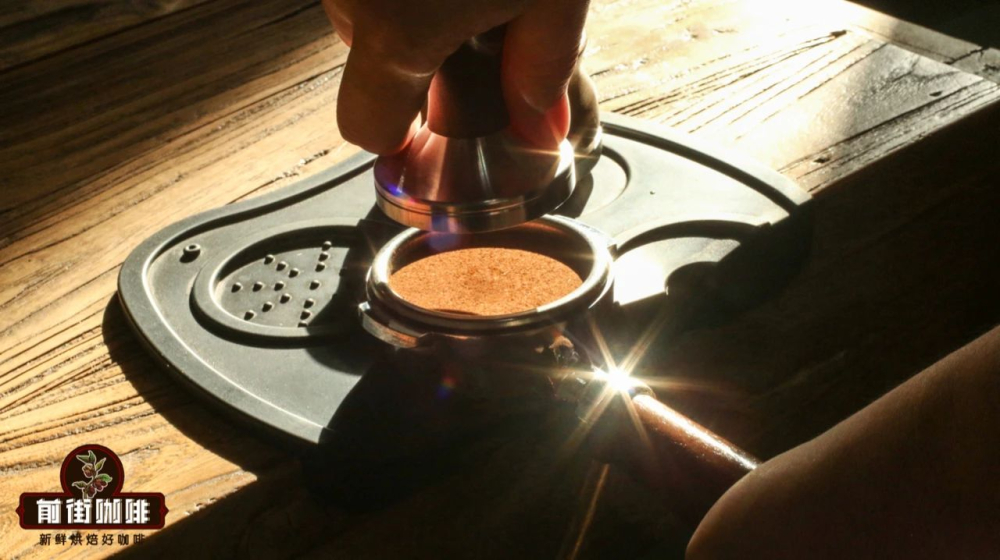
There are various styles of tamping. In this world, almost no two people's tamping will be exactly the same. Generally speaking, if it is a heavy tamp, the required pressure would be something like 25kg/m2, but tamping is indeed the most free parameter among the golden rules. Because we use a calibrated tamper, the tamping force is basically consistent.
[Coffee Bean Grind Size]
Grind size is related to many factors such as climate, coffee bean roast level, freshness, humidity, and the age of the grinder. There has always been a saying in the industry: "The correct thing is that the grind size is always changing; the wrong thing is keeping the grind unchanged."

[Dose]

The reasonable capacity of Front Street Coffee's portafilter basket size is 20 grams. If the dose is too small, the extraction time is too short, which easily causes under-extraction; if the dose is too large, besides not fitting, even if it fits, the basket volume is only so large. After the grounds are tamped, the gaps between particles decrease, the flow rate of water slows down, and the extraction time becomes too long, leading to over-extraction.
[Extraction Time]
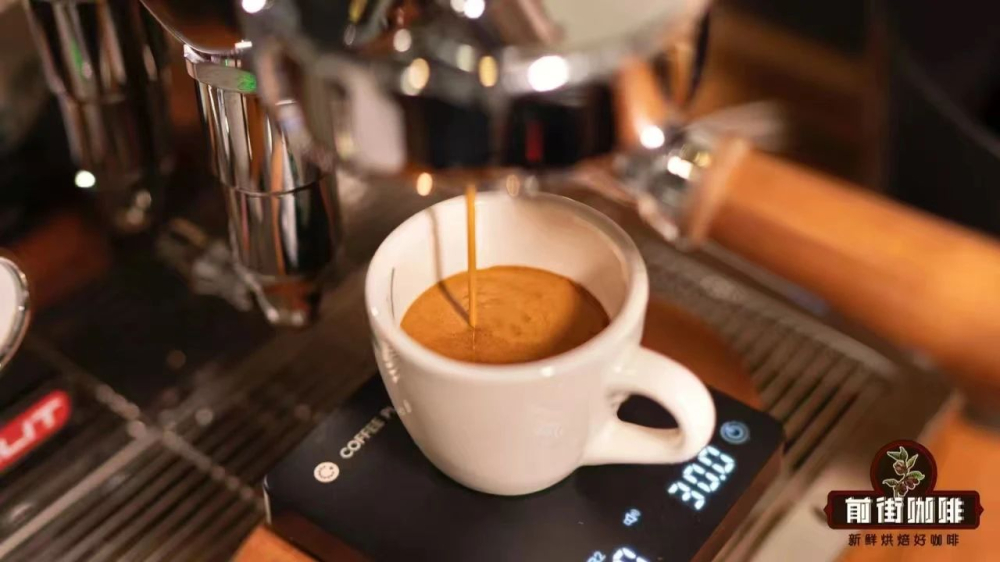
The golden rule for extraction time is set at 25~28 seconds, but extraction time is actually a comprehensive manifestation of tamping, dose, and grind size, and needs to be adjusted by the barista's understanding.
[Extraction Yield]
Taking Front Street Coffee's espresso extraction as an example, 20 grams of coffee grounds extract 40 grams of espresso liquid, for a coffee-to-liquid ratio of 1:2. The ratio is not absolute, and specifically depends on the flavor determined at the time. If more coffee liquid is extracted, then the coffee will appear thinner and the bitterness will be more obvious. If less coffee liquid is extracted, then the coffee will appear viscous, rich, with a more concentrated but incomplete taste.
[Crema]

The complexity of coffee crema cannot be explained clearly in just a few words, but simply put, it needs a thick, golden-brown crema to be a good Espresso. And Front Street thinks that Crema has an irreplaceable position for a cup of espresso. As a symbol, it marks the characteristics of a cup of espresso. For a delicious cup of espresso, the appearance of its Crema also occupies a judging factor. The state of the crema also tells the barista how the extraction of this cup of coffee turned out. For example, beans, freshness, roast level, and grind size will all produce crema in different states.
The above content is compiled by CoffeeHunters, a coffee news website.


