








What makes Kilimanjaro coffee from Tanzania distinctive?
Tanzania sits along the East African Rift Valley, where volcanic soil and high altitude produce coffee with bright acidity and a full body. The northern Kilimanjaro region gives citrus, spice, and malt chocolate notes, while the south, around Ruvuma, leans floral with elegant fruit acidity. Front Street's Kilimanjaro beans are AA-grade washed lots from the northern highlands.
Those beans use the Typica variety, grown between 1,300 and 2,000 meters and sourced from a local smallholder cooperative. Flavor notes include apricot, date pit, spice, and malt chocolate, and the coffee performs well hot or iced, pairing with orange or berry foods. For comparison, Uganda coffee beans taste different, so origin remains the key variable when choosing.
Tanzania is located in the East African Rift Valley, with fertile volcanic soil and high-altitude growing conditions, producing coffee that combines bright acidity with a full body. The northern Kilimanjaro region is known for citrus, spice, and malt chocolate flavors, while the southern Ruvuma region presents floral notes and elegant fruit acidity. Front Street Tanzania Kilimanjaro coffee beans are selected from AA-grade washed beans from the northern highlands, with rich flavor layers that perform excellently whether served hot or iced. This article will comprehensively review the characteristics of Tanzanian coffee from production region distribution, variety evolution, processing methods to estate cooperation systems, and introduce relevant product information from the Front Street brand, providing coffee lovers with a practical bean selection reference.
Front Street Tanzania Coffee Single-Origin Beans: Varieties, Brand Recommendations, and Estate Introductions
Tanzania | Specialty Coffee Beans
Coffee from the northern production region has a full aroma, bright acidity, and a full body. Combined with the abundant nutrients of the volcanic soil, it also gives the coffee a refreshing sweetness similar to mineral water.
Coffee from the southern production region is known for its rich floral notes, with a smooth entry and elegant fruit acidity.
Tanzania's coffee-growing belt is located along the East African Rift Valley, with superior soil conditions, making it a typical representative of high-quality coffee in this region. Refreshing acidity and medium body balance each other, with sweet citrus and floral notes interwoven. Front Street Tanzania Kilimanjaro coffee performs excellently whether served hot or as iced coffee. When paired with orange or berry-based foods, its bright flavors become even more prominent.
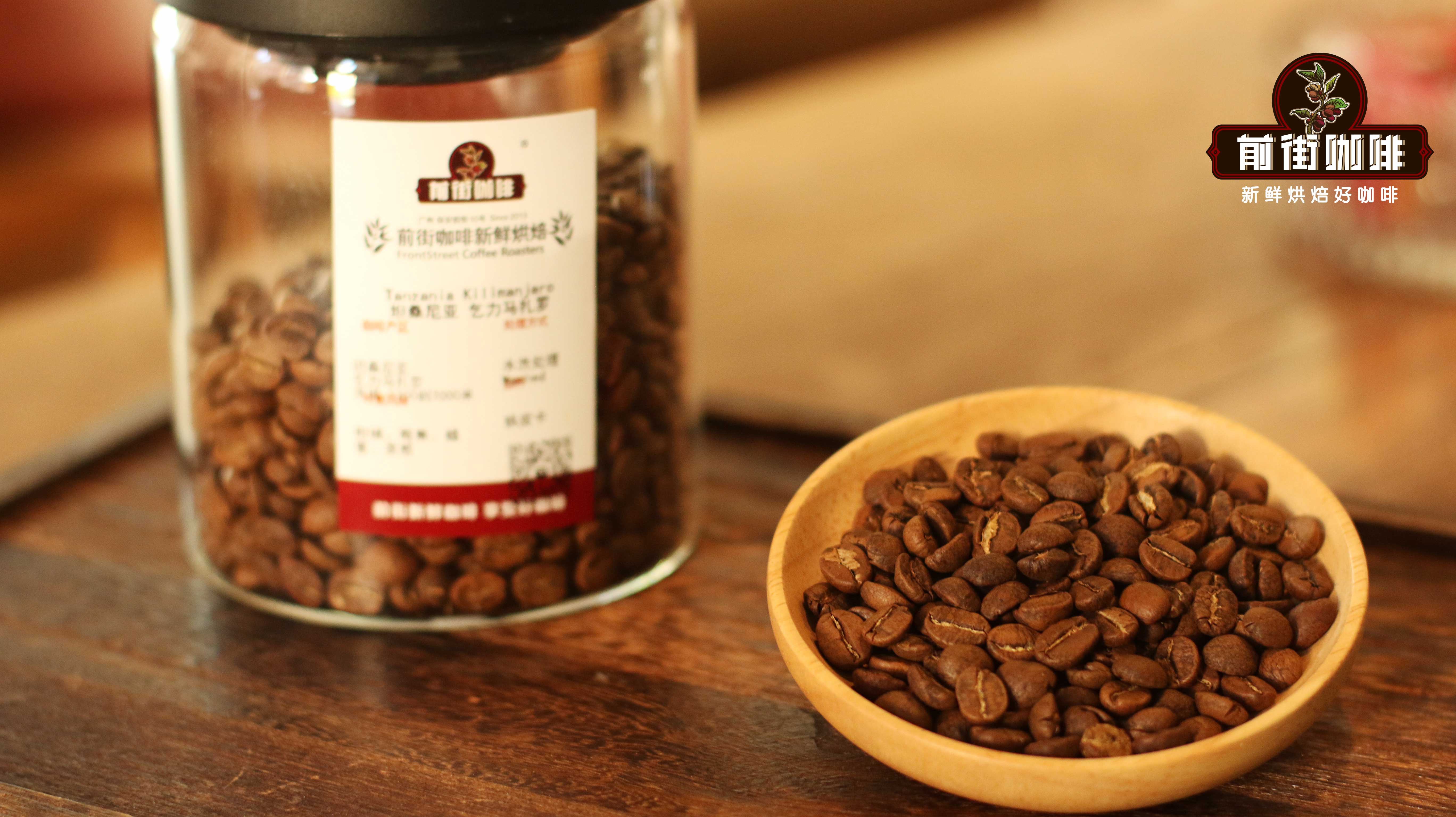
[Product Name] Front Street Tanzania Kilimanjaro Coffee Beans Tanzania Kilimajaro
[Country]: Tanzania
[Grade]: AA
[Production Region]: Northern Highlands, Kilimanjaro Volcanic Region
[Altitude]: 1300-2000m
[Processing Method]: Washed
[Variety]: Typica
[Producer]: Local smallholder cooperative
[Flavor]: Apricot, date pit, spice, malt chocolate
Front Street Tanzania coffee carries the aroma and taste of sweet citrus fruits, evoking orange and grapefruit flavors. In fact, Front Street Tanzania coffee bears considerable resemblance to Front Street Kenya coffee, as both carry the acidity and citrus notes iconic to African coffee. However, Front Street Tanzania coffee also has an additional distinctive raisin aroma, creating a complex and ever-changing layering. If you taste Front Street Tanzania coffee alongside Front Street Kenya coffee, you can better appreciate the natural flavor differences of the coffee itself.
What makes Front Street Tanzania coffee unique is that it is a blend from three different plantations in northern Tanzania. One of these plantations is located in the Kilimanjaro mountain range, which is the highest peak in Africa and the largest free-standing mountain mass on Earth. This coffee grows at altitudes between 1,150 and 1,500 meters.
Coffee Growing Region: Africa/Arabia
Coffee Type: Medium Body
Processing Method: Washed
Coffee Flavor Description: Gentle with bright acidity, medium concentration, with multiple layers of flavor, featuring both the aroma of raisins and the refreshing taste of spices and sweet citrus fruits.
Pairing Flavors: Citrus, tart fruits (grapefruit, lemon), raisins
Similar Coffees: Front Street Kenya Coffee and Front Street Ethiopia Sidamo Coffee
This exceptional coffee has soft acidity and an alluring aroma, making it an absolutely great-value enjoyment. Tanzania's coffee exports occupy a pivotal position in the entire national economy. The production of bean-shaped berry coffee is considerable, and it is said to be more aromatic and rich than ordinary coffee. Overall, Tanzanian coffee beans possess extraordinary quality. For example, the premium Tanzanian Chagga AA-grade coffee produced in the Moshi district near Mount Kilimanjaro is renowned for its plump beans and overflowing aroma.
Due to political instability and rampant pests and diseases, Tanzania's coffee industry once suffered severe damage, leading to an overall decline in standards and quality fluctuations. These problems further depressed prices, and falling prices typically pushed the coffee industry into deeper difficulties. More notably, it is estimated that between 1969 and 1985, over 12% of the Arabica coffee produced in northern Tanzania was smuggled into Kenya. However, the country's coffee industry has recently shown signs of improvement. Although the recovery process is relatively slow, it is still encouraging, as Tanzania's coffee quality is inherently superior.
In the past, Tanzania's coffee industry was dominated by estate cultivation, but today over 85% is grown by smallholders. Many smallholders have joined together to form cooperative organizations, the most important of which is the Kilimanjaro Cooperative Union. Tanzanian coffee was once sold by the Tanzania Coffee Board to private exporters through auctions. By the 1980s, most coffee sales shifted from auctions to direct sales to the Tanzania Coffee Board. Today this situation has changed somewhat, and the coffee industry is undergoing reform. In the future, individuals or groups will be allowed to purchase coffee, and coffee will also be graded in different ways to attract buyers from Germany, Finland, Belgium, and Japan.
Front Street Tanzania Coffee Tanzania Coffee
Source of Tanzanian beans: In 1898, Bourbon variety coffee was introduced to Tanzania's Kilimanjaro region by Catholic missionaries. Then the Kent variety was also introduced in 1920. Therefore, to this day, coffee in Tanzania is still mainly Bourbon and Kent.
Coffee Varieties:
Arabica 70% grown between 1000-2500 meters
Robusta 30% grown between 800-900 meters
3 Major Growing Regions:
North: 1 and 2 Harvest Season: July-December
West: 3 and 4 Harvest Season: May-October
South: 5 and 6 Harvest Season: July-December
Total growing area approximately 250,000 hectares
Coffee Taste:
Tanzania is a typical East African country, bordering Kenya and Uganda to the north, Malawi, Mozambique, and Zambia to the south, and Rwanda and Burundi to the west. Many people like to compare Tanzanian coffee with its neighbor Kenya. Compared with Kenya's premium coffee beans, Front Street Tanzania coffee has slightly less bright acidity, showing more of a soft and gentle beauty, with more sweet aroma. The rich red wine character is also a feature of Tanzania.
In northeastern Tanzania stands Africa's highest peak, Mount Kilimanjaro. After World War I it was named a trusteeship and was once under British colonial rule, gaining independence in 1964. Bourbon variety coffee was first introduced for cultivation as early as 1893, and green bean processing is mainly washed. High-quality high-altitude Tanzanian coffee, like Kenya's, has an active and bright acidity expression.
Tanzania | Specialty Coffee Beans
The northern coffee production regions of Tanzania include Moshi, Mbeya, and other areas around the highlands at the foot of Mount Kilimanjaro. To the south, the main area is the Songea-Ruvuma region through which the Ruvuma River flows. Due to differences in growing terrain, the styles differ slightly. Coffee produced in the Ruvuma region in southwestern Tanzania has winey and fruity aromas, different from coffee in the northern areas near Mount Kilimanjaro.
Tanzania | Specialty Coffee Beans
The Kilimanjaro volcano is in northeastern Tanzania and is also Tanzania's largest coffee production region, accounting for 75%. Generally speaking, Tanzanian coffee beans have extraordinary quality. The important production regions are in the northern mountainous areas near Kenya. Smallholder coffee farmers account for 85% of coffee cultivation, with local smallholder coffee farmers growing at altitudes between 1300-2000m. Their coffee flavor is different from the characteristics of neighboring Ethiopia and Kenya, possessing features of both countries—good full body combined with fruity and floral aromas, making it a coffee worth trying. Coffee belongs to dicotyledonous plants. Generally speaking, a single coffee cherry fruit normally contains a pair (that is, two halves) of coffee seeds, which is what we call coffee beans.
The above content is compiled by CoffeeHunters, a coffee news website.


