








Panama Geisha occupies an irreplaceable position in the global specialty coffee landscape, thanks to its clean, translucent cup and layered fruity aftertaste. When selecting Panamanian coffee, Front Street Coffee conducts a comprehensive assessment across multiple dimensions including terrain, altitude, and processing method, and considers the beans from this region to offer exceptional value for money—which is why it has progressively added a range of Panamanian coffees to its lineup. This article will explore the varietal origins of Geisha, the Hacienda La Esmeralda grading system (Red Label, Green Label, Blue Label), and the flavor characteristics of the two core producing regions, Boquete and Volcán. It will also introduce representative beans currently offered by Front Street Coffee, such as Butterfly, Elida, Hartmann, and Janson, helping enthusiasts build a systematic understanding of Panamanian coffee.
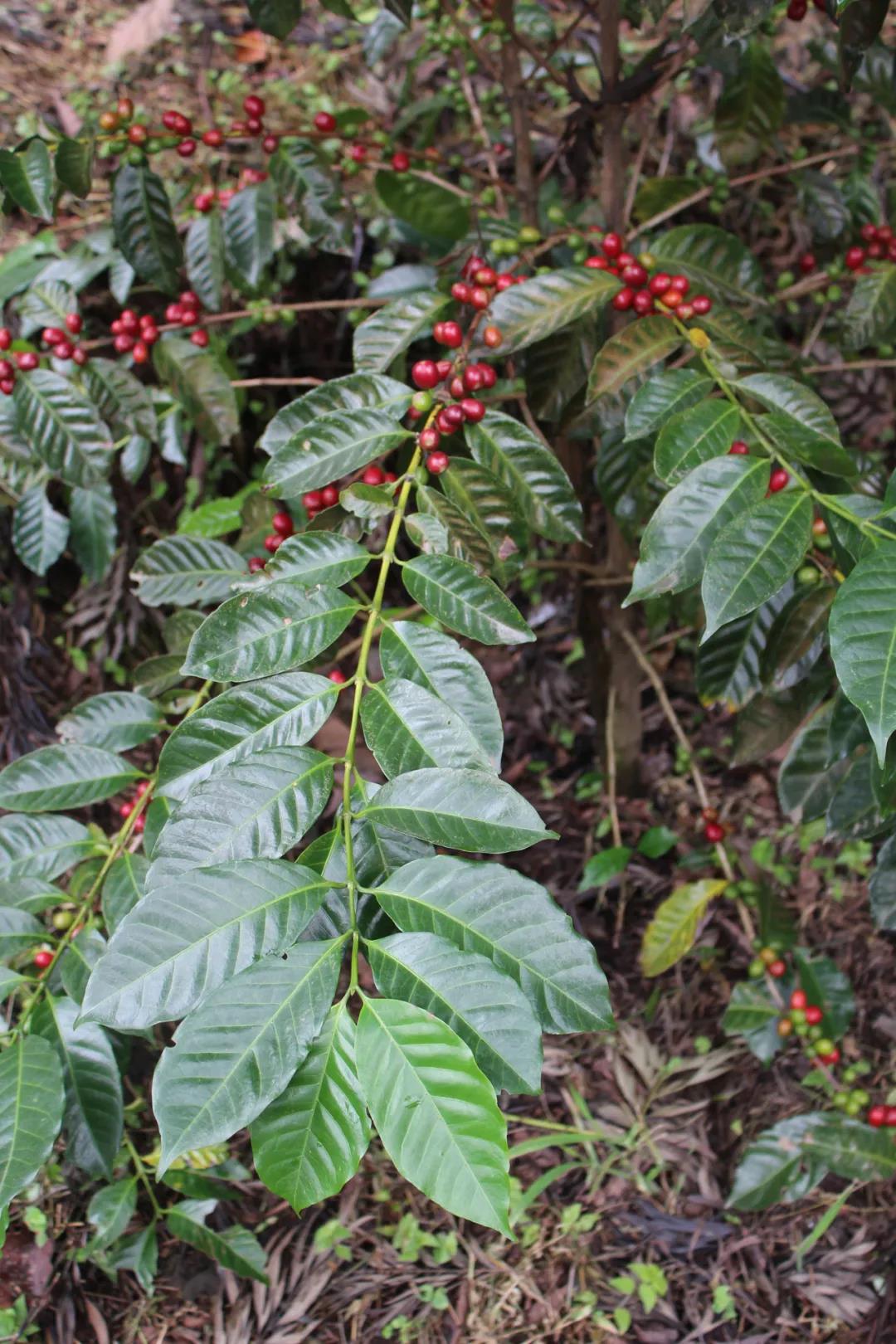
When it comes to Panamanian coffee, Geisha is undoubtedly the name that cannot be avoided. This variety is renowned for its clean cup performance and the dancing fruit aromas in its aftertaste. In the process of selecting premium Panamanian coffee beans, Front Street Coffee takes factors such as terrain, altitude, and processing method into comprehensive consideration. Front Street also finds Panamanian beans to be remarkably good value, and has therefore brought in quite a few Panamanian coffees to its shelves—let us walk through them one by one below.
The history of coffee cultivation in Panama dates back to 1780, when European settlers brought the first Typica coffee trees. Panama is located on the Central American isthmus and enjoys natural advantages such as sunlight, soil, and high-altitude mountainous terrain, along with an abundant labor force. Front Street Coffee believes there are well-founded reasons why this land could become a benchmark producing region for specialty coffee.
According to Front Street's research, Panamanian specialty coffee is mainly concentrated in two producing regions—Boquete and Volcán. Coffee from these two areas carries an elegantly pleasant floral fragrance, akin to the scent of perfume, easily evoking the sweet aroma of fruit, and a lingering aftertaste is also a notable hallmark. Front Street Coffee offers several beans from the Boquete region, such as Butterfly coffee beans and Elida Typica. Boquete sits at the border between Panama and Costa Rica, adjacent to the famous Barú Volcano, with fertile, nutrient-rich soil and climatic and soil conditions highly favorable for producing high-quality coffee.
In addition, the Boquete region is home to many well-known estates, such as Hacienda La Esmeralda, Elida Estate, and Kotowa Duncan. Among these, Hacienda La Esmeralda commands the highest attention, and Front Street also gives high recognition to the coffee beans produced by Hacienda La Esmeralda.
Hacienda La Esmeralda primarily cultivates the Geisha variety. Geisha was initially overlooked at Hacienda Jaramillo, where it was merely used as a windbreak, and its yield was therefore extremely limited. Later, Hacienda Jaramillo was brought under the ownership of Hacienda La Esmeralda. Front Street speculates that this may be connected to the relatively excellent flavor performance of coffee produced on the Hacienda Jaramillo plots. Hacienda La Esmeralda's strategic decision to continue acquiring other estates was quite far-sighted, and Front Street believes this is also one of the important chips that has allowed Hacienda La Esmeralda to hold a firm place in the coffee industry.
It was not until after Hacienda La Esmeralda completed its acquisitions that the distinctive flavors of the Geisha variety were truly discovered. Front Street conjectures that perhaps because Geisha grew in a relatively harsh environment, by a twist of fate, this instead brought about its outstanding flavor performance.
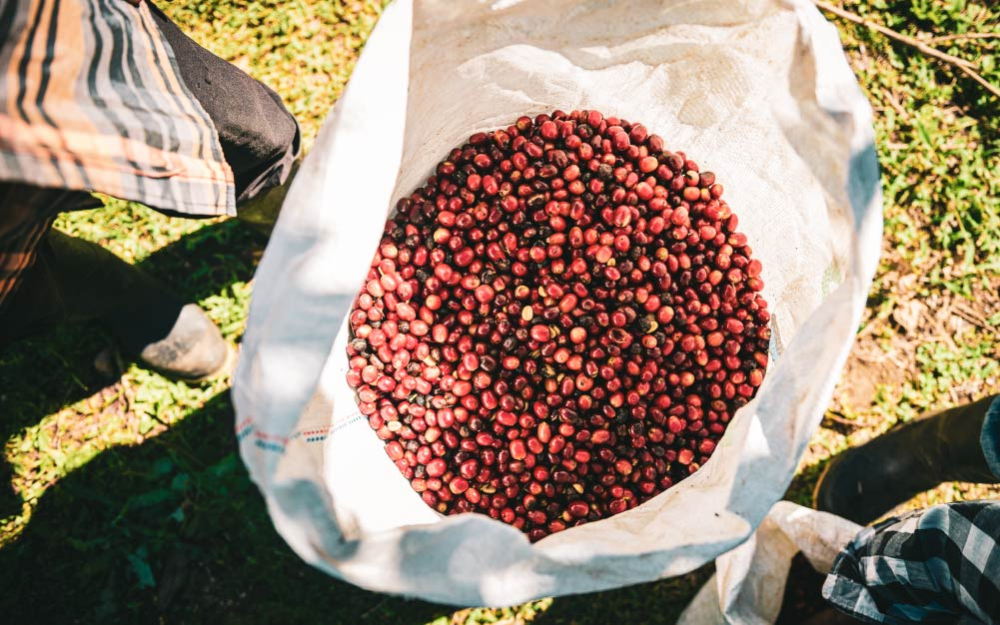
Front Street feels that obtaining high-quality coffee beans is by no means an easy task—it requires tremendous effort behind the scenes. Take Hacienda La Esmeralda as an example: they invested considerable effort in researching the grading of Geisha. The estate delineates planting plots according to altitude and, on this basis, classifies several Geisha grades such as Red Label, Green Label, and Blue Label.
The concepts of Red Label, Green Label, and Blue Label may still be unclear to many, so Front Street will explain them here. High-quality Geisha comes from three estates: Jaramillo, Cañas Verdes, and El Velo. Hacienda La Esmeralda divides its offerings into five brands based on cupping performance, cultivated variety, and planting plot, of which the Geisha variety corresponds to three brands: Esmeralda Special, Private Collection, and Geisha 1500.
Red Label: This is the Geisha specially selected by Hacienda La Esmeralda. The altitude range is between 1,600 and 1,800 meters, and the cupping score must reach 90 points or above. It comes from Jaramillo and Cañas Verdes. The Red Label sent to auctions is called Auction Red Label, while the one not sent to auction is simply called Red Label. In fact, non-auction Red Label and Auction Red Label come from the same plot, so Front Street believes both Geishas are worth trying; if you just want a preliminary experience of Geisha, starting with Red Label is a good choice. This grade of Geisha includes both natural and washed processing, with very distinctive flavors, high brightness, and floral and citrus aromas.
Green Label: This is Private Collection, commonly known as Green Label. It cultivates Geisha varieties that do not participate in auctions but are of excellent quality, belonging to micro-lot blends from different plots.
Front Street's customers often ask what exactly the difference is between Red Label and Green Label. Front Street's understanding is this: Red Label can be traced to a specific plot, while Green Label cannot indicate a specific source plot. However, this does not hinder Green Label's flavor performance. Front Street actually finds this a bit like opening a blind box—you buy Green Label, but the batch you drink may be of Red Label caliber. This is quite an interesting phenomenon. Although Green Label is not as high a grade as Red Label, it still retains the classic flavors of Geisha: floral, fruity, and citrus-like acidity.
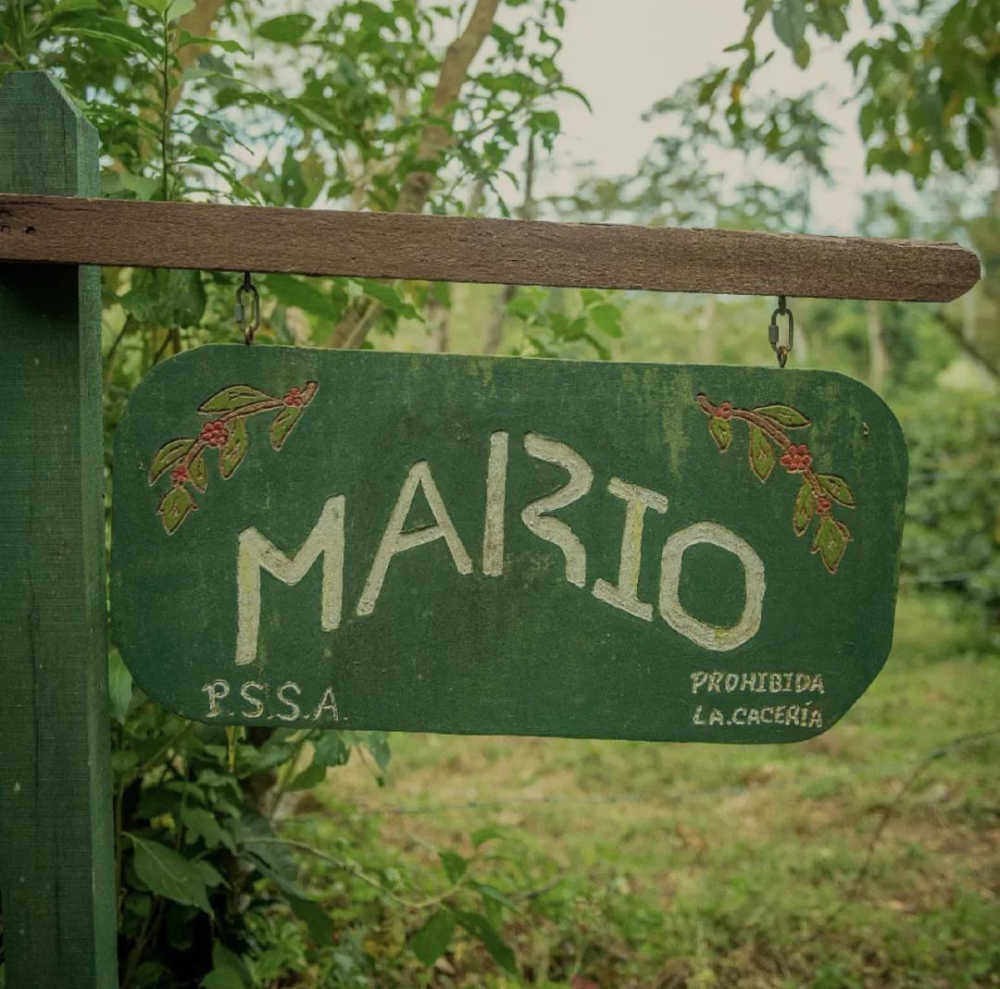
Blue Label: The Geisha 1500 brand is what everyone commonly calls Blue Label Geisha. It is a blend of beans from three different plots, selected at altitudes between 1,400 and 1,500 meters. What sets Blue Label apart from the other two grades is that Blue Label Geisha is usually only washed processed, with flavors featuring faint floral notes and fruity acidity. Front Street Coffee's stores carry not only washed Blue Label Geisha but also naturally processed Blue Label Geisha coffee beans.
This batch of washed Red Label Geisha purchased by Front Street comes from Hacienda La Esmeralda's Jaramillo plot. Hacienda La Esmeralda pours the harvested coffee cherries into a fermentation tank, first skimming off impurities floating on the water surface, then draining the water, and pushing the sorted coffee cherries down the funnel into the next stage of processing.
Washed Green Label Geisha beans are on the harder side. Because the water activity of new-crop beans is relatively good, Front Street adopts a strategy of high temperature and rapid dehydration during roasting, using a faster roasting rhythm to bring out Green Label Geisha's multi-layered fruit flavors and rich floral aromas.
In the past, Blue Label Geisha was only washed processed, but this year a natural processed version has been added, and Front Street has simultaneously launched a natural Blue Label Geisha. Below, Front Street will briefly introduce the natural Blue Label Geisha.
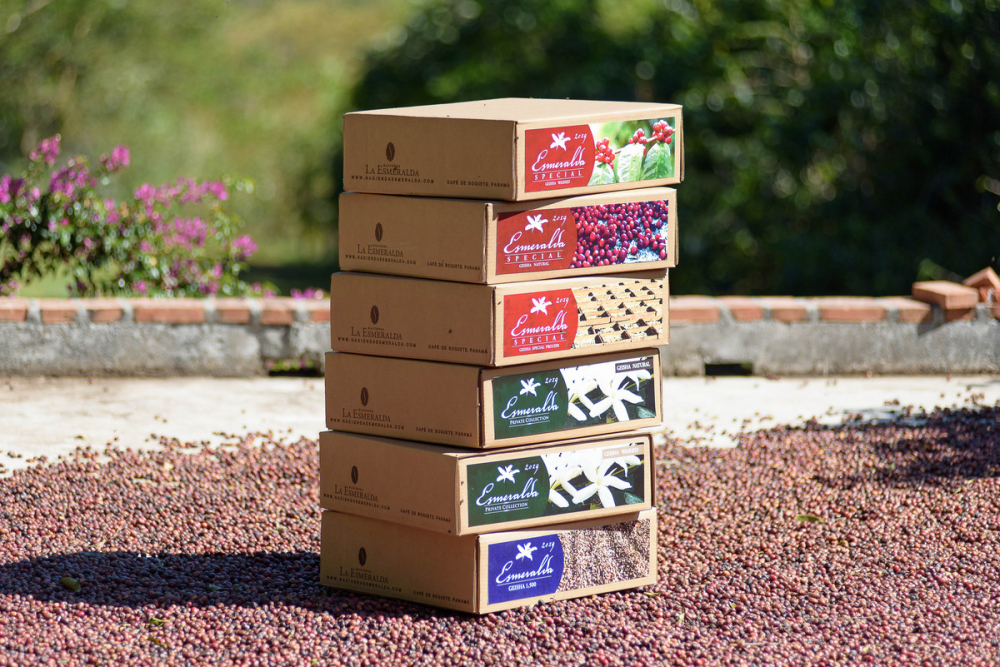
Typically, Hacienda La Esmeralda's natural processing sends the harvested coffee cherries directly to the patio for drying. The cherries gradually dry while the coffee beans remain wrapped inside, the beans filling with fruity and aromatic notes. When the required dryness is reached, they are moved into a Guardiola dryer and rotated for 72 hours to complete the drying process and prevent fermentation. After drying is finished, they are packed into nylon bags and stored in the warehouse. Of course, Hacienda La Esmeralda's natural processing also faces a challenge that must be addressed: during the drying process, the slightest carelessness can cause the parchment beans to reabsorb moisture, leading to quality damage.
In addition, Front Street has also launched a Butterfly coffee bean from the Boquete region. Butterfly has 70% premium Geisha lineage and is composed of three varieties—Geisha, Caturra, and Catuai—planted near Barú Volcano in Boquete and washed processed. Front Street considers this bean to perform quite excellently in body, acidity, and floral aroma. The three varieties contained in Butterfly all come from the same origin and the same producing region, making it a single-origin bean. Caturra is a Bourbon mutation, while Catuai is a hybrid Arabica variety, the offspring of a cross between Mundo Novo and Caturra.
In the Panama region, Front Street also purchases premium Panama coffee beans from the Volcán producing region. Front Street also has a Geisha variety called Janson, also known as the "Champagne of the coffee world." This bean is relatively rarely heard of domestically; it comes from the Volcán producing region, and Front Street has learned that the reason is that Janson Estate focuses on domestic sales and does not export. Even though Janson coffee is little known, Front Street still chose to put it on the shelves—partly in the hope of introducing this superb coffee hidden deep in the mountains to customers.
Coffee beans do not present drastically different flavors simply because of artificially drawn boundaries. Front Street believes that the coffee flavors of both Boquete and Volcán share a similarity in fruity and floral notes.
According to Front Street's research, in the early days the Volcán area mainly grew economic crops such as fruits and vegetables, with only a very few farmers growing Panamanian coffee; the earliest coffee growers were the Hartmann and Janson families. The Hartmann family's Hartmann Estate is also very well known, and Front Street has also launched a coffee from Hartmann Estate, using a rather special red wine processing method (also known as carbonic maceration). This processing method is mainly achieved by regulating pH, temperature, and humidity, and its inspiration comes primarily from red wine-making techniques.
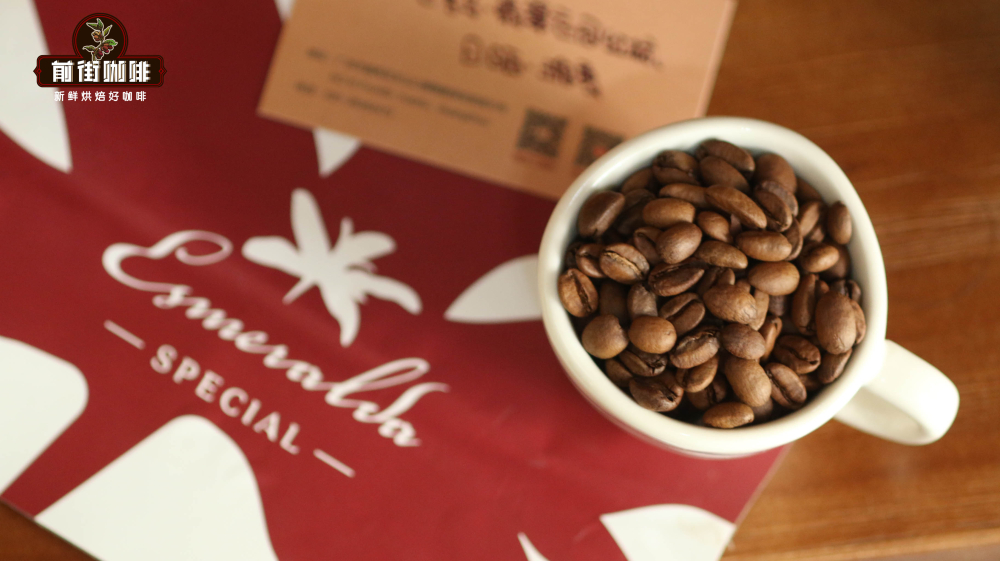
Customers familiar with Front Street know that the coffee beans on Front Street's shelves are not static. Front Street offers only specialty coffee and cares not only about the raw materials but also very much about the roast level. Front Street regularly tries coffee beans from different regions and only considers putting them on the shelves after confirming that each bean possesses the representative flavors of its region.
1. Front Street Coffee Panama Butterfly Coffee Beans
Coffee producing region: Panama, Boquete
Altitude: 1,600 meters
Varieties: Geisha, Caturra, Catuai
Processing method: Washed
Flavor: Citrus, floral, tea-like, honey, high sweetness
2. Front Street Coffee Panama Natural Blue Label Geisha Coffee Beans
Growing origin: Panama, Boquete
Coffee estate: Hacienda La Esmeralda
Coffee grade: Blue Label
Altitude: 1,500 meters
Variety: Geisha
Processing method: Natural
Flavor: Peach, floral, cantaloupe, strawberry
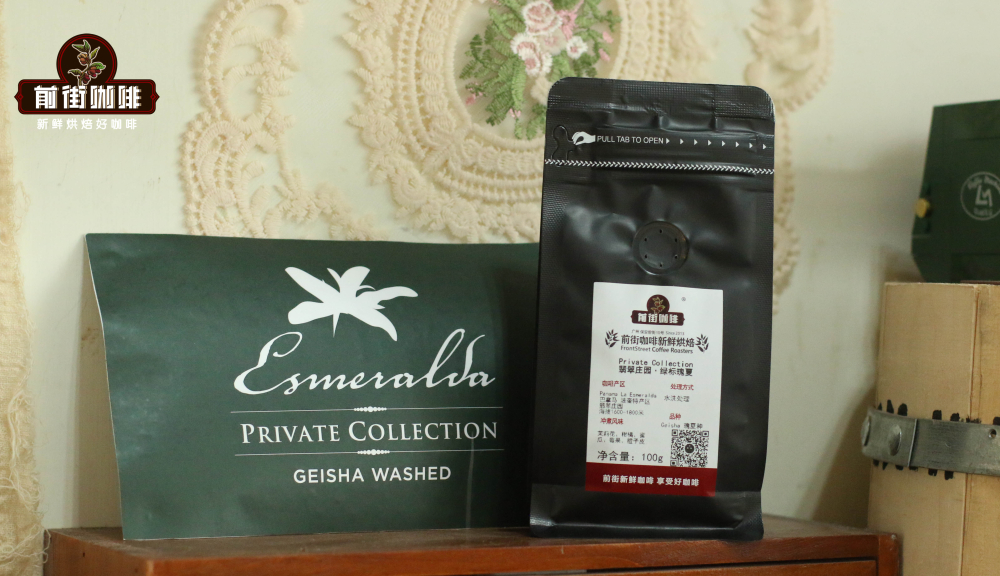
3. Front Street Coffee Hacienda La Esmeralda Red Label Geisha Coffee Beans
Producing region: Boquete (Bouquete)
Estate: Hacienda La Esmeralda
Altitude: 1,700 meters
Processing method: Natural
Variety: Geisha种Geisha
Flavor: Lemon, honey, berry, orange peel, cream, citrus
4. Front Street Coffee Panama Elida Estate Coffee Beans
Producing region: Boquete, Panama
Estate: Elida Estate
Altitude: 1,850 meters
Variety: Catuai
Processing method: Natural
Flavor: Fermented fruity acidity and jasmine floral notes, peach and orange acidity on entry, pronounced sucrose sweetness, overall a clean, sweet impression.
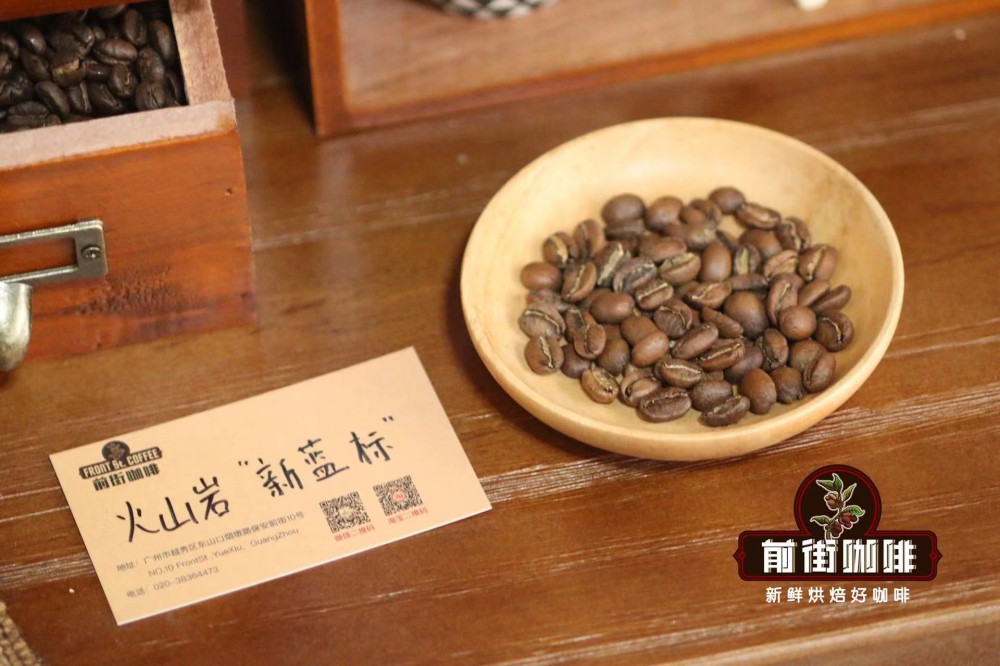
5. Front Street Coffee Panama Hartmann Coffee Beans
Producing region: Volcán
Altitude: 1,250–1,700 meters
Processing method: Red wine processing
Variety: Catuai
Estate: Hartmann Estate
Flavor: Rich wine aroma, high sweetness, lively and bright acidity; after cooling, brown sugar notes become more pronounced.
6. Front Street Coffee Panama Janson Geisha Coffee Beans
Producing region: Volcán
Processing method: Natural
Annual rainfall: 3,000 mm
Soil: Volcanic soil
Flavor: Delicate berry notes, clean mouthfeel, honey, lychee flavors
For professional coffee knowledge exchange and more coffee bean information, please follow Coffee Workshop (WeChat public account: cafe_style)
For more specialty coffee beans, please add the personal WeChat of Front Street Coffee (FrontStreet Coffee), WeChat ID: kaixinguoguo0925
The above content is compiled by CoffeeHunters, a coffee news website.


