







How Does Siphon Coffee Brewing Actually Work?
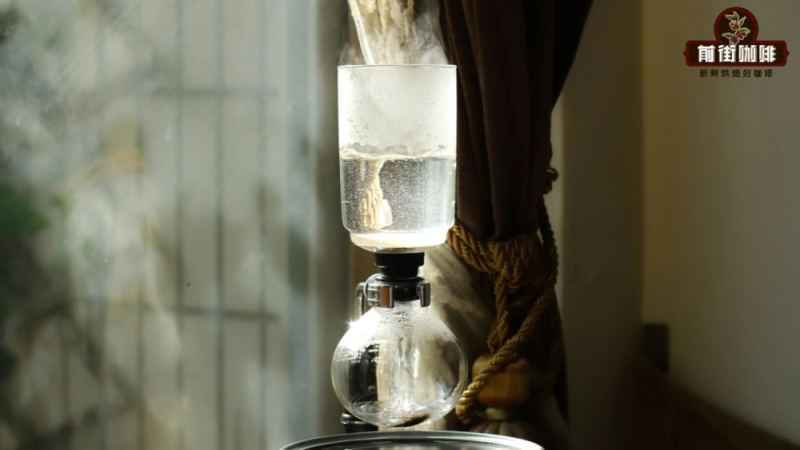
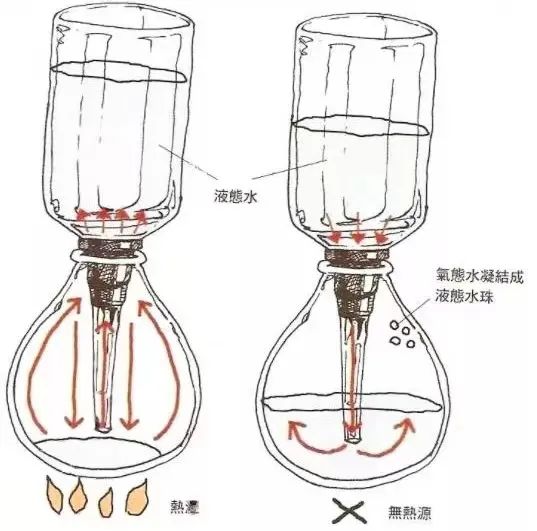
Siphon coffee brewing uses a lower chamber, an upper chamber, and a stand. Heating the lower chamber creates steam pressure that pushes water into the upper chamber, where it meets the coffee grounds. Removing the heat source lets the brewed coffee fall back down, completing extraction in a few minutes.
Cloth and paper filters are the two common choices. Cloth filters retain more oils and give a fuller body, while paper filters produce a cleaner cup. Grind size, coffee-to-water ratio, stirring technique, and the moment the heat is turned off all affect the final result, so a repeatable process matters more than guesswork.
In the current wave of specialty coffee, the siphon is already a rare piece of equipment. Many cafés no longer offer siphon coffee, or keep it only as a special single-origin item. For those who prefer this brewing method, mastering a clear set of operating logic is more practical than relying on café output. Starting from Front Street Coffee's practice, this article systematically sorts out the siphon's construction principles, the choice between cloth and paper filters, heat source selection, the divergence between adding coffee grounds first and later, grind size and coffee-to-water ratio, stirring techniques, and the judgment of when to turn off the heat, and appends a replicable complete brewing process to help coffee enthusiasts consistently reproduce a cup of rich, full-bodied siphon coffee in their own kitchens.
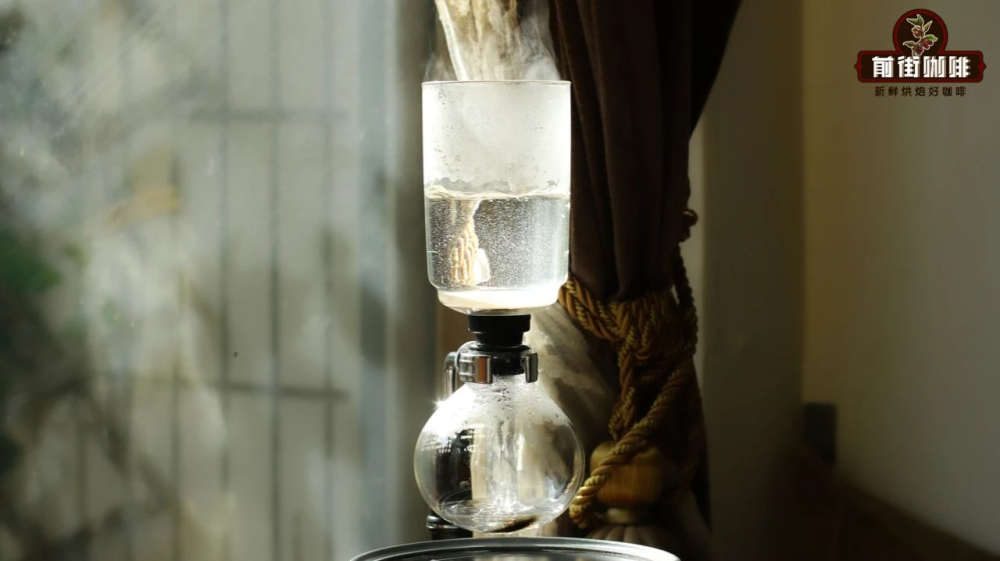
From today's perspective, the siphon is a piece of coffee equipment with considerable historical depth. Many coffee shops long ago stopped offering siphon coffee, and even when they do, it is often classified as a specialty product rather than a main menu item. But for siphon enthusiasts, if you cannot drink it outside, you can just make it yourself. In this article, Front Street Coffee will try to explain siphon coffee clearly in plain language.
-The Construction of the Siphon
A siphon is roughly made up of three parts: the upper chamber, the lower chamber, and the stand. The stand is connected to the lower chamber and serves the functions of fixation and support. The lower chamber is nearly spherical, a shape that helps heat distribute evenly during heating. The upper chamber is cylindrical, and after narrowing at the bottom it extends into a slender tube, with a rubber gasket fitted at the narrowed point.
When the upper chamber is placed on the lower chamber, the rubber gasket seals it. At this point, heating the lower chamber causes the water to produce steam, and the pressure inside rises, pushing the water up into the upper chamber. The upper chamber is exactly where the coffee grounds meet the water. Once the heat source is removed, the coffee liquid falls back into the lower chamber, and the extraction of siphon coffee is complete.

-Cloth Filter and Paper Filter
Surely no one wants to drink a mouthful of coffee grounds, so a filtration medium is needed to intercept the sediment. The common choices are flannel cloth filters and circular paper filters. Flannel is a traditional siphon filter material; its advantage is that it retains coffee oils, while its shortcoming is that it is more troublesome to use and clean.
Paper filters are a newer filtration material, characterized by more thorough filtration, blocking even fine substances including oils. If you are only drinking it yourself and do not brew coffee very often, Front Street Coffee suggests choosing flannel, so you can experience the flavor of siphon coffee more fully.
-Heat Source
The current mainstream heating methods include gas stoves, halogen lamps, and alcohol lamps. Both gas stoves and halogen lamps can adjust the flame intensity, heat up quickly and stably, and the drawback is their relatively high cost. Alcohol lamps cost little, but the heat source is not stable enough and heating takes longer.
Front Street Coffee believes that no matter which heat source is used, good coffee can be made; the key is to make corresponding adjustments according to the heating characteristics. Of course, if conditions allow, gas stoves or halogen lamps are still preferable.
-Adding Coffee Grounds First or Later
There are two schools of thought on the order of adding coffee grounds in siphon brewing. The traditional school chooses to add the grounds first. The other school believes that when the grounds are added first, the water comes into contact with some of the coffee grounds as it rises, causing that portion of the coffee to "start early," which may lead to uneven extraction, so they insist on waiting until all the water has risen into the upper chamber before adding the grounds. This is quite similar to the controversy in pour-over coffee over whether to start timing before pouring water or at the same time as pouring.
Front Street Coffee's suggestion is that for beginners, adding the grounds later is more reliable, with fewer uncertain factors than adding them first.
-Coffee Grounds Grind Size
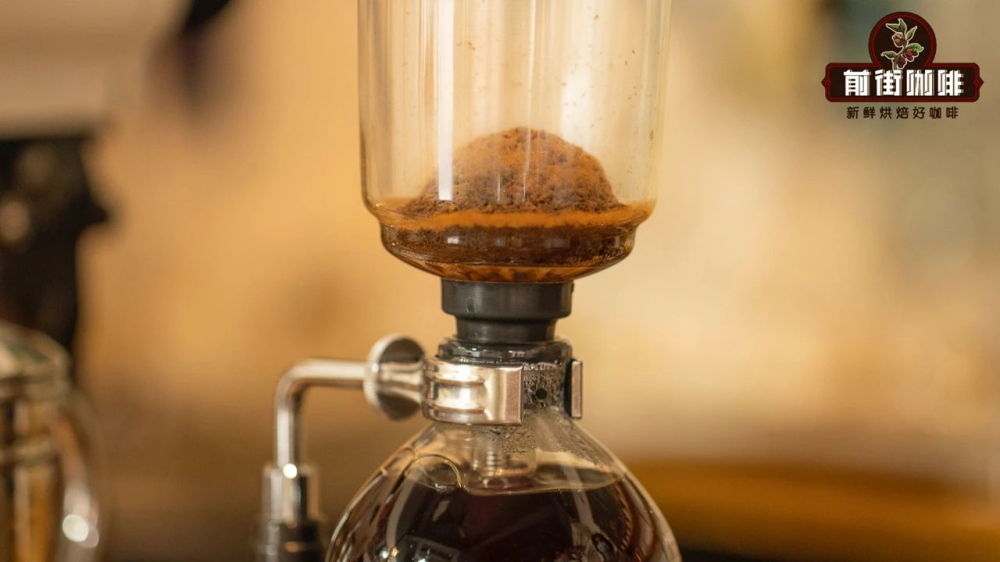
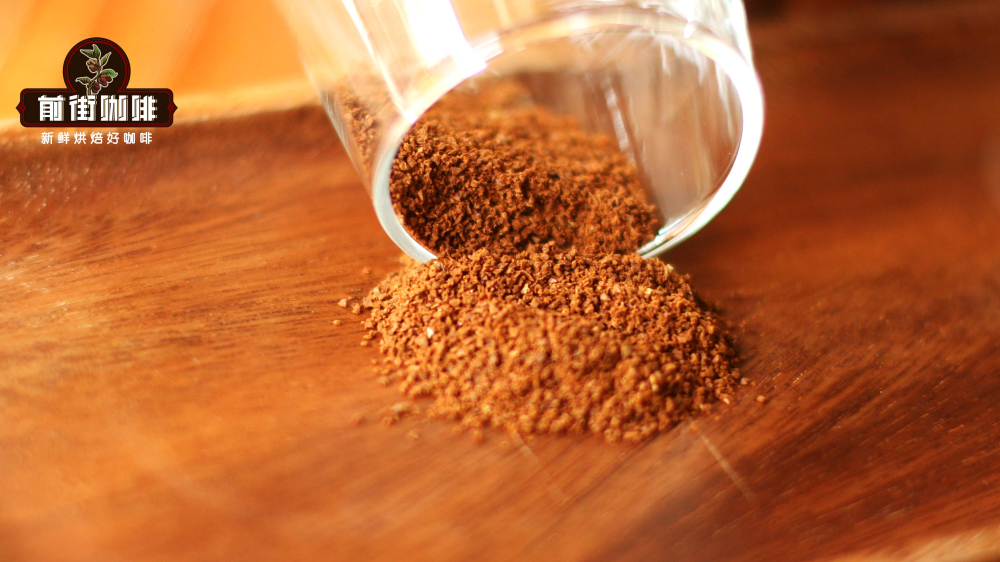
Siphon coffee should be ground finer than pour-over. According to Front Street Coffee's measurement, the grind size is about 90% passing through a No. 20 sieve; when using the shop's EK43s grinder, the corresponding setting is 9; if using a C40 hand grinder, the setting is 20.
-Coffee-to-Water Ratio
The coffee-to-water ratio for siphon coffee usually falls between 1:10 and 1:12, with 1:12 being more commonly used. If making a single serving at home, you might as well use Front Street Coffee's commonly used parameters: 18 grams of coffee grounds with 200 milliliters of water.
-Stirring Method
There are all kinds of stirring techniques: the rotary stirring method, the cross stirring method, the Z-shaped stirring method, the ∞-shaped stirring method, and the tapping method, among others.
Front Street Coffee suggests using the tapping method at the beginning, tapping the coffee bed along the path shown in the figure below. The stirring rod uses the center as a pivot, with both ends moving back and forth in an offset manner.
There is not only one method, but Front Street Coffee believes the tapping method is relatively easy to control and quicker to learn.
-Judging the End Time
When to turn off the heat for siphon coffee: some people are used to judging by smelling the aroma, which demands a high level of basic skill and is also hard to describe clearly in words. Therefore, Front Street Coffee recommends that beginners control it by timing. If adding the grounds later, start timing from the moment the grounds are added; if adding the grounds first, start timing from when you are about to swing the stirring rod. The time to turn off the heat falls at about 50 to 70 seconds.
-Specific Operating Steps
Take Front Street Coffee's usual brewing process as an example.
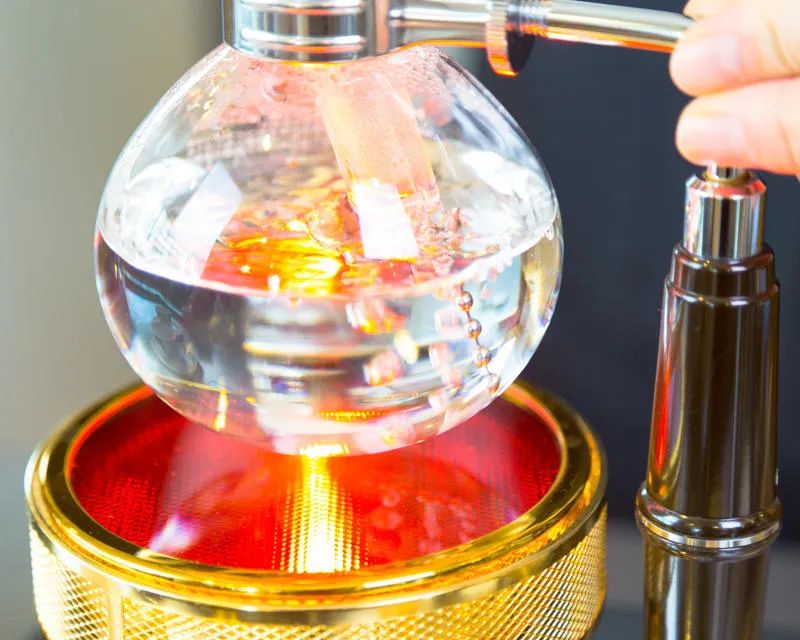
1. Pour in 200 milliliters of hot water, wipe the lower chamber dry, and turn on the heat source.
2. Insert the upper chamber into the lower chamber at an angle; the explosion-proof bead must touch the bottom of the lower chamber.
3. When continuous small droplets appear in the lower chamber, set the upper chamber upright and press it tight. Wait for the water in the lower chamber to be drawn up into the upper chamber.
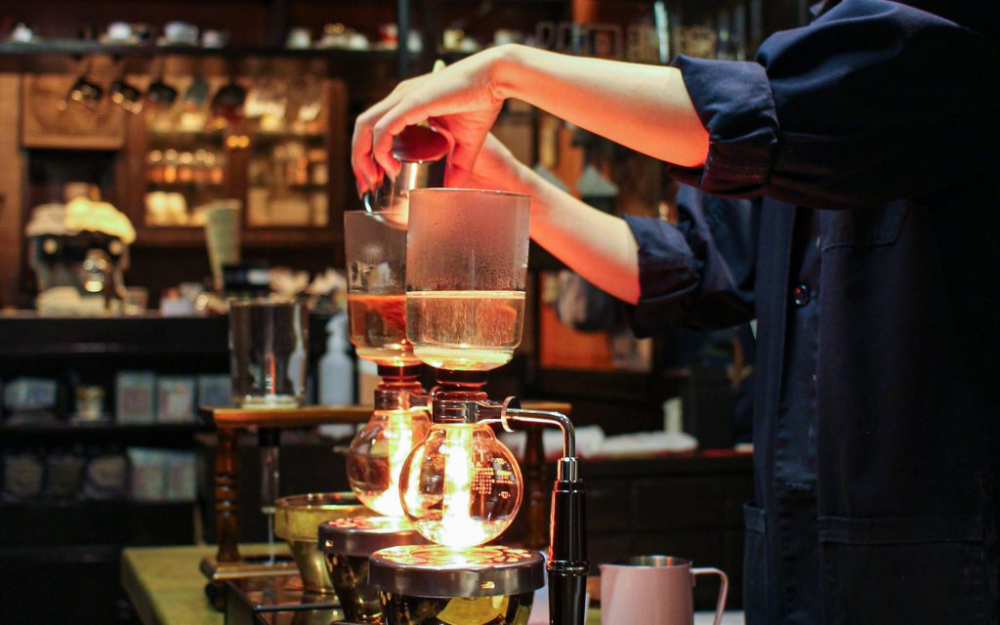
4. Pour in the coffee grounds and start timing. In the first stage, use the stirring rod to press all the coffee grounds into the water with a tapping motion so they absorb water evenly.
5. In the second stage, at 25 seconds, begin the stirring method recommended by Front Street Coffee, stirring until the coffee clearly separates into three layers: coffee liquid, coffee grounds, and coffee foam.
6. In the third stage, at 50 seconds, begin stirring in the same direction. At 60 seconds, remove the heat source and wait for the coffee liquid to fall back.
Siphon coffee brewed this way has a rich aroma. Although it is not as transparent and clean as pour-over, the oils floating on the surface bring a lot of fullness.
In Front Street Coffee's view, compared with pour-over coffee, operating a siphon is clearly more cumbersome: before brewing, a heat source must be prepared; during the entire extraction, you cannot lose focus; and after brewing, you must clean up promptly and wash the flannel that filtered the grounds. In a shop with a high volume of drinks, siphon output is only more troublesome.
The above content is compiled by CoffeeHunters, a coffee news website.


