







What Does Brazil Queen Farm Yellow Bourbon Coffee Taste Like?
Queen Farm's yellow bourbon coffee from Brazil shows low acidity, a full body and clear sugarcane sweetness, which is why it stands out among the country's specialty lots. The variety, the pulped natural processing method and the farm's history together produce that profile, and Front Street's roasting and brewing notes give buyers a reference point before ordering.
Brazil's 2020/21 crop fell sharply after drought hit the flowering stage, with early estimates pointing to a 20 to 30 percent drop. La Niña kept February rainfall below normal during fruit development, which can hollow the fruit. Enough January rain and irrigation on most estates limited the damage, so supply held, and Brazilian c arabica lots remain available year round.
Brazil, as a major global coffee producer, has faced production reduction pressure in recent years due to drought and climate impacts, with production in 2021 expected to drop by 20 to 30 percent. Among the many Brazilian specialty coffees, Queen Farm's Yellow Bourbon coffee is highly favored for its low acidity, full body, and clear sugarcane sweetness. This article will guide you through the current state of Brazilian coffee-producing regions, the historical background of Queen Farm, the characteristics of the Yellow Bourbon variety, the pulped natural processing method, and Front Street Coffee's roasting and brewing insights, comprehensively analyzing the flavor code of this Brazilian Queen Farm coffee to provide a reference for coffee enthusiasts when making purchases.
Will Brazil's coffee production decline in 2021, and will prices rise accordingly? Recently, many coffee enthusiasts have been paying attention to the developments in Brazilian coffee. Due to a sharp decrease in rainfall last year, Brazilian producing regions suffered drought, and coffee trees lacked sufficient water during the flowering stage, leading to a reduction in fruit set, which caused a significant drop in Brazil's coffee production for the 2020/21 crop year. So will Brazilian coffee run out of supply? Of course not—at least Front Street can guarantee that everyone can drink Brazilian coffee 365 days a year.
Brazilian Coffee-Producing Region News
The La Niña climate is still affecting Brazil, and rainfall in Brazil's main coffee-producing regions in February is expected to be lower than the same period in previous years. According to the normal growth rhythm of Brazilian coffee, February is a critical stage for coffee fruit development. A lack of water will cause the inside of the fruit to be hollow, preventing coffee beans from forming. This not only affects Brazil's coffee production this year but also impacts quality. However, the institution assesses that the final adverse impact may be limited. First, rainfall in Brazil's coffee-producing regions in January was sufficient, which both met the needs of coffee growth at that stage and helped the soil store some water, helping coffee trees resist a certain degree of drought. On the other hand, most coffee estates in Brazil are already equipped with irrigation facilities, which can also alleviate the impact of drought to some extent.
According to estimates by the Brazilian Coffee Association, Brazil's coffee production in 2021 will be between 43.8 million and 49.5 million bags, a decrease of 21.4% to 30.5% compared with 2020. In addition to the low-production year in the biennial cycle and drought weather, the fact that Brazil's coffee planting area has fallen to its lowest level in 20 years has also played a role. It is reported that in 2021, Brazil's coffee-bearing area was 1.76 million hectares, the smallest in nearly 20 years. Another 431,900 hectares failed to bear fruit, resulting in a total area of 2.19 million hectares. The reduction in Brazil's coffee-bearing area is mainly because coffee prices have remained sluggish in recent years, and some small estates have chosen to grow other cash crops. The high proportion of non-bearing area is expected mainly because Robusta-producing regions have recently started coffee cultivation, but it has not yet been more than 3 years.
Among the Brazilian coffees that Front Street Coffee has sourced, the Yellow Bourbon coffee from Queen Farm has always been deeply loved by everyone. The first reason is its low acidity and full body; secondly, the sugarcane-like clear sweetness of this coffee bean makes it unforgettable~
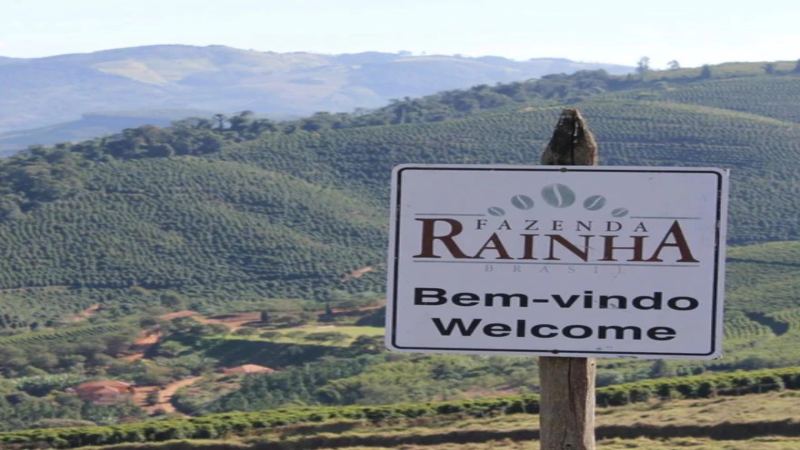
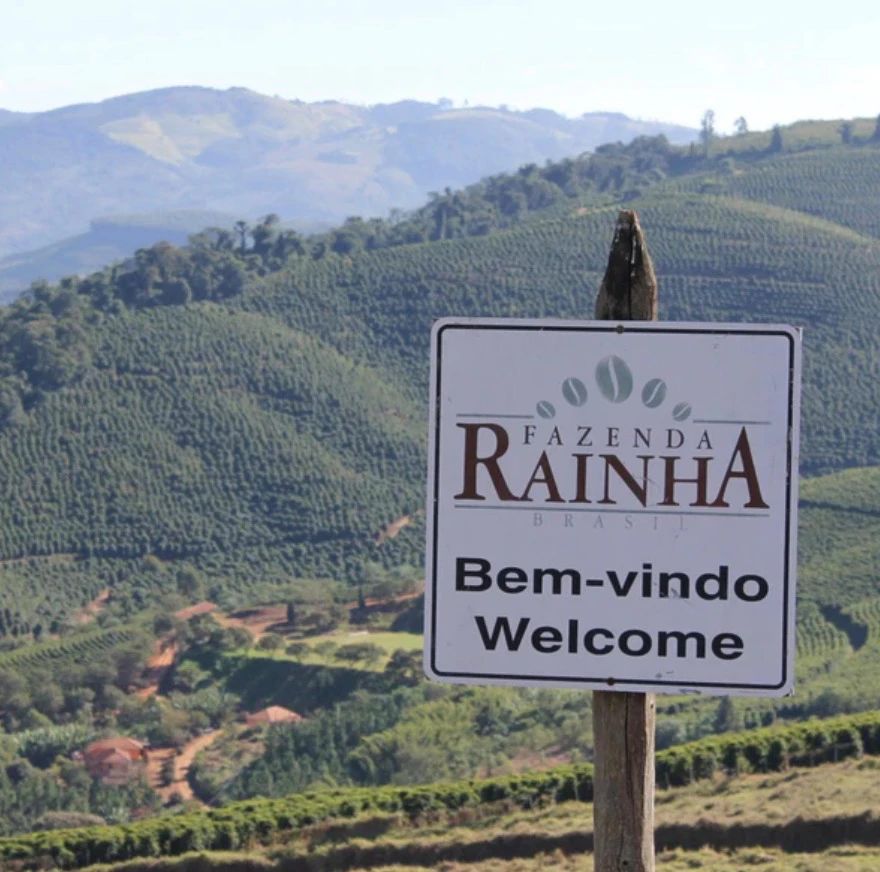
Queen Farm (Fazenda Rainha) (Queen Farm) is located in the Alta Mogiana region of São Paulo state, north of São Paulo city. This estate is very well known in Brazil and is owned by the Carvalho Dias family. The Carvalho Dias family owns 4 major estates. Since the first Brazilian COE competition in 1999, they have won awards every year, with more than 12 awards in 7 years. In 2004, they even took the champion, 9th place, and 11th place.
The Carvalho Dias family is also a founding member of the Brazilian Specialty Coffee Association. Their commitment to coffee quality and environmental preservation is evident to all. Within the family farms, they use natural waterfalls to develop pollution-free hydroelectric power, meeting their own electricity needs (another family estate that often wins awards is named Waterfall Farm after this waterfall). They have built churches, classrooms, nurseries, and medical stations, insist on maintaining native flora and fauna in original forests, and continue afforestation... Taking Queen Farm as an example, environmental protection is quite thorough. Because of the higher terrain and non-plain topography, machines cannot be used for harvesting, so the fruit is completely hand-picked. They also cultivate low-yield, high-quality Bourbon, making it a representative estate of the essence of Brazil's high-quality coffee!
Alta Mogiana Region
This area is very close to the southern part of Minas, Brazil's main specialty Arabica coffee-producing region. Coffee is planted among shrubs, grasses, and other vegetation. There are many farming families in this area. Some use traditional large-farm operating methods, while others adopt small-scale modern operations. Modern technology mixed with mountain coffee-growing culture has created the highest-quality green coffee beans. Through cupping, Front Street has found that coffee beans produced in this region have a sugarcane-like clear sweetness.
Yellow Bourbon Coffee Variety
A variety mutated from Typica, and together with Typica it is currently one of the varieties closest to the original species. A variety mutated from Typica, and together with Typica it is currently one of the varieties closest to the original species. Bourbon coffee beans have complex acidity, caramel sweetness, and balance. Bourbon trees are tall and vigorous, with relatively broad, slightly serrated green leaves. The coffee beans they produce are relatively small and densely packed, so compared with Typica, the beans look smaller and rounder. The fruit can be red, yellow, or orange, varying with the variant and soil texture, with red fruit being the most common. The Queen Farm coffee beans that Front Street Coffee has sourced use Yellow Bourbon coffee beans.
Pulped Natural Processing Method
The pulped natural processing method and the semi-washed processing method actually mean the same processing method, because their processing steps include both natural processing and washed processing. However, its correct name should be Pulped Natural, that is, pulp natural method. The coffee fruit is first put through a water tank to remove defective floating fruits, then the skin, pulp, and part of the mucilage layer are removed, and then it is washed for one hour. Because the soaking and fermentation time is very short, the mucilage is not easily all washed off, and mucilage still remains on the parchment. At this point, the sticky parchment beans are spread out on a drying patio to dry, preferably on African raised beds with good breathability.
Compared with washed processing, this processing method saves a large amount of water, reduces resource costs, and also changed the poor coffee quality of Brazil's extensive natural drying, because removing the skin and pulp greatly shortens the sun-drying time, thereby also reducing the chance of infection. It can be said to be Brazil's unique processing method adapted to local conditions.
Front Street Coffee Roasting Record
Brazilian coffee generally grows at an altitude of 1000-1300 meters. Front Street Coffee has noticed that its density is relatively low, its moisture content is moderate, the bean texture is relatively soft, and the thickness from the bean surface to the bean core is relatively thin, so it is not suitable for roasting at too high a temperature, as this would produce burnt bitterness.
Yangjia 800N, bean charge 550g: preheat the device to 200°C and put in the beans, adjust the gas to 150, open the damper to 3, the turning point is 1'30", maintain the gas, turn yellow at 5'10", the grassy smell disappears, entering the dehydration stage, lower the gas to 125, open the damper to 3.5. At 8'20" dehydration is complete, wrinkles and dark patches appear on the bean surface, the toast aroma turns into coffee aroma, which is the prelude to first crack. When it reaches 178°C, lower the gas to 80. At this time, pay attention to listening for the sound of first crack. First crack begins at 9'14", open the damper fully to 5. Post-first-crack development time is 3'00", drop at 201°C.
Front Street Coffee Brewing Insights
Front Street Coffee uses the Kono Meimon dripper with short ribs to brew Brazilian Queen Farm coffee beans. Its short-rib design slows the water flow rate, thereby enhancing the coffee's body.
Water temperature: 88°C
Dose: 15 grams
Coffee-to-water ratio: 1:15
Grind size: medium-fine grind (73% passing through China standard No. 20 sieve)
Front Street Coffee uses staged extraction, also called three-stage brewing: use 30 grams of water for blooming for 30 seconds, pour in a small stream in circles until 125 grams for the stage, and when the water level is about to expose the coffee bed, continue pouring until 225 grams and stop pouring. When the water level is about to expose the coffee bed, remove the dripper. (Start timing at the beginning of blooming.) The extraction time is 2'05".
Brazilian Queen Farm coffee brewing flavor: the fresh sweetness of sugarcane juice, black tea, a mellow and smooth fruit sweetness, obvious nutty flavor, balanced and gentle acidity, weak and clean bitterness, rich chocolate aroma and nutty flavor, a bright and refreshing taste, and a smooth, delicate mouthfeel.
The above content is compiled by CoffeeHunters, a coffee news website.


