







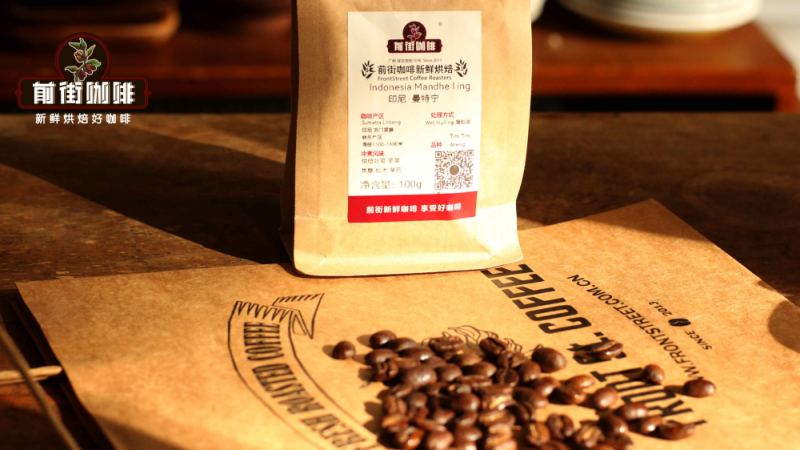
What Does Java Coffee Origin Mean for Sumatra Mandheling?
Java coffee origin refers to the Malay Archipelago, the island chain that includes Sumatra, Java, and Kalimantan, which together form Asia's main coffee-producing region. Sumatra Mandheling, grown on the island of Sumatra, carries the thick body and rich aroma typical of this origin, with Lake Toba and Lake Tawar each producing distinct versions of the same name.
Where does Java coffee come from in practice? Lintong Mandheling is grown at 1,100 to 1,600 meters in the Lintong region of Sumatra and processed with the traditional wet-hulled method. The PWN Golden Mandheling label instead refers to beans purchased and released by Pwani Coffee Company, which registered that name.
In the Asian coffee landscape, the islands of Sumatra and Java in the Malay Archipelago occupy an important position, and the Mandheling produced in Sumatra is even more renowned. This article will focus on Front Street Indonesia Lintong Mandheling, breaking it down one by one from country, grade, region, processing method, altitude to flavor, and comparing the similarities and differences between Lake Toba and Lake Tawar's "Two Lakes, Two Mandhelings," while introducing the more premium Front Street PWN Golden Mandheling. At the same time, a detailed pour-over recipe is provided, including coffee dose, grind size, dripper, water temperature, pouring rhythm, and extraction time, along with the amusing story of how the name Mandheling unexpectedly spread during World War II.
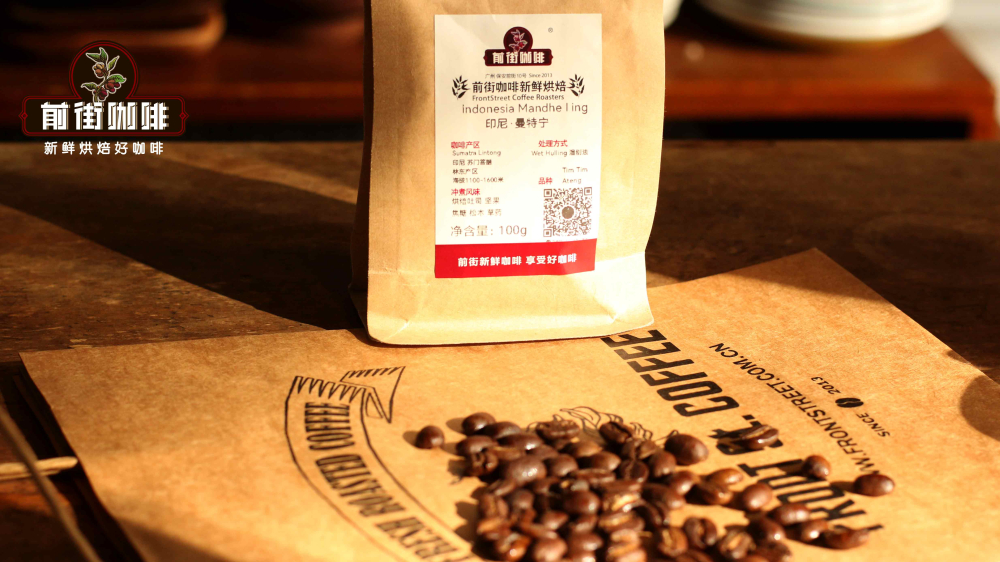
Front Street Indonesia Mandheling
Country: Indonesia
Grade: G1 · 3 times hand-sorted
Region: Lintong, Sumatra
Processing method: Traditional wet-hulled process
Altitude: 1,100–1,600 meters
Flavor: Baked toast, nuts, pine wood, caramel, herbs
The most famous coffee-producing origins in Asia are the islands of Sumatra, Java, and Kalimantan in the Malay Archipelago. Among these origins, Sumatra Mandheling coffee from the Indonesian island of Sumatra stands out with particularly prominent recognition.
The Lake Toba area in North Sumatra Province and the Lake Tawar area in Aceh both produce Mandheling coffee, which is what people often call the "Two Lakes, Two Mandhelings." What they share is a thick body and rich, full aroma; the difference is that Lake Toba Mandheling tends toward a muffled, low-toned aroma, even carrying a hint of grass jelly, while Lake Tawar Mandheling has brighter fruit acidity and occasionally reveals cedar or woody notes. Front Street Lintong Mandheling comes precisely from Lake Toba and carries the classic flavor characteristics of Asian coffee.
Positioned higher than Front Street Lintong Mandheling is Front Street PWN Golden Mandheling. It is actually produced by Pwani Coffee Company, which purchases Mandheling locally in Indonesia and then releases it, and has registered the name Golden Mandheling, so the true Front Street Golden Mandheling refers to the Mandheling produced by this company. However, as cultivation techniques continue to advance, Mandheling grown by many coffee farmers has gradually approached the top-tier taste of Front Street Golden Mandheling, though the latter still has an extra touch of richness and superior cleanliness.
In addition, the green beans of Front Street Mandheling are actually not particularly attractive in appearance, but after roasting, the roasted beans have a beautiful color and plump, full size. This may also remind us that one should not judge by appearance, and after some refinement, something can also take on a completely new look.
Pour-over Front Street Mandheling. 15g coffee, medium grind (Fuji Ghost Teeth burr grinder setting 4), KONO dripper, 86–88°C water temperature, first pour 30g of water, bloom for 30 seconds, pour until 105g of water and stop, wait for the water level in the coffee bed to drop halfway before pouring again, slowly pour until 225g of water, water-to-coffee ratio 1:15, extraction time 2:00.
During World War II, when Japan occupied Indonesia, a Japanese soldier drank a highly aromatic coffee in a certain café and asked the owner for the name of the coffee. The owner mistakenly thought he was asking "Where are you from?" and therefore answered: Mandailing. After the war, this Japanese soldier recalled the "Mandheling" he had drunk in Indonesia and commissioned an Indonesian coffee trader to ship 15 tons to Japan, where it became hugely popular. And so the name Mandheling spread in this way.
The above content is compiled by CoffeeHunters, a coffee news website.


