







How does the Ethiopian coffee grading system work?
The Ethiopian coffee grading system, run by the Ethiopia Commodity Exchange, scores physical bean characteristics and cupped flavors to sort lots into grades such as G1 and Q1. The Worka washed Yirgacheffe from Front Street Coffee carries a G1 grade, reflecting clean preparation, few defects, and the floral and citrus profile that Yirgacheffe is known for.
The region sits in the Gedeo zone of southern Ethiopia at roughly 1,650 to 1,800 meters, where heirloom varieties are grown and washed before drying. Heirloom coffee does not grow on trees in the botanical sense of a distinct species; it is a mix of native Arabica types, and the altitude, fog, and mild climate shape the cup.
Yirgacheffe, as Ethiopia's most representative specialty coffee region, has long held the position of the top entry choice for coffee enthusiasts, thanks to its signature floral and citrus notes. This article takes Front Street Coffee's Worka washed Yirgacheffe as an example to systematically review the terroir conditions of this region, background information on the Worka cooperative, the washed processing procedure, and the definition and distribution characteristics of heirloom varieties. It also provides a detailed interpretation of the Ethiopia Commodity Exchange (ECX) coffee grading system, covering the scoring weights of physical characteristics and cupping flavors, the logic behind the division of Q1 and Q2 grades, and includes Front Street roasters' medium-light roast recommendations for Yirgacheffe's acidity characteristics, offering a reference for purchasing and brewing.
In the specialty coffee circle, Yirgacheffe enjoys considerable fame, and many people first encounter single-origin coffee through this bean. When Yirgacheffe is mentioned, Sidamo often comes up as well, and the relationship and differences between the two confuse many consumers. In fact, both are located within Ethiopia. To understand it simply: Sidamo is a province, while Yirgacheffe is a town under that province, a sub-region of Sidamo and one of the highest-altitude coffee-growing areas in Ethiopia. Because Yirgacheffe possesses a uniquely distinctive flavor profile, it was later separated from Sidamo and established as an independent region, and today it is the most renowned coffee origin on the African continent.
While cupping the washed Yirgacheffe, Front Street Coffee noticed that this bean's most prominent flavor tag is clear floral notes and abundant citrus aromas. However, coffee flavor expression also varies with variables such as brewing water temperature and roast depth, so Front Street Coffee chose Worka for this test.
Bean Information
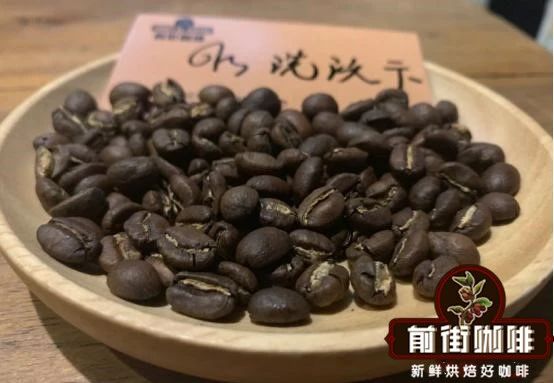
Front Street Coffee: Ethiopia Yirgacheffe Worka Grade: G1 Variety: Heirloom Growing Altitude: 1650m~1800m Processing Method: Washed
Region Introduction
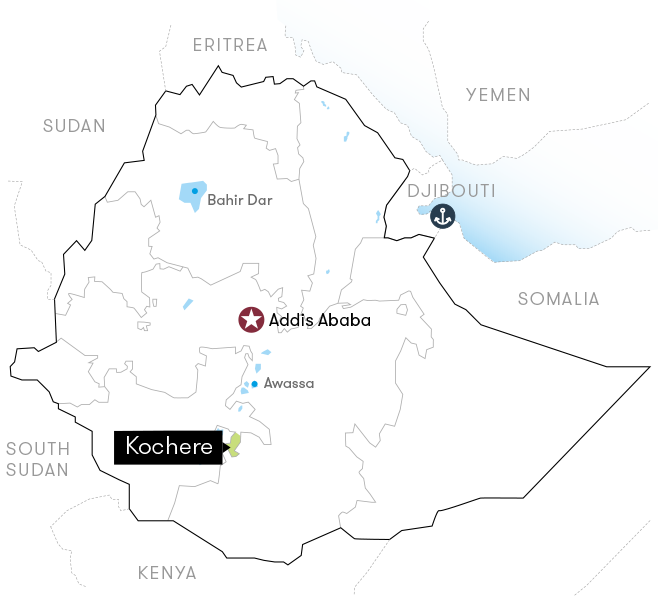
Yirgacheffe is located in the Gedeo region of southern Ethiopia. Among the names under this area, Yirgacheffe and Kochere are the best known. With an altitude range of 1,700 to 2,100 meters, it is one of the highest coffee-growing regions in the world and a calling card of Ethiopian specialty coffee.
Represented by the Misty Valley, the rift zone is shrouded in fog year-round, with a mild, spring-like climate, gentle breezes, and a cool, humid atmosphere. Thousands upon thousands of coffee trees grow vigorously here, creating Yirgacheffe's unique terroir charm in which floral and fruity aromas blend together in rich layers.
Worka Cooperative This coffee bean from Front Street is produced in Ethiopia and processed by the Worka cooperative. Alemayehu Alako Farm is one of the members of the Worka cooperative. Worka is located within the Yirgacheffe region, at an altitude between 1,800 and 2,000 meters. The Worka cooperative was established in 2005, and in the same year joined the well-known Yirgacheffe Coffee Farmers Cooperative Union (YCFCU), known for producing high-quality natural Yirgacheffe, The Worka cooperative has about 300 coffee farmers under it.
Processing Method
This Yirgacheffe Worka coffee bean from Front Street uses the washed processing method.
First, the sorted coffee cherries are sent into a depulper to initially remove the skin and pulp. Then the green coffee beans with residual pulp and mucilage still attached are soaked in water to ferment for about 24 hours. After fermentation is complete, the green coffee beans with parchment are transferred to a flowing water channel for washing, removing the pulp and mucilage thoroughly. After washing, the coffee beans are sun-dried or dried using drying equipment to reduce the moisture content to around 12%, and finally the parchment layer of the green coffee beans is removed.
Heirloom The bean variety of this Worka coffee from Front Street also belongs to heirloom. Usually, coffee farmers may cultivate multiple varieties at the same time, or may select the better-performing varieties separately for sale. Ethiopia's situation is rather special: in this country, coffee mostly grows in the field, courtyard, or forest understory in wild or semi-wild forms, and what coffee farmers harvest is actually a large collection composed of many different natural variants.
Wild coffee trees especially prefer to grow in the forest understory. Those tree species that can provide shade for coffee are called "Shade Trees." This cultivation method is called "Shade-grown Coffee." Its advantages are that it can reduce the impact on the ecosystem, while diverse organisms also help suppress pests and diseases. In some regions, people also use local food crops such as bananas to shade coffee, achieving two benefits at once.
Ethiopia has recorded nearly 2,000 coffee varieties, of which 1,927 are native varieties and 128 are introduced foreign varieties. Therefore, judging by appearance alone, Ethiopia's coffee varieties are like a "grand garden," with all kinds of shapes—long, short, thin, plump—everything imaginable.
Ethiopia (graded by proportion of defective beans)
Before the establishment of the Ethiopia Commodity Exchange (ECX), Ethiopia's coffee export grades were set by the CLU department (Cupping and Liquoring Unit) under the Ministry of Agriculture, mainly grading according to the number of defective beans contained in 300 grams of green coffee beans, with the specific standards shown in the table below.
Generally speaking, washed coffee beans are concentrated in grades G1-G2, while limited by the sun-drying technology at the time, natural green beans had a relatively high number of defects, generally falling between G3-G5. With the continuous improvement of natural processing techniques, natural beans can now also reach the G1-G2 grade level.
After the establishment of ECX (Ethiopia Commodity Exchange) in 2008, grading was changed to a comprehensive scoring system combining the physical attribute characteristics of green coffee beans with cupping flavor characteristics.
ECX divides all coffee into two types, non-washed and washed, according to processing method, and defines three categories:
a. Specialty: few defects, high cupping flavor quality
b. Commercial: does not reach specialty grade, but is higher than the domestic (Local/Domestic) consumption grade;
c. Local/Domestic: coffee with a large number of defective beans (unripe beans), and relatively poor flavor caused by being out of season and poor storage. Among these, specialty and commercial are for the international export market. ECX divides green coffee beans into nine grades based on the total score of physical attribute characteristics and cupping flavor characteristics, with physical characteristics accounting for 40% and cupping quality accounting for 60%.
Physical Characteristics (40%):
Washed processing: number of defects (20%), appearance size (10%), color (5%), odor (5%)
Non-washed processing: number of defects (30%), odor (10%)
Cupping Quality (60%)
Then G1-G3 are cupped again according to SCAA standards to more meticulously evaluate their flavor attributes: G1 and G2 scoring no less than 85 points are rated as Q1; G1, G2, and G3 scoring between 80 and 85 points are rated as Q2; all G1, G2, and G3 scoring below 80 points are rated as G3.
Q1 and Q2 are classified as specialty grade for export. G4 to G9 remain unchanged in their original grading and, together with G3, are classified as commercial grade for export. If you want to buy the highest-grade G1 and G2 Yirgacheffe, the first choice is Front Street washed Gutingding and Front Street natural Red Cherry. They not only have the classic white floral and citrus acidity, but also present their own tonalities due to different processing methods—Front Street washed Gutingding has a fresh sweetness like honeydew, snow pear, and honey, while Front Street natural Red Cherry presents flavors of tropical fruit, dried strawberry, and slight fermented aroma.
Roasting Recommendation
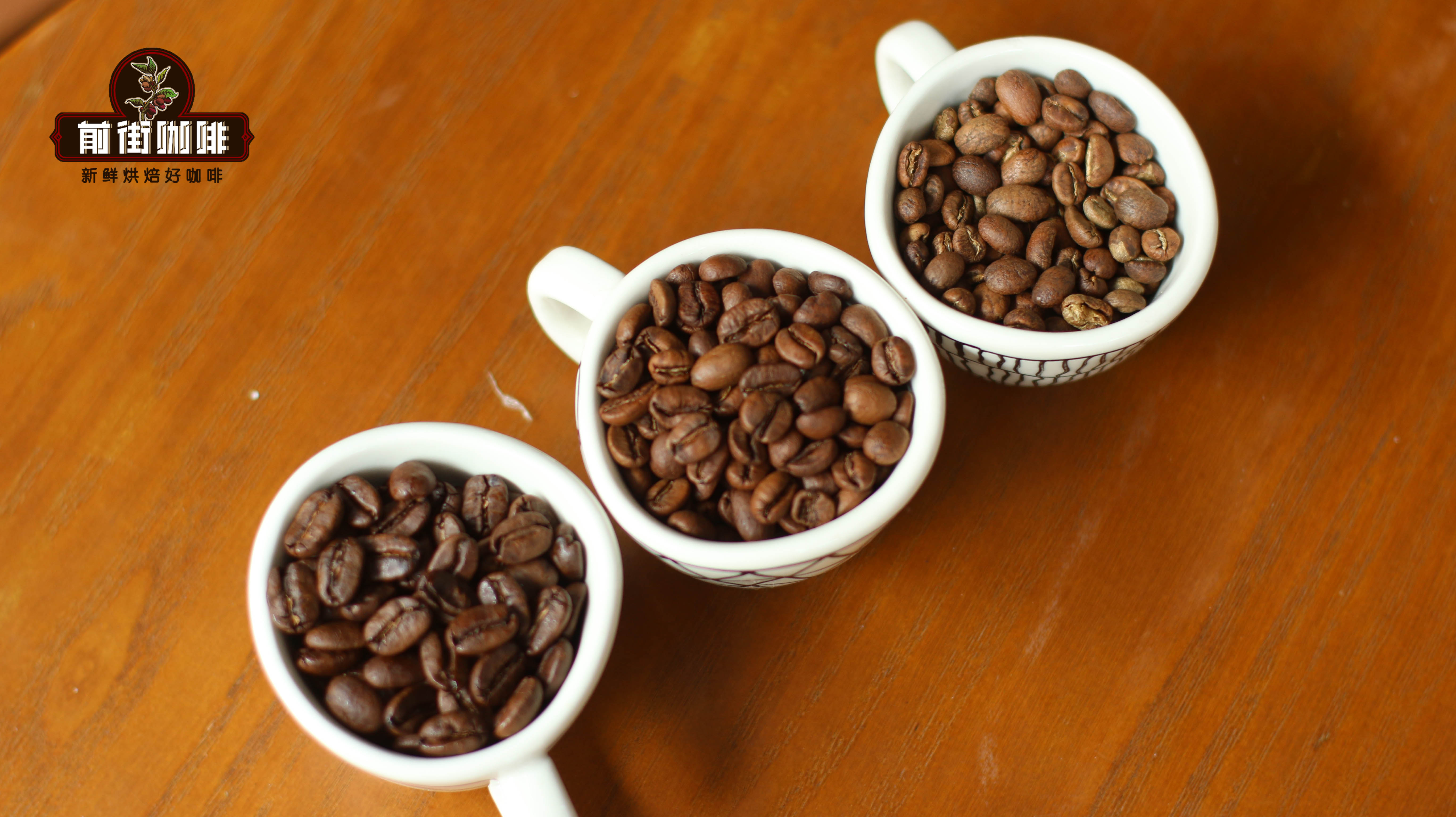
The acidity of Front Street's three Yirgacheffe coffees is their characteristic feature. To highlight this trait, Front Street roasters recommend using a medium-light roast.
The above content is compiled by CoffeeHunters, a coffee news website.


