







What Does the Arabica Variety Mean for Yunnan Coffee?
Yunnan small-bean coffee refers to Arabica varieties grown inside Yunnan province. The name comes from the smaller fruit size of Arabica compared with Robusta, the medium-fruit type, and Liberica, the large-fruit type. Quality lots are concentrated in Lincang, Baoshan, Simao, Xishuangbanna, Dehong and Nujiang, mostly between 1,000 and 1,500 meters of altitude.
Higher elevations widen the day-to-night temperature gap, slowing tree growth and letting more nutrients accumulate in the fruit. Catimor has long been the dominant planted Arabica variety in Yunnan, though it carries flavor limitations. Typica is now being grown experimentally in Lincang, and three processed lots are compared for flavor and brewing method.
Yunnan small-bean coffee has performed impressively in international competitions and flavor evaluations in recent years, with its popularity continuing to rise. From the perspective of Front Street Coffee, this article systematically reviews the definition of Yunnan small-bean coffee, its main growing regions and geographical conditions, traces the history of the introduction of the Catimor variety and its flavor limitations, and introduces Front Street's practice of experimentally cultivating the Typica variety in Lincang. At the same time, the article compares in detail the differences in flavor performance and suitable brewing methods among the three Yunnan coffee beans currently sold by Front Street—Natural Typica, Washed Catimor, and Black Cocoa Blend—helping coffee enthusiasts gain a more comprehensive understanding of the current situation and potential of the Yunnan production region.
For more specialty coffee-related knowledge, welcome to follow: Front Street Coffee (Frontsteet Coffee)
In recent years, Front Street Yunnan small-bean coffee has received more and more attention. Whether in international competitions or coffee flavor evaluations, it has achieved good results, and the popularity of Yunnan coffee has continued to rise. Driven by Yunnan coffee, China's coffee industry has entered a stage of rapid development. Many customers who come to Front Street stores will take the initiative to ask whether there is Yunnan coffee, so today let's start with small-bean coffee and take a serious look at this production region, Yunnan.
What exactly does small-bean coffee refer to?
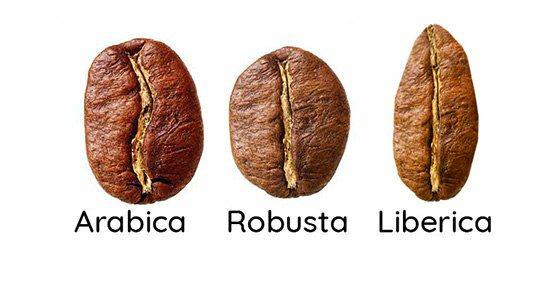
The most common type on the domestic market is Yunnan small-bean coffee, and so-called small-bean coffee actually refers to the Arabica variety. In the early years, when coffee varieties had not yet been carefully classified, Arabica was called small-fruit coffee because its fruit was smaller than that of Robusta (medium-fruit variety) and Liberica (large-fruit variety), and correspondingly there was also the term large-fruit coffee.
The growing regions of Yunnan coffee
As long as it is an Arabica variety planted within Yunnan, it can be classified as Yunnan small-bean coffee. The better-quality Yunnan coffee growing areas are mainly concentrated in Lincang, Baoshan, Simao, Xishuangbanna, Dehong, Nujiang and other places within an altitude range of 1,000 to 1,500 meters. The higher the altitude at which coffee trees are planted, the more obvious the temperature difference between day and night. The growth rate of the coffee trees slows down, more nutrients accumulate in the plant, and sugars and aromatic substances are also formed more fully, so the final flavor performance of the coffee beans is also better.
Yunnan's geographical conditions are quite favorable, so the coffee industry has developed rapidly. In 2014, both the planting area and output accounted for more than 99% of the country's total. The average temperature in Lujiangba, Baoshan, is 21.5°C, with a maximum of 40.4°C, and there is basically no frost throughout the year.
The variety situation of Yunnan small-bean coffee
At present, the main variety grown in Yunnan is Catimor. In addition, Typica, Bourbon, and Geisha are also grown in a small number of areas.
In the 1970s and 1980s, coffee leaf rust broke out in many countries in Central and South America, and coffee production was severely affected. In response to the leaf rust problem, Portugal's coffee research institution CIFC crossed Timor, which carries Robusta genes, with the Bourbon variant Caturra in 1959, cultivating Catimor, which has strong disease resistance and high yield. In order to address the losses caused by leaf rust, and with the encouragement and promotion of coffee organizations, large-scale introduction began in Central and South America in the 1980s.
In 1988, Nestlé took a fancy to Yunnan as a place suitable for growing coffee and distributed Catimor coffee trees with stronger resistance to coffee leaf rust. Only then did local people begin growing coffee again, and they supplied Nestlé for a long time.
Because Catimor carries Robusta genes, its flavor performance is not ideal, and it does not taste very good when drunk directly, so people's impression of Yunnan coffee has long remained at the level of instant coffee. But Front Street Coffee believes that an truly excellent cup of Yunnan coffee can fully display the unique flavor of the Yunnan production region under traditional natural or washed processing. To remove the undesirable flavors of Yunnan coffee itself, changes still have to be made at the root of the variety.
Therefore, in 2013, Front Street Coffee began growing the Typica variety and a small amount of the Bourbon variety in Lincang, Yunnan, for experimental research, and after harvest also sold them in Front Street's online and offline stores.
There are two reasons for choosing Typica: first, as one of the oldest coffee varieties, it has pure Arabica genes and is elegant and clean in flavor, and has always been regarded as a recognized specialty coffee variety; second, the earliest coffee trees planted in Yunnan were also Typica, brought in by French missionaries.
Although what Front Street grows is Typica, this does not mean that Yunnan Catimor is bad. With the spread of specialty coffee culture, Catimor coffee in the Yunnan production region is now cultivated and grown more scientifically, and its flavor and quality have also improved greatly.
Recommended Yunnan small-bean coffee beans
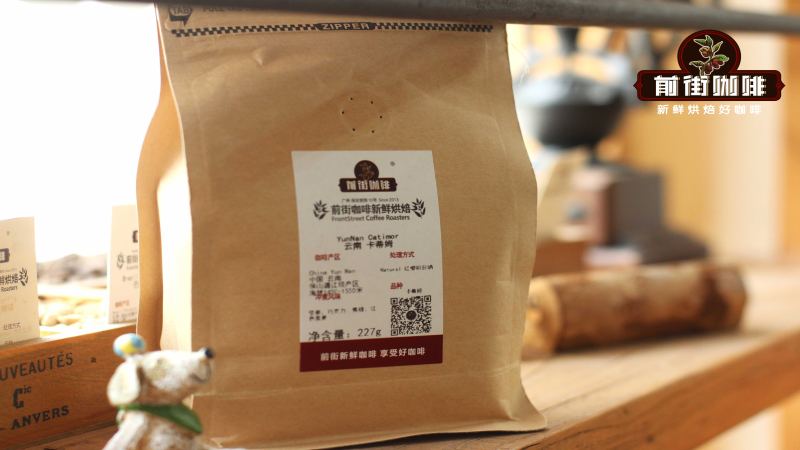
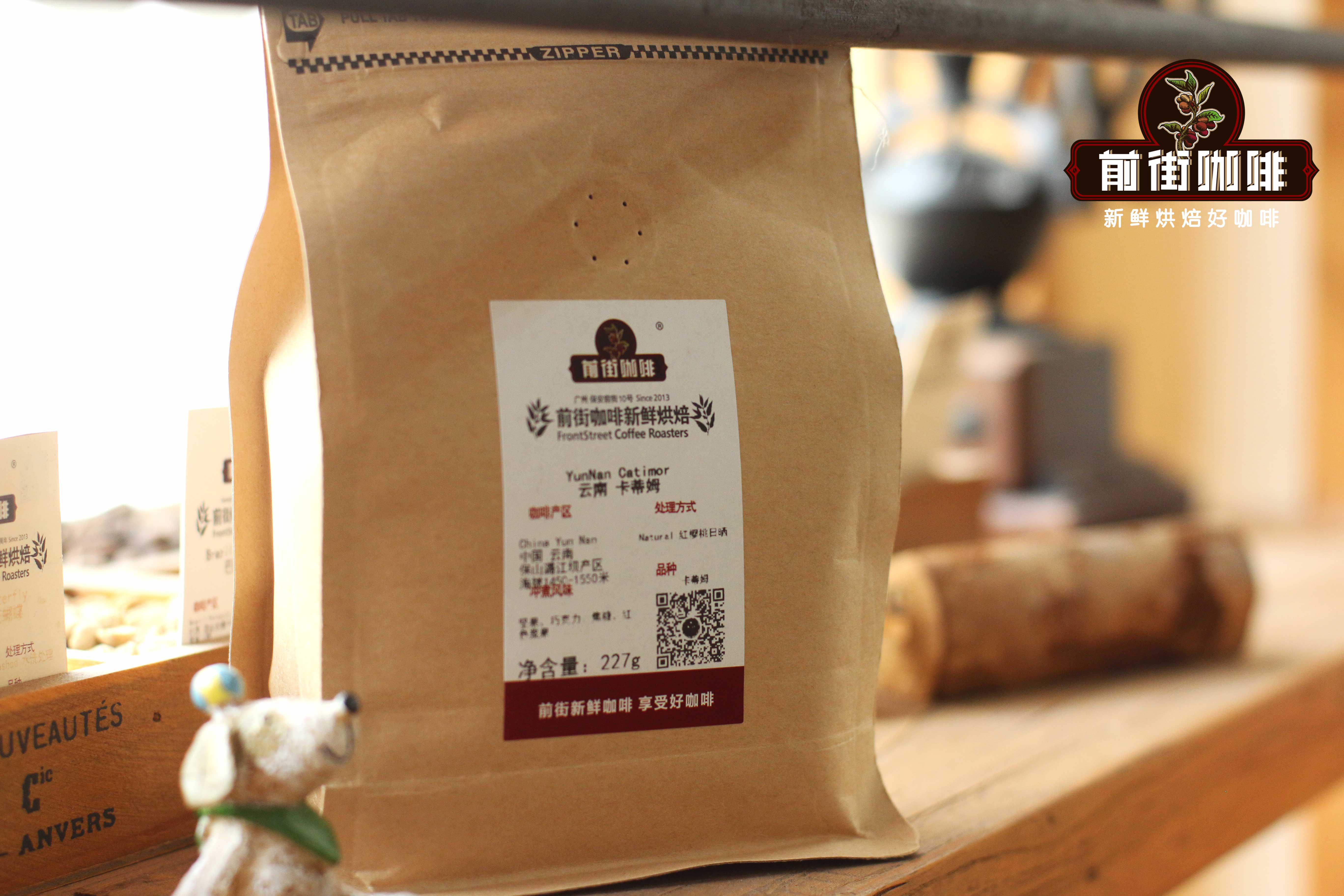
Front Street currently has three Yunnan coffee beans on sale, namely "Front Street 2013 Natural Typica Coffee Beans," "Selected Regional Daily Beans - Front Street Yunnan Baoshan Washed Catimor Coffee Beans," and "Front Street Black Cocoa Basic Blend Coffee Beans," composed of washed Yunnan small beans and semi-washed Brazilian Red Bourbon.
All three beans carry the signature flavors of the Yunnan production region: nutty, caramel, and plum-like notes. The difference among them is that "Front Street Natural Typica" has a cleaner flavor, with acidity, sweetness, and bitterness in balance, and a prominent sweet aftertaste, suitable for extraction by pour-over, cold brew, French press, and other methods;
"Front Street Yunnan Small Beans" leans toward nutty, chocolate, and herbal notes, while retaining the flavor characteristics of the Yunnan production region. It is suitable for pour-over brewing as black coffee, allowing consumers to experience, with the highest cost-effectiveness, the charm of the regional flavor presented by Yunnan coffee beans under traditional processing methods;
"Front Street Black Cocoa Basic Blend" is specially designed for espresso, with lower acidity and better crema performance, suitable for extraction with home coffee machines and moka pots.
The above content is compiled by CoffeeHunters, a coffee news website.


