







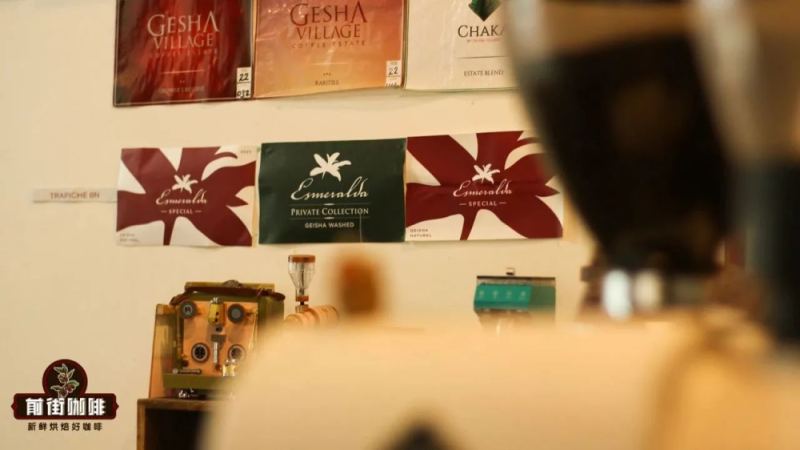
Geisha coffee beans are renowned worldwide for their intense floral aroma, citrus and berry notes, and delicate acidity, and Panama's Hacienda La Esmeralda is the key force that propelled it to the pinnacle. From the perspective of Front Street Coffee, this article systematically traces Geisha's journey from the forests of Ethiopia to Boquete, Panama, explains in detail the microclimatic conditions of Hacienda La Esmeralda's three major plots—Jaramillo, Canas Verdes, and El Velo—and provides a segment-by-segment explanation of the grade classification, flavor orientation, and brewing strategies for the Red Label, Green Label, and Blue Label lots. It also includes Front Street Coffee's roasting curve records for the Red Label and Green Label, as well as V60 three-pour brewing parameters for light-roasted Geisha, helping coffee enthusiasts gain a more complete understanding of this bean's character and extraction logic.
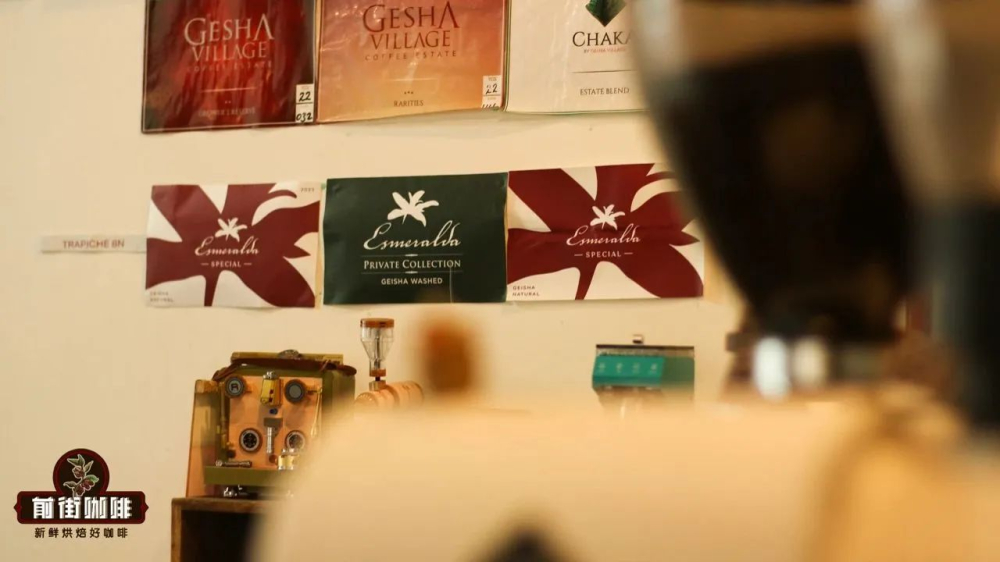
Today's main subject is Geisha coffee beans. But before we formally begin, Front Street Coffee would like to first pose a question: when it comes to Geisha, besides Panama, what else comes to mind? Many people will probably immediately think of Gesha Village in Ethiopia. Here Front Street Coffee wants to emphasize one point—the Geisha produced at Gesha Village in Ethiopia and Panamanian Geisha belong to completely different varieties at the varietal level, and must never be conflated.
Front Street Coffee Panama Coffee Producing Region Introduction
The Geisha variety was first discovered in 1931 in the Geisha forest of Ethiopia, and was subsequently sent to the Kenya Coffee Research Institute. Five years later, in 1936, it was introduced to Uganda and Tanzania; in 1953 it reached Costa Rica; and it was not until 1970 that it finally made its way to Panama. In fact, for a long time Geisha received little attention and was mostly planted merely as a windbreak tree species, until it encountered Panama's Hacienda La Esmeralda, when its fate was completely rewritten.
Panamanian Geisha's fame needs no elaboration today. The reason it has swept the globe lies precisely in that striking floral aroma, the interwoven citrus and berry tonality, abundant juicy body, and the increasingly refined acidity and layer-upon-layer flavor structure as the temperature drops. Panama's coffee cultivation is almost entirely concentrated around the Barú volcano area. Geisha is extremely demanding about growing conditions; only estates with sufficiently high altitude, cloud cover or shade trees, and sufficiently fertile soil can produce that fascinating floral aroma, delicate fruit acidity, and rich layering.
Introduction to the representative estate of Front Street Coffee's Boquete producing region in Panama—Hacienda La Esmeralda
In 1964, American banker Rudolph Peterson moved to Panama after retirement and bought Hacienda La Esmeralda in Boquete, initially focusing on dairy farming. Later his son Price gave up his medical career to help his father manage the farm, and in 1987 introduced the Caturra and Catuai varieties. In 1994 a wet-processing plant was built, giving them independent coffee-processing capability. In 1996, they purchased the neighboring Jaramillo farm—an area with superior geographical conditions and outstanding original coffee flavor—and incorporated it into the Hacienda La Esmeralda estate.
The reason Jaramillo was favored by the Petersons was that the coffee originally planted there had a pleasant orange aroma and floral-fruity notes, completely different from the traditional taste of Panamanian coffee. After cupping different areas of the farm one by one, they discovered that the source of the aroma was a group of unnamed coffee trees growing at the estate's highest point. Because yields were extremely low, the previous owner had used them only as windbreak trees, but the Petersons recognized their value and decided to plant and cultivate that area separately.
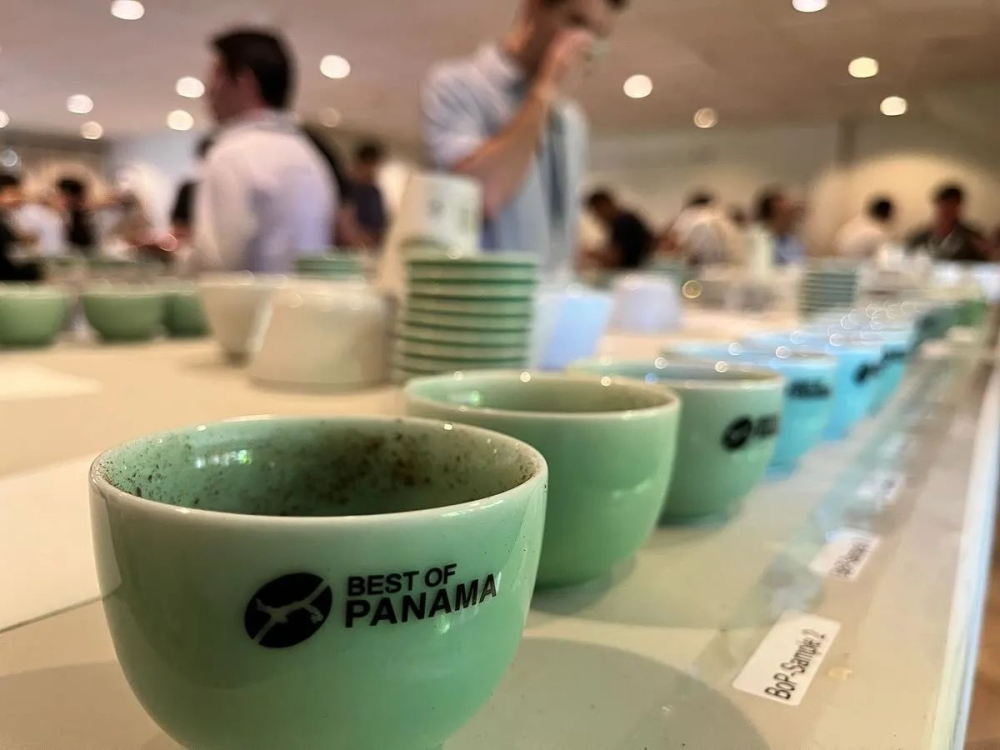
In 2004, this bean entered the Panama Best of Panama (BOP) green bean competition and won first place in one fell swoop, and thereafter advanced with unstoppable momentum. Later, expert identification confirmed that it was indeed the Ethiopian Geisha variety. After that, the Peterson family devoted most of their energy to infrastructure construction to support excellent lot separation and fine processing.
Front Street Coffee · Plot divisions of the Geisha variety at Panama's Hacienda La Esmeralda
Hacienda La Esmeralda is extremely meticulous in dividing its Geisha-growing plots, mainly into three major plots: Jaramillo, Canas Verdes, and El Velo. Each major plot is further subdivided into several small plots.
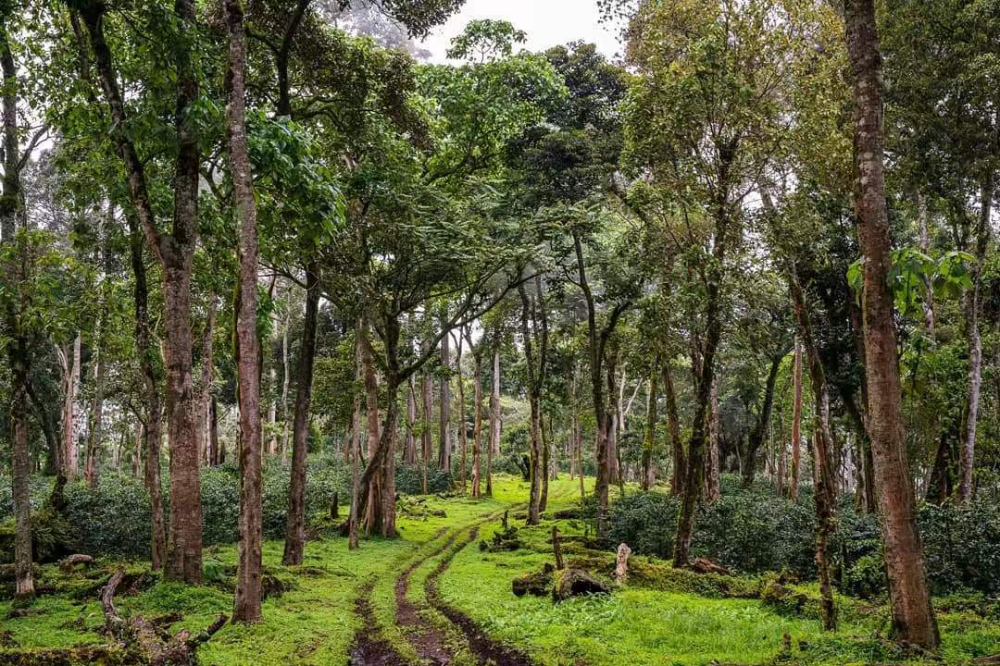
Jaramillo has annual rainfall of about 4000ml, average daytime temperature of 19-25°C, average nighttime temperature of 11-15°C, and average altitude of 1600-1700m. This plot is subdivided into 5 small plots: Mario, Noria, Reina, Bosque, and Buenos Aires.
Canas Verdes has annual rainfall of about 3500ml, average daytime temperature of 16-23°C, average nighttime temperature of 10-15°C, and average altitude of 1600-1800m. The larger Canas Verdes contains a total of 9 small plots: Lino, Coronado, Fundador, León, Montaa, Trapiche, Chinta, Cabaa, and Tumaco.
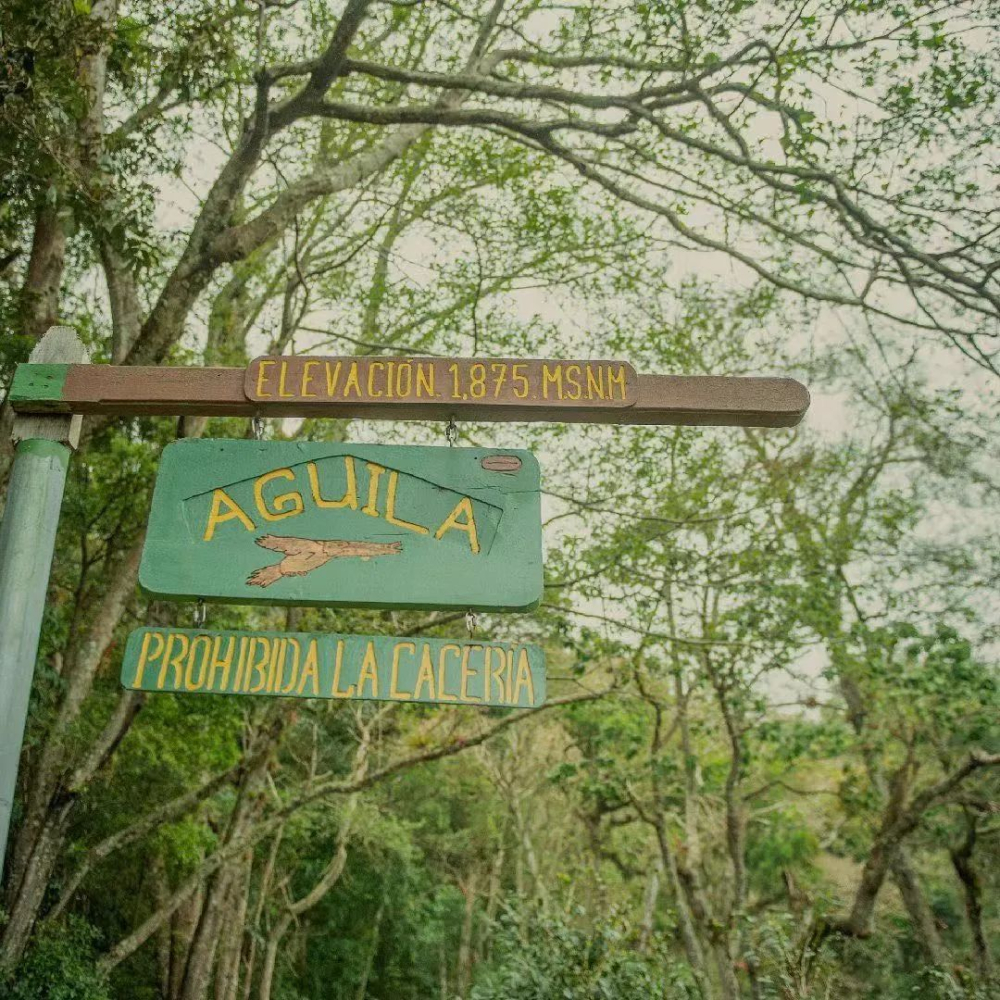
El Velo is the most recently purchased plot of Hacienda La Esmeralda, with an average altitude of 1700-1900m. In addition to growing Geisha and Catuai, this plot also retains a small number of other introduced varieties, such as Laurina, Pacamara, Mocha, and SL28. El Velo is divided into 7 small plots: Guabo, Portón, Durazno, Mural, Higo, Buena Vista, and guila.
Front Street Coffee 2024 latest lot Red Label
Panama Hacienda La Esmeralda Mario Red Label Geisha coffee beans
The Red Label Geisha coffee beans from the 2021 new crop season come from Hacienda La Esmeralda's Mario plot, which belongs to the estate's long-famous sub-estate Jaramillo.
This area can be described as loaded with honors; in 2004 Hacienda La Esmeralda became famous precisely through the Geisha from this plot. Hacienda La Esmeralda's fine processing techniques and strict quality-control standards give the slowly sun-dried Red Label Geisha a richer fruit tonality, with both excellent sweetness and acidity, and of course the signature sweet fruity notes and jasmine florals of Geisha.
Front Street Coffee 2021 latest lot Red Label Front Street Coffee Panama 2021 new crop season Hacienda La Esmeralda Mario Red Label Geisha coffee beans
Region: Boquete producing region, Hacienda La Esmeralda Estate: Jaramillo Estate, Mario plot
Altitude: 1700m Variety: Geisha Processing method: slow sun-dried
Hacienda La Esmeralda's quality-control standard is beyond doubt; the green beans are plump and full, with Geisha's easily recognizable long, pointed-at-both-ends shape, and virtually no obvious defective beans can be found.
Front Street Coffee Panama Hacienda La Esmeralda Green Label Geisha coffee beans
Although the Green Label lot does not participate in bidding, the coffee bean quality remains excellent. Green Label Geisha is grown at altitudes of 1600-1800 meters and mainly blends lots from different plots such as Jaramillo and Canas Verdes.
Because it uses a multi-plot blend model, Green Label and Red Label sometimes show extremely high flavor similarity. Although Green Label Geisha's grade is not as high as Red Label's, its cleanliness is outstanding, with an overall flavor profile leaning toward jasmine tea and relatively high acidity; sun-dried Green Label has good sweetness, pleasant sweet-and-sour balance, and easily brings to mind passion fruit and floral tea. The Green Label lot also offers either washed or sun-dried processing.
Front Street Coffee · Panama Hacienda La Esmeralda Geisha Green Label coffee beans Country: Panama Region: Boquete Estate: Hacienda La Esmeralda Altitude: 1600~1800m Processing method: washed Variety: Geisha
Guests often ask what exactly is the difference between Red Label and Green Label. Front Street Coffee offers the simplest reference: Red Label Geisha can be traced back to a specific small plot; Green Label Geisha is a blend and cannot be traced to its source. Precisely because Green Label uses a blended-bean model without detailed plot labeling, occasionally Green Label and Red Label can be highly similar in flavor.
Front Street Coffee Panama Hacienda La Esmeralda Blue Label Geisha coffee beans
Geisha 1500 is what we commonly call Blue Label Geisha, grown at altitudes of 1400-1500 meters, a blend of beans from the three plots Jaramillo, Canas Verdes, and El Velo. Its flavor shows faint floral notes and fruit acidity, and the body is relatively less substantial. Blue Label Geisha uses only washed processing.
But please note: since 2021, Hacienda La Esmeralda has adjusted its Geisha coffee grading. Starting from the 2021 crop season, Hacienda La Esmeralda has officially discontinued the Blue Label lot (Geisha 1500).
Front Street Coffee Panama Geisha coffee beans roasting record
Panama Hacienda La Esmeralda Geisha coffee beans are plump in form, with a thick and elongated body and relatively pointed ends. To highlight their floral-fruity aroma and bright acidity, Front Street Coffee uses a light roast. Note that even for the same Geisha variety, Front Street Coffee uses different parameters when roasting Red Label and Green Label, which requires the roaster to rely on long-accumulated experience to judge each bean's unique character.
Front Street Coffee Panama Hacienda La Esmeralda Red Label Geisha coffee beans roasting curve sharing
Charge at a drum temperature of 150°C, heat power 120, airflow damper opened to 3; turning point at 1'36", when the drum temperature is 140°C open the damper to 4 and keep the heat power unchanged; when the drum temperature is 147.6°C the bean surface turns yellow, the grassy smell completely disappears, and it enters the dehydration stage; when the drum temperature reaches 150°C adjust the heat power to 100 and keep the damper unchanged; at 7'38" wrinkles and dark spots appear on the bean surface, and the toast aroma clearly turns into coffee aroma, which can be defined as the prelude to first crack; at this point you need to listen clearly for the first crack sound, first crack begins at 8'10", open the damper to 4, develop for 1'28 after first crack, and drop at 189.5°C.
Front Street Coffee Panama Hacienda La Esmeralda Green Label Geisha coffee beans roasting curve sharing
Charge at a drum temperature of 190°C, heat power 150, airflow damper opened to 3; turning point at 1'36", when the drum temperature is 140°C open the damper to 4 and lower the heat power to 130; when the drum temperature is 150.8°C the bean surface turns yellow, the grassy smell completely disappears, and it enters the dehydration stage; when the drum temperature reaches 166°C adjust the heat power to 110; keep the damper unchanged; at 7'55", at 176 degrees adjust the heat power to 90; wrinkles and dark spots appear on the bean surface, and the toast aroma clearly turns into coffee aroma, which can be defined as the prelude to first crack; at this point you need to listen clearly for the first crack sound, first crack begins at 8'30", open the damper to 5, at 187 degrees adjust the heat power to 60; develop for 1'30 after first crack, and drop at 193.5°C.
Front Street Coffee Panama Geisha coffee beans brewing suggestions
Front Street Coffee takes into account that this Geisha is a light roast, and light-roasted beans have a lower coffee solid dissolution rate than dark-roasted beans. Therefore, to ensure the Geisha flavor can be fully extracted, a higher water temperature is used for brewing, along with a finer grind size. Some fans have noticed that Front Street Coffee has always recommended a coffee-to-water ratio of 1:15, while for Hacienda La Esmeralda Geisha it uses 1:16. This is because slightly widening the coffee-to-water ratio helps better experience Geisha's layering and flavor expression.
Filter cup: V60#01 Water temperature: 91°C Coffee dose: 15g Coffee-to-water ratio: 1:15 Grind size: medium-fine grind (78% passing rate on Chinese standard No. 20 sieve)
Front Street Coffee · Panama Geisha coffee beans brewing technique
Front Street Coffee uses staged extraction, also called three-pour brewing. Use 30 grams of water for a 30-second bloom, pour in a small stream in circles until 125 grams for the stage break, and when the water level is about to expose the coffee bed continue pouring until 240 grams and stop pouring; when the water level is about to expose the coffee bed again, remove the filter cup. (Timing starts from the beginning of the bloom.) Extraction time is 2'00"~2'10".
Front Street Coffee Panama Hacienda La Esmeralda Red Label Geisha coffee beans flavor description Bright rose floral aroma, citrus aroma, berries, complex fruits, honey, rich and substantial juicy body, rich flavor layers, pronounced sweetness Front Street Coffee · Panama Hacienda La Esmeralda Green Label Geisha coffee beans flavor description Jasmine, ginger flower, lemon, honey, Tieguanyin tea note, long-lasting finish
For more coffee bean information, please follow Coffee Workshop (WeChat public account cafe_style) For professional coffee knowledge exchange, please add WeChat ID kaixinguoguo0925
The above content is compiled by CoffeeHunters, a coffee news website.


