







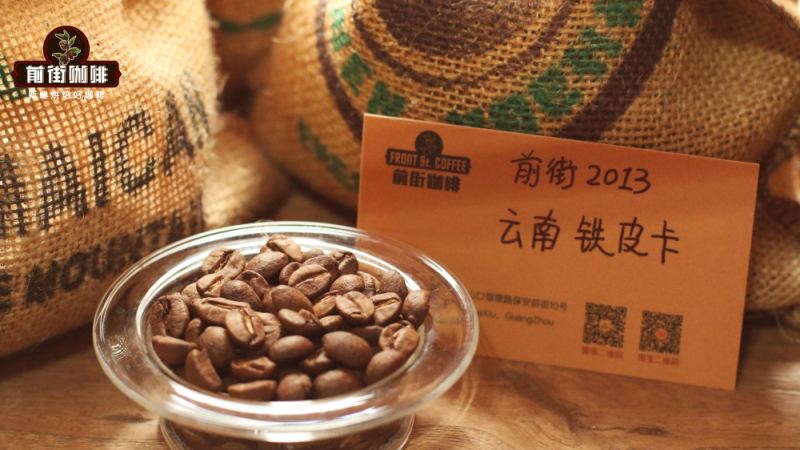
As China's most suitable coffee-producing region, Yunnan's small-bean coffee varieties have undergone a transition from Typica to Catimor. Front Street Coffee started with trial planting in Dazhen, Guangdong, and ultimately settled in Lincang, Yunnan, creating [Front Street 2013] with Typica beans. This article will take you through the background of coffee cultivation in Yunnan, the interspecific differences between Typica and Catimor, and the seven-year journey of this sun-dried Typica from seed to cup. We will also explore the origin of the name "Yunnan small-bean coffee" and its flavor characteristics, and share the standard V60 brewing parameters used in our café, so you can experience the layered changes of black tea notes and nutty tones at home.
For more specialty coffee knowledge, welcome to follow our WeChat official account: Front Street Coffee (FrontStreet Coffee)
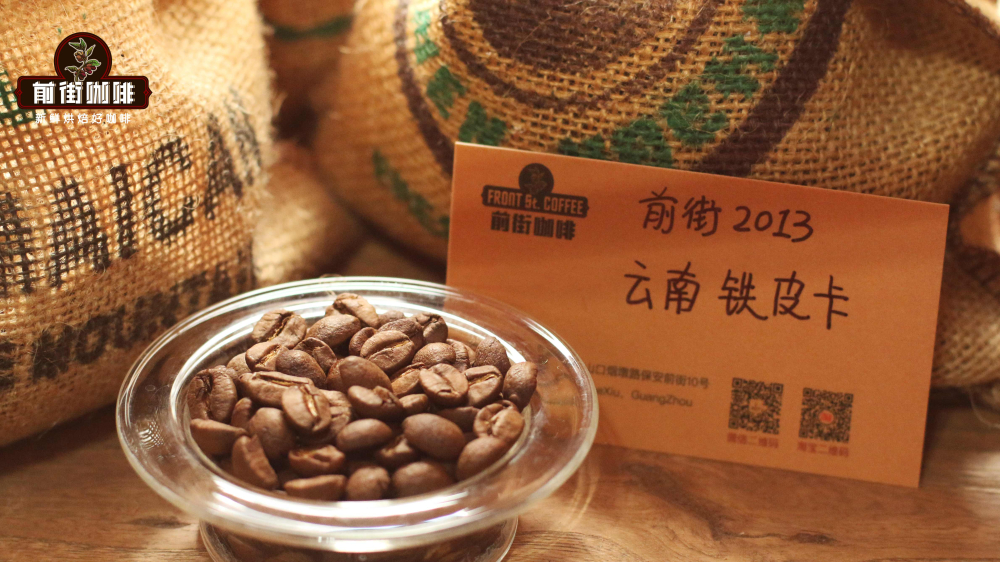
In Front Street Coffee's (FrontStreet Coffee) bean list, [Front Street 2013] is a bean that customers often ask about. Many people are curious because of its "Front Street" prefix.
In fact, Front Street's path differs from most cafés — we planted coffee first, then opened a café. Initially, Front Street tried planting in a place in Guangdong called Dazhen, and the bean variety chosen was Catimor, which is now common in Yunnan. If you are not yet familiar with Catimor, Front Street will write a dedicated article later. At that time, China's coffee industry was just starting out, industry information was scarce, and Front Street's understanding of coffee was not yet solid. After more than half a year of practice, Front Street deeply realized that coffee cultivation is inseparable from altitude and soil. Only by placing high-quality bean varieties in matching altitude zones can you harvest specialty coffee with outstanding flavor.
So Front Street expanded its view to the whole country. Friends who follow China's coffee market will easily notice that domestic coffee cultivation is mainly concentrated in three provinces: Yunnan, Fujian, and Hainan. Hainan's average altitude is relatively low, which happens to lack one of the most critical conditions for coffee cultivation. Front Street observed that most coffee grown in Hainan is Robusta. Robusta has extremely low requirements for the growing environment, and its genetics determine that it is easier to manage, higher-yielding, and lower-cost than Arabica.
Robusta's caffeine content is twice that of Arabica, it has more antioxidants, and it is less susceptible to disease. But everything has two sides: despite its high yield and strong disease resistance, Robusta is generally considered more bitter and rougher in mouthfeel than Arabica, so it is often not regarded as a specialty coffee bean.
Looking across the country, Yunnan is the most suitable place for growing coffee. At that time, Yunnan mostly grew Arabica, so Front Street Coffee (FrontStreet Coffee) made an important decision: abandon cultivation in Guangdong and turn to Yunnan. Front Street did not directly buy estates, but innovatively bought hillsides suitable for coffee cultivation. Previous experience told Front Street that Catimor was not the variety it sought, so it chose the more expensive Typica. Why is Typica more expensive than Catimor, which was popular in Yunnan at the time (and even now)?
The difference between Catimor and Typica:
First, Typica. Like all Arabica, Typica should have originated in southwestern Ethiopia. At some point in the 15th or 16th century, it was brought to Yemen. By 1700, seeds from Yemen began to be cultivated in India.
In 1696 and 1699, coffee seeds were sent from India's Malabar Coast to the island of Batavia (now Java, Indonesia). These few seeds were the source of the later distinctive Typica variety. Typica is one of the most important coffee genome groups in the world, with excellent flavor, but its yield is relatively lower than other bean varieties. Many world-famous coffees are Typica varieties, such as Jamaican Blue Mountain and Hawaii Kona estates. In Yunnan, however, coffee farmers chose Catimor in pursuit of higher returns.
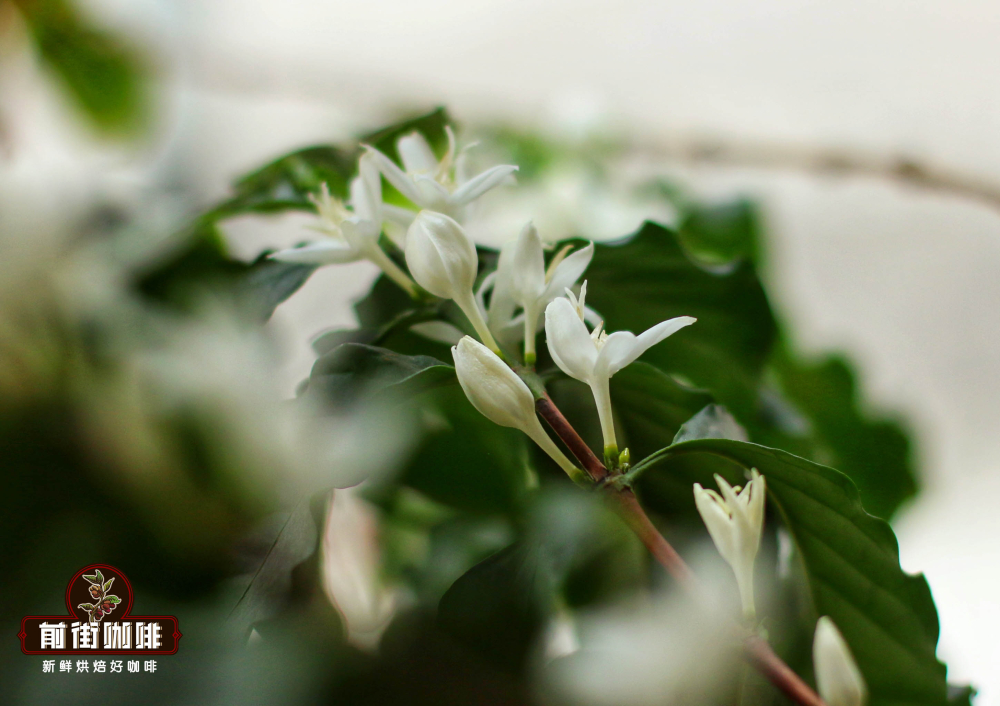
Second, Typica is extremely susceptible to disease. Catimor is a hybrid of Catuai and Timor coffee. Because it carries Robusta genes, it has stronger disease resistance and higher yield. But precisely because of this, Catimor inherited Robusta's strong flavor characteristics, and its rough flavor is often criticized by coffee enthusiasts.
Yunnan's coffee cultivation altitudes are generally not high. Although estates may state an upper limit of around 1,800 meters, not all coffee trees grow at the highest point; most are planted near the qualified altitude line for Arabica. Since the altitude is not high enough, good bean varieties are used to compensate. In order to obtain the most satisfactory results under limited conditions, Front Street chose Typica, which has a higher price per plant and lower yield, and implemented stricter selection and management systems, recruiting and training a large number of skilled workers. All these efforts ultimately condensed into the coffee bean [Front Street 2013].
From seed to cup, [Front Street 2013] took 7 years. At first, Front Street remained in a trial-and-error stage, and coffee takes three to four years from seedling to fruiting. Without experience, it is difficult to succeed on the first try. Afterward, through multiple rounds of variety improvement, this batch of Typica, only about 200 kilograms, was finally produced. Hard work pays off — after this coffee was listed, it sold out quickly due to its excellent flavor quality.
Next, Front Street Coffee (FrontStreet Coffee) will brew a [Front Street 2013] for everyone according to café serving standards.
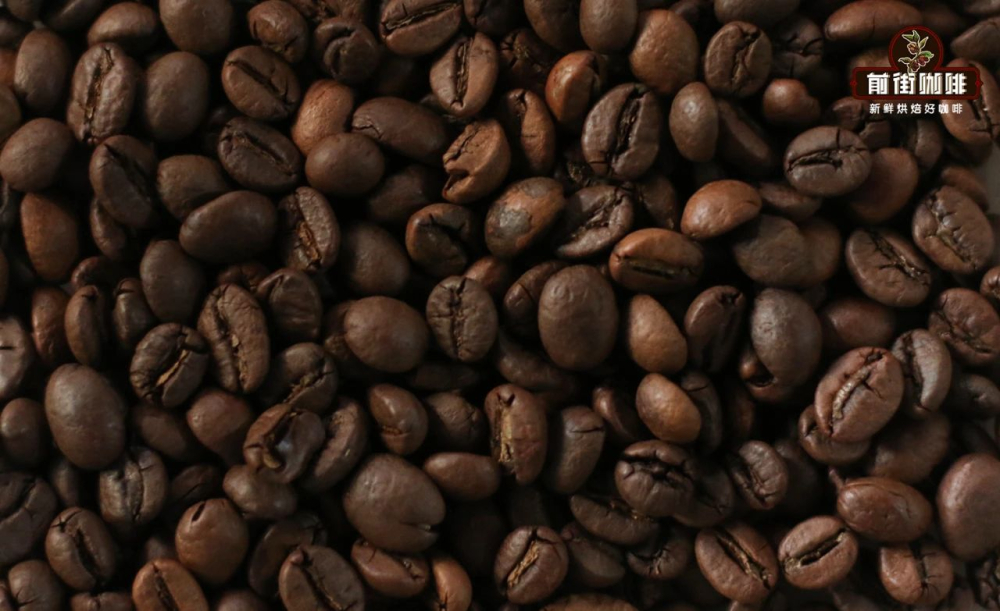
[Front Street 2013]
Origin: Lincang, Yunnan
Estate: Front Street Coffee (FrontStreet Coffee)
Variety: Typica
Processing method: Sun-dried
Altitude: 1,300 meters
Dripper: V60
Water temperature: 91℃
Dose: 15 grams
Coffee-to-water ratio: 1:15
Grind size: fine granulated sugar coarseness (80% passing rate on China standard No. 20 sieve)
Extraction method: Front Street uses a standard three-pour extraction. Use twice the coffee dose in water for blooming, about 30 seconds. Pour in a small stream in a circular motion from the center outward to 125 grams. After the water level drops, continue pouring to 225 grams and stop. Wait until the water in the upper chamber drips through, then remove the dripper. Control the extraction time to about 2 minutes.
The most prominent characteristic of this coffee is its outstanding black tea notes, obvious nutty tones, and rich layering. As the temperature changes, you can perceive a flavor transition from berries to citrus. The finish leans toward brown sugar sweetness.
Of course, the yield of [Front Street 2013] is far from enough to satisfy Front Street Coffee's (FrontStreet Coffee) customers, so Front Street also purchased a batch of Catimor coffee in Baoshan, which is what we commonly call Yunnan small-bean coffee. Yunnan coffee beans belong to the Arabica species, commonly known in China as Yunnan small-bean coffee. Yunnan's high-quality geography and climate provide good conditions for coffee growth, and currently four major production areas have formed: Lincang, Baoshan, Dehong, and Pu'er.
Regarding the origin of the name "Yunnan small-bean coffee," Front Street will also give a brief explanation. At first, small-bean coffee broadly referred to Yunnan's Arabica beans, and today many people think it refers to Typica. However, with the rise of China's coffee market, Yunnan coffee farmers replaced the original Typica with Catimor in pursuit of yield. The large-scale cultivation of Catimor naturally made the name "small-bean coffee" fall to it. So what are the flavor characteristics of Yunnan small-bean coffee? Front Street believes that compared with Typica, Catimor's flavor is less refined and elegant, with a heavier tea-like note and a considerable decrease in acidity.
The above content is compiled by CoffeeHunters, a coffee news website.


