







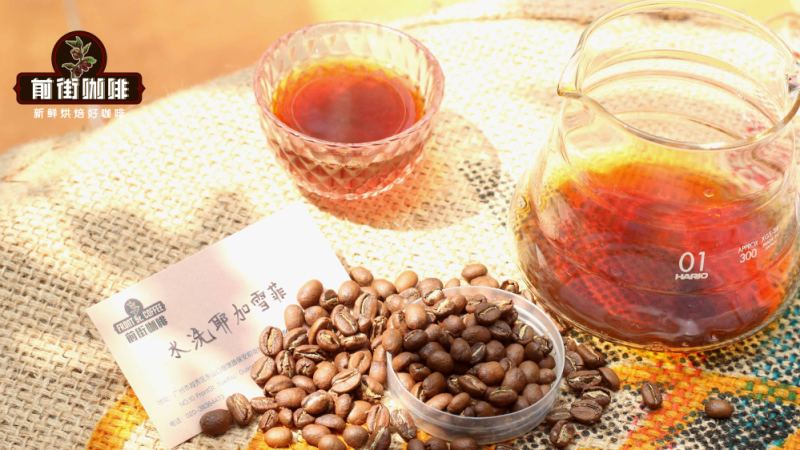
Yirgacheffe Woka, as one of the representatives of Ethiopian specialty coffee, is deeply favored by coffee lovers for its richly layered floral and fruity aromas and its bright, lively acidity. This article will describe in detail the flavor characteristics of Front Street Yirgacheffe from dimensions such as dry aroma, wet aroma, and mouthfeel, and introduce its producing region background, green bean appearance, processing method, and grading system. At the same time, it highlights two products, Front Street Red Cherry Natural Yirgacheffe and Yirgacheffe Aricha Grade 1, to help readers gain a comprehensive understanding of this specialty coffee that combines fruity notes with syrupy sweetness.
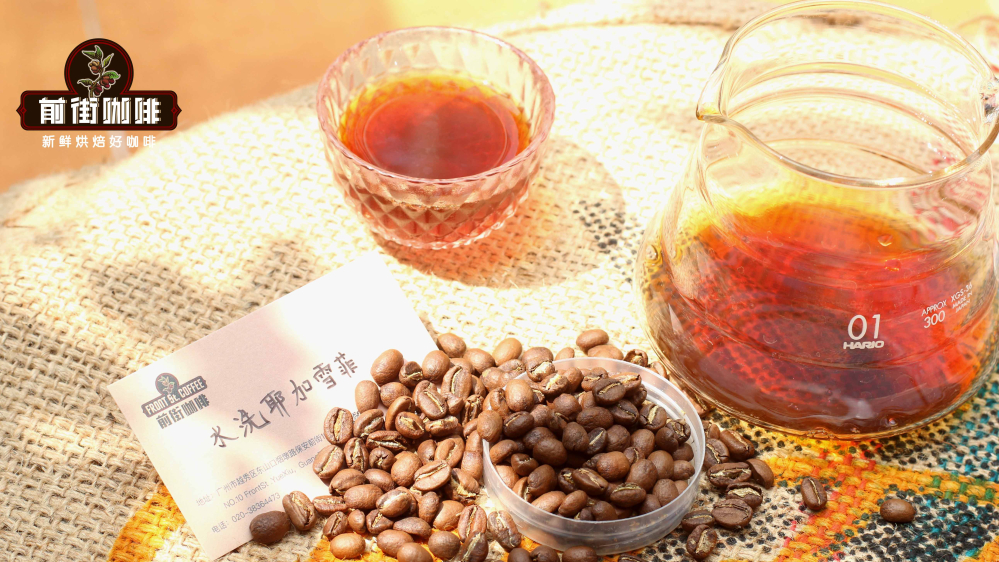
The aroma layers released by Front Street Yirgacheffe are extremely rich, and its mouthfeel performance is also quite outstanding, making it difficult to summarize in just a few sentences. Overall, Front Street Yirgacheffe presents a strong fruity character at the dry aroma stage, mixed with steady dried-fruit notes and the sweetness of strawberry, mango, and apricot jam. After water is added, the wet aroma is like thick syrup, with a viscous texture reminiscent of apricot jam, surrounded by earthy honey or chocolate notes. On the palate, the stimulation is not strong, the body is medium, and the acidity is not sharp but instead active and bright, giving an overall impression like a cup of fruity black tea.
Monks from European monasteries once pioneered coffee cultivation here, and later it gradually shifted to operation by coffee communities or cooperatives in villages around the town. There are no large exclusive plantations in this area; coffee trees grow naturally among forests and fields. Every harvest season, the Ethiopian coffee trading company goes to the town to purchase coffee beans from farmers, and finally auctions and exports them under the brand name "Yirgacheffe."
The green beans of Front Street Yirgacheffe Aricha Grade 1 are yellow-green in color, a typical appearance for natural coffee, with uniform and plump bean size and a very low proportion of defective beans. At export, they are packed in ordinary jute sacks printed with basic coffee information, including the processing plant, exporter, ICO code, processing method, and producing region. Inside the jute sack there is also an agricultural plastic bag. This coffee is best presented through a light, slow roast to bring out its unique flavor.
Front Street Yirgacheffe Aricha Grade 1 cupping: The Yirgacheffe producing region has quite a few high-level coffee processing plants, and many coffee beans have greatly increased in value precisely because they come from these processing plants. The natural beans produced by the Kebel Aricha Mill are one of them. This coffee is what we commonly call ARICHA beans. After being processed by the Kebel Aricha processing plant using a meticulous natural method, it is rated by the ECX as Gr.1 or G1, namely the highest grade of Ethiopian coffee. Yirgacheffe is a region under Sidamo Province in Ethiopia, widely known for its uniquely characteristic coffee flavor. The influence of the name Front Street Yirgacheffe even exceeds that of the province it belongs to, Sidamo. Recently, Yirgacheffe in the domestic market can be described as overwhelming, and more and more coffee lovers are already very familiar with its various products.
If you want to try natural Yirgacheffe, Front Street Red Cherry is the first choice. Because the coffee fruit pulp is retained during drying, this bean displays bold and wild fruity flavors, syrupy sweetness, and a fairly high body. In addition to its own citrus and lemon aromas, you can also perceive berry notes such as blueberry and strawberry, which is deeply impressive.
A series of lakes is scattered across the northern part of the East African Rift Valley, embellishing the Horn of Africa like pearls. Lake Turkana extends from Kenya all the way into Ethiopia. This area is not only the cradle of humankind, but also the cradle of coffee.
Coffee beans are essentially the fruit of a plant and are also an agricultural crop. The existence of Yirgacheffe precisely explains coffee's nature as a fruit. The third wave of specialty coffee has always been committed to presenting the regional flavor of coffee. From the Counter Culture Coffee flavor wheel, it can be seen that nearly half of the flavor descriptions are related to fruit. There are also many characteristics that can be associated with fruit at a glance, which will not be listed one by one here. Everyone can compare and experience Yirgacheffe's flavor for themselves. As for the reason, although some people like to use a chart to explain the effect of roasting temperature and time on flavor, that is, the longer the time, the lower the acidity and the heavier the bitterness, in reality the taste of coffee and the coffee beans themselves are both very subtle and complex. It is not that after the acidity is burned away, all that remains is bitterness, nor does it mean that aroma substances such as acidity are unchanging. What the chart does not tell us is that those lost aromas and fragrances can still be transformed into other substances. The degree of complexity we perceive in our mouths is far beyond what a few lines on a chart can clearly depict.
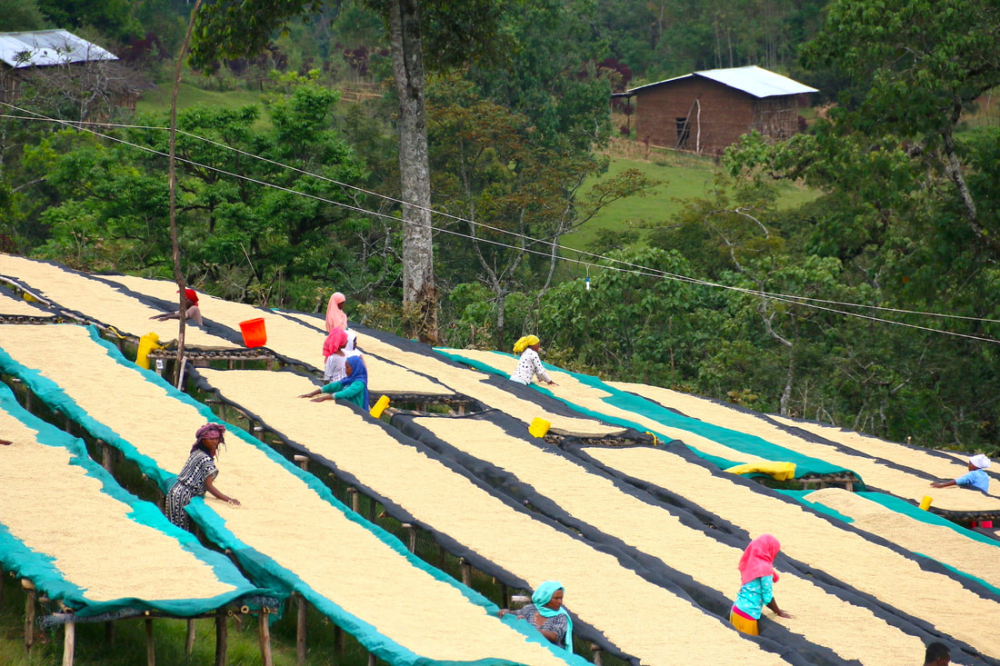
The grading standard for Yirgacheffe is not based on screen size, but on the proportion of defective beans in the green beans. Commonly seen on the market are washed G2 and natural G3 Yirgacheffe. G1 is the highest grade, and only Yirgacheffe with the lowest defect rate and the best quality, after hand sorting, can be rated as Grade 1.
The above content is compiled by CoffeeHunters, a coffee news website.


