







Which Arabica Variety Grows in Colombian Coffee Regions?
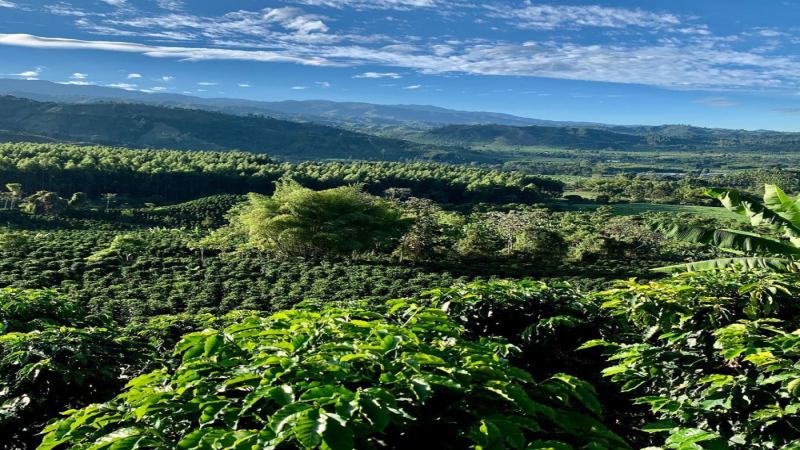
Colombia's low latitude, high altitude, and varied terrain make it a major specialty origin. Main cultivated varieties are Caturra and Castillo, with smaller amounts of Bourbon, Pink Bourbon, and Geisha. Caturra, a natural mutation of the Arabica variety Bourbon found in Brazil in 1937, is shorter and higher yielding but has weaker disease resistance.
Specialty regions such as Huila, Cauca, Nariño, and Tolima show distinct terroir, and processing ranges from washed and semi-washed to anaerobic natural and anaerobic enzyme-washed. Colombian coffee growth typically carries a full body with nut, chocolate, and caramel aromas and a smooth fruit acidity.
Colombia, with its low latitude, high altitude, and diverse terrain, has become a major origin of specialty coffee worldwide. Front Street Coffee currently offers seven single-origin Colombian beans, covering Rose Valley, Flower Moon Night, Big Belly Button, Sidra, Hope Estate Geisha, decaf beans, and Huila everyday beans. This article will systematically review the characteristics of Colombia's main cultivated varieties—Caturra, Castillo, Pink Bourbon, and Geisha—analyze the terroir conditions of specialty regions such as Huila, Cauca, Nariño, and Tolima, and introduce processing methods including washed, semi-washed, anaerobic natural, and anaerobic enzyme-washed, and finally provide Front Street's roasting curves, cupping flavors, and brewing parameter recommendations for each bean.
For more specialty coffee information, welcome to follow our WeChat official account: Front Street Coffee (FrontStreet Coffee)
Colombia's terrain is complex and diverse, located in a low-latitude, high-altitude region, providing unique natural conditions for specialty coffee cultivation. Front Street Coffee (FrontStreet Coffee) currently offers seven Colombian coffee beans, and this number alone shows how popular Colombian beans are in the market. In recent years, special processing methods have become increasingly popular, and Colombian coffee beans can adapt to a variety of special processing methods. After processing, the flavors change richly, but this has also sparked considerable controversy, which is beyond Front Street's scope of discussion. Front Street has always believed that the coffee flavor of the Colombian origin itself should have a full body and a relatively heavy texture, with aromas of nuts, chocolate, caramel, and a smooth, pleasant fruit acidity, with a perfect balance among acidity, bitterness, and sweetness.
Coffee varieties cultivated Colombian coffee is mainly Caturra and Castillo, with a small amount of Geisha and Bourbon also planted.
Caturra: This is a natural mutation of the Arabica variety Bourbon, discovered in Brazil in 1937. The Caturra tree is shorter than Bourbon. Because it inherits Bourbon's lineage, its disease resistance is relatively weak, but its yield is higher than Bourbon's. Although it was first discovered in Brazil, Caturra is not suitable for growing in Brazil, so Brazil did not plant it on a large scale. Instead, it became widely popular in Central and South America, with large areas of Caturra planted in countries such as Colombia, Costa Rica, and Nicaragua.
Castillo: This is the most widely planted coffee variety in Colombia. It is popular because of its good resistance to leaf rust. Starting in 1961, Cenicafe began researching the Timor variety, which has Robusta lineage. After that, CENICAFE continued its research and development work. In 2002, it released its second disease-resistant variety, Tabi (a hybrid descendant of Typica, Bourbon, and Timor), and in 2005 it released Castillo, the most successful disease-resistant variety to date. After the large-scale leaf rust outbreak in 2008, Colombia began vigorously promoting the cultivation of Castillo.
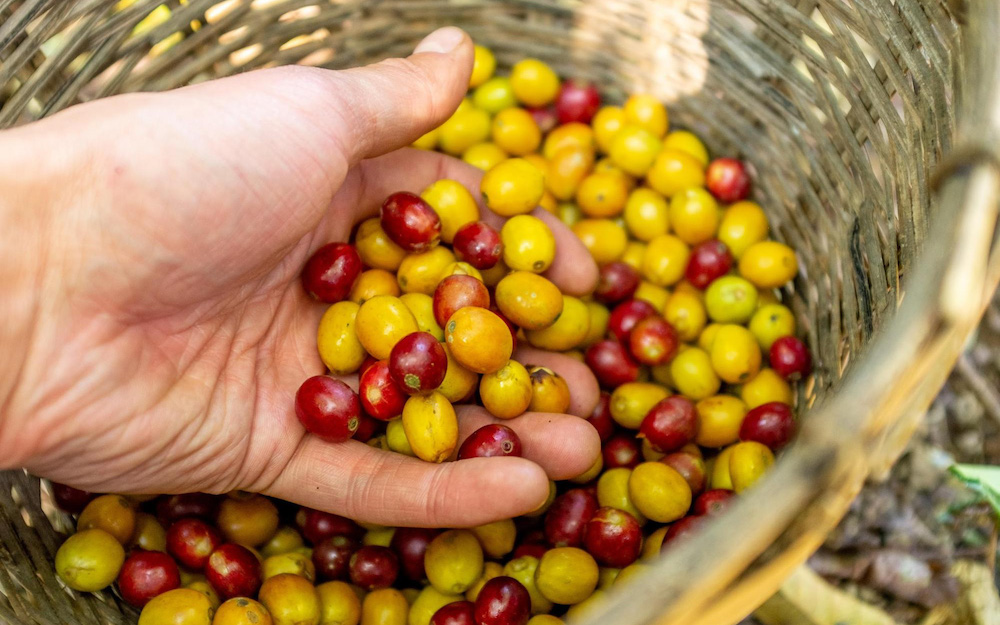
Pink Bourbon: As the name suggests, its coffee cherries turn a romantic pink when ripe. This is a very rare new variety, developed by crossing Red Bourbon and Yellow Bourbon. The main reason Pink Bourbon is rare is that maintaining this beautiful pink color is extremely difficult. Sometimes some orange Bourbon is harvested, because the final color of the coffee fruit is determined by recessive genes in the pollen grains. Among the pollen grains selected for crossing, some may carry the yellow gene tending toward Yellow Bourbon, while others may carry the red gene tending toward Red Bourbon. These are all recessive genes and can very easily interfere with one another.
Geisha: Although this variety's flavor is exquisite, such an elegant expression comes from a specific growing environment. Geisha is very picky about its growing environment, requiring cultivation in areas with higher altitude, cloud mist shading or abundant shade trees, and fertile soil. Geisha grown at high altitude has obvious floral aromas and refined, elegant fruit acidity, which is one of the reasons it has become popular worldwide. Colombia's Geisha cultivation is somewhat connected to Panama's Hacienda La Esmeralda. As early as 2007, Hope Estate first purchased Callejón Estate next to Hacienda La Esmeralda to learn Geisha cultivation techniques. After mastering them, it transplanted the Geisha seedlings back to an area at 1,700 to 1,950 meters above sea level with large day-night temperature differences and a rich microclimate. These are the "descendants" transplanted in the early days from Callejón Estate next to Hacienda La Esmeralda. Coffee-growing regions
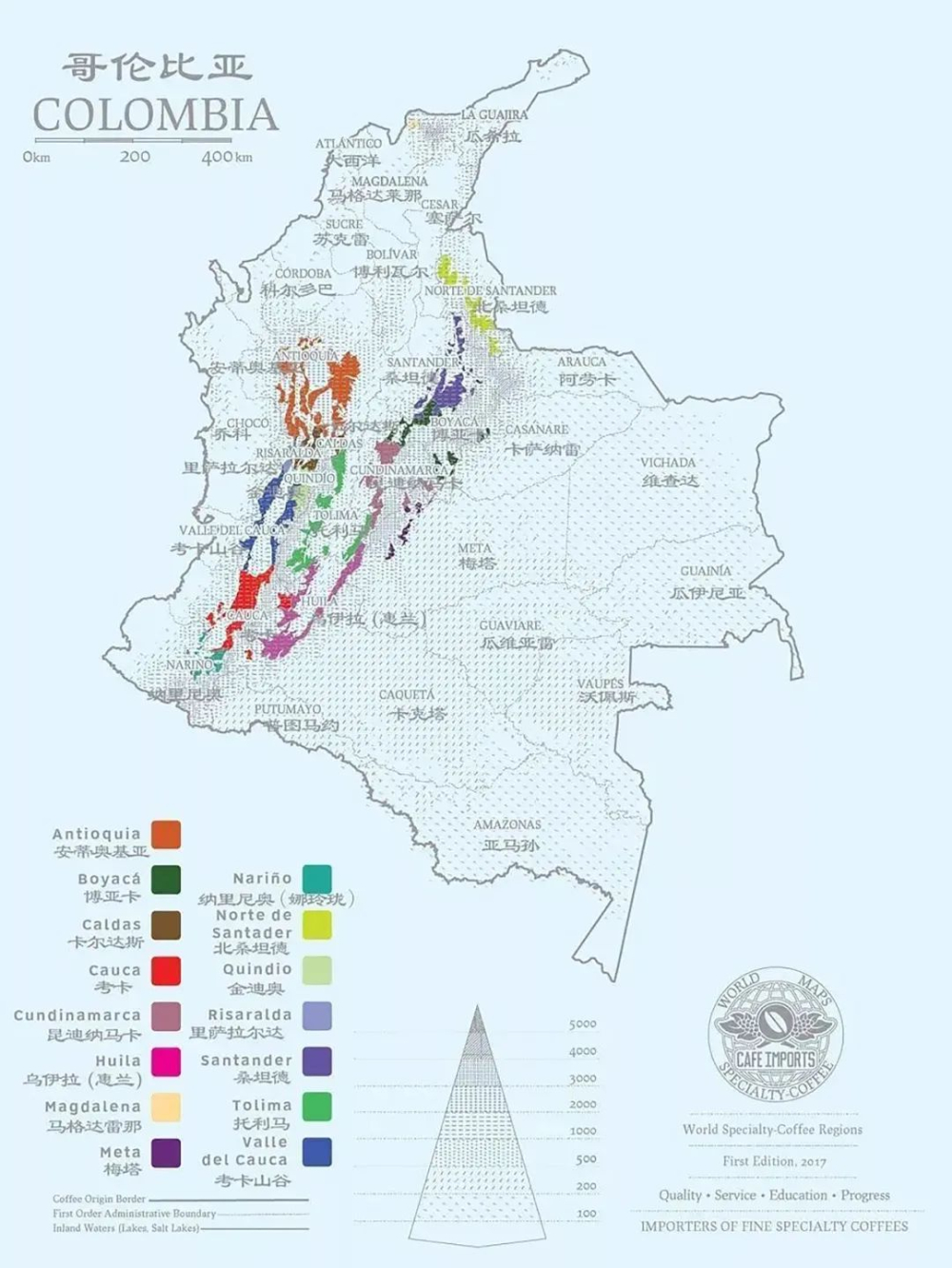
Colombian coffee is best known for producing regions such as Medellin, Armenia, and Manizales, customarily referred to collectively as "MAM." Colombia's specialty bean-producing regions are concentrated in the south, at altitudes above 1,500 meters, including San Augustin in Huila, Popayan in Cauca, Nariño, and Tolima. The coffee produced in these places all has refined acidity and berry aromas, accompanied by caramel aroma and abundant sweetness.
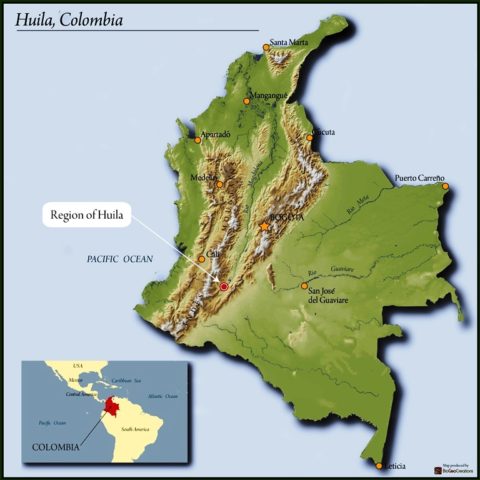
Huila: Located at the southern end of Colombia's Central Cordillera in the south of the country, it is the country's most famous specialty coffee region. Surrounded by mountains, with cultivation altitudes above 1,500 meters, Colombia's most important rivers converge here, bringing abundant water resources and moisture. Contrary to the general impression of mass-market Colombian coffee as balanced, mellow, and smooth, many smallholder micro-lot Colombian specialty beans actually have strong regional flavor characteristics. In recent years, as the international market has placed more importance on coffee quality and raised requirements for specialty coffee, the previous system of grading by bean size has gradually been abandoned in favor of micro-regional selections organized by smallholder producers. Dozens of smallholders combine their individual harvests into a single micro-lot for sale, which also creates more opportunities to directly select many exceptionally high-quality coffees from specific smallholders through lot-by-lot cupping.
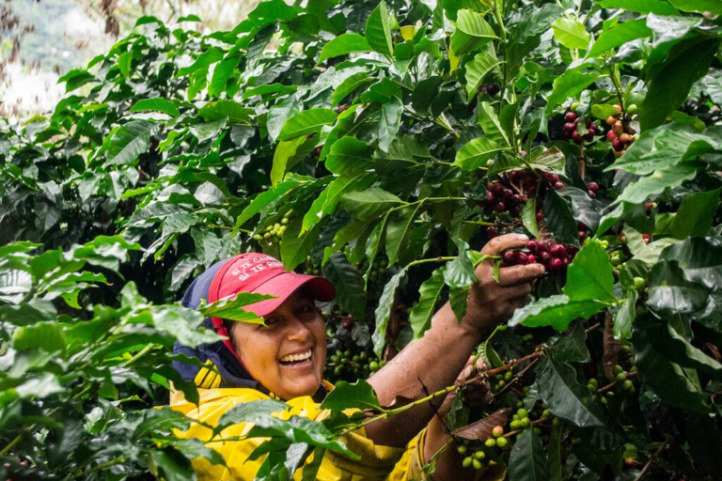
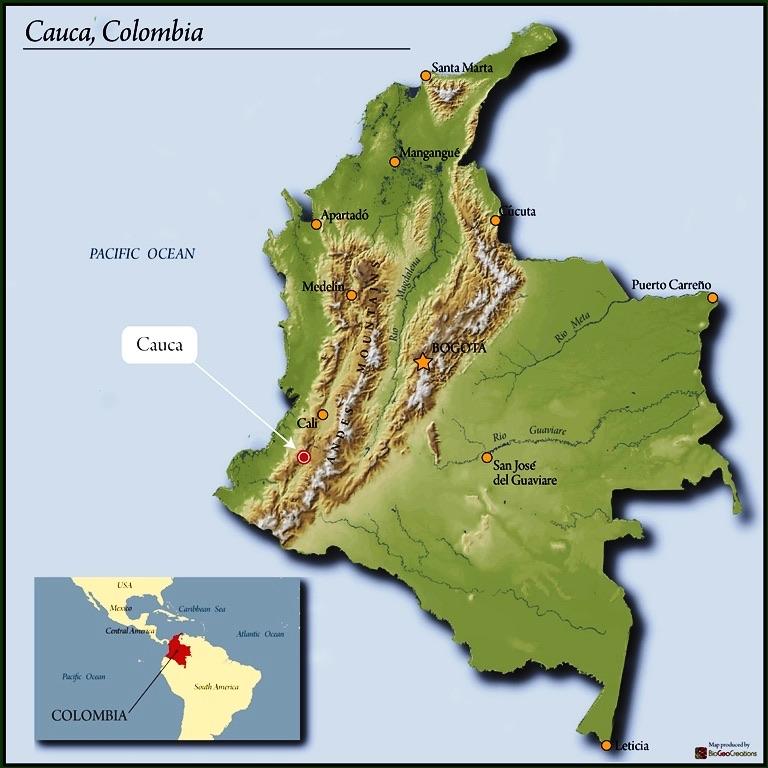
Cauca: It is a region with certified Colombian coffee origin. Its average altitude is 1,758 meters, rising to as high as 2,100 meters. The region's terrain, rainfall, temperature, and volcanic soil provide suitable conditions for coffee cultivation. Eighty percent is mountainous, with parallel mountain ranges in the east and center that are part of the Andes. The central range contains two major volcanoes, Sotara and Petacas. On the border, Cauca is similar to other southwestern producing regions, with rainfall showing a clear monomodal distribution. The dry season mainly occurs from August to September each year, after which the rainy season brings a concentrated coffee flowering season, followed by a concentrated coffee harvest the following year.
The biggest climatic difference from other producing regions is probably the relatively large temperature variation, with an average daily temperature of 11°C and an average daytime temperature of 18°C. The day-night temperature difference is an important factor in producing high-quality coffee. The low nighttime temperatures and relatively higher altitude slow the pace of coffee growth, allowing the coffee seeds and beans to more fully absorb nutrients from the coffee fruit, and also creating Cauca coffee's better acidity and its widely praised distinctive sweetness.
Nariño: Located in the southwest of the country, bordered by the Pacific Ocean to the west and Ecuador to the south, with the Andes running through the entire province. Coffee is grown at high altitude on the cloud belt from 1,600 to 2,300 meters. The soil is fertile volcanic geology. The beans are small in shape but full, with an emerald green color. The vast majority of Nariño's annual production is purchased by large American bean dealers. Narino Province is located in southwestern Colombia, bordered by the Pacific Ocean to the west and neighboring Ecuador to the south, with the Andes running through the province. Here there are majestic mountains and beautiful scenery, and many rivers pass through the region flowing southward. It belongs to Colombia's high-mountain coffee-growing area and has nurtured many specialty coffee smallholders. Nariño's total annual production is about 150,000 bags, while the portion belonging to hand-selected beans is only about 6,000 bags.
Tolima: Adjacent to Huila and Cauca, it is traversed north-south by the Andes (M. Andes) and the Cordillera (M. Cordillera). Between these two famous mountain systems runs the Magdalena River (R. Magdalena) from south to north. The name Tolima comes from the earliest people who lived here, the "Pijao people." In this ancient people's language (Pijao word), tolima means "snow-covered," "snowed." Tolima's farms are generally slightly larger than those in other southern Colombian producing regions, at about 10 to 15 hectares. Cooperatives are also common here, with farmers sending their own small batches of coffee cherries to the cooperative's processing plant. Some farmers also choose to process their own coffee using their own small-scale processing facilities capable of handling the day's harvest. Coffee processing methods Colombian coffee beans use a wide variety of processing methods, among which anaerobic processing and washed processing are the main ones.
Washed processing: Coffee farmers first pour the harvested coffee cherries into a large water tank. Underdeveloped, defective beans will float to the surface, while ripe, full fruits will sink to the bottom. At this point, the defective beans (fruits) floating on the surface are removed. Then the outer skin and pulp of the coffee fruit are removed with a pulper, and at this stage the coffee beans still have a slippery layer of mucilage attached. The coffee beans with mucilage are placed into a fermentation tank for 16 to 36 hours, during which microorganisms break down the mucilage. After fermentation is complete, a large amount of clean water is used to remove the remaining mucilage from the coffee beans. Finally, the washed coffee beans are dried. Front Street believes that the washed processing method has both gentle and intense acidity, a moderate body, and a sweet, spicy aroma.
Semi-washed method: It is only suitable in certain specific regions of Colombia where the climate has a fairly long dry period, and only then can it be used to process local coffee. Coffee produced by this method is sticky, and the mucilage is not removed through fermentation in a tank. Therefore, coffee produced by this semi-moist processing method contains characteristics of both the wet processing method and the dry processing method. Front Street believes that semi-washed coffee has quite good acidity, sweetness, flavor, and aroma; the only drawback is that such coffee does not have as intense a flavor as pure natural or washed coffee.
Anaerobic natural: The whole coffee cherry is first subjected to anaerobic fermentation and then to natural drying. Basically, the anaerobic process makes the coffee more uniform and easier to monitor; the aerobic process is more complex and harder to monitor. In an anaerobic environment, the breakdown rate of sugars in the mucilage is slowed, and the pH value also declines more slowly, extending fermentation time and thereby developing better sweetness and a more balanced flavor. The temperature controlled during anaerobic fermentation must be below 10 to 15 degrees. In a sealed and clean stainless steel fermentation container, the coffee beans ferment for three days in an oxygen-free state.
Anaerobic enzyme-washed: Anaerobic enzyme-washed removes defective coffee beans through washing. Finally, the processed coffee beans are placed into a sealed container, into which carbon dioxide is injected to expel oxygen. In an oxygen-free environment, the breakdown rate of sugars in the coffee mucilage is slowed, and the pH also declines more slowly, extending fermentation time, thereby developing better sweetness and a more balanced flavor in the coffee.
Anaerobic double enzyme-washed: This is based on anaerobic washing, with a second anaerobic fermentation using special enzymes. After the coffee fruit is removed from the anaerobic environment, the skin and pulp are removed by machine, and the coffee beans with mucilage are placed into a plastic bag or other sealed container in an anaerobic environment for another round of anaerobic fermentation. A processing method that undergoes the above two anaerobic fermentations is called double anaerobic fermentation.
Under the Colombia category, Front Street has offered many coffees in total, among which 7 single-origin coffees are deeply loved by many friends for their unique flavors: Front Street Colombia Rose Valley coffee beans, Front Street Colombia Flower Moon Night coffee beans, Front Street Colombia Big Belly Button coffee beans, Front Street Colombia Sidra coffee beans, Front Street Colombia Hope Estate Geisha coffee beans, as well as Front Street Colombia decaf coffee beans and Colombia Huila everyday beans.
As the "face" among origin coffee beans, Front Street Huila coffee because it has the highly recognizable flavor of the region and is also a low-priced, high-value coffee bean. When Front Street Coffee (FrontStreet Coffee) chooses to offer a "daily bean," it carefully selects beans from major producing regions that best represent the local original flavor.
Region: Santander, Colombia Estate: Big Tree Estate Altitude: 1700m Processing method: Anaerobic enzyme-washed Variety: Caturra
Region: Colombia Huila Aceituno Farm Altitude: 1800m Processing method: Anaerobic natural Variety: Caturra
Country: Colombia Region: Huila Altitude: 1500-1800 meters Variety: Caturra Processing method: Washed
Front Street roasting suggestions [Rose Valley roasting suggestion]
Considering that Colombia Rose Valley is double anaerobic washed, in order to preserve the beans' fruit profile and rich acidity while also showing a full body and sweetness on the palate, a medium roast profile is used.
Bean charging temperature: 180°C, Yellowing point: 6'00", 151°C First crack: 9'48", 183.3°C Development after first crack 2'10", discharged at 197°C
[Flower Moon Night roasting suggestion]
Considering that Colombia Flower Moon Night is anaerobic natural processed, in order to preserve the beans' fruit profile while also showing a full body and sweetness on the palate, a medium roast profile is used.
Bean charging temperature: 180°C
Yellowing point: 6'2'', 150.6°C
First crack: 10'20'', 185°C
Development after first crack 1'50'', discharged at 196°C
[Colombia everyday bean roasting suggestion]
Because this Colombian Huila bean has relatively high density, uniform screen size, and a relatively full bean shape, Front Street's roaster wanted to express aromas of nuts, dark chocolate, and caramel in this bean, so after first crack the heat was adjusted to extend the roasting time, discharging at 3'00'', 202°C.
Charge when the roaster temperature reaches 185°C, set airflow to 3, heat to 120, turning point 1'32", 98.6°C; when the roaster temperature reaches 140°C, open airflow to 4; at this point the bean surface turns yellow, the grassy smell completely disappears, and the dehydration stage begins. When the roaster temperature reaches 192°C, adjust the heat to 80 and open airflow to the maximum 5; at 8'30", ugly wrinkles and dark patches appear on the bean surface, and the toast aroma clearly turns into coffee aroma, which can be defined as the prelude to first crack. At this time, listen carefully for the sound of first crack. First crack begins at 9'15". After first crack, develop for 3'00'', discharging at 202°C.
Front Street cupping flavors [Flower Moon Night cupping flavors]
Dry aroma: berries, nuts, fermentation aroma
Wet aroma: berries, strawberry, chocolate [Rose Valley cupping flavors]
Dry aroma: fermentation, peach, strawberry
Wet aroma: honey, rose, peach
[Colombia everyday bean cupping flavors] Dry aroma: nuts, spices Wet aroma: berries, nuts, chocolate, caramel
Front Street Coffee (FrontStreet Coffee) brewing suggestions
Dripper V60 Water temperature 90°C Dose 15 grams Coffee-to-water ratio 1:15 Grind size fine granulated sugar (80% passing through China standard No. 20 sieve)
The setting used varies with coffee beans' different altitudes and roast levels, so Front Street Coffee (FrontStreet Coffee) suggests recalibrating the grinder at regular intervals. To calibrate coffee grind size, you can use a standard No. 20 coffee inspection sieve. If you do not have a sieve at home, Front Street Coffee (FrontStreet Coffee) suggests judging by observing the flow rate: if the flow is too fast, the grind is too coarse; if the flow is too slow, the grind is too fine.
Front Street Coffee (FrontStreet Coffee) uses staged extraction, also called three-stage brewing: use 30 grams of water for blooming for 30 seconds, then pour in a slow circular stream until 125 grams for the first stage. When the water level drops and is about to expose the coffee bed, continue pouring until 225 grams and stop pouring. When the water level drops and is about to expose the coffee bed, remove the dripper. (Start timing from the beginning of blooming.) Extraction time is 2'00"-2'10". Rose Valley brewing flavor : stunning peach characteristics, accompanied by aromas of rose and liqueur chocolate, fragrant and rich, entering the mouth like drinking peach juice. It has both the high-quality sweet acidity of black grapes and a silky mouthfeel like cream toffee.
Flower Moon Night brewing flavor: Rich strawberry aroma, strawberry acidity on entry, jam-like sweetness in the middle, a slight cocoa finish, and a juicy mouthfeel. Everyday bean brewing flavor: Nuts, dark chocolate, soft fruit acidity in the middle, and caramel sweetness.
The above content is compiled by CoffeeHunters, a coffee news website.


