







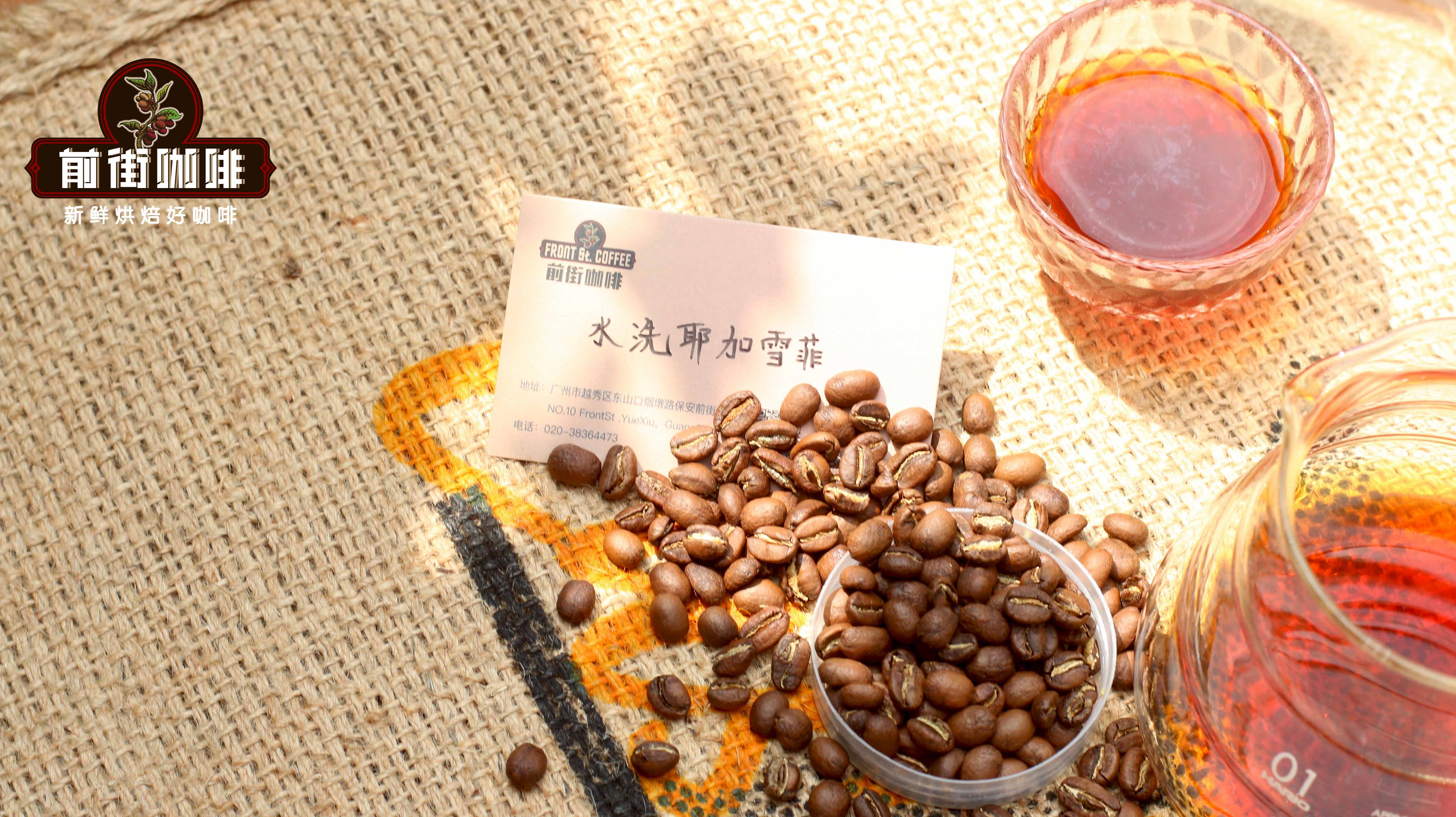
Yirgacheffe Adola is one of the representatives of Ethiopian specialty coffee, and its outstanding taste is inseparable from its exquisite washed processing. Since the 1970s, this producing region has been famous for washed beans, and Front Street Coffee's Gutingding is one of its highest-grade representatives. This article will provide a complete analysis of the six major steps of the washed processing method, from flotation, depulping, fermentation and demucilage to sun drying and storage, and will also introduce the rise of sun-dried Yirgacheffe in recent years, such as the improved details of Front Street Coffee's Sun-Dried Red Cherry. At the same time, it shares Front Street Coffee's recommended grind size, water temperature, coffee-to-water ratio, and staged pouring technique to help you fully bring out this bean's floral and fruity aroma and bright acidity.
Front Street Coffee's Yirgacheffe has joined the ranks of the world's top specialty beans, and its excellent washed processing is the key driving force. Since the 1970s, this producing region has used washed processing as the mainstream method and gradually developed into Ethiopia's largest washed-bean producing region. Front Street Coffee's Gutingding is one of the highest-grade representatives here, and it is a must-try for those just entering the field of specialty coffee.
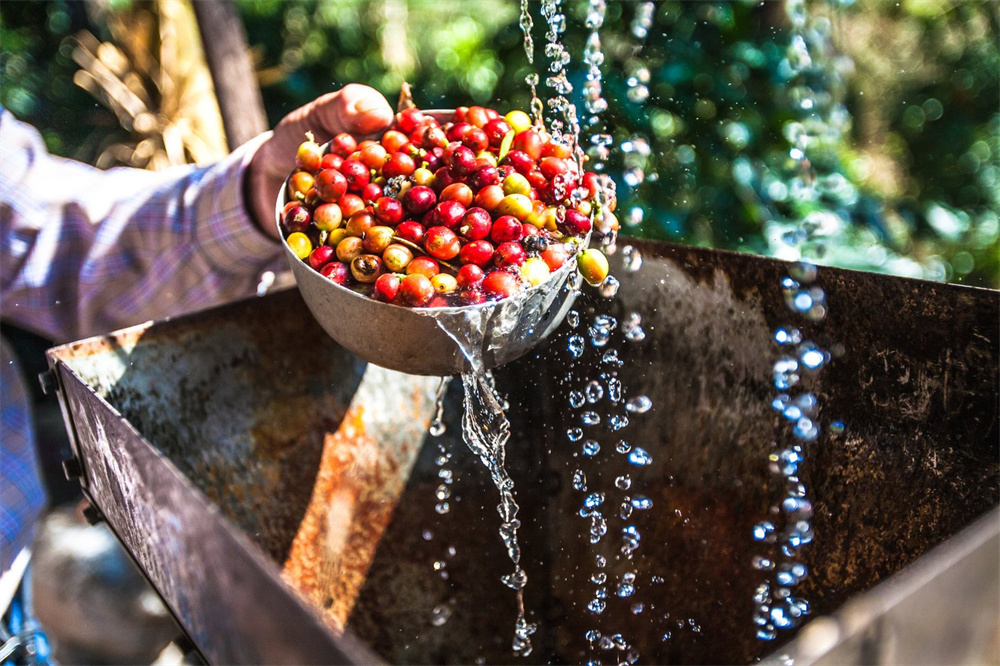
Washed processing method process/steps ① Cleaning/collection/flotation/float selection After the coffee cherries are picked, they need to be transported to the processing station for weighing within 6 to 12 hours, and then soaked and washed. The purpose is to remove defective cherries that float on the water surface due to insufficient density, and to remove branches, sand, stones, and other debris.
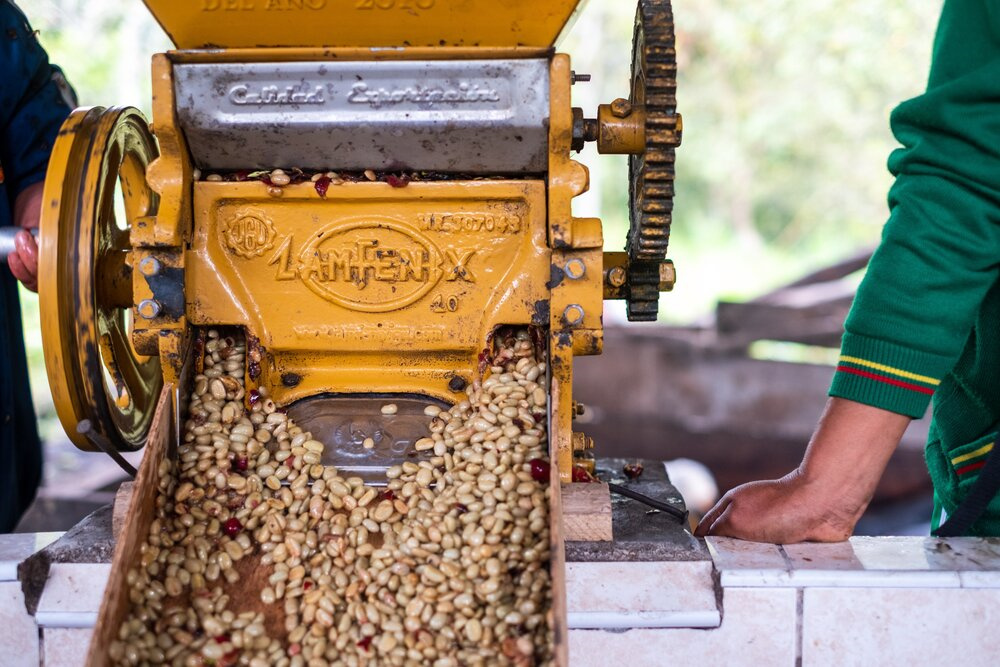
② Depulping and removing the flesh Using a machine, the skin and flesh are stripped away, leaving only the coffee beans wrapped in parchment. At this point, a layer of mucilage still adheres to the bean surface, and it needs to be removed through fermentation, which produces acidic substances.
③ Fermentation & demucilage This layer of mucilage is the pectin part. Its sticky adhesion is strong and difficult to remove directly, so it needs to be placed in a clean water tank for about 18 to 36 hours, relying on the acidic decomposition produced by pectin fermentation to break down the mucilage.
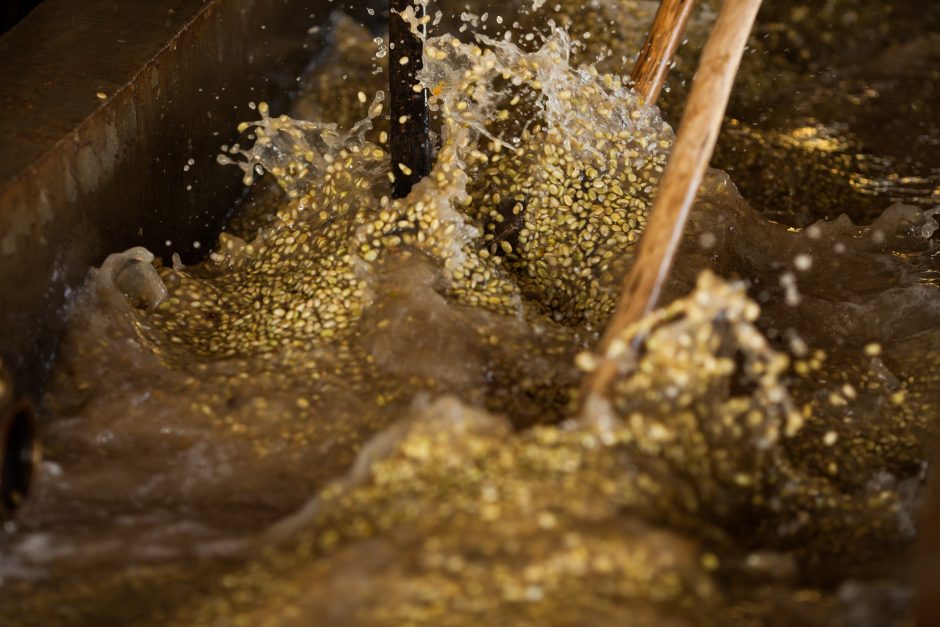
④ Washing off the pectin After the mucilage is broken down, a small amount of clean water is added and stirred so that the decomposed pectin separates from the beans. After washing is completed, coffee beans wrapped in parchment and hard skin are obtained.
⑤ Sun drying After washing, defective beans are picked out, and then the beans are spread on concrete ground, tarps, or drying beds for sun drying. The drying time depends on the weather, usually 5 to 14 days. After drying, the moisture content of the coffee beans drops from 55% to 11%.
⑥ Storage After drying is completed, the coffee beans are stored with the parchment, and the parchment will not be removed until just before export.
However, in the past two years, Ethiopia has broken with convention and successively launched stunning sun-dried Yirgacheffe beans, quickly becoming a popular choice in the specialty market. Front Street Coffee's Sun-Dried Red Cherry is a high-quality single-origin coffee made by optimizing the details on the basis of traditional sun drying: only fully ripe all-red cherries are picked, they are turned regularly to avoid uneven heating, and then multiple rounds of screening remove defective beans, ultimately presenting a rich yet clean floral and fruity aroma.
Sun-dried Yirgacheffe sets strict standards for red cherry harvesting. Before sun exposure, unripe green cherries and defective cherries are manually removed, and during the sun-drying process, damaged or moldy fruits are removed again. After two weeks, the sugar and essence of the fruit flesh seep into the coffee beans, and the moisture content drops to 12%. Then the hardened fruit flesh, pectin layer, and pods are all scraped off together. After the beans are taken out, they still need to undergo density and bean-color testing. After eliminating defective beans, workers then visually pick out any defective beans that slipped through. These layers of quality control create the clean, refined, and intensely captivating fruity aroma of Front Street Coffee's sun-dried Yirgacheffe beans. By 2015, sun-dried Yirgacheffe had already reached G1 grade, with quality and appearance surpassing G1 washed beans.
Front Street Coffee's Sun-Dried Yirgacheffe is roasted until it is discharged at the密集 stage of first crack, and it is brewed by pour-over or siphon. When grinding the beans, you can already smell the striking sun-dried fruity aroma, with obvious sweetness, while also carrying the citrus and jasmine floral notes that are the signature of Front Street Coffee's washed Yirgacheffe.
Grind size: Front Street Coffee recommends a medium-fine grind (78% passing rate on China standard No. 20 sieve). If it is too coarse, it is difficult to extract rich substances, and the coffee taste will be rather thin; if it is too fine, it is easy to over-extract at high temperature, resulting in bitterness. The water temperature can be 90-91°C, which can more fully present the bright fruit acidity. Because the acidity is relatively high, the brewing ratio can be 1:16 to dilute the acidity concentration and allow light flavors such as floral aroma and tea-like notes to emerge. Brewing technique: Front Street Coffee recommends a staged pouring method so that different flavor substances are better released as the coffee bed rises in temperature in stages.
Brewing method: First pour in 30g of water and bloom for 30 seconds; at this point the coffee expands relatively fully. In the second stage, pour 120g of water in a small circle from the center, with a pouring height of 5cm, gently, and there is no need to stir deliberately. When the water level drops to 1/2 of the coffee bed, begin the third stage of pouring. In this stage, gently spiral from the center outward, with a flow rate of about 4g/s, until pouring reaches 240g and then stop. After all the coffee liquid in the dripper has finished dripping, end the extraction. The time is 2'00"-2'10".
The above content is compiled by CoffeeHunters, a coffee news website.


