








Why Do Panama Geisha Coffee Beans Taste So Distinct?
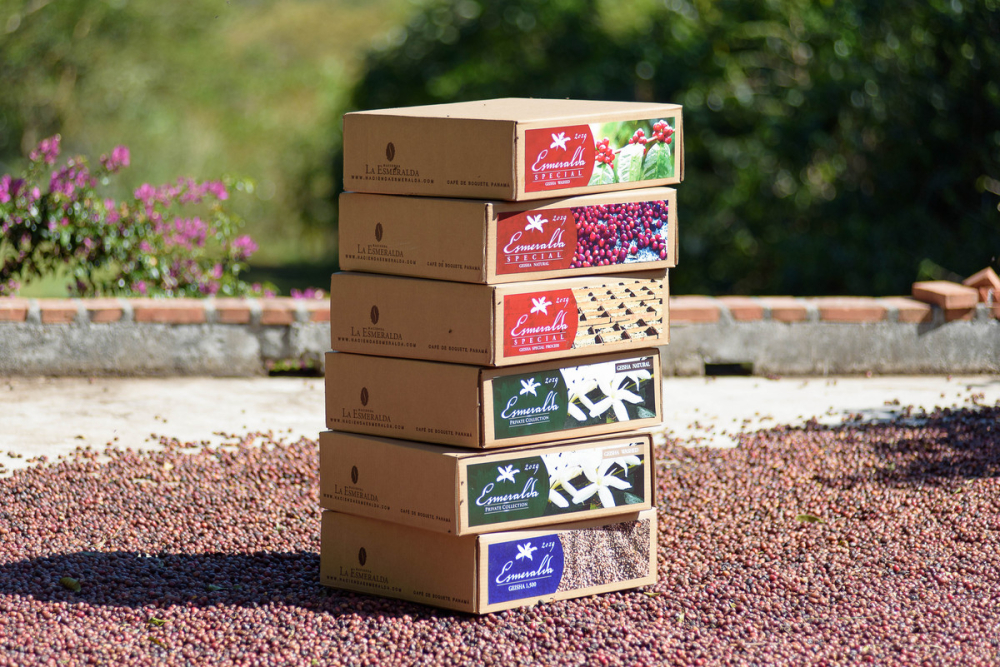
Panama is the origin that brought geisha coffee beans to the world stage, and Boquete is its core region. The country's rugged, S-shaped terrain, equator-close tropical maritime climate, and cool nights suit high-quality coffee. Hacienda La Esmeralda grades its geisha as Red Label, Green Label, and Blue Label.
Panamanian coffee shows a pure, distinctive flavor and body with balanced acidity, carrying a hint of Blue Mountain character. Washed and natural processing further separate the cups, and estates such as Janson, Elida, and Hartmann also ship notable lots. The country borders Colombia, Costa Rica, the Pacific, and the Caribbean.
Geisha coffee has captivated coffee lovers worldwide with its bright, fresh floral and citrus aromas, and Panama is the core origin that brought this legendary variety to the global stage. From Front Street's perspective, this article systematically reviews Panama's coffee-growing conditions and development history, takes a deep dive into the terroir characteristics of four major regions including Boquete and Volcan, and provides a complete introduction to the grade classifications and flavor differences of Hacienda La Esmeralda's Red Label, Green Label, and Blue Label Geisha. At the same time, Front Street will also share information on coffee beans from well-known Panamanian estates such as Janson, Elida, and Hartmann, as well as a comparison of washed and natural processing methods, helping coffee enthusiasts gain a comprehensive understanding of the allure of Panamanian coffee.

When it comes to Geisha, Front Street believes coffee lovers are certainly no strangers to it. This coffee has won over coffee fans around the world with its uniquely distinctive flavor—there is no doubt about that. Friends who have visited Front Street's shop to taste Geisha coffee all praise its bright, fresh flavor with floral and citrus aromas, which is truly stunning. So in this article, Front Street will take you into Panama and talk about its Geisha coffee.
Panama Coffee Growing Conditions
Panama is located on the Isthmus of Panama in Central America, bordering Colombia to the east, the Pacific Ocean to the south, Costa Rica to the west, and the Caribbean Sea to the north. The country is S-shaped, connecting North America and South America, with the Panama Canal running north to south linking the Atlantic and Pacific Oceans, earning it the reputation of "Bridge of the World."
After reviewing relevant materials, Front Street learned that Panama's terrain is quite rugged overall, with interlacing valleys and ravines. Apart from the coastal plains in the north and south, most of the country is mountainous. Because it is close to the equator, it has a typical tropical maritime climate—humid during the day, cool at night, and with abundant rainfall—making it very suitable for growing high-quality coffee. Front Street believes that Panamanian coffee has quite pure and distinctive flavor and body, with balanced acidity, carrying a hint of Blue Mountain coffee's character.
Panama Coffee Development History
According to Front Street's research, Panama's coffee history can be traced back to 1780. At that time, a retired British naval captain planted the first Typica seedlings in Panama's Boquete Valley, and later colonists introduced coffee to the western highlands.
Of course, during the colonial period, coffee cultivation naturally did not focus on quality but aimed at mass production, so for a long time Panamanian coffee lagged behind its neighbor Costa Rica, with output only one-tenth of the latter's.
It was not until 1989 that seven well-known Panamanian coffee estates jointly founded the Specialty Coffee Association of Panama (SCAP), which began to emphasize specialty coffee cultivation. In 1996, Panama held a green bean competition and auction, aiming to unite small coffee growers nationwide to promote the Panama coffee brand and encourage healthy competition. Front Street also learned that the reason Panama's scientific management of coffee leads the industry is that when the United States assisted Panama in building the canal at the end of the 20th century, a large number of American elites moved here. Most of their descendants had American university educations, giving them ample knowledge reserves.
In fact, Panamanian coffee truly rose to fame because Hacienda La Esmeralda's Geisha coffee beans won the BOP championship in 2003. From then on, the international market scrambled for Geisha, hailing it as the champagne of the coffee world. The highest bid in the BOP washed Geisha category exceeded US$160 per pound, while the highest bid in the natural Geisha category was won by a natural Geisha from Hacienda La Esmeralda at over US$350 per pound.
Panama Coffee Producing Regions
As Front Street mentioned above, Panama enjoys exceptional geographical conditions for coffee production. Under the influence of these geographical factors, Panama has developed complex and varied microclimates, which have also created Panamanian coffee beans with unique flavors. Panama's main coffee-producing regions can be roughly divided into four areas: Boquete, Volcan, Santa Clara, and Piedra de Candela. Next, Front Street will briefly introduce the characteristics of each of these four regions one by one.
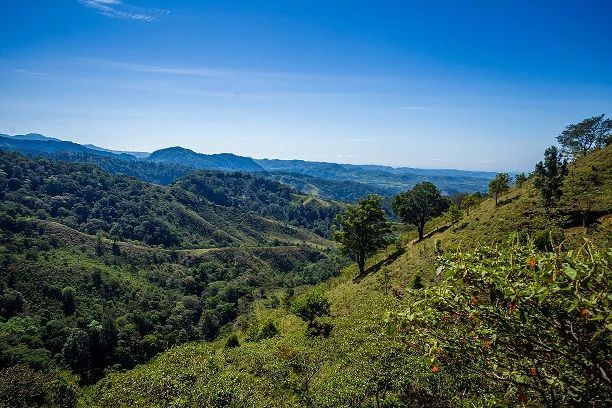
Boquete: altitude 1,450 meters. This region has the highest coffee production and best quality in Panama. Hacienda La Esmeralda, Kotowa Estate, and Elida Estate are all located here.
Volcan: altitude 2,000-3,000 meters. Coffee from this region is characterized by a mild and balanced flavor, gradually attracting the attention of international connoisseurs and coffee lovers. The well-known Baru Volcano coffee comes from this region.
Santa Clara: altitude 1,500 meters. This region benefits from irrigation by the Chorerra Falls and its proximity to the Panama Canal, which allows coffee from all of Panama to be conveniently shipped worldwide.
Piedra de Candela: altitude 1,200 meters. This region is a micro-region of the Volcan area, named after the Baru Volcano and the city of Piedra Candela. It is considered the area with the greatest potential for developing high-quality specialty coffee.
Panama Coffee Bean Grading System
According to Front Street's research, Panama's coffee bean grading system is based on altitude, as follows:
1. Strictly Hard Bean (SHB) above 4,500.
2. Hard Bean (HB) 4,000–4,500.
3. Semi-Hard Bean (SH) 3,500–4,000.
4. Extra Prime Washed (EPW) 3,000–3,500.
5. Prime Washed (PW) 2,500–3,000.
6. Extra Good Washed (EGW) 2,000–2,500.
7. Good Washed (GW) below 2,000.
Next, Front Street will introduce the Panamanian coffee beans currently available at Front Street.
First, let's talk about the Geisha coffee beans from Panama's Hacienda La Esmeralda. Front Street believes veteran coffee enthusiasts are no strangers to Hacienda La Esmeralda—it is precisely the BOP champion-winning estate mentioned above. Hacienda La Esmeralda was purchased in 1964 by American banker Rudolph Peterson, who moved to Panama after retirement, initially focusing on dairy farming. Later, his son Price resigned from his medical career to help his father run the farm, introducing Caturra and Catuai coffee varieties in 1987, and establishing a washed processing plant in 1994, from which point it had its own coffee processing facilities.
Currently, Hacienda La Esmeralda mainly has three estates growing the Geisha variety: El Velo, Canas Verdes, and Jaramillo.
While gathering information, Front Street learned that Jaramillo Estate was acquired by Hacienda La Esmeralda in 1996. The estate has an excellent geographical environment, and its original coffee varieties had outstanding flavor. Front Street believes that precisely because Hacienda La Esmeralda acquired estates with excellent output and high altitude at the time, this decision was unique back then and laid the foundation for its later important position in the coffee industry. Jaramillo Estate was the estate where the Geisha variety was planted early on. Due to its scarce yield, the previous owner used it only as windbreak trees, and it was not until after the acquisition that its extraordinary flavor was discovered. Front Street thinks this is precisely the charm of Geisha—the harsher the growing environment, the better the flavor expression. In other words, after Hacienda La Esmeralda discovered coffee beans with flavor potential, in order to achieve precise management, it cupped coffee beans from different areas of the estate separately and determined planting plots based on altitude. Thus came the Red Label, Green Label, and Blue Label Geisha grades we know today, all divided by altitude. FrontStreet Coffee will explain this part in detail below.
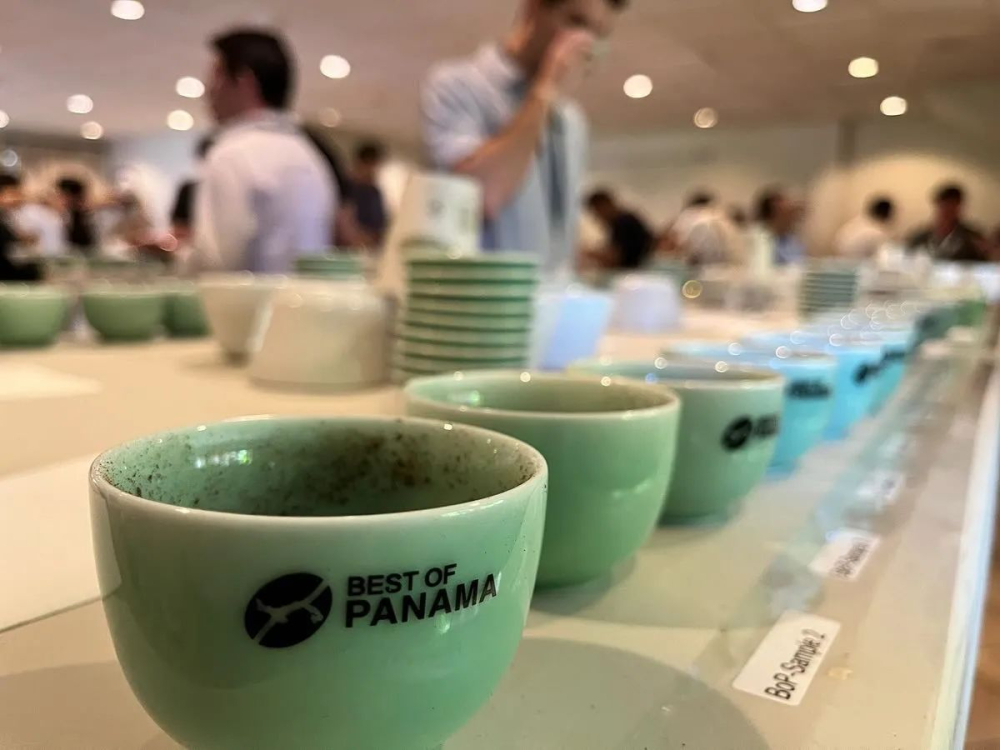
Therefore, Front Street believes that the biggest difference between Hacienda La Esmeralda's marketing strategy and other estates is that it divides its products into five major brands based on cupping performance as well as the varieties and plots planted. Among them, the Geisha variety has three brands: Esmeralda Special, Private Collection, and Geisha 1500; the Catuai variety has two brands: Diamond Mountain and Palmyra.
According to Front Street's research, even though Geisha coffee beans are widely planted in Panama, not all Geisha is of excellent quality, which is also why its price is high. The Geisha variety was initially discovered because of its strong resistance to leaf rust (a terminal disease in coffee), but it has low yield and is overly delicate, so only estates with superior conditions can produce high-quality Geisha coffee beans, and Hacienda La Esmeralda is one of them.
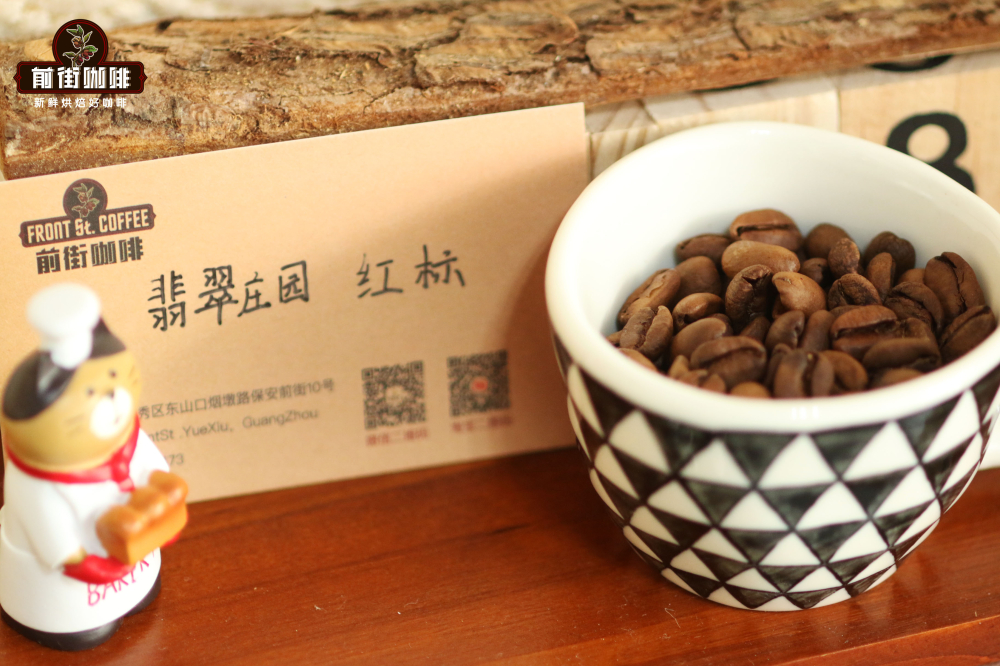
FrontStreet Coffee: Hacienda La Esmeralda Red Label Geisha Coffee Beans
Country: Panama
Region: Boquete (Hacienda La Esmeralda)
Altitude: 1,700 m
Variety: Geisha
Processing Method: Natural
Flavor: Rose, honeysuckle, sweet potato, grapefruit, lemon, black tea, cane sugar
The Geisha produced under the Esmeralda Special brand is what Front Street calls Red Label. These coffee beans are selected from batches grown at altitudes of 1,600-1,800 meters, with cupping scores above 90 points.
In Hacienda La Esmeralda's own independent auction, only the Geisha batches from designated plots that are put up for bidding are the auction Red Label. Customers often ask Front Street whether auction Red Label tastes better or regular Red Label tastes better. In fact, non-auction Red Label and auction Red Label come from the same plot; the only difference is whether they participate in the auction. Front Street believes there is no need to insist on the auction level: first, the price is indeed higher; second, if you just want to try it, Red Label is also a good choice. This grade of Geisha mostly uses natural or washed processing, with a flavor featuring a special and bright floral and citrus aroma.
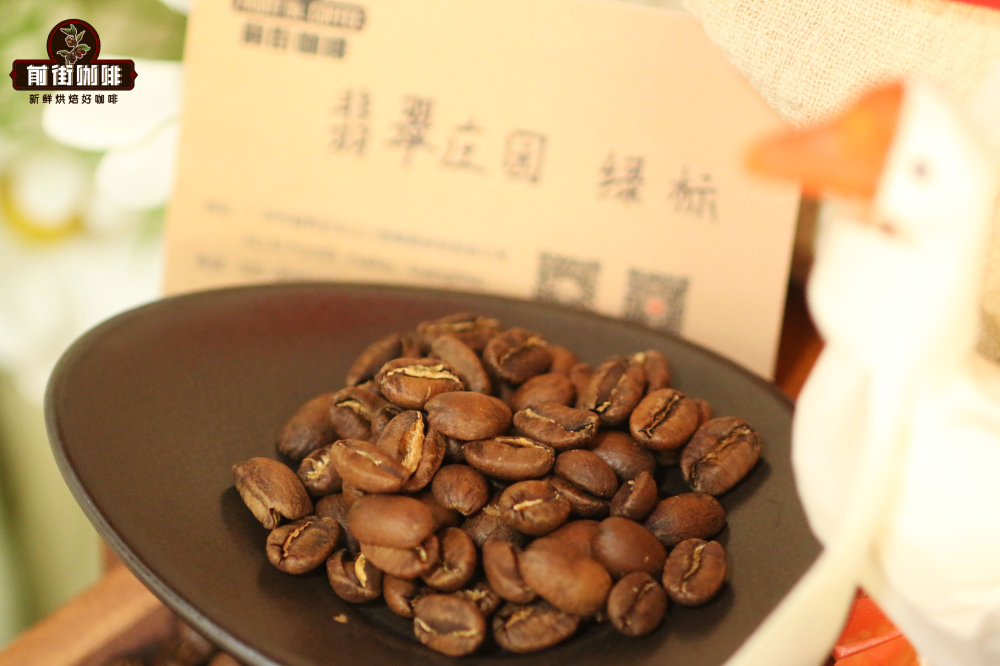
FrontStreet Coffee: Hacienda La Esmeralda Green Label Geisha Coffee Beans
Country: Panama
Region: Boquete (Hacienda La Esmeralda)
Altitude: 1,700 m
Variety: Geisha
Processing Method: Natural
Flavor: Rose, honeysuckle, sweet potato, grapefruit, lemon, black tea, cane sugar
Private Collection, commonly known as Green Label, was once the Geisha batches that did not participate in auctions but were of excellent quality. Green Label is harvested from a blend of Geisha beans from different plots across the two main estates at altitudes of 1,600–1,800 meters. With its classic orange blossom and honey notes, it has become the top choice for many Geisha lovers on a limited budget. Starting from 2022, Hacienda La Esmeralda began labeling which sub-estate this grade of Geisha comes from.
People often ask what the difference is between Red Label and Green Label. FrontStreet Coffee gives the most straightforward answer: Red Label can be traced back to a specific small plot, while Green Label is a blend and cannot be traced. Because of the blending approach, with no detailed plot labeling, Green Label sometimes has a very high flavor similarity to Red Label, but the next batch may differ again. FrontStreet Coffee feels that drinking Green Label is like buying a lottery ticket—perhaps the batch you taste this time has the flavor of Red Label.
Although Green Label is not as high-grade as Red Label, it still carries Geisha's classic flavors—floral notes, fruity notes, citrus acidity, and a rich, juicy body. Green Label Geisha is also available in washed or natural processing.
The above is the distinction between Red Label Geisha and Green Label Geisha. So what is Blue Label Geisha?
Actually, the Geisha 1500 brand is what Front Street often calls Blue Label Geisha. It is a blend selected from altitudes of 1,400-1,500 meters, sourced from three different plots: Jaramillo, Canas Verdes, and El Velo. The flavor has subtle floral notes, fruity acidity, and sweetness, with a less full body. Blue Label Geisha is only available in washed processing. In previous years, Blue Label Geisha was only washed, but the 2020 harvest season's Blue Label batch added a natural processing method.
FrontStreet Coffee: Hacienda La Esmeralda Washed Blue Label Geisha Coffee Beans
Country: Panama
Region: Boquete (Hacienda La Esmeralda)
Altitude: 1,400-1,500 m
Variety: Geisha
Processing Method: Washed
Flavor: Citrus, lemon, honey, nuts, tea-like
FrontStreet Coffee: Hacienda La Esmeralda Natural Blue Label Geisha Coffee Beans
Country: Panama
Region: Boquete (Hacienda La Esmeralda)
Altitude: 1,400-1,500 m
Variety: Geisha
Processing Method: Natural
Flavor: Lemon, honey, melon, berries, fermented notes
So what is the difference between washed Blue Label Geisha and natural Blue Label Geisha?
In fact, different processing methods more or less affect the flavor of coffee beans. Front Street believes that the washed processing method involves more fermentation than the natural method, because after fermentation the coffee beans go through a washing step that makes the bean surface cleaner, resulting in a refreshing taste and increased acidity after drying. Natural processing, on the other hand, retains some fruit pulp during drying, giving the coffee beans more berry flavors and a stickier, fuller body. Washed processing removes the sticky pulp from the coffee bean surface before drying, which ensures that excessive fermentation or mold growth does not occur during drying. The washed processing method costs more than the natural method, so it is not suitable for water-scarce countries.
Washed Processing Steps:
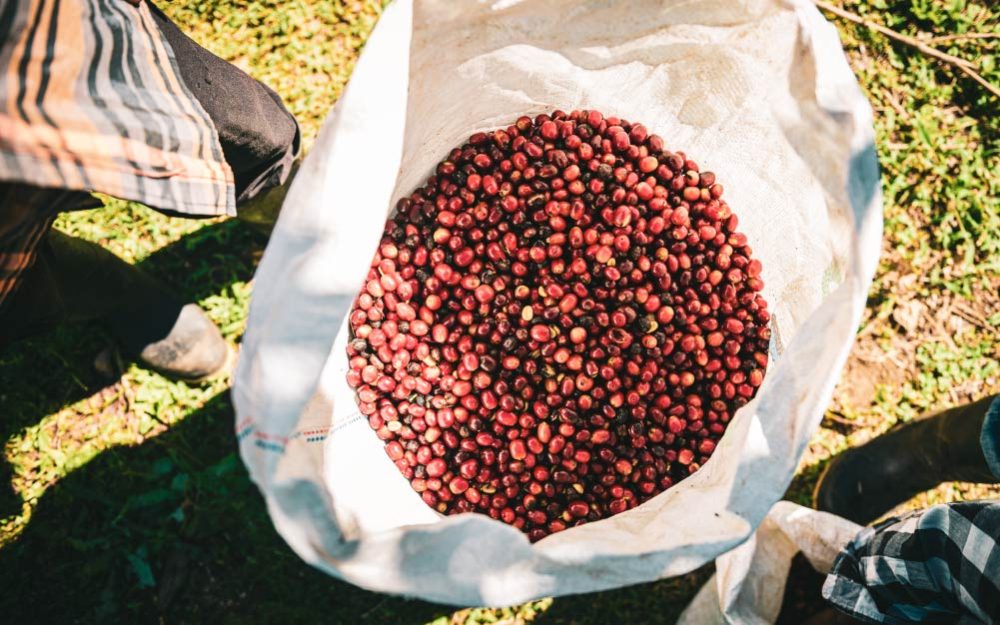
1. Harvest ripe coffee cherries
2. Initial removal of impurities and defective beans
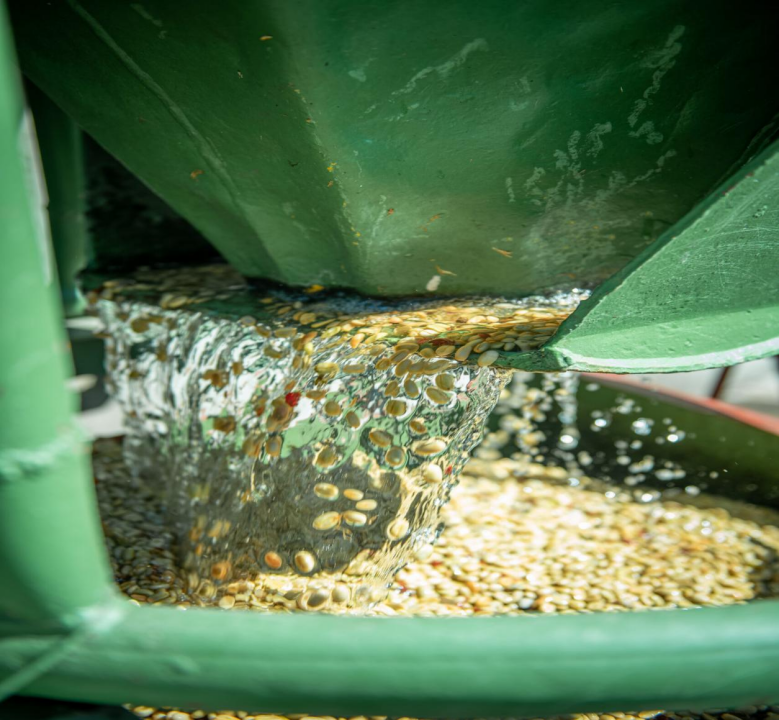
3. Float screening: Pour coffee cherries into a water tank. Ripe, full cherries sink to the bottom, while underripe or damaged cherries float to the surface.
4. Remove skin and pulp: Put the selected good coffee cherries into a pulping machine to remove the outer skin and pulp, leaving the seeds (coffee beans).
5. Fermentation to remove pectin: Place the coffee seeds, which are covered with a layer of mucilage (pectin), into fermentation tanks, using biological processing to dissolve the pectin through fermenting bacteria.
6. Washing to remove impurities: Since fermenting bacteria remain on the coffee beans, the beans need to be sent to washing channels for cleaning and a second screening (defective beans float to the surface). This step consumes a large amount of clean water to wash thoroughly.
7. Drying coffee beans: Usually machines are used to dry the coffee, or they are sun-dried, reducing moisture content to 10–14%.
8. Remove parchment and silver skin: Finally, a hulling machine is used to remove the remaining parchment and silver skin, completing the processing, after which the green beans can be packaged and shipped.
Natural Processing Steps:
1. Harvest ripe coffee cherries
2. Initial removal of impurities and defective beans
3. Float screening: Pour coffee cherries into a water tank. Ripe, full cherries sink to the bottom, while underripe or damaged cherries float to the surface.
4. Sun drying: Scoop out the ripe coffee cherries that sank to the bottom of the tank and spread them on drying beds for sun drying, reducing moisture from 70% to about 10-12%. They need to be raked several times a day for even drying, and covered at night to prevent moisture damage.
5. Remove outer shell: After about two to four weeks of sun drying, the outer layer of the coffee seeds has dried and hardened. At this point, a hulling machine is used to remove the outer shell, and the process is complete.
6. Packaging and shipping: The hulled coffee beans are packaged bag by bag—what we generally call green beans. Finally, through different roasting processes and brewing variations, coffee can present millions of flavor variations.
The differences between the two are:
1. Under the same processing conditions, natural beans have a distinct dried red wine aroma, while washed beans have a citrus-honey fruity aroma.
2. Both produce a noticeable fruity acidity similar to lemon and citrus fruits, but natural beans are fuller-bodied with a hint of red wine fermentation.
3. Washed processing has brighter acidity, like citric acid, with a more refreshing taste and more pronounced citrus notes; natural processing is fuller-bodied, with what is commonly called a heavier roasted bitter note and a more intense mouthfeel.
The above are all of Front Street's Hacienda La Esmeralda Geisha coffee beans. Next, Front Street will introduce a few more beans from other well-known Panamanian estates for our coffee-loving friends.
FrontStreet Coffee: Panama Janson Estate Geisha Coffee Beans
Country: Panama
Region: Volcan (Janson Estate)
Altitude: 1,750 m
Variety: Geisha
Processing Method: Natural
Flavor: Maple syrup, lemon citrus, apple, rose, dark chocolate, fruity aroma, multi-layered sweet and sour
According to Front Street's research, Janson Geisha is rarely heard of domestically because Janson Estate focuses on domestic sales and does not export. With its high altitude, nutrient-rich volcanic soil, abundant rainfall, and suitable temperatures, Janson Estate gradually became the estate with the second-highest Geisha production among Panamanian estates, with 50% of the estate planted with Geisha variety coffee trees. This estate not only has a dedicated processing plant for coffee cherries but also puts great effort into roasting to improve the reference value of cupping results. Thanks to these efforts, Janson Estate's coffee bean quality has been increasingly improving, and its results earned Janson Estate Geisha second place in the 2013 BOP competition.
FrontStreet Coffee: Panama Elida Estate Coffee Beans
Country: Panama
Region: Boquete (Elida Estate)
Altitude: 1,850 m
Variety: Typica
Processing Method: Natural
Flavor: Raisin, peach, orange, cantaloupe, cane sugar, caramel, green tea
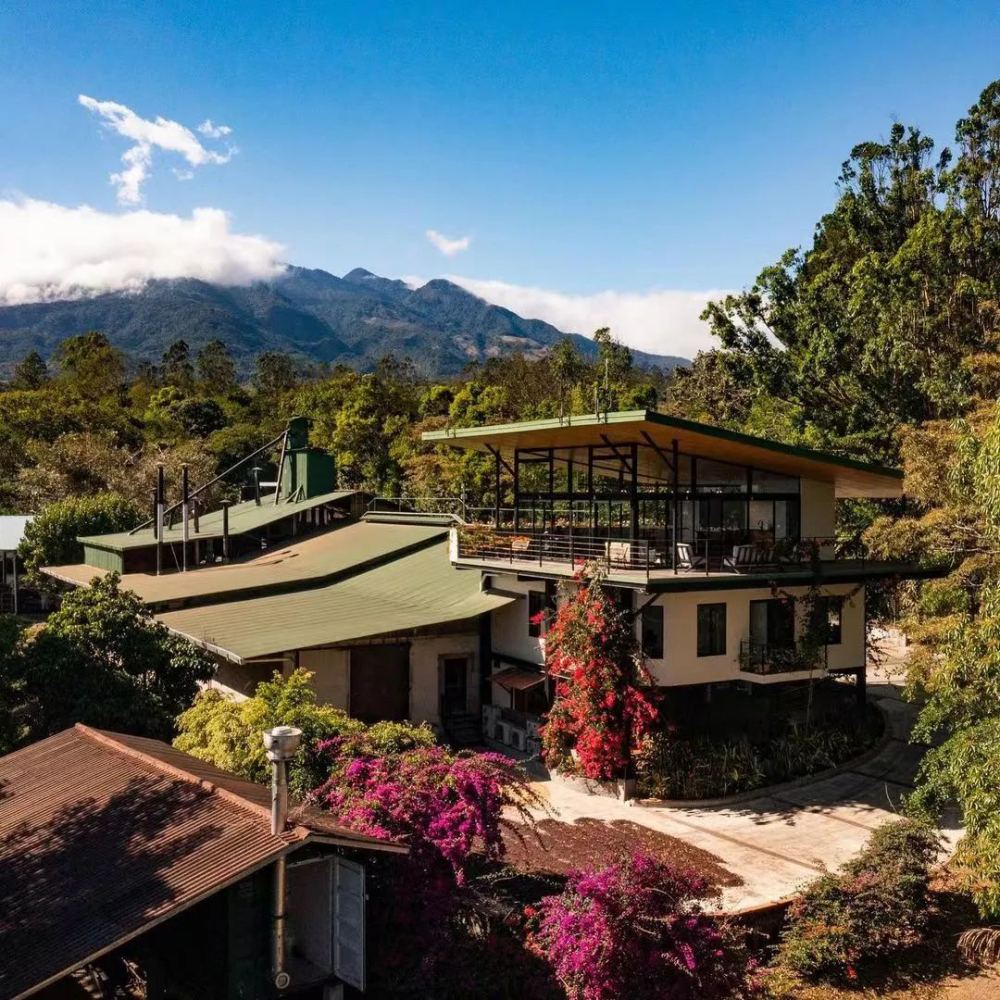
The reason Front Street chose Elida Estate coffee beans for coffee-loving friends to taste is that it has won Best of Panama awards for five consecutive years recently—an impressive record second only to Hacienda La Esmeralda. According to Front Street's research, Elida Estate is the most famous estate of the Lamastus family, founded in 1918. From when Robert Lamastus, the founder of the Lamastus family's coffee estate, planted his first coffee tree, it has now spanned a century and witnessed the worldwide rise of specialty coffee.
Elida Estate covers a total area of 65 hectares, more than half of which is within Baru Volcano National Park. Only 30 hectares are used for growing coffee trees, with the rest remaining as primary forest. Coffee is grown at altitudes ranging from 1,670 to 1,850 meters. In such a high-altitude environment, low temperatures delay the ripening of coffee cherries by about a month compared to normal; the fertile volcanic soil provides ample nutrients for the coffee, and combined with the favorable microclimate brought by Baru Volcano, Elida Estate is able to consistently achieve excellent results in cupping competitions.
This Elida Estate coffee bean is different from the Geisha coffee mentioned above by Front Street—it is a Typica variety coffee. So what is Typica? Typica coffee beans originated in Ethiopia and southeastern Sudan and are one of the oldest coffee varieties among Arabica species. All Arabica varieties derive from Typica coffee beans; the beans are oval or slender-tipped. The top leaves are copper-red, hence the name "red-topped coffee," also known as the old variety small-bean coffee.
FrontStreet Coffee: Panama Hartmann Estate Coffee Beans
Country: Panama
Region: Volcan
Altitude: 1,250-1,700 m
Variety: Catuai
Processing Method: Red Wine Processing
Flavor: Tropical fruit, nuts, red wine, honey, cane sugar
Speaking of Hartmann Estate, it is actually one of Panama's oldest coffee estates. The founder, Alois Strasil Hartmann, came to Panama's Boquete region around 1918 to start his cultivation business. It was later founded in 1940 by his son, Ratibor Hartmann. Today, Hartmann Estate has developed into a family business, with each family member taking on roles in coffee growth management, harvesting and processing, and estate tours.
According to Front Street's research, this family business has a state-level cupping lab and sample roasting room, rigorously cupping every batch of coffee cherries. This ensures Hartmann Estate's coffee quality remains consistent, and they are always seeking improvement. Their scientific approach to coffee and nearly 100 years of family experience have allowed them to maintain excellent coffee bean quality.
At the same time, Hartmann Estate grows a very wide range of coffee varieties, including Typica, Caturra, Catuai, Bourbon, Pacamara, Maragogipe, and Geisha. The one from Front Street is a Catuai variety coffee bean from Hartmann Estate. So what is Catuai?
Speaking of Catuai, Front Street must first mention Caturra. Caturra is a natural mutation of the Arabica variety Bourbon, discovered in Brazil in 1937. Its tree is shorter and more compact than Bourbon. Because it inherits Bourbon's lineage, it has relatively weak disease resistance, but its yield is higher than Bourbon. Although discovered in Brazil, Caturra is not suitable for growing in Brazil, so it was not planted on a large scale there. Instead, it became widespread in Central and South America—for example, Colombia, Costa Rica, and Nicaragua all plant Caturra on a large scale.
Catuai is a coffee variety artificially crossbred from Caturra and Mondu Novo. Catuai has good resistance to natural disasters, especially wind and rain. The Catuai tree is relatively short, and compared to other coffee trees, Catuai's cherries grow more firmly and are harder to pick. The cherries can be either red or yellow. According to Front Street's understanding, no case has yet been found where yellow cherries taste better than red ones.
FrontStreet Coffee: Panama Butterfly Coffee Beans
Country: Panama
Region: Boquete
Altitude: 1,600 m
Variety: Catuai, Caturra, Geisha
Processing Method: Washed
Flavor: Citrus, floral, tea-like, honey
The name "Butterfly" alone lets you feel the aroma of this coffee. Like Hacienda La Esmeralda and Elida Estate, this coffee bean comes from Boquete, Panama, and offers excellent value for money.
FrontStreet Coffee Panama Butterfly was originally called Cupid, not the current Butterfly. At first it contained only 30% Geisha; after two years of sales it was adjusted to contain 50% Geisha, and later adjusted again to the current 70%, composed of three varieties: Geisha, Caturra, and Catuai, planted in Boquete's Baru Volcano region at an altitude of 1,600 meters, with the processing plant using meticulous washed processing. Panama's special microclimate results in abundant rainfall in this area, along with large temperature differences between day and night. Combined with the unique volcanic rock soil of the volcanic region, as well as careful harvesting and fine processing, this coffee performs exceptionally well in body, acidity, and floral notes.
What Front Street finds even more pleasantly surprising is that on top of its excellent quality, its affordable price makes this coffee bean's value for money off the charts. And what makes this coffee bean special is that it contains the Geisha variety, giving it very distinct Geisha flavors. Because Butterfly contains three varieties of coffee beans—Geisha, Caturra, and Catuai—coffee-loving friends who come to Front Street ask whether it is a blend. Actually, it is not.
According to information Front Street obtained through research, due to the estate's historical circumstances, in order to pursue yield at the time, the early Geisha variety was planted mixed together with Caturra and Catuai coffee trees. Butterfly is made through artificial post-blending, but because the three varieties in Butterfly all come from the same origin and the same producing region, it belongs to single-origin coffee.
The above is Front Street's compilation of some Panama coffee-related content and the flavor differences among the Panamanian coffee beans currently available at Front Street, hoping to help coffee-loving friends choose a Panamanian coffee bean flavor that suits them.
For professional coffee knowledge exchange and more coffee bean information, please follow Coffee Workshop (WeChat public account: cafe_style)
For more specialty coffee beans, please add private WeChat FrontStreet Coffee, WeChat ID: kaixinguoguo0925
The above content is compiled by CoffeeHunters, a coffee news website.


