







How Does Processing Shape Coffee Flavor in Kochere?
Washed and natural processing steer Yirgacheffe Kochere beans toward different cup profiles. Washed Kochere tends to cup cleaner, with clearer structure and more prominent acidity, while the Natural Red Cherry lot builds more body and releases fruit flavors more fully. The Red Cherry Project grades and handles both lots, so the processing method, not the variety alone, drives much of the difference in the cup.
Kochere sits about 25 kilometers southeast of Yirgacheffe and is one of the region's three noted micro-regions, with roughly 100,000 residents whose main income comes from coffee. A coffee roaster comparing the two lots can track the gap across green bean appearance, roasting curves, cupping scores, and Clever Cup brewing, and the same logic sits behind the Yirgacheffe G1 grading standard.
Yirgacheffe is Ethiopia's most iconic specialty coffee region, and coffee beans from its sub-region Kochere present strikingly different flavor profiles depending on the processing method. This article starts with Front Street Coffee's two beans—Natural Red Cherry and Washed Kochere—to systematically review the Kochere region's background, the operation mechanism and quality standards of the Red Cherry Project, and to compare them across four dimensions: green bean appearance, roasting curves, cupping performance, and Clever Cup brewing. The goal is to help coffee enthusiasts understand the practical impact of natural and washed processing on flavor direction, as well as the grading logic behind Yirgacheffe G1.
In the formation of coffee flavor, Front Street has always held that while variety, origin, and cultivation methods are crucial, the green bean processing method is equally an unavoidable link. Different processing methods steer coffee beans toward different flavor directions. Front Street Coffee has previously discussed in a feature on how green bean processing affects flavor that the two methods—natural and washed—have a profound and lasting shaping effect on the final flavor of coffee. Washed processing tends to make the coffee's mouthfeel cleaner, the flavor profile clearer; beyond fruity notes, the bean's own characteristics are more easily perceived, and acidity is usually more prominent. Natural processing, on the other hand, tends to enhance the coffee's body and release flavors more fully, resulting in a finished bean with intense and vivid flavor expression.
Also under Front Street's Yirgacheffe lineup, Front Street Natural Red Cherry Coffee and Front Street Yirgacheffe Washed Kochere Coffee each display a unique flavor personality precisely because of different processing methods. Front Street Coffee selected these two beans—Front Street Yirgacheffe Red Cherry Natural and Front Street Yirgacheffe Kochere Washed—to observe the changes brought by different processing methods through comparison. Before diving into the comparison, let's follow Front Street Coffee to learn about the regional background behind the beans.
Kochere Region
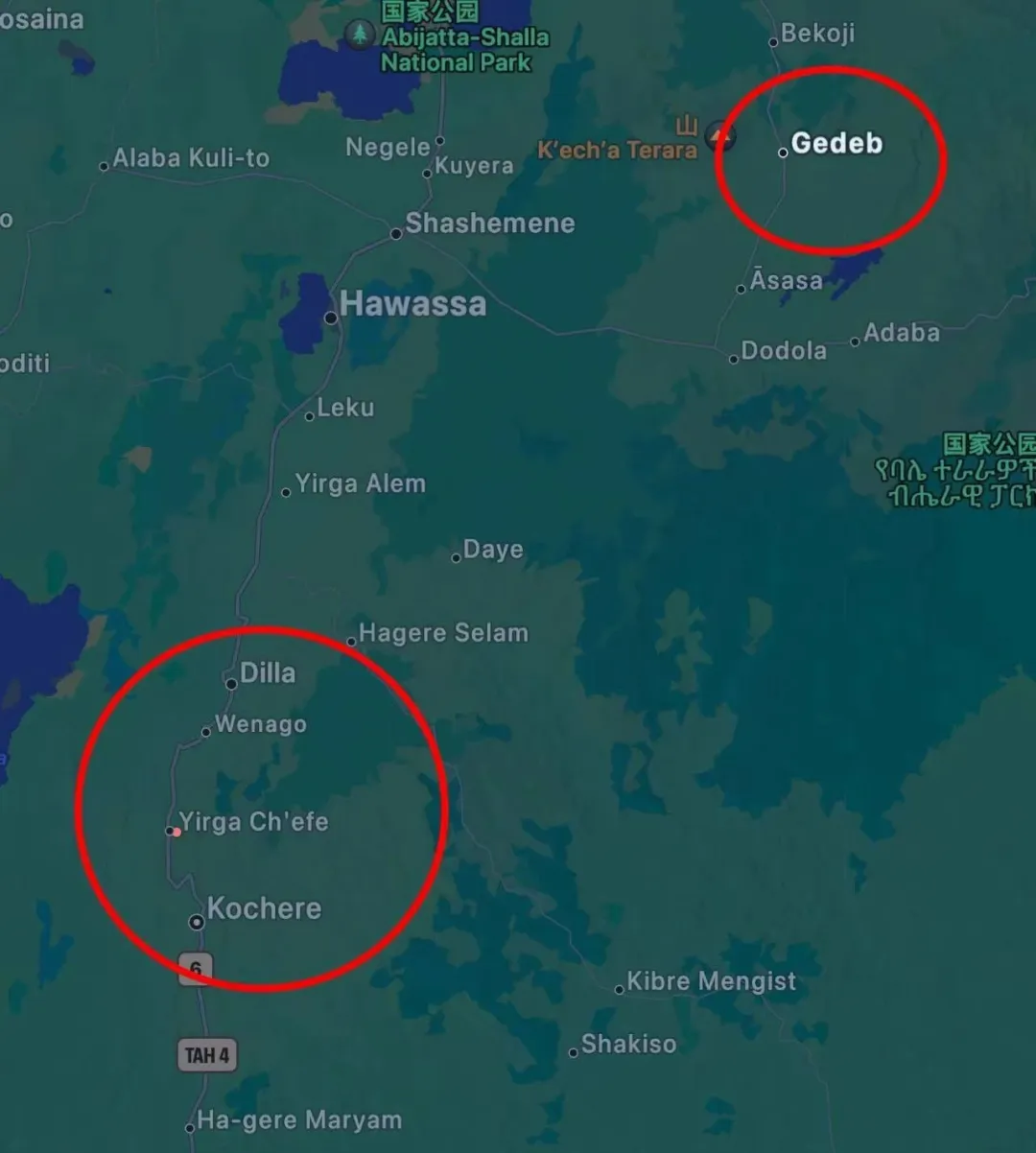
Kochere is located about 25 kilometers southeast of Yirgacheffe in Ethiopia. It is a relatively affluent small region thanks to the coffee industry and one of Yirgacheffe's three renowned micro-regions. The area has roughly 100,000 residents, coffee beans are their main source of income, and the region's processing equipment is quite advanced. The well-known coffee review website Coffee Review once awarded Kochere washed beans a high score of 94 points.
The most famous producing area in southern Ethiopia is the highest-altitude Yirgacheffe region, where over ninety percent of the coffee is grown by local smallholders on small plots where they also plant vegetables and food crops. This bean comes from the Kochere district at the southernmost end of the Yirgacheffe region; among the four sub-regions, Kochere has the most favorable conditions and the largest output. Local smallholders deliver freshly picked bright red cherries to the processing station, where workers remove unripe fruit and then spread them on raised beds for sun-drying, with the entire process strictly following G1 standards.
Ethiopia's main harvest season is concentrated in November and December. Most farmers do not use modern farming methods but rely on manual care of coffee trees, without using harmful pesticides or herbicides. As a result, Ethiopian coffee can almost all be considered organic by default, whether certified or not; the combination of primitive cultivation methods and meticulous processing craftsmanship has earned the region's coffee worldwide renown. The Kochere region possesses relatively advanced green bean water-processing equipment and has always performed excellently in washed processing, with complex notes of honey and citrus, clean and sweet, widely praised. The main production model locally is small coffee farmers delivering each batch of harvested red cherries directly to the nearby cooperative's washing station for unified processing. Famous neighboring producing areas around Kochere include Wenago, Gelena, Abaya, and Gedeb.
Kochere is one of the 77 Woredas in Ethiopia's SNNPR. In the coffee world, Kochere belongs to part of Gediyo within Yirgacheffe and is one of Yirgacheffe's most important producing areas. Kochere can be further divided into several micro-regions; coffee produced in the area is sometimes named after the source town, processing station, or micro-region to more precisely label the batch's origin, in line with the coffee industry's current pursuit of traceability. The stronger the traceability of a batch, the more specific its origin, and the higher the stability and reproducibility of its flavor year after year—naturally, the price is also higher.
This batch of Front Street Yirgacheffe Kochere differs from regular batches, belonging to the highest specification G1 grade, with a distinctive origin flavor profile featuring a clean, fresh lemon aroma, as well as refined and elegant jasmine fragrance, melon, citrus, ginger, and spiced tea, among other rich aromas and flavors. Yirgacheffe itself is a small town of about 20,000 people; the neighboring small producing areas of Wenago, Kochere, and Gelena Abaya, because their coffee flavor is almost identical to Yirgacheffe's, are also classified under the Yirgacheffe regional category. Yirgacheffe is culturally and geographically similar to neighboring Sidamo but seems to enjoy more favorable conditions. Top-quality Front Street Yirgacheffe coffee carries floral notes, bright citrus acidity, lemony aromatics, and a silky smooth mouthfeel, always attracting enthusiasts' attention. Amid the growth wave of the specialty coffee industry, coffee output from this region has consistently been a focus of international buyers.
Kochere's production model is mainly local smallholders delivering their batches to cooperatives for unified processing. The local Chalalacktu village has about 100,000 people depending on coffee for their livelihood, and related production activities are their main source of income. Thanks to the revenue from coffee production, the local standard of living is considerably better than in many Ethiopian villages, with well-equipped health facilities and higher education institutions. Advanced processing equipment allows Kochere's coffee to consistently maintain high standards in washed processing, with complex notes of molasses and citrus, clean and sweet.
Front Street Yirgacheffe Kochere G1
Country: Ethiopia
Region: Yirgacheffe
Variety: Local heirloom
Altitude: 1650m~1800m
Processing: Washed
Flavor Profile: Rich fruity notes, fresh jasmine, berries, citric acidity, pineapple, apple, smooth mouthfeel, clear, long finish.
The Red Cherry Project
The "Red Cherry Project" (ORC) is a program aimed at improving the quality of coffee from small-scale farms. In 2007, Trabocca, the largest green bean trader in the Netherlands, initiated this project to seek high-quality Ethiopian coffee. The project requires that when harvesting green coffee cherries, not only must only fully red cherries be selected, but the entire harvest must also be hand-picked—and this is merely the most basic requirement; the project goes far beyond this. Its main purpose is to encourage bean farmers while bringing surprises to roasters. Trabocca, the largest coffee bean trader in the Netherlands, invites all Ethiopian farms before the harvest season to produce small batches of approximately 1,500 to 3,000 kilograms (25 to 50 bags) of beans, with women specifically selecting 100% ripe red cherries, which greatly influences the final coffee flavor; thus, careful, sharp-eyed, and hardworking Ethiopian women have become important drivers of the Red Cherry Project.
The Red Cherry Project is also an intensive practice that pushes farms to invest more effort in the sorting and selection stage, and these coffees command relatively higher prices. Red Cherry operations cover washed beans, natural beans, semi-washed, semi-natural, and experimental coffees, with main producing areas including Yirgacheffe, Sidamo, Bonga Forest, Lekempti, Kembata, Illubabor, Harar, and Limu; in 2011, the Golocha producing area (near Harar) was added. Coffee from these regions has unique flavors that fully showcase the charm of Ethiopian coffee. After receiving the coffee, Trabocca selects it again; through cupping quality tests at offices in both Ethiopia and the Netherlands, farms that meet the standard receive substantial bonuses. Trabocca, the driving force behind the Red Cherry Project, has invested all profits earned over the years back into partner farms. Trabocca emphasizes that this is a project with no profit motive; the company executes the Red Cherry Project with a team of only 4 people (including the boss and secretary), with other administrative affairs supported by the parent company to reduce administrative costs, and all profits are returned to partner farms.
First, the cupping score requirements are very high. After Trabocca receives coffee shipped from the producing areas, it re-screens it in cupping rooms in Addis Ababa, Ethiopia, and Amsterdam, the Netherlands; through two cupping sessions in both locations, it judges whether the coffee beans meet the standard. Beans that qualify are organized by Trabocca for auction to coffee bean buyers worldwide. Typically, coffee beans auctioned through this platform can fetch prices more than 4 times the general international spot price for coffee, and at the highest, even 20 times.
Second, production volume requirements are small and quality requirements are high. To have enough capacity to care for these top Ethiopian beans, Trabocca requires that beans participating in the project must be produced in small batches, roughly between 1,500 kg and 3,000 kg.
Finally, Trabocca's investment in and attention to this project is substantial. Trabocca has donated new sun-drying racks, shade nets, generators, and other equipment locally, while also providing financial loan support, new hardware equipment, and production processing knowledge and techniques to help farmers improve their production standards. Through real-time monitoring, safe transport, and other means, it ensures that Red Cherry Project beans receive the best care at every stage.
Specifically, the Red Cherry Project encourages coffee farmers to more diligently complete every step of coffee cherry harvesting and processing by raising the procurement price for high-quality green coffee beans. The coffee beans produced this way are of better quality and taste better, more readily gaining end-market recognition, thereby balancing the relatively higher coffee procurement price.
Front Street Yirgacheffe Red Cherry Natural G1
Country: Ethiopia
Region: Yirgacheffe
Processing Station: Aricha
Altitude: 2300m
Variety: Local heirloom
Processing: Natural
Flavor: Berries, lemon, strawberry, fermented wine aroma
Green Bean Comparison
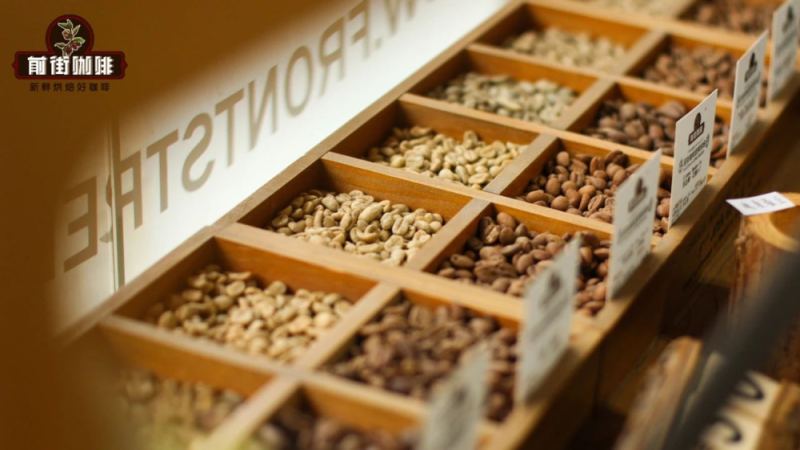
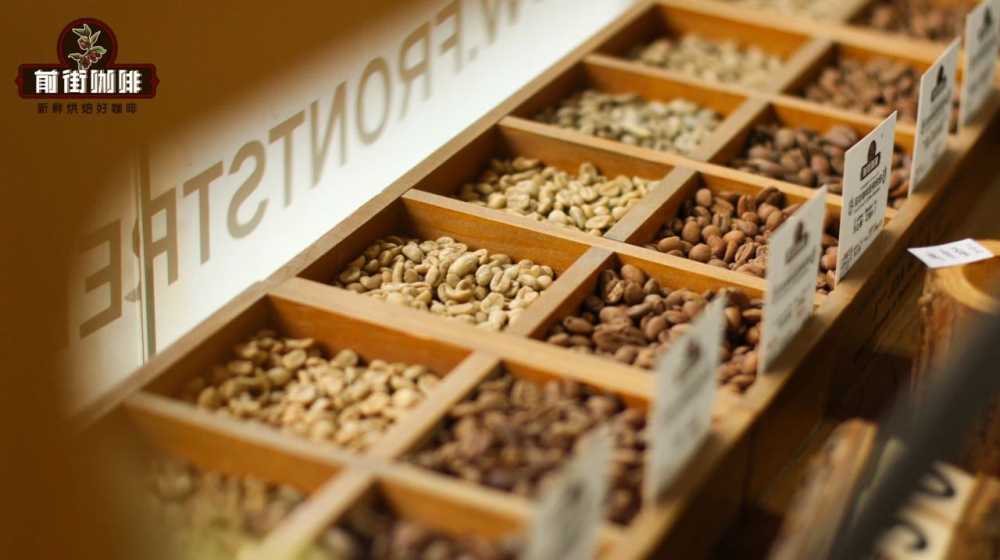
Front Street Red Cherry is G1 grade; in terms of green bean appearance, its color is yellow-green, typical of natural coffee, with uniform, plump beans and few defective beans.
Front Street Kochere washed fine processing generally removes the silver skin from coffee beans during processing, giving them a special luster and a brighter, more translucent blue-green look. In contrast, Front Street Red Cherry processed by the dry fine method only removes the parchment; the silver skin remains intact.
Silver Skin: Inside the parchment layer, there is an even thinner film wrapping the coffee bean. Because of its glossy color with a silvery sheen, people customarily call it silver skin.
Roasted Bean Comparison
After roasting, Front Street Natural Red Cherry has less silver skin; the relatively more silver skin in green bean form is because it falls off more thoroughly during roasting. Front Street Washed Kochere, however, has more silver skin; washed beans have more inner silver skin, and a fair amount remains after roasting. Of course, this is directly related to the roast level—the darker the roast, the more completely the silver skin falls off.

Roasting Comparison
Roaster Yangjia 800N (batch size 5500g)
Front Street Red Cherry
Front Street Coffee roaster's operation: Charge at 200°C, set airflow to 3, heat power to 150, airflow unchanged, turning point at 1'35"; when temperature reaches 140°C, adjust heat power to 180, airflow to 4; at this point the bean surface turns yellow, the grassy smell completely disappears, entering the dehydration stage; when temperature reaches 170°C, adjust heat power to 150, airflow unchanged;
At 9'01", the bean surface shows ugly wrinkles and dark scorch marks, and the toasty bread smell clearly turns into coffee aroma, which can be defined as the prelude to first crack; at this point, listen carefully for the sound of first crack; at 9'25" first crack begins, reduce heat power to 120, adjust airflow to 5, develop for 1'40" after first crack, drop at 196°C.
Agtron bean color value is 74.7 (left image), Agtron pink value is 91 (right image), Roast Delta value is 0.316.
Front Street Kochere
Front Street Coffee roaster's operation: Charge at 200°C, set airflow to 3, heat power to 160, airflow unchanged, turning point at 1'32"; when temperature is 151°C, adjust airflow to 3.5; when temperature reaches 140°C, adjust heat power to 180, airflow unchanged; at this point the bean surface turns yellow, the grassy smell completely disappears, entering the dehydration stage;
At 8'35", the bean surface shows ugly wrinkles and dark scorch marks, and the toasty bread smell clearly turns into coffee aroma, which can be defined as the prelude to first crack; at this point, listen carefully for the sound of first crack; at 8'53" first crack begins, keep heat power at 180 unchanged, adjust airflow to 4, develop for 1'45" after first crack, drop at 195°C.
Agtron pink value is 84.5 (left image), Agtron bean color value is 62.7 (right image), Roast Delta value is 21.8.
Cupping Comparison
Front Street Coffee partners cupped Front Street Natural Red Cherry and Front Street Washed Kochere separately; flavor summary as follows: Front Street Red Cherry cupping: Fermented notes, citrus, lemon, grape, oolong, berries, floral, caramel
Front Street Kochere cupping: Citric acidity, green tea note, citrus, jasmine, orange, nuts, floral.
Clever Cup Brewing Comparison
Brewing parameters: 15g coffee / BG-5R / 1:15 / 90°C
Brewing method: Pour water directly to 225g, wait 3'45" then drain into the sharing pitcher; when the coffee bed is visible, remove the dripper; total time 4 minutes.
Front Street Red Cherry: Lemon, licorice, citrus, berries, sweet orange; overall high sweetness, with caramel and cream notes in the aftertaste, and a black tea aroma in the finish.
Front Street Kochere: Lemon, floral, tangerine, cane sugar; overall clean and refreshing, with honey notes in the aftertaste and an oolong tea finish.
In terms of brewed flavor, Front Street Red Cherry has a relatively fuller body and higher sweetness than Kochere; Front Street Kochere is clean and refreshing, with livelier acidity, slightly lower sweetness, and rich fruity notes.
Summary:
Front Street Red Cherry: in terms of green bean appearance, its color is yellow-green, typical of natural coffee, with uniform, plump beans and few defective beans. Front Street Kochere washed fine processing generally removes the silver skin from coffee beans during processing, giving them a special luster and a brighter, more translucent blue-green look, while Red Cherry processed by the dry fine method only removes the parchment; the silver skin remains intact.
Yirgacheffe's coffee grading system is not based on screen size but on the proportion of defective beans among all beans in the green coffee. Commonly found on the market are washed G2 and natural G3 Yirgacheffe; G1 is the highest grade—Yirgacheffe with the lowest defect rate and the most outstanding quality must additionally undergo hand sorting before being rated Grade 1.
The above content is compiled by CoffeeHunters, a coffee news website.


