







Brazil is the world's largest coffee producer, yet it is not often mentioned on single-origin bean lists, appearing more frequently as a blend component. This is closely related to its soft-bean flavor profile brought about by low altitude, flat terrain, and sun-exposed cultivation—low acidity, prominent nut and chocolate notes, and good body. This article will systematically sort out Brazil's main coffee regions (Cerrado, Sul de Minas, Mogiana, etc.), the differences between Red Bourbon and Yellow Bourbon varieties, the evolution of natural and pulped natural processing methods, and, using Brazil Cerrado and Queen Farm Yellow Bourbon as examples, share Front Street Coffee's complete pour-over recipe, including the KONO dripper, 88°C water temperature, 1:15 coffee-to-water ratio, a grind size with 75% passing through a No. 20 sieve, and a three-stage pouring rhythm, to help you brew a cup of Brazilian coffee full of caramel, nut, and cream flavors.
On single-origin coffee menus, the name Brazilian coffee does not appear very often; more often it shows up in the form of a blend, and this has much to do with its flavor characteristics. Yet in the world of espresso, Brazilian coffee is almost everywhere—in some recipes, as much as ninety percent of the ingredients come from Brazil—and it can also be found in many well-known blended coffee brands and canned coffee products, which shows just how important Brazil is in the coffee industry. Although Brazilian coffee is ubiquitous in the commercial market, that does not mean it cannot enter the specialty ranks. The coffee industry is undoubtedly one of Brazil's pillar economies, and as the world's largest producing country, Brazil has gradually established a firm foothold in the specialty coffee sector in recent years. Varieties produced in regions such as Parana, Espirito Santos, Sao Paulo, Minas Gerais, and Bahia include Bourbon, Typica, Caturra, and Mundo Novo.
Front Street currently offers two Brazilian beans: one is the Cerrado coffee bean that showcases the flavor of Brazil's basic producing regions, and the other is the Queen Farm Yellow Bourbon coffee bean that represents the standard of a specialty estate.
Brazilian Coffee Bean Producing Regions
The influence of altitude on coffee flavor cannot be ignored. Take Panama Geisha as an example: the higher the altitude and the harsher the environment, the more outstanding the flavor expression tends to be. Brazil's growing altitude is generally lower than that of Central and South American countries, and low altitude largely determines its flavor direction. The terrain here is flat and monotonous, lacking microclimates, and sun-exposed cultivation without shade trees has long been used, thus creating Brazil's distinctive soft-bean style—low acidity, heavy nuttiness, good chocolate sweetness and body, but with a slight woody and earthy taste, while floral and orange notes are not obvious. In short, Brazilian coffee tends toward mildness and balance, and it is not easy to taste the wild, soaring acidity and citrus notes of African beans. For this reason, it is best suited as a blend base. FrontStreet Coffee's blended beans are all based on Brazilian coffee beans.
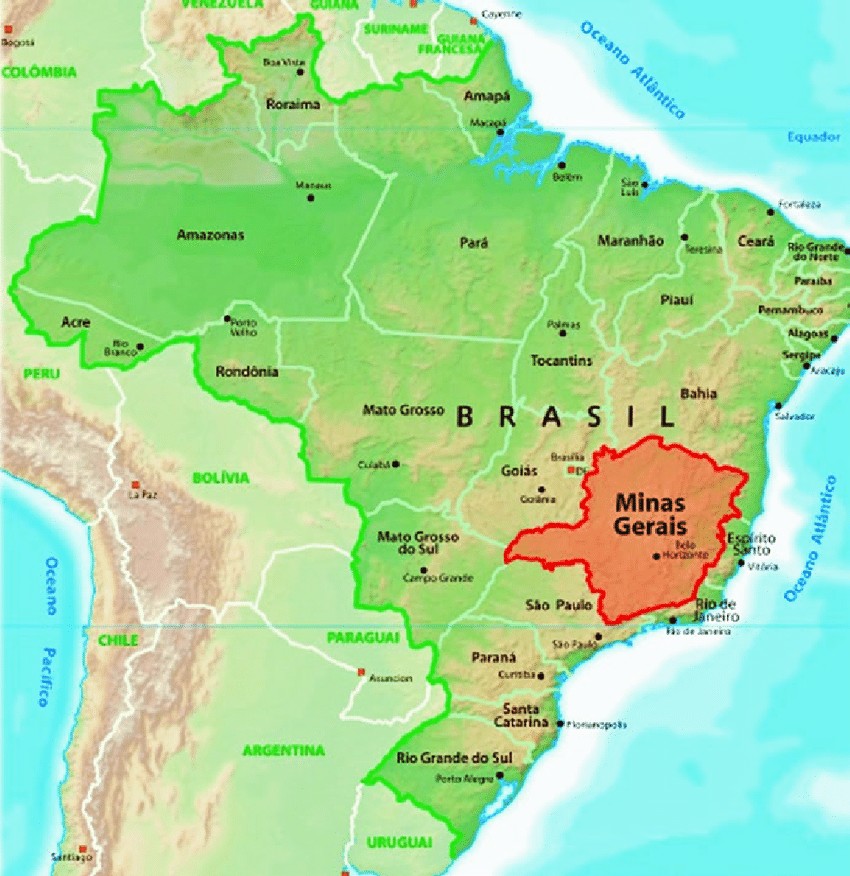
Brazilian coffee producing areas are concentrated in the central and southern parts of the country, distributed across 7 states and about 14 coffee regions, including: Sul de Minas, Minas Hills, Chapada de Minas, Matas de Minas, Mogiana, Centro-Oeste de São Paulo, Montanhas do Espírito Santo, Conilon Capixaba, Cerrado, Planalto da Bahia, Atlantic Bahia, Paraná, Rondônia, and Cerrado. Among them, the most representative is undoubtedly the Cerrado region. It can be said that Sul de Minas and Cerrado have played an immeasurable role in promoting the rise of Brazilian coffee.
Sul de Minas:
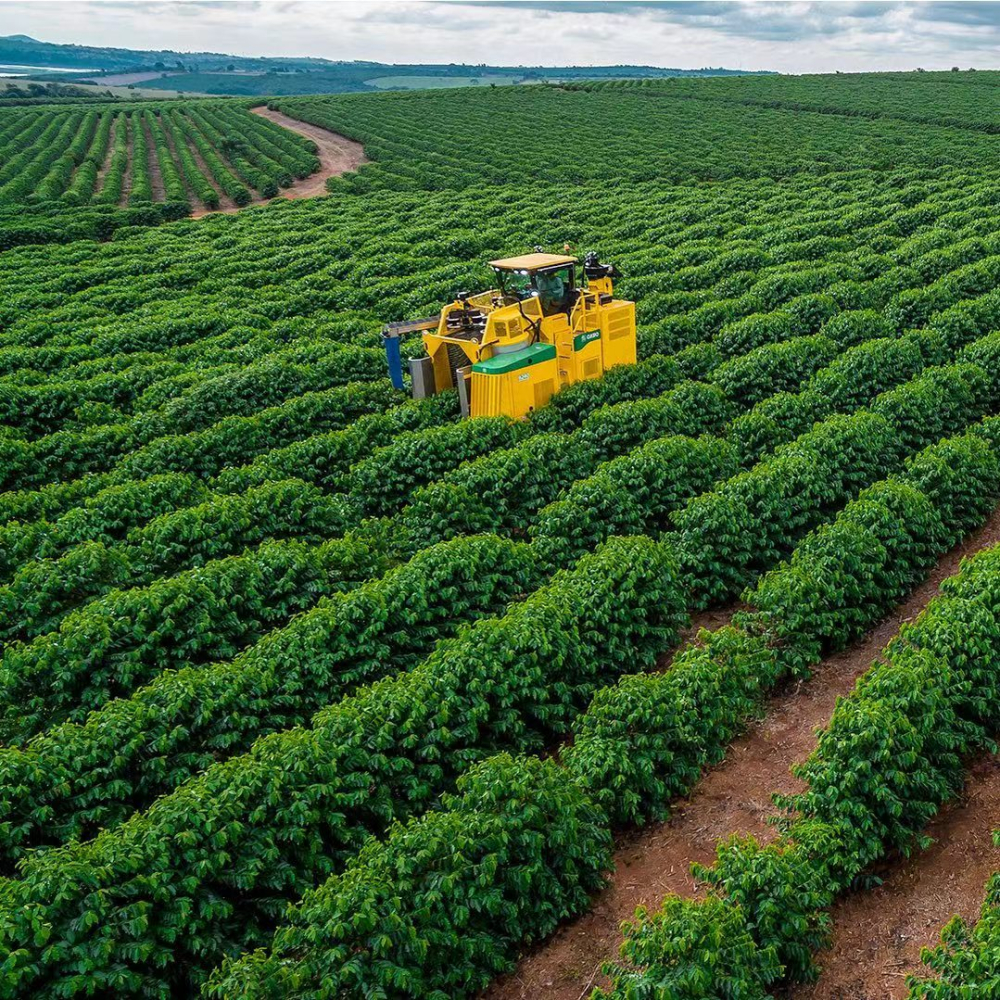
At an altitude of 700m-1200m, it is hilly woodland and Brazil's earliest coffee-producing area. Due to rising labor costs, mechanical harvesting is now mostly used, and it is also the earliest commercially developed coffee region, with many large exporters establishing bases here. Sul de Minas was able to become a specialty region thanks to its terrain and climate. At an altitude above 1100 meters, the landscape is varied, the dry and rainy seasons are distinct, the temperature difference between day and night is large, and there are diverse microclimates, making it very suitable for growing Bourbon and Yellow Bourbon varieties.
Cerrado:
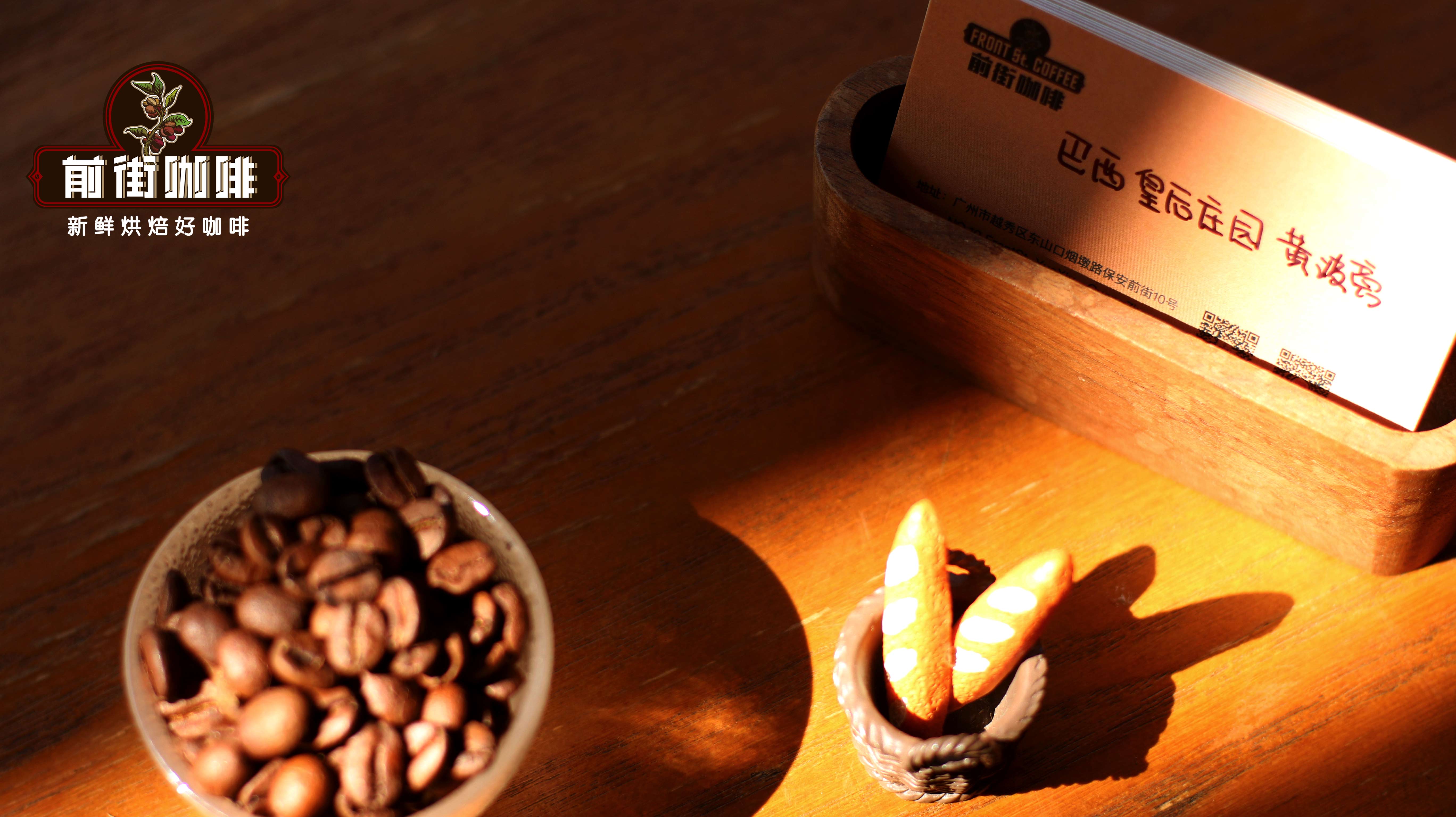
FrontStreet Coffee's everyday-drink Brazilian coffee comes from the Cerrado region. Front Street believes that the coffee from this region has a mellow flavor without earthy or musty notes, which is closely related to the local climate. The Cerrado region is located on the highlands in the southern part of the "Cerrado savanna climate zone," which spans eight provinces in central Brazil and covers about two million square kilometers. It occupies 22% of Brazil's total area of savanna and lies deep in Brazil's interior; in Portuguese, Cerrado means "closed place." The Cerrado savanna begins in Mato Grosso in southwestern Brazil, passes through the central-western part of Minas, and reaches western Bahia in the north. The so-called Cerrado Coffee Region refers to the area where the savanna extends into Minas state at an altitude of 850–1200 meters. In Brazil's division of coffee-producing regions, it is distinguished from Sul de Minas, which is also located in Minas state. The flat and open terrain of the savanna is especially suitable for establishing large estates, and together with the distinct dry and rainy seasons and the relatively cool climate of the plateau, this area has become the finest section of the Cerrado savanna. Only with high altitude and fertile soil can specialty coffee beans with clean sweetness, high body, and high cleanliness be grown.
Mogiana:
This area is very close to southern Minas. Coffee is planted among shrubs, grasses, and other vegetation. There are many farming families in the region; some operate in the traditional large-farm manner, while others adopt small-scale modern operations. The combination of modern technology and mountain coffee-growing culture produces the highest-quality green coffee beans.
FrontStreet Coffee's Brazil Queen coffee comes precisely from the Mogiana region.
Brazilian Coffee Bean Varieties
There are many coffee bean varieties, and their flavors naturally differ. Seeing "variety: Red Bourbon" printed on the bag of FrontStreet Coffee's Brazilian coffee, what exactly is that? And what is the difference between Red Bourbon and Yellow Bourbon? Front Street will introduce it for everyone:
Red Bourbon
Red Bourbon is a secondary variety produced by a mutation of Typica and, together with Typica, belongs to the oldest extant coffee varieties. It generally bears red fruit, hence the name Red Bourbon; there are also Yellow Bourbon and Pink Bourbon. After the Red Bourbon coffee tree flowers and bears fruit, the fruit color changes as follows: green > slightly yellow > slightly orange > ripe red > then darker, more mature red, hence the name Red Bourbon. Its flavor and aroma are relatively good, with bright acidity, and it even has a vinous charm reminiscent of red wine when drunk. Red Bourbon is currently the most widely planted variety in Brazil's coffee-producing regions.
FrontStreet Coffee's everyday-drink Brazilian coffee is of the Red Bourbon variety.
Yellow Bourbon
Yellow Bourbon is likewise a genetic mutation of Bourbon. Bourbon has long been regarded as outstanding among coffees because of its high yield and good quality. Yellow Bourbon is a Bourbon mutation unique to São Paulo state in Brazil; after the fruit ripens, it does not turn red like Red Bourbon but instead turns orange-yellow, hence the name. Because Yellow Bourbon is grown at very high altitudes, its flavor expression is quite outstanding.
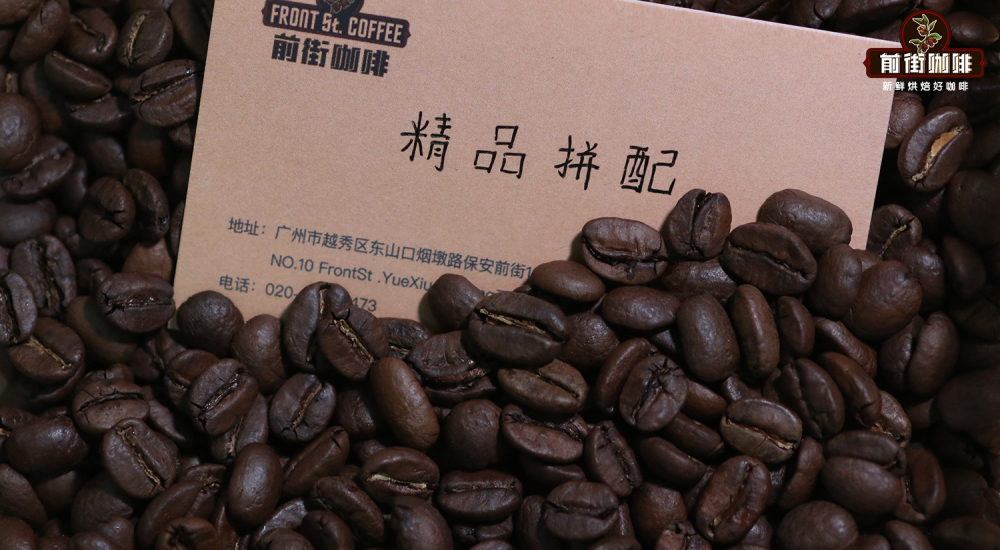
Yellow Bourbon usually carries nutty and chocolate notes, with balanced, gentle acidity, a slight yet clean bitterness, and an overall bright and refreshing character. FrontStreet Coffee's Brazil Queen coffee, a Yellow Bourbon variety, is a typical representative.
Brazilian Coffee Bean Natural Processing Method
Before 1990, Brazil used almost entirely rough natural processing, which made Brazilian beans prone to picking up notes of rotten wood or earth. Because the coffee fruit had to undergo two to three weeks of sun exposure, once rain and moisture returned, it was easy for musty flavors to develop. In order to change this situation of depending on the weather, in 1990 Brazil developed the pulped natural method (Pulped Natural) based on the country's relatively dry climate in order to shorten processing time.
In pulped natural processing, the skin and pulp of the coffee cherry are first removed, so the fermentation degree of the mucilage-covered coffee beans after pulping can be controlled. Traditional natural processing, by contrast, dries the beans with the skin and pulp still on, making it impossible to observe the fermentation degree of the mucilage. The pulped natural method lies between natural and washed processing, but omits the washed process's "tank fermentation and clean-water rinsing" steps, instead taking the beans directly into the sun to dry. Although the method looks similar, without the fermentation step the coffee bean flavor is completely different. During the removal of skin and pulp in pulped natural processing, fully ripe pulp is easy to remove, while the skin of unripe green cherries is harder to handle, so a second sorting can be carried out to filter out unripe fruit and unify the ripeness of the coffee fruit. Compared with the natural method, Front Street believes that coffee beans selected and processed this way have improved cleanliness and ripeness, bringing a more uniform mouthfeel.
Compared with natural processing, Front Street believes that coffee beans processed this pulped natural way can greatly improve cleanliness and ripeness. Front Street's everyday-drink Brazilian coffee uses the pulped natural processing method. FrontStreet Coffee's Brazil Cerrado coffee is processed using the pulped natural method.
Front Street's Parameters for Brewing Brazilian Coffee:
Brazilian coffee is so unique—how should it be brewed to fully bring out its flavor? Below, Front Street will share some parameters for Front Street's pour-over Brazilian coffee:
The flavor of Brazilian coffee has nutty, chocolate, and caramel notes, so Front Street's roaster chooses a dark roast. The darker the roast, the looser the coffee bean texture and the stronger the water absorption, making extraction easier during brewing; therefore, Front Street uses a lower water temperature and a coarser grind to avoid over-extraction and a burnt, bitter taste.
Front Street's choice: KONO dripper, 88°C water temperature, 1:15 coffee-to-water ratio, 15 grams of coffee, grind size with 75% passing through a No. 20 national standard sieve, staged brewing. The resulting Brazilian coffee has a strong caramel, nut, peanut, and cream flavor on the palate.
In choosing the dripper, Front Street selected the Kono Meimon dripper. The Kono dripper's greatest feature is that the ribs extend from the bottom to the middle, while the upper part is a smooth dripper wall; this way, after the filter paper fits the dripper, water cannot "sneak" around the coffee grounds and escape, thereby improving body and mouthfeel.
The amount of coffee Front Street uses is still 15g. More coffee is not always better, nor is less always better; it depends specifically on the dripper size. Front Street uses a 1-2 cup dripper, for which 15-20g is a reasonable brewing dose. Brewing with an amount outside this range will be somewhat difficult.
For the coffee-to-water ratio, Front Street recommends 1:15. Although some suggest 1:13 or a smaller coffee-to-water ratio, Front Street has said before that concentration and body are not necessarily related, and that too strong a brew can cause discomfort. Therefore, using a 1:15 coffee-to-water ratio can also express the caramel and chocolate sweetness of Brazilian coffee very well. Of course, if you want a lighter taste, you can also adjust the ratio slightly yourself.
For the coffee grind size, Front Street uses 75% passing through a No. 20 sieve. The grind for brewing Brazilian coffee should be a bit coarser than for light-roasted coffee beans, because Brazil uses a dark roast, whose structure is looser and more likely to absorb water and release coffee substances. If it is ground to the fineness of light-roasted beans, it is easy to brew out burnt bitterness; if ground coarser, the coffee becomes thin and tasteless, with a mouthfeel as thin as water.
For water temperature, Front Street recommends brewing at 88°C. For the same reason as with grind size, too high a water temperature easily produces burnt bitterness, while too low a water temperature makes the coffee flat and also produces an unpleasant sourness.
For the brewing method, Front Street likewise uses a three-stage pouring method. Pouring in three stages can better express the nut, peanut, cream, and caramel sweetness of Brazilian coffee. The specific water distribution is: for the first stage, pour 30ml for the bloom, wetting all the coffee grounds and allowing them to degas, so that the flavor substances of the coffee can be better extracted later. Using staged extraction, use twice the coffee dose of water for the bloom, that is, 30 grams of water for a 30-second bloom. The reason the bloom process is needed is to allow the coffee grounds to release internal carbon dioxide gas, thereby making the later extraction more stable. In the second stage, pour in a small stream in circles until it reaches 125 grams, then stop; when the coffee grounds are exposed, proceed to the third stage. In the third stage, continue pouring until 225 grams and stop. After the water in the dripper has dripped through, remove the dripper. Timing starts from the beginning of pouring, and the extraction time is 2'00". Next, pick up the whole cup of coffee and shake it evenly, then pour it into a cup for tasting.
Front Street's Coffee Brewing Advice:
When it comes to brewing coffee, Front Street has always believed that the freshness of coffee beans is a very important part; fresh coffee beans allow you to experience the rich flavors of coffee to the greatest extent. The coffee beans shipped by FrontStreet Coffee are all within 5 days of roasting, because Front Street deeply understands that the freshness of coffee beans has a great impact on flavor. Front Street's roasting宗旨 is "freshly roasted good coffee," so that every customer who places an order receives the freshest coffee when it arrives. The resting period for coffee is about 4-7 days, so when the customer receives it, it is exactly at its best flavor.
Of course, some customers need Front Street to help grind the coffee, and that is no problem either, but Front Street must remind you: once coffee beans are ground in advance, they no longer need resting, because during transport the pressure generated by carbon dioxide inside the package can also make the coffee flavor rounder, so as soon as you receive the ground coffee you can immediately brew a cup and drink it. However, ground coffee needs to be brewed promptly, because after ground coffee contacts air it oxidizes relatively quickly; in other words, the coffee's flavor dissipates fairly quickly and the coffee will not taste as good. Therefore, Front Street recommends buying whole beans and grinding fresh before brewing, so that you can better taste the coffee's flavor.
Front Street's Parameters for Brewing Brazilian Coffee:
Front Street's choice: KONO dripper, 88°C water temperature, 1:15 coffee-to-water ratio, 15 grams of coffee, grind size (75% passing through China's No. 20 standard sieve).
Using staged extraction, use twice the coffee dose of water for the bloom, that is, 30 grams of water for a 30-second bloom; pour in a small stream in circles until 125 grams, then pause; continue pouring until 225 grams and stop; after the water in the dripper has dripped through, remove the dripper. Timing starts from the beginning of pouring, and the extraction time is 2'00". Next, pick up the whole cup of coffee and shake it evenly, then pour it into a cup for tasting.
Flavor of pulped natural Brazil Cerrado coffee beans: obvious sweetness on the palate, accompanied by a light lemon aroma, with rich nutty flavor, and a clear dark chocolate note in the finish; the overall impression is relatively round.
Flavor of natural Brazil Queen Farm coffee beans: balanced mouthfeel; against an almond-cocoa main theme, the sweetness of sucrose stands out. It is a coffee with good fullness and abundant sweetness.
For pour-over coffee, Front Street is rather particular, because different coffee beans and different roast levels call for different equipment and water temperatures. This is also why friends say that the coffee brewed by the baristas at FrontStreet Coffee tastes better than coffee brewed at home. Of course, as Front Street just said, Brazilian coffee mostly appears as blended beans, so if you want to drink blended coffee, you can also give the flavor a try! Front Street has many espresso beans recommended by baristas—Front Street Black Cocoa Blend, Specialty Blend, and Commercial Blend. Also, if you want to drink single-origin coffee, Front Street can satisfy that too, because Front Street offers more than fifty kinds of single-origin coffee from different regions for everyone to choose from!
For professional coffee knowledge exchange and more coffee bean information, please follow Coffee Workshop (WeChat public account: cafe_style).
For more specialty coffee beans, please add the private WeChat of FrontStreet Coffee: qjcoffeex.
The above content is compiled by CoffeeHunters, a coffee news website.


