







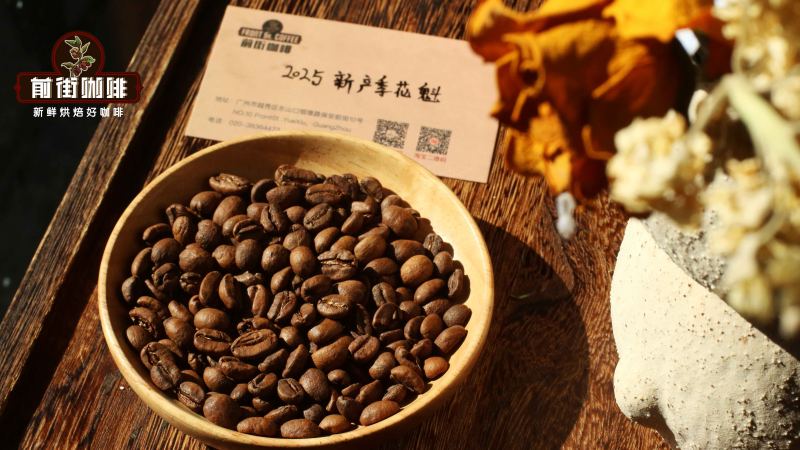
Where does Sidama Huakui coffee actually come from?
Sidama is one of Ethiopia's well-known specialty coffee regions, prized for fruity aromas and floral notes. However, what is commonly called Huakui comes from Guji Hambela, not Sidama itself. Sidama's core area now belongs to the newly established Sidama State, with other parts falling in Oromiya and SNNPR.
The Bensa, Arbegona, Bura, Bona Zuria, and Shantawene areas covered by Sidama Zone A repeatedly appear on international green bean competition lists, standing out for recognition and quality. Recommended lots include Huakui, Shantawene, and Alo. For natural beans, a fast-flow dripper such as a V60, careful water temperature, grind assessment, and a three-pour technique support a clean floral and fruity cup.
Sidama is one of Ethiopia's most renowned specialty coffee regions, winning over countless coffee lovers with its rich fruity aromas and elegant floral notes. But did you know? What is now commonly called "Huakui" actually comes from Guji Hambela, not Sidama. This article will take you deep into Sidama's regional history and ethnic origins, the distribution of core sub-regions within Zone A, and the specialty lots recommended by Front Street Coffee such as Huakui, Shantawene, and Alo. At the same time, we will also break down in detail the pour-over essentials for Sidama natural beans—from dripper selection, water temperature control, to grind size assessment and the three-pour technique—to help you brew a cup full of floral and fruity aromas.
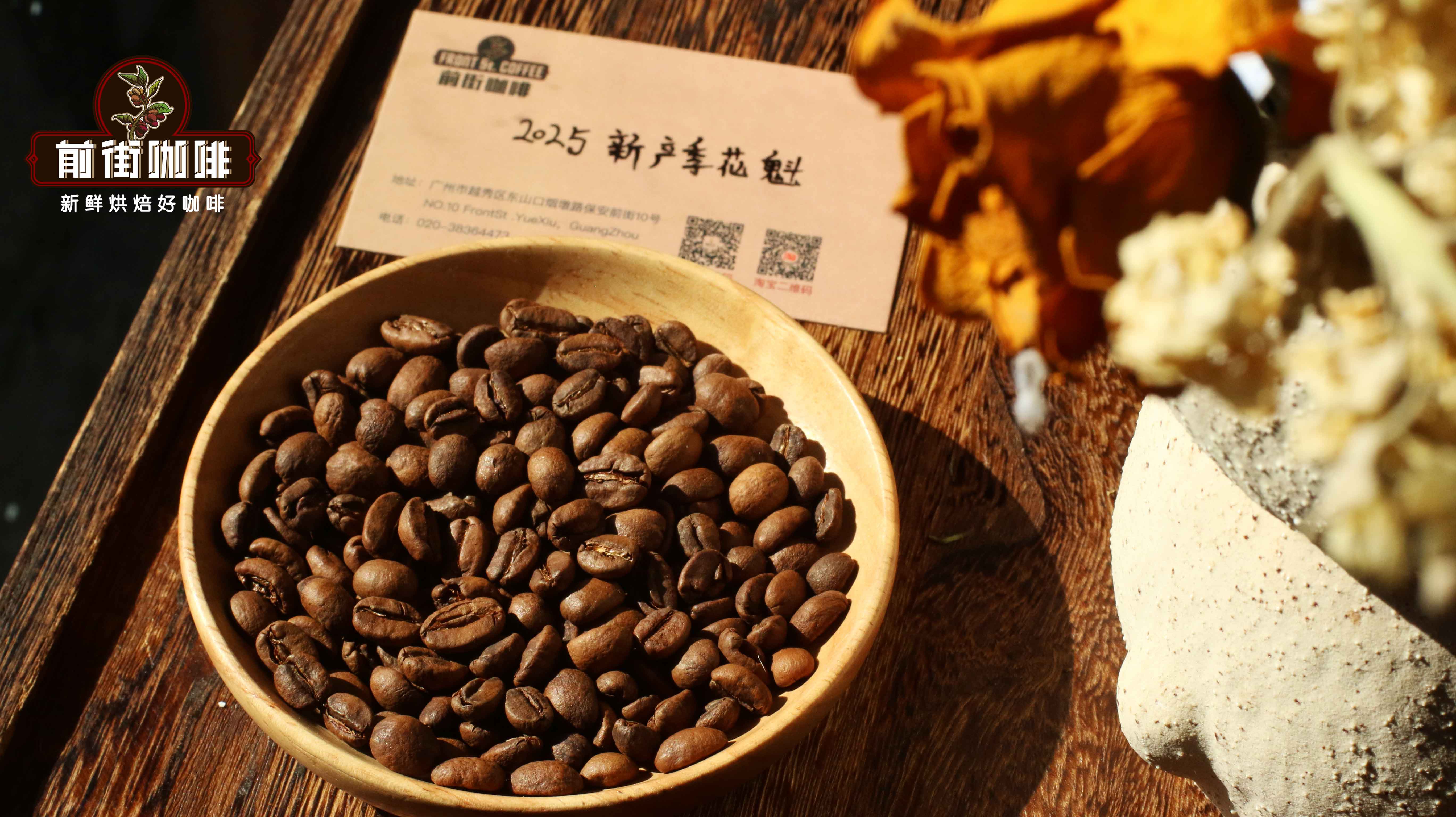
Flavor: floral, jackfruit, dried fruit, apricot, juicy
According to the production region map drawn by the well-known specialty green coffee trader Trabocca, the core area of Sidama now belongs to the newly established Sidama State, with another portion distributed within Oromiya Region and SNNPR Region.
From the current situation, the Bensa, Arbegona, Bura, Bona Zuria, and Shantawene areas covered by Sidama Zone A have repeatedly appeared on the lists of international green bean competitions, making the coffee from these places clearly surpass other areas of Sidama in terms of recognition, quality, and reputation.
Front Street Coffee: Ethiopia · Sidama Alo Hatessa Natural Coffee Beans
Country: Ethiopia
Region: Sidama · Bensa Alo Hatessa
Altitude: 2180–2280 meters
Variety: 74158
Grade: G1
Processing Method: Natural
Flavor: magnolia, passion fruit, pineapple, mango, fermented notes
1. It is recommended to use a dripper with a faster flow rate. Light-roasted coffee beans expand only to a limited degree and the beans are relatively hard, so a large amount of fines is easily produced during grinding. After pouring, these fines settle to the bottom first, causing clogging in the final stage. The resulting coffee usually has insufficient aroma and a somewhat muddy mouthfeel. Therefore, it is best to choose a dripper with a fast drainage speed, such as the V60 most commonly used by Front Street. Its spiral rib structure helps coffee grounds release gas smoothly and maximizes the release and dissolution of aromatic acidity, while the large hole at the bottom further speeds up the flow of water.
2. The water temperature should be controlled between 90°C and 93°C. According to Front Street's brewing experience, if you want the coffee's acidity to be bright and uplifting with a tea-like finish, you can brew with water at 90°C–91°C; if you want the fruity acidity to be fuller and more solid while enhancing body, you can adjust the water temperature to 92°C–93°C.
3. The grind size parameter directly affects the total extraction time, so Front Street usually judges whether the grinding setting is appropriate by combining extraction duration with coffee flavor. The method is actually not complicated: taking 15 grams of coffee grounds and a three-pour technique as an example, if the total time is less than 1 minute 40 seconds and the coffee tastes sharply sour and thin, it means the particles are too coarse and the extraction is insufficient; if it exceeds 2 minutes 20 seconds and the coffee tastes bitter, heavy, and dull, it may be that the grind is too fine, causing over-extraction.

As for the coffee-to-water ratio, Front Street recommends anywhere between 1:15 and 1:16. If you prefer the rich profile of oolong tea and berries, use 1:15; if you want to more clearly capture white floral notes and citrus acidity, use 1:16 to let the flavors open up more.
For the first pour, add 30 g of water for blooming and let it last 30 seconds. Start timing as you pour, maintaining a small stream in a circular motion from the center outward throughout, and be careful to wet the entire coffee bed.
After 30 seconds, switch to a slightly larger but steady stream and pour the second stage of 95 g of water, with the aim of lifting the entire coffee bed. The stream should be poured vertically and evenly. At this point the scale shows 125 g, and it should be completed in about 55 seconds.
When the liquid level drops to the halfway point, begin the third pour of 100 g with a fine stream in a small circular motion, trying to keep the circle from becoming too large, otherwise it is easy to disturb the coffee bed and cause under-extraction. The final total water amount is 225 g, and the drip should finish in about 2 minutes.
Coffee brewed this way with washed Kaffa beans has a very refreshing mouthfeel. On the palate, you first sense mouth-watering acidity similar to yellow peach, sweet orange, and pomelo, with an overall profile leaning toward yellow stone fruits. Because stirring motion is included in the process, the coffee, in addition to rich fruity acidity, also carries a clean, moist sweetness, like drinking a refreshing and sweet glass of juice.
Friends who like floral coffees, even if they cannot say exactly where Ethiopia is on a map, have certainly heard of the name Sidama, because this place has produced a large number of specialty beans with outstanding flavor, combining full, rich fruity aromas with elegant fragrance, making many coffee enthusiasts love them endlessly. Taking Front Street Coffee's bean list as an example, varieties such as Huakui 8.0, Shantawene, and Alo all come from specialty lots in Sidama. So what exactly is the reason that the coffee here has such excellent flavor performance? Next, Front Street will take everyone into this famous region to find out.
After consulting the materials, Front Street learned that Sidamo Province was established in 1942, and its name comes from a local ethnic group—"Sidama." In the past, this place was once the Kingdom of Sidama. There has long been controversy over whether it should be called Sidamo or Sidama, but in the coffee industry, the term Sidamo is more widely spread, so people are more accustomed to calling it "Sidamo."
The main ethnic group in the Sidama production region is the Sidama people. As early as the ninth century AD, they settled in southern Ethiopia. They not only have their own language—Sidama—but also a unique calendar, festivals, and other traditional cultural customs. The Sidama language belongs to the Cushitic language family and is very different from Ethiopia's official language, Amharic. The Sidama calendar is especially distinctive: a year has 13 months, each averaging 28 days, with the 13th month having 29 days, but a week has only 4 days, and each month has 7 weeks. The various festivals derived from this are also highly distinctive. For example, the Sidama New Year is called Fichee-Chambalaalla. This name comes from a woman and has been recognized by UNESCO as an Intangible Cultural Heritage of Humanity.
After 1995, Ethiopia implemented a federal system of administration, and at the same time, in order to respect the cultures of the various ethnic groups within the country, the local government redivided regions according to the residential areas and languages of the major ethnic groups. As a result, Sidama was placed under the jurisdiction of the new Southern Nations, Nationalities, and Peoples' Region, and the area also restored its historical original name: Sidama.
However, before the administrative divisions were redrawn, Sidamo Coffee had already become world-famous for its distinctive aroma. Therefore, compared with "Sidama," people are more accustomed to calling it Sidamo. In addition, when the Ethiopian government registered trademark protection for Sidama coffee at the time, it also adopted the old name Sidamo® as the registered trademark. To this day, domestic consumers are still accustomed to calling this origin "Sidamo."
Geographically, the Sidama production region is located in the highlands of southern Ethiopia, near Lake Awasa in the East African Rift Valley and bordering Kenya. It has a high altitude, suitable rainfall, fertile soil, and countless native tree species, making it very suitable for coffee cultivation. Most coffee trees in this area grow between 1,550 and 2,200 meters above sea level. High altitude means the coffee cherries mature more slowly, and the aromatic structure formed is also more complex and intense. The harvest season is also slightly later than in other parts of Ethiopia.
The overlapping administrative boundaries left over from history have made Sidama one of the most complex and difficult-to-understand origins in the world. Compared with other production regions, the area covered by Sidama is both large and broad. The Ethiopia Commodity Exchange (ECX) also divides it into 5 zones based on geographical indications: A, B, C, D, and E. Each zone also governs multiple sub-regions, covering more than 50 cooperatives and more than 200 washing stations in total. Under the influence of different altitudes, humidity, soil, and microclimates, coffee flavors can also differ subtly from village to village.
With the development of specialty coffee, some sub-regions with larger output and outstanding quality have gradually been separated out and labeled and exported under the name of independent production regions. For example, Guji at the southernmost end once belonged to Sidama Zone A. Later, because its stunning coffee quality was discovered by more and more international buyers, the coffee industry developed rapidly, and it embarked on a path of independence. Therefore, saying "Sidama Huakui" now is inaccurate; the correct way to say it should be "Guji Hambela Huakui."
According to the production region map drawn by the well-known specialty green coffee trader Trabocca, the core production area of Sidama is located within the newly established Sidama State, and it also covers parts of Oromiya Region and SNNPR Region.
At present, the Bensa, Arbegona, Bura, Bona Zuria, and Shantawene areas included in Sidama Zone A have frequently appeared on the lists of international green bean competitions, making the coffee from these places far exceed other areas of Sidama in terms of recognition, quality, and reputation.
Front Street Coffee: Ethiopia · Sidama Alo Hatessa Natural Coffee Beans
Country: Ethiopia
Region: Sidama · Bensa Alo Hatessa
Altitude: 2180–2280 meters
Variety: 74158
Grade: G1
Processing Method: Natural
Flavor: magnolia, passion fruit, pineapple, mango, fermented notes
The above content is compiled by CoffeeHunters, a coffee news website.


