







What Varieties Are Behind Yunnan Coffee?
Yunnan small-bean coffee is not simply Catimor. The name small-bean traces back to Typica, and Yunnan's fields also hold Catimor and Bourbon alongside it. Yunnan supplies about 98 percent of China's coffee output and sits on the coffee golden belt, with Baoshan and Lincang among the main producing areas.
The growing conditions support that: the Tropic of Cancer crosses southern Yunnan, and mid-altitude land between 1,000 and 3,500 meters covers close to ninety percent of the province. A subtropical plateau monsoon climate with wide day-night temperature swings and steady rain gives the arabica variety the altitude and conditions it needs for quality fruit.
What variety is Yunnan small-bean coffee, really? Many people assume Yunnan small-bean coffee is Catimor, but the name actually comes from Typica. This article walks you through Yunnan's coffee-growing environment and main producing regions (Baoshan, Lincang, and more), traces the origins of varieties like Catimor, Typica, and Bourbon, and introduces Front Street Coffee's estate planting in Yunnan along with the flavor profile of its natural-process Typica. Whether you want to understand how Yunnan coffee varieties are classified or are looking for a dependable Yunnan bean, this article gives you clear answers.
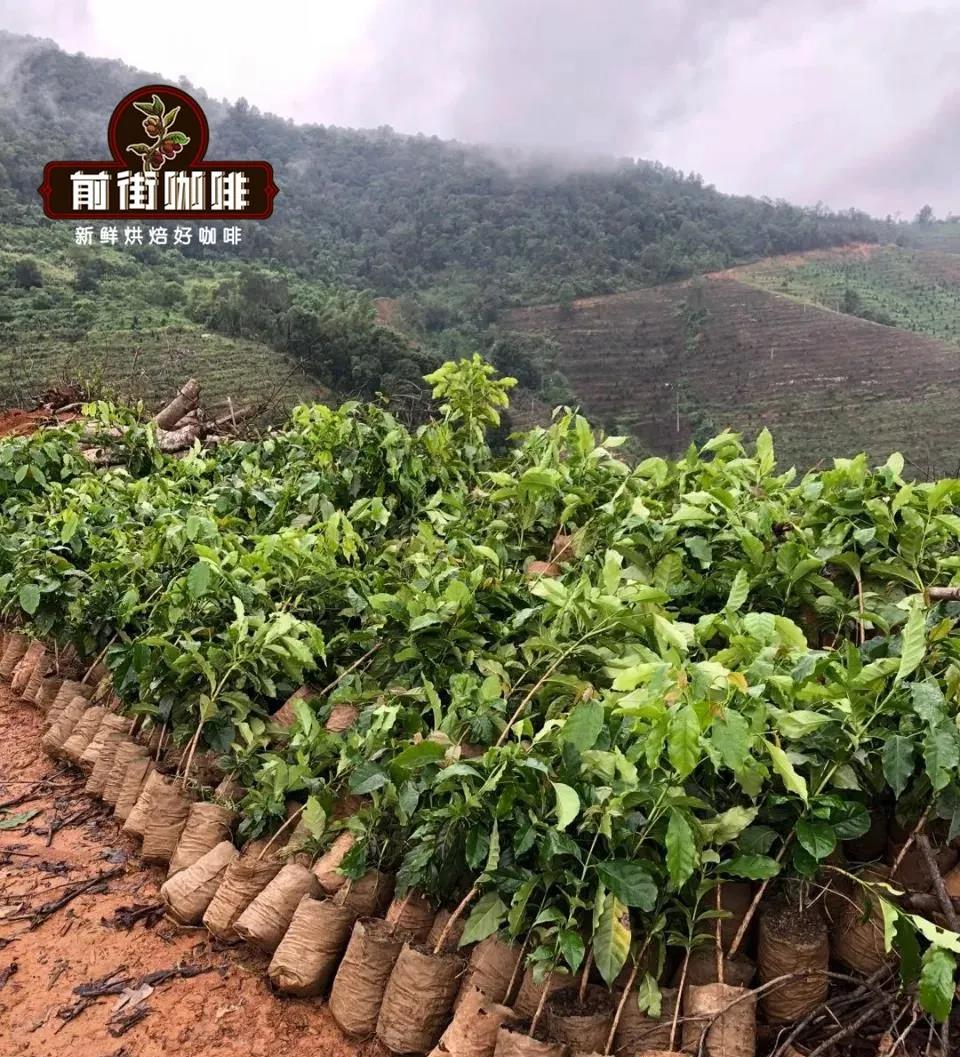
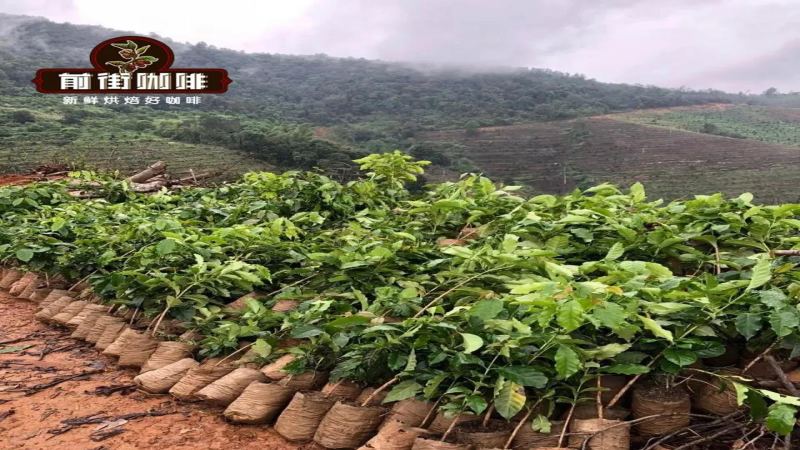
These days, when coffee comes up, more and more friends praise the quality of domestic producing regions. Yunnan coffee and Vietnamese coffee are often named, especially Yunnan. In the past, when people talked about coffee, their first thought was usually imported beans, but now attention is gradually turning to domestic beans. Yunnan is both China's largest coffee-growing province and sits on the recognized coffee golden belt, and the coffee it produces is winning favor with more and more people.
Some may ask: isn't China a country famous for tea? Tea is China's origin. But what Front Street wants to say is that coffee spread around the world following the footsteps of Europeans and Americans. Compared with many coffee-producing countries worldwide, China's coffee-growing history can be traced back to the late Qing Dynasty. Today, the vast majority of coffee on the domestic market comes from Yunnan; Yunnan coffee accounts for 98% of the nation's total output, making it almost synonymous with China's coffee-growing industry.
Yunnan's Coffee-Growing Environment
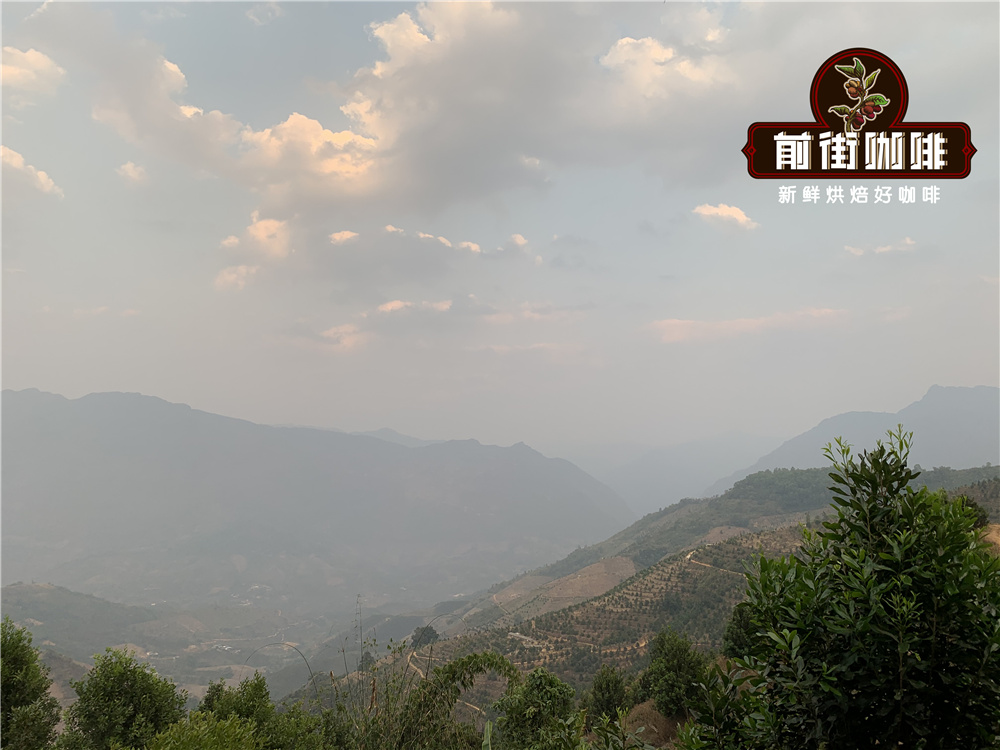
Coffee is ultimately a crop, and climate and environment determine everything. Yunnan happens to lie in the golden zone for coffee growing. Yunnan is located in southwestern China, with the Tropic of Cancer passing through its south. Its terrain is mainly mountainous and plateau, and the mid-altitude areas of 1,000 to 3,500 meters account for nearly ninety percent of the province's land area. The climate is a subtropical plateau monsoon type, with marked day-night temperature differences and abundant rainfall. As Front Street has said before, coffee needs high altitude and suitable temperatures and rainfall to bear high-quality fruit, and Yunnan meets exactly these conditions, so the coffee cherries produced here have an inherently solid foundation.
Yunnan Coffee Producing Regions
Yunnan's small-bean coffee growing areas are mainly concentrated in the south and west, among which Pu'er, Baoshan, Dehong, and Lincang are relatively famous.
Baoshan
According to Front Street's understanding, coffee cultivation in Baoshan began in the mid-1950s, when the first coffee seedling was brought back from Southeast Asia by the patriotic overseas Chinese Mr. Liang Jinshan. As early as the late 1950s, Baoshan coffee was rated first-class in London, England, which shows just how excellent its quality is.
In recent years, with the development of international trade, Baoshan coffee has been regarded as a premium product in many European and American countries, with demand exceeding supply. In December 2010, China's General Administration of Quality Supervision, Inspection and Quarantine certified the coffee as a product reflecting China's national geographical indication.
FrontStreet Coffee's Yunnan small-bean coffee comes from Baoshan, Yunnan, and the variety is Catimor.
Lincang
The Lincang base is located at 23°N, 99°E, with a lowest altitude of 1,230 meters and a highest of 1,540 meters, a height difference of 310 meters. The terrain is mainly mountainous and sloped, with considerable undulation, fertile soil, ample sunshine, abundant rainfall, and large day-night temperature differences. FrontStreet Coffee's plantation is in Lincang, and these unique natural conditions create the lively, bright acidity of Front Street's Yunnan coffee. Front Street's Yunnan coffee is smooth on entry, with the flavor of Asian herbaceous plants and a lively, bright acidity. These excellent qualities depend on many factors, including the growing environment, climate, and cultivation and management techniques.
Most of the Yunnan coffee beans on FrontStreet Coffee's bean list come from the Baoshan and Lincang producing regions. Among them, the Yunnan coffee beans from the Lincang region are Typica coffee beans grown at the FrontStreet Coffee estate that FrontStreet Coffee established locally in Lincang, Yunnan.
Yunnan Coffee Varieties
The varieties currently mainly cultivated in Yunnan include Catimor, Typica, Bourbon, Caturra, Catuai, and others, but almost all of what is seen on the market is Catimor. So when people say Yunnan small-bean coffee now, they usually mean Yunnan Catimor. FrontStreet Coffee's Yunnan coffee comes in two varieties: one is Catimor, such as Yunnan small-bean coffee; the other is Typica, such as Front Street 2013 Natural Typica coffee. Yunnan small-bean coffee gets its name from Typica, because Typica's beans are small in size, hence "small bean." As Front Street has introduced before, because Catimor has high productivity and strong disease resistance, many growers painfully cut down Typica and switched to planting Catimor. At present, Yunnan's Catimor planting area is still relatively large, and the variety of Yunnan small-bean coffee is Catimor.
Yunnan small-bean coffee gets its name from Typica, because the coffee beans of the Typica variety are small in size, hence "small bean." Front Street also mentioned earlier that Catimor has high productivity and strong disease resistance, and many growers painfully cut down Typica to switch to Catimor. At present, Yunnan's Catimor planting area is still relatively large, and the variety of Yunnan small-bean coffee is Catimor.
In 1959, the Portuguese moved the Brazilian Bourbon mutant Caturra to East Timor and crossed it with Timor, which carries Robusta bloodlines, successfully breeding the highly disease-resistant and highly productive Catimor. Because leaf rust swept through coffee-producing countries worldwide, with the assistance of international organizations, producing countries vigorously promoted Catimor to resist leaf rust and increase productivity.
Catimor was developed in 1959 by CIFC, the Portuguese Coffee Leaf Rust Research Center, and is a hybrid of the Timor variety and the Caturra variety. It inherits Timor's Robusta genes, so it has better resistance to coffee berry disease and coffee leaf rust, and also a certain resistance to coffee pests.
Regarding Catimor, Taiwanese specialty coffee master Han Huaizong once described it this way: a devil-like finish. Because of the influence of Robusta genes, Catimor may have an earthy, fishy taste. You'll find that the flavor of Yunnan small-bean coffee is somewhat similar to Mandheling, both carrying a bit of piney flavor. Of course, with improvements in growing techniques and processing methods, the flavor of Yunnan Catimor is also improving.
Catimor is not of pure Arabica lineage; it is a hybrid of the Timor species (belonging to Robusta) and Caturra (a Bourbon mutant), so it carries about 25% Robusta bloodlines. This lineage also determines its flavor flaws: the aroma is not rich enough, the overall bitterness is on the heavy side, and it is prone to astringency and a rather pungent musty taste. But its yield is several times that of Typica, so Yunnan has planted large amounts of Catimor for many years.
FrontStreet Coffee began getting involved in coffee growing even before it opened its shop at Dongshankou in Yuexiu, Guangzhou. Following the specialty coffee principle of emphasizing variety and growing environment, FrontStreet Coffee's Yunnan estate mainly grows Typica, the oldest Arabica variety, along with a small amount of Bourbon.
Around 2018, FrontStreet Coffee's estate began to have harvests one after another, and by the 2020/2021 harvest season there was a certain yield of Typica coffee beans. In 2021, the natural-process Typica produced by FrontStreet Coffee's own estate was sold only at Front Street stores, and because that year's output was limited, it sold out in less than half a year. FrontStreet Coffee also received praise from quite a few coffee lovers.
In the 2021/2022 harvest season, FrontStreet Coffee's estate reached a Typica output of 600 kilograms, which is currently available at FrontStreet Coffee stores and its Taobao shop.
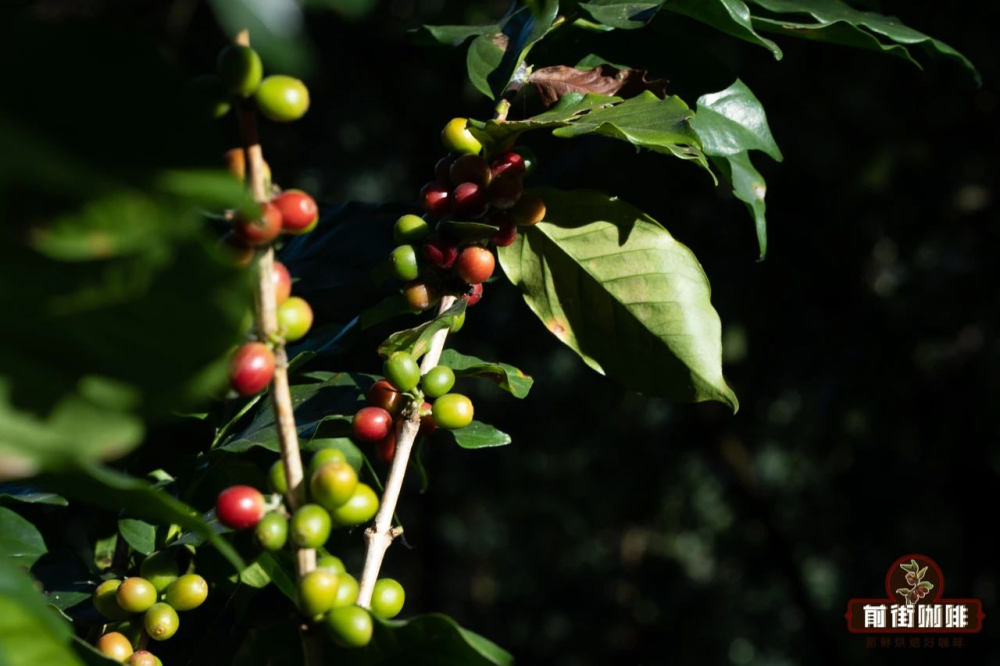
Because FrontStreet Coffee's estate grows the Typica variety and uses the traditional natural processing method, its flavor carries the soft acidity of plum berries, rich nutty notes, brown sugar sweetness, and a black tea-like body. Overall, this coffee has a very full mouthfeel, matching Yunnan small-bean coffee's characteristics of being strong but not bitter, and fragrant but not harsh.
Yunnan Coffee Bean Processing Methods
Coffee bean processing methods are all related to local conditions. Yunnan has a long rainy season and unstable climate, so most Yunnan coffee beans use washed processing.
But the Typica grown at FrontStreet Coffee's estate uses the natural processing method, spreading ripe cherries whole and evenly on raised beds to dry in the sun, turning them from time to time to avoid uneven drying that produces unpleasant fermentation flavors. Keeping the fruit intact allows more sugars to penetrate into the green beans, giving this Front Street coffee a rich aroma and stronger sweetness.
When FrontStreet Coffee's roaster received this natural-process Typica green coffee, in order to highlight the aroma and sweetness while also showcasing the mouthfeel of Yunnan small-bean coffee, a medium roast was used.
FrontStreet Coffee Brewing Suggestions
For brewing, Front Street suggests using freshly roasted coffee beans, so you can experience the rich flavors to the greatest extent. The coffee beans FrontStreet Coffee ships are all within 5 days of roasting, because Front Street knows well that freshness greatly affects flavor. Front Street's roasting motto is "freshly roasted good coffee," so every customer who places an order receives the freshest coffee. The coffee resting period is about 4-7 days, so by the time customers get it, it is at its best flavor.
Of course, some customers need Front Street to help grind the beans, and that's fine too, but Front Street must remind you: once coffee beans are ground in advance, they no longer need resting, because during transport the pressure from carbon dioxide inside the packaging can also round out the flavor, so you can brew a cup immediately upon receiving the coffee grounds. But the grounds need to be brewed promptly, because after contact with air they oxidize quickly, the flavor dissipates faster, and the mouthfeel is not as good. So Front Street recommends buying whole beans and grinding fresh right before brewing, to better taste the coffee's flavor.
Front Street Brewing Parameters:
Dripper: Hario V60, Water temperature: 88°C, Dose: 15 grams, Coffee-to-water ratio: 1:15, Grind size: medium-fine (70% passing a Chinese standard No. 20 sieve)
[Front Street 2013 Natural Typica Coffee Flavor] Heavy mouthfeel, prominent sweet-and-sour quality, with citrus and berry notes, a hint of fermented wine aroma, caramel-like sweetness, creamy finish, and a black tea-like body.
[Washed Yunnan Small-Bean Coffee Flavor] Herbaceous, nutty, chocolate, caramel.
For professional coffee knowledge exchange and more coffee bean information, please follow Coffee Workshop (WeChat public account cafe_style)
For more specialty coffee beans, please add the private WeChat of Front Street Coffee (FrontStreet Coffee), WeChat ID: qjcoffeex
The above content is compiled by CoffeeHunters, a coffee news website.


