








Indonesia is a coffee-producing region that cannot be overlooked on the global coffee map, and Mandheling is the country's most recognizable coffee calling card. From the perspective of Front Street Coffee, this article traces the complete history of Indonesian coffee—from the introduction of Arabica during the Dutch colonial period, through the impact of leaf rust, to Robusta filling the gap. It analyzes the geographical layout of Sumatra's high-altitude producing regions versus low-altitude Robusta cultivation, and offers an in-depth interpretation of how Indonesia's unique wet-hulling process shapes Mandheling's signature low acidity, full body, and herbal flavors. The article also introduces Lintong Mandheling, Golden Mandheling, and Tiger Mandheling from Front Street's bean list, clarifies the certification points for PWN's Golden Mandheling, and includes Front Street's recommended brewing parameters and flavor descriptions to help enthusiasts fully understand the unique charm of Indonesian coffee.
For more specialty coffee knowledge, welcome to follow our WeChat official account: Front Street Coffee
Coffee-producing countries are found all over the world, and in Asia there is one far-famed origin: Indonesia. Anyone who has delved into coffee at all has most likely heard of Mandheling. As the representative coffee of Indonesia, Mandheling is known for its rich, intense taste, with particularly distinct herbal and dark chocolate flavors, earning deep affection from seasoned coffee enthusiasts and dark roast lovers alike. Now let's join Front Street Coffee to get to know Indonesian coffee from multiple angles.
The Origins and Development of Indonesian Coffee
In 1699, while Indonesia was still under Dutch colonial rule, the VOC (Dutch East India Company, Vereeniging Oost-Indies Company) introduced Arabica coffee plants here with the aim of breaking the Arab monopoly on the global coffee trade. The Dutch colonial government initially chose to plant coffee around Batavia (present-day Jakarta).
Subsequently, more coffee plantations were established in East Java, Central Java, West Java, as well as parts of Sumatra and Sulawesi. Indonesia thus became the first place outside Arabia and Ethiopia to cultivate coffee on a large scale. Between 1725 and 1780, the VOC successfully achieved a monopoly on the coffee trade.
By the mid-17th century, the East India Company further expanded Arabica coffee cultivation to Sumatra, Bali, Sulawesi, and Timor. Coffee cultivation on Sulawesi Island dates back to as early as 1750. In the North Sumatra highlands, coffee first took root near Lake Toba in 1888, and was later extended in 1924 to the Gayo Highlands (Aceh) around Lake Laut Tawar. In the late 18th century, Dutch colonists established sizable coffee plantations on the Ijen Plateau in eastern Java.
In the 1920s, smallholder farmers across Indonesia began growing coffee as a cash crop. However, disaster struck in 1876 when coffee leaf rust swept across Indonesia, nearly destroying the Typica variety. In 1900, Robusta coffee (C. canephora var. robusta) was introduced to East Java as a replacement variety, especially in the low-altitude areas where rust was particularly severe.
The plantations on Java Island were nationalized after Indonesia's independence and were revitalized in the 1950s through the introduction of new Arabica varieties. These varieties were also widely adopted by smallholders through government and various development programs. To this day, over 90% of Indonesia's coffee comes from smallholders, with average farm size under one hectare.
If Front Street were asked which bean best represents Indonesian coffee, many friends would probably, like Front Street, blurt out "Mandheling."
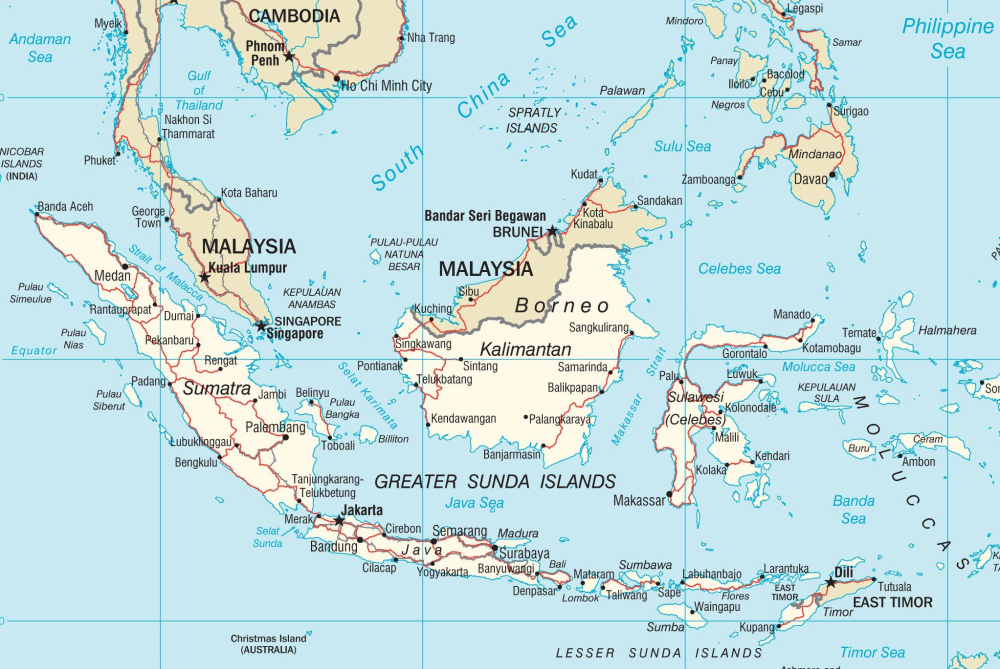
Mandheling mainly comes from the island of Sumatra in Indonesia. This island is the largest in Indonesia, located near the equator with a typical tropical rainforest climate—high heat and humidity, abundant rainfall—providing excellent conditions for growing quality Arabica coffee beans. However, Indonesia's producing regions have limited altitude conditions, and thus limited space for growing quality Arabica. As a result, only 25% of Indonesia's coffee beans are Arabica, since Arabica only reveals its best flavors at high altitudes; the remaining 75% are Robusta trees, which can survive at low altitudes. And the highest areas in Indonesia are precisely in Sumatra.
Varieties of Mandheling Coffee Beans
Front Street Coffee's Lintong Mandheling coffee is labeled with the varieties: Tim Tim Ateng, while Golden Mandheling coffee is labeled with the variety: Ateng. What exactly are these varieties? Golden Mandheling coffee beans come from the Gayo Mountains in Aceh, North Sumatra, and the variety is Ateng. Ateng is a hybrid between Arabica and Robusta, widely planted in Sumatra and other Indonesian islands, essentially a branch of Catimor, with Ateng being the local name. What Indonesia calls Tim Tim is what we commonly call Timor. The Ateng variety shows excellent cultivation adaptability and flavor performance in the Aceh region.
The Dutch initially brought Typica to Sumatra, and Typica is a pure Arabica coffee variety. Later, in 1877, leaf rust swept through Indonesia, and the local government had to introduce coffee varieties with stronger disease resistance, trying every possible means. They successively introduced Robusta, Timor from Timor Island, Catimor, Kent from India, and S795. Biologically, aside from Robusta, all the introduced varieties belong to the Arabica species. Returning to the present, Robusta is generally found in the low-altitude areas of southern Sumatra, while Mandheling coffee is concentrated in the high-altitude zones of the north. The famous Mandheling producing areas are known as the "Two Lakes, Two Mandheling": Lake Tawar and Lake Toba. Lake Tawar is in the north in Aceh, near which the now-famous Gayo Mountains are located; Lake Toba is in the Lintong region.
Indonesia's Unique Processing Method: Wet-Hulling
The distinctive herbal and woody agarwood notes of Mandheling coffee are closely tied to the local processing method. Indonesia has a typical tropical rainforest climate with frequent rainfall and relatively short sun-drying hours, making sun-drying processing unfeasible; combined with generally modest local economic conditions, it is difficult to invest enough in washed processing. Thus this semi-washed method emerged. It is an extremely rare processing method in the world, yet it accidentally created Mandheling's special flavors of low acidity, full body, and a muffled aroma.
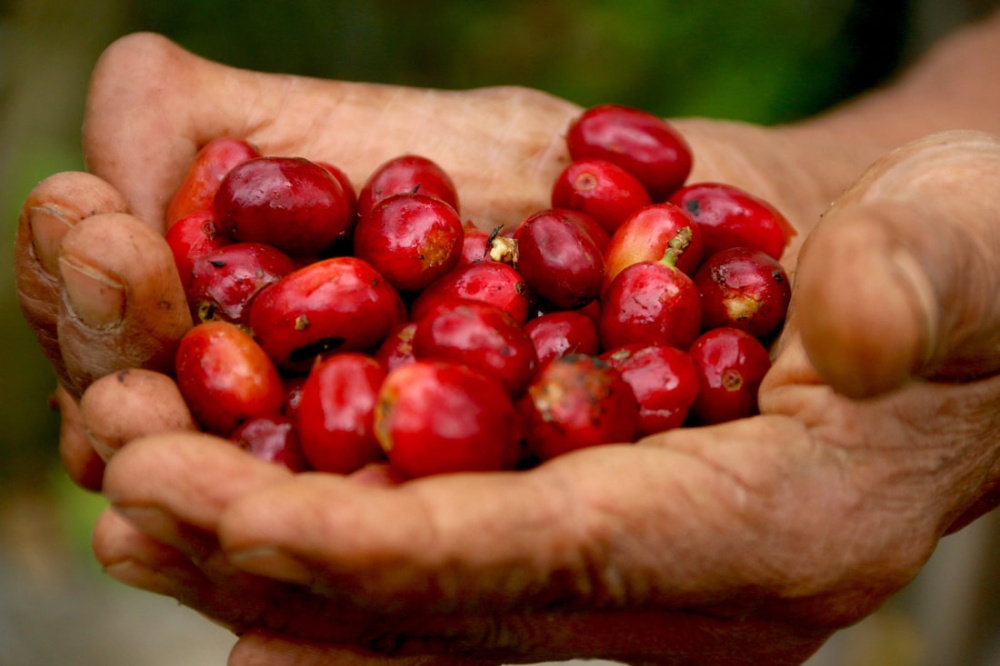
The locally unique "wet-hulling" method is carried out while the beans are still moist and soft, with moisture content as high as 30% to 50%. That is, farmers pick fresh coffee cherries from the trees and process them the same day, using a wooden pulper to remove the skin and pulp of the coffee cherries, then ferment for 3 hours before drying. When the parchment beans are in a semi-dry, semi-wet state, they are collected and sold to local coffee processing stations.
After the coffee processing station receives these semi-dry, semi-wet parchment beans, it first removes the mucilage layer and parchment layer, then continues with the later stage of sun drying. In this way, the time needed to dry the green coffee beans is shortened to about 2 to 4 days, and once the moisture content drops to 12% to 13%, the beans can be stored. Generally speaking, many green coffee beans do not have their parchment layer removed until moisture content drops below 13% during post-processing, but wet-hulling is an exception. Coffee processed by wet-hulling has greatly reduced fermentation and acidity, while body is enhanced, with notable caramel and fruity notes, plus a slight woody and herbal character—this is the classic "taste of place" of Sumatra coffee.
Front Street Coffee's Mandheling coffees include three types: Lintong Mandheling, Golden Mandheling, and Tiger Mandheling.
Golden Mandheling
We mentioned Golden Mandheling earlier—does the word "Golden" in the name represent a precious grade? In fact, Golden Mandheling is not a grade classification, but a trademark registered by the Indonesian company N.V. Pawani Medan (PWN). Founded in 1957, the company deals in the export of Indonesian products such as coffee, rubber, cinnamon, cloves, and patchouli oil. It was the first Indonesian company to export coffee from North Sumatra and the first to make "Mandheling coffee" famous in Japan. Since 1977, the company has focused on exporting premium coffee beans, including Sumatra Arabica coffee Mandheling Grade 1 and Robusta coffee AP-I Grade 2, mainly sold to Japan, Taiwan, and the United States, with Japan and Taiwan accounting for over 95% of exports. In Japan and Taiwan, "PWN" is synonymous with "quality assurance."
Because Golden Mandheling's quality is exceptionally outstanding, its price is naturally much higher than ordinary Mandheling, which has also led to an endless stream of counterfeit Golden Mandheling on the market.
Front Street believes that authentic Golden Mandheling must come from Indonesia's PWN Coffee Company (the Golden Mandheling trademark is owned by PWN). When importing Golden Mandheling green coffee beans, a PWN certificate is included as certification (used to distinguish authenticity). If the seller cannot provide the source information of the Golden Mandheling green beans (certificate or burlap sack), then one should carefully verify.
The Golden Mandheling on Front Street Coffee's bean list is PWN's Golden Mandheling. This Front Street Golden Mandheling green coffee bean has a screen size of 18+ and fewer than 3 defective beans per 300-gram sample, with the highest grade of G1. In addition, PWN has performed three rounds of hand sorting on this batch of beans, removing defective beans as thoroughly as possible, resulting in a cleaner taste, more pronounced sweetness, and a more intense aroma.
Front Street's Mandheling Coffee Brewing Recommendations:
Mandheling coffee is dark roasted. It is recommended to use a Kono dripper, water temperature around 88°C, water-to-coffee ratio of 1:15, coffee dose of 15g, grind size of 11 on the EK43s grinder (75% passing through a Chinese standard No. 20 sieve).
Use a staged extraction. First, bloom with water at twice the coffee dose, i.e., 30g of water for 30 seconds. Starting from the 31st second, continue pouring in a circular motion with a small stream. Pause at 125g, then continue pouring until 225g and stop. After the water in the dripper has dripped through, remove the dripper. Time from the start of pouring; the extraction time is 2 minutes 00 seconds. Then swirl the entire cup of coffee to mix, and pour into a cup to drink.
[Lintong Mandheling] Rich nutty character, with a hint of melon aroma in the finish; as the temperature drops, herbal flavors emerge. Full body and layered complexity.
[Front Street PWN Golden Mandheling] Rich nutty flavors; as the temperature drops slightly, melon, herbal, and spice notes gradually emerge. The aftertaste has dark chocolate character, with pronounced caramel sweetness and a clean, gentle mouthfeel.
The above content is compiled by CoffeeHunters, a coffee news website.


