







Ethiopia, the birthplace of Arabica coffee, boasts nearly 2,000 recorded coffee varieties and is a pilgrimage site for countless coffee lovers. This article systematically reviews the variety classification, cultivation patterns, and processing techniques of Ethiopian coffee, analyzes the distribution characteristics of long beans and small-bean heirloom varieties across different production regions, and provides a detailed introduction to four cultivation forms including forest coffee and garden coffee. It also delves into the complete processes and representative beans of the natural method, washed method, and semi-washed method, including popular products such as Front Street Coffee Hualei and Front Street Coffee Gutingding Cooperative, taking you on a comprehensive journey through the coffee charm of this magical country.
For centuries, Ethiopia has remained the world's most celebrated source of single-origin specialty coffee. Its richly layered flavors, distinctive acidity, and delicate floral aromas have captivated countless people, making it one of the oldest coffee-producing regions in history. On Front Street Coffee's bean list, there are dozens of coffees to choose from, yet many customers walk in and go straight to the point, specifically asking for an Ethiopian pour-over—clear evidence of how much this region means to everyone.
Ethiopia is a country full of surprises at every turn. The Arabica coffee we drink daily or have yet to try all traces its roots here. It is said that Ethiopia has nearly 2,000 registered coffee varieties, of which 1,927 are native heirloom varieties and 128 are introduced from abroad. Judging by appearance alone, Ethiopian coffee varieties are like a grand garden of wonders, each with its own form—some slender, some short, some lean, and some plump...
Long beans can be found in coffee-growing regions throughout the country. Based on observed proportions, long-bean varieties appear more frequently in the western Jimma region, including the Limmu and Kaffa areas. For example, many long beans are found in Front Street Coffee's Kaffa Forest, which displays a Geisha-like citrus aroma and honeyed sweetness when brewed. In Sidama or Yirgacheffe, however, the proportion of such varieties is noticeably lower.
Small-bean varieties tend to be rounder in shape, with smaller bean sizes, mostly between 14 and 15 screen sizes. This variety is probably the most familiar to everyone, as it is frequently seen in the Sidama and Yirgacheffe production regions. Front Street Coffee has also found these small beans in samples from Harrar and in green coffee sold locally in Jimma. Compared to other areas, Sidama, Yirgacheffe, and the surrounding Arsi and Guji areas cultivate more of these small-bean heirloom varieties—Front Street Coffee Hualei, Front Street Coffee Gutingding Cooperative, and Front Street Coffee Hamashu all belong to the more mini-sized category.
In addition to the sheer number of varieties, coffee cultivation methods also affect the degree of variety mixing in Ethiopian coffee beans. Divided by scale and model, Ethiopian coffee cultivation can be categorized as follows: ● Forest coffee (8-10%): Coffee trees grow alongside other crops in primary forests without any human intervention; farmers visit periodically to harvest coffee cherries. ● Semi-forest coffee (30-35%): Coffee trees are planted in areas between the forest and farmers' living areas. Like forest coffee, it is a naturally produced variety, but farmers manage the growing area and plant other cash crops. ● Garden coffee (50-55%): Coffee trees are planted around farmers' living areas, mostly cultivated by the farmers themselves. ● Plantation coffee (5-6%): Operated by large private growers with more complete processing facilities and production capacity.
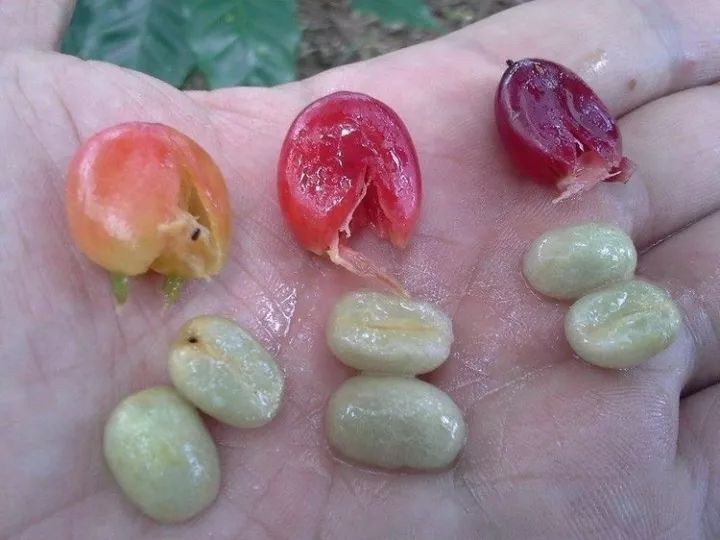
Coffee cultivation in Sidama and Yirgacheffe mostly follows the garden coffee model, where coffee farmers plant coffee trees near their own living areas, harvest the cherries themselves during harvest season, and deliver them to processing stations built near water sources for centralized processing (or middlemen collect them in bulk). Apart from a few capable estates that can independently handle cultivation, harvesting, and green bean processing, many coffee beans from different regions and different varieties are processed together at processing stations and then sent to auction houses for official evaluation and grading.
This is precisely why many Ethiopian coffee beans are named and distinguished by processing station or cooperative, and it is also one of the reasons why the same batch of coffee beans contains a mix of multiple varieties. Even different batches from the same processing station may have noticeably different flavors. Taking Yirgacheffe as an example, Front Street Coffee Gutingding Cooperative, Front Street Coffee Konga Red Cherry, and Front Street Coffee Worka Cooperative each present their own unique flavor profiles due to differences in origin and processing method.
The natural method, also known as the dry process or drying method. Coffee cherries are spread out on wide drying beds to be exposed to sunlight, raked and turned daily to ensure even drying. Once the moisture content of the skin and pulp drops to about 12%, the cherries are sent to a machine to remove the skin and pulp.

Process: Sun-drying on beds - Depulping - Removing impurities - Hulling - Grading - Bagging As a traditional processing method, the natural method is simple to perform and is commonly found in arid regions such as Brazil. Green beans obtained through the natural method have a relatively rough surface with more silver skin than the washed method, yet less silver skin remains during roasting.
Representative beans: Front Street Coffee Gesha Village Red Label, Front Street Coffee Gesha Village Gold Label, Front Street Coffee Chaka, Front Street Coffee Kaffa Forest, Front Street Coffee Hualei
Suitable brewing methods: Pour-over, cold brew, French press, Clever Dripper, siphon
The washed method, also known as the wet process. Coffee cherries first undergo floatation to remove impurities such as twigs, leaves, and stones, then are depulped. The depulped coffee cherries need to be soaked in water. The cherries have a sticky mucilage layer on their surface; soaking them in water and relying on fermentation removes the mucilage. Fermentation time ranges from 8 to 48 hours. During fermentation, constant attention is needed to avoid contamination that could cause off-flavors in the beans. After fermentation is complete, gently rubbing with hands removes the mucilage layer.
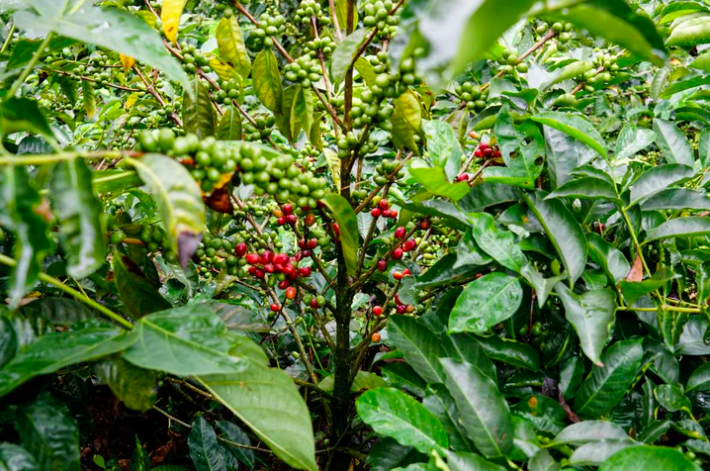
Process: Floatation - Depulping - Fermentation - Washing - Drying - Hulling - Grading - Bagging It is important to note that coffee beans processed by the washed method should be cleaned and dried promptly to prevent contamination from secondary fermentation. The washed method is commonly found in coffee-producing regions with abundant water resources such as India. The resulting beans have a glossy surface with less silver skin, and quality is easy to control with relatively consistent flavor.
Representative beans: Front Street Coffee Yirgacheffe, Front Street Coffee Gutingding Cooperative
Semi-washed method After floatation, the skin and part of the mucilage layer are scraped off, washed with water, and then sun-dried.
Process: Floatation - Depulping - Washing - Sun-drying Coffee beans processed by the semi-washed method feel sticky to the touch because some mucilage remains on the parchment.
The above content is compiled by CoffeeHunters, a coffee news website.


