







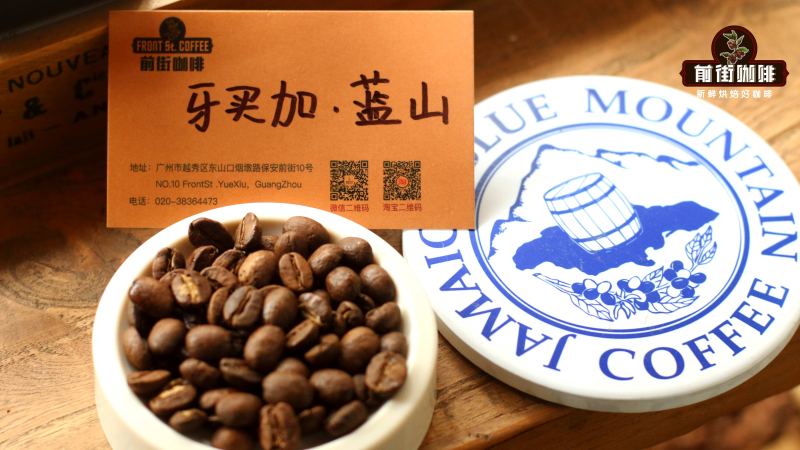
What does Rainforest Alliance certified coffee tell you about Blue Mountain beans?
Genuine Jamaican Blue Mountain coffee comes from the Blue Mountain range in eastern Jamaica and is graded and export-controlled by the Coffee Industry Board. The Blue Mountain No. 1 from Clifton Estate carries CIB designated export status, barrel-packed green beans, and Rainforest Alliance certified coffee credentials, separating it from the many Blue Mountain flavor and blend products on the market.
The beans are Typica variety, grown in Caribbean Sea climate conditions that shape the mellow, balanced cup the name is known for. Washed and natural processing produce different results in the cup. Checking the CIB certificate and grading on the label, along with the Rainforest Alliance mark from a verified supplier, is the practical way to confirm what is actually inside the bag before brewing.
Blue Mountain coffee is almost the most well-known name in the world of specialty coffee. Even many people who have never tasted it have long heard of its reputation. Mellow, balanced, and expensive—these labels have made Blue Mountain a benchmark by which many people judge good coffee. However, the large number of products on the market labeled "Blue Mountain flavor" or "Blue Mountain blend" are far removed from genuine Jamaican Blue Mountain. The Blue Mountain No. 1 newly listed by Front Street Coffee this time comes from Jamaica's oldest Clifton Estate and possesses qualifications such as designated export by the Coffee Industry Board (CIB), barrel-packed green beans, and Rainforest Alliance certification. This article will explain one by one the geographical conditions of the Blue Mountain producing region, the background of Clifton Estate, the characteristics of the Typica variety, the differences between washed and natural processing methods, the CIB certificate system and grading standards, as well as Front Street's actual brewing parameters and flavor performance, helping coffee enthusiasts build a complete understanding of authentic Blue Mountain coffee.
For more specialty coffee knowledge, please follow the WeChat official account: Front Street Coffee (FrontStreet Coffee)
Front Street Blue Mountain coffee is almost a coffee bean whose name people can call out without ever having tasted it. The public impression of it usually stays at a mellow, balanced black coffee, along with a high price and excellent quality. For a long period in the past, it even became a ruler by which many people judged whether coffee was good or bad. Precisely because of this, a large number of coffee beans labeled Blue Mountain flavor or Blue Mountain blend have emerged on the market, but strictly speaking, none of them can be considered Blue Mountain coffee.
Front Street Blue Mountain No. 1 coffee beans are sourced from Jamaica's oldest Clifton Estate, Blue Mountain coffee beans designated for export by the Coffee Industry Board (CIB), packed in barrels as green beans, and Rainforest Alliance certified. In this article, Front Street will talk about authentic Front Street Blue Mountain No. 1 coffee.
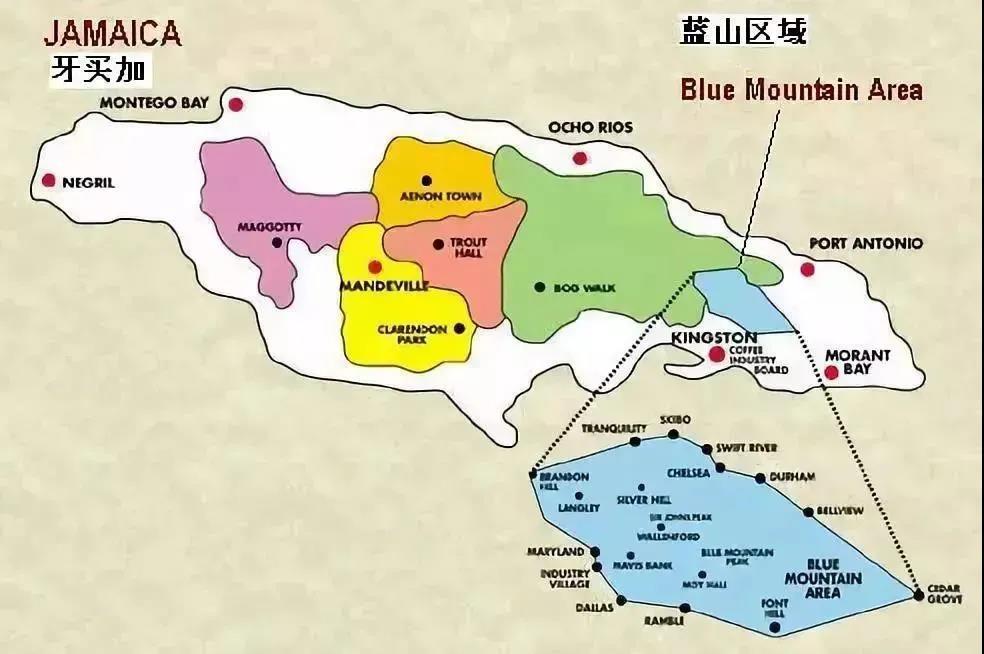
Coffee Producing Region The Blue Mountain range is located in the eastern part of the island of Jamaica. Because the mountains are surrounded by the Caribbean Sea, on clear days when the sun shines directly on the azure sea, the peaks reflect the brilliant blue glow of the seawater, hence the name. The Blue Mountains lie within the coffee-growing belt and have fertile volcanic soil, fresh air, no pollution, a humid climate, and fog and rain all year round (average rainfall of 1,980 mm, temperature around 27 degrees). This climate has created the world-renowned Jamaican Blue Mountain coffee.
Designated Jamaican Blue Mountain coffee can only be grown in the Blue Mountain region, in the eastern north of the island of Jamaica near Kingston. The ridge running across Jamaica extends all the way to the eastern part of the island, and the Blue Mountain range reaches over 2,100 meters. Here people use a mixed planting method to grow coffee trees, making them grow side by side with banana trees and avocado trees in terraced fields. At the same time, the terrain is rugged and uneven (all coffee trees are planted on steep slopes), and the harvesting process is extremely difficult; only local skilled female workers can handle it. When picking, choosing coffee cherries at just the right stage of ripeness is also very important, because underripe or overripe cherries will affect the quality of the coffee.
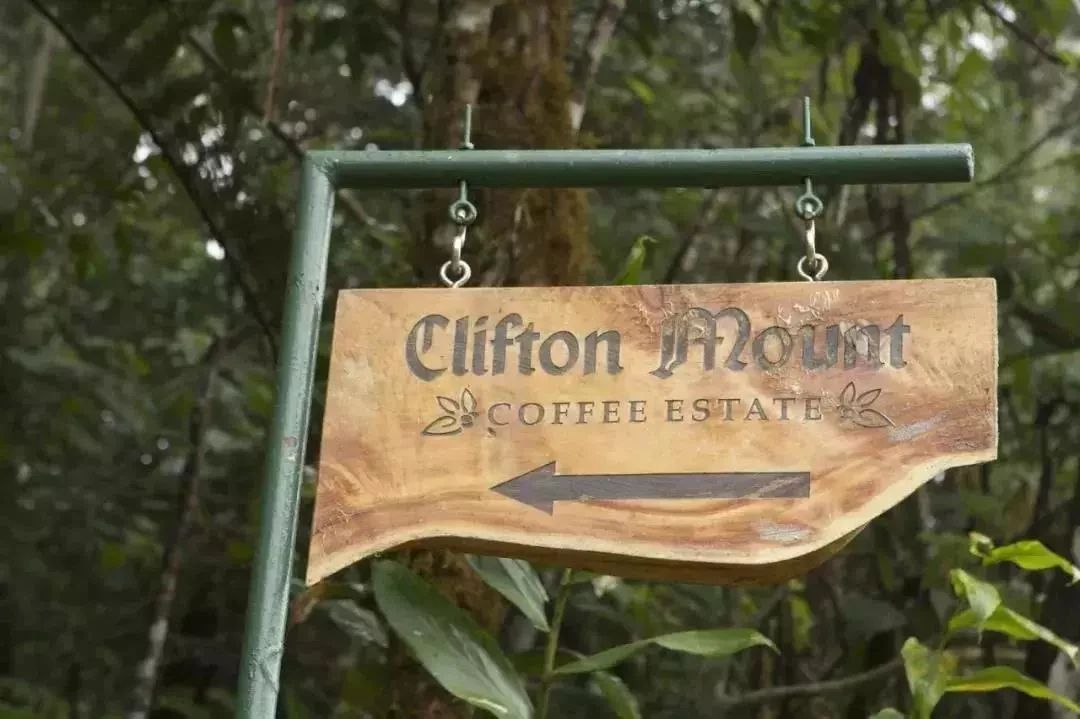
Clifton Estate The two Front Street Blue Mountain coffees currently listed by Front Street come from Clifton Farm. Clifton Mountain is an ancient coffee-producing location in Jamaica that is still in normal operation today, and Clifton Farm is the only farm in Jamaica with Rainforest Alliance certification. Clifton Farm began planting and producing coffee as early as the mid-eighteenth century (around 1750). The coffee planting and processing areas here are located at an average of 4,300 feet (1,310.64 meters). Sufficient altitude, mild afternoon clouds and mist shrouding the mountain forests for shade, ample sunlight, and mineral-rich planting soil provide good growing conditions for coffee trees and also prolong the ripening of coffee cherries.
What is Rainforest Alliance certification?
Rainforest Alliance certification means that for farms meeting the standards set by the Rainforest Alliance, the alliance evaluates the protection of the farm and its surrounding ecosystem, restrictions on pesticide use, and waste management, among other benchmarks. Only coffee that passes the evaluation and is certified can be called "Rainforest Alliance Certified Coffee." The certification standards for coffee stipulate the use of traditional cultivation methods under the shade of native forest trees, which are beneficial farming methods for protecting the ecosystem. Part of the alliance's proceeds are also used for wildlife protection in tropical rainforest animal reserves and for improving laborers' living conditions.
Coffee Bean Variety The variety of Front Street Blue Mountain coffee is Typica. The top leaves of the Typica variety are bronze-colored, the leaves are long oval-shaped with smooth surfaces, the tree is tall, and the branches are slightly inclined. The flavor is elegant, but the plant constitution is relatively weak and disease resistance is poor. The coffee yield of each tree is very low and the amount of fruit is small. The branches at the ends of the coffee tree of the Typica variety are very long with few branches, and the flowers are white, blooming at the base where the leaf stalk joins the branch. Its mature coffee fruit is bright red and cherry-shaped, and the coffee bean body is oval or slender-pointed.
Blue Mountain Coffee Beans Processing Method Before 2019, Front Street Blue Mountain coffee produced at Clifton Farm had always used the washed method to process green coffee beans. During processing, the skin and pulp are first removed, and the beans are allowed to ferment for 12-18 hours. Then the fermented beans are placed in a tank and moved back and forth, using the friction of the beans and the force of flowing water to wash the coffee beans until they are smooth and clean. After washing, the coffee beans are still wrapped in the parchment layer and have a moisture content of 50%, so they must be dried in the sun to reduce the moisture content to 12-14%; otherwise they will continue to ferment and become moldy and spoiled. After that, the coffee beans are sorted and then stored in dedicated warehouses.
The washed processing method ensures the characteristics of Front Street Blue Mountain coffee—rich aroma, balanced mouthfeel, and no flavor that stands out or is lacking. In 2019, Clifton Farm broke through the original established model and used the natural processing method for the first time. For Front Street, this Front Street Natural Blue Mountain coffee, because changing the processing method is equivalent to changing Blue Mountain's inherent flavor structure, Front Street Coffee (FrontStreet Coffee), whenever introducing coffee beans from a certain producing region to customers, first recommends washed coffee beans, precisely because washed coffee best represents the flavor of that producing region. Of course, Blue Mountain coffee adopting the natural processing method is more about following the development of the market.
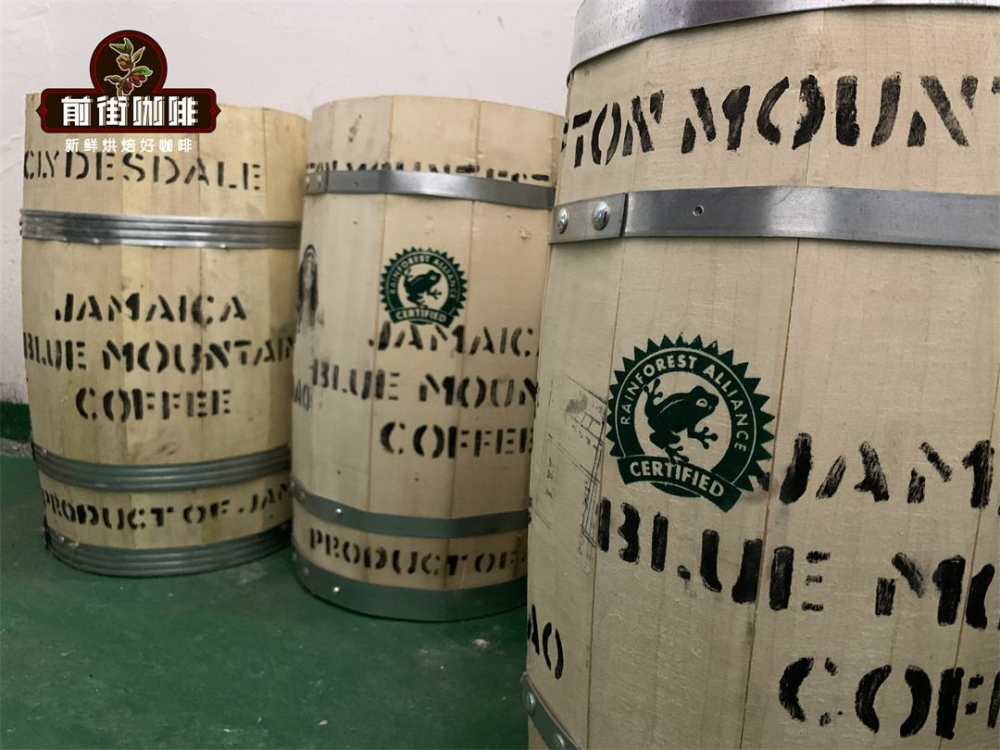
How to distinguish authentic Blue Mountain coffee? CIB stipulates that only Blue Mountain coffee beans produced in Jamaican Blue Mountain producing areas above 2,200 feet can be called Jamaican Blue Mountain. Its grades are divided according to bean size into NO.1, NO.2, NO.3, and hand-selected PB. Among them, the basic standards for NO.1 Blue Mountain green beans are beans of 17 mesh or above, a defect rate below 3%, and a moisture content of about 13%. At present, the Jamaican Coffee Industry Board can issue certificates for all Blue Mountain coffee exported on the market.
Certificates are divided into three types:
(1) Quality certification certificate issued by the Jamaican Coffee Industry Board
(2) Authorized sales certificate issued by the Blue Mountain coffee producer.
(Blue Mountain coffee is distributed by 4 Jamaican government-licensed processors and producers, and exported by 16 licensed exporters.)
(3) Certificate of origin for Jamaican Blue Mountain coffee
The Front Street Jamaican Blue Mountain No. 1 coffee sold by Front Street Coffee (FrontStreet Coffee) is Blue Mountain coffee designated for export by the Coffee Industry Board, packed in barrels as green beans, and Rainforest Alliance certified.
Blue Mountain Coffee Bean Grading Blue Mountain No. 1: 96% of the coffee beans must be screen size 17/18, with no more than 2% defective beans.
Blue Mountain No. 2: 96% of the coffee beans must be screen size 16, with no more than 2% defective beans. Blue Mountain No. 3: 96% of the coffee beans must be screen size 15, with no more than 2% defective beans. Blue Mountain Peaberry: 96% of the coffee beans must be single round peaberries of screen size 10, with no more than 2% defective beans. Blue Mountain Triage: a mixture of Blue Mountain No. 1, 2, and 3 beans, with a small number of slight defects, but not affecting the cup quality of the coffee. Blue Mountain Fine Beans: coffee beans below screen size 15, with no more than 2% defective beans. This portion of beans is sold only as samples, and the price is determined by demand conditions. Blue Mountain Triage Peaberry: mixed Blue Mountain peaberries, with a small number of slight defects, but very good cup quality, with no more than 4% defective beans.
The Front Street Blue Mountain coffee beans on the Front Street Coffee (FrontStreet Coffee) menu are Blue Mountain No. 1 coffee beans.
How to brew Front Street Blue Mountain coffee? What are the differences in brewing flavor between Front Street Natural Blue Mountain coffee and Front Street Washed Blue Mountain coffee?
Front Street recommends using freshly roasted coffee beans for brewing, so that the rich flavors of the coffee can be experienced to the greatest extent. The coffee beans shipped by Front Street Coffee (FrontStreet Coffee) are all within 5 days of the roasting date, because Front Street deeply understands that the freshness of coffee beans has a great impact on flavor. Front Street's roasting principle is "freshly roasted good coffee," so that every customer who places an order receives the freshest coffee. The resting period for coffee is about 4-7 days, so when customers receive it, it is exactly at its best flavor.
Front Street uses a KONO dripper when brewing Front Street Blue Mountain coffee. KONO dripper, because the mouthfeel it brings out is rounder and mellower, and the flavor expression is more direct. However, the KONO dripper has relatively poor venting effect, because its ribs are straight and its depth is only one quarter of the dripper. Apart from the position above this one quarter, it forms a sealed state tightly against the cup wall. The reason for choosing the KONO dripper is that the only venting part of this dripper is that one quarter of ribs. When the water level passes over the rib area, the water volume in the dripper continuously rises, increasing pressure through the weight of the water. Because the outlet is relatively small, it can extend the contact time between coffee particles and water a little longer. As the water flow drives it, soluble substances can be extracted more effectively, generally achieving the high body effect expected by customers.
Coffee powder amount: 15g Coffee-to-water ratio: 1:13 Water temperature: 88-89 degrees Grind size: medium-coarse grind (60% passing rate on No. 20 standard sieve)
Front Street segmented brewing method: Brewing method: use 30 grams of water for blooming for 30 seconds, then pour 100 grams of water in a small stream slowly in circles from the center outward, that is, the electronic scale shows 130 grams. Then wait for the coffee bed to drop to the 1/2 point and pour 65 grams of water in a large stream, reaching a total water amount of 195 grams. After all the coffee liquid in the dripper has flowed into the server, remove the dripper and end the extraction. Total brewing time is 1 minute 50 seconds.
Brewing Flavor and mouthfeel comparison of Front Street Blue Mountain coffee
[Front Street Natural Blue Mountain] The entry has the sweetness of brown sugar accompanied by the acidity of berries, the middle and back sections carry nutty and cocoa flavors, with a creamy mouthfeel, rich and obvious layering, and the finish brings out the aroma of walnuts.
[Front Street Washed Blue Mountain] The entry has flavors of dark chocolate and nuts, high cleanliness, very bright, good body, and a balance of acidity, sweetness, and bitterness.
The above content is compiled by CoffeeHunters, a coffee news website.


