







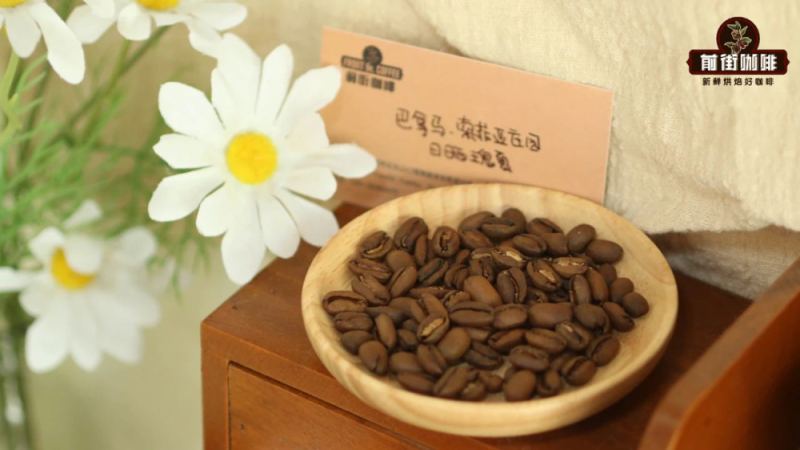
Geisha coffee is renowned worldwide for its intense floral aroma, citrus and berry notes, and delicate acidity, and the choice of roast level directly determines its flavor direction. This article analyzes the taste differences of Geisha coffee from three dimensions—light, medium, and dark roast—and, combined with Front Street Coffee's roasting philosophy and brewing practices, provides a detailed interpretation of the flavor characteristics of Panama Hacienda La Esmeralda Geisha. It also includes Front Street's recommended V60 pour-over parameters, coffee-to-water ratio, and grinding standards to help coffee enthusiasts find the cup that best suits them between floral-fruity aromas and full-bodied richness.
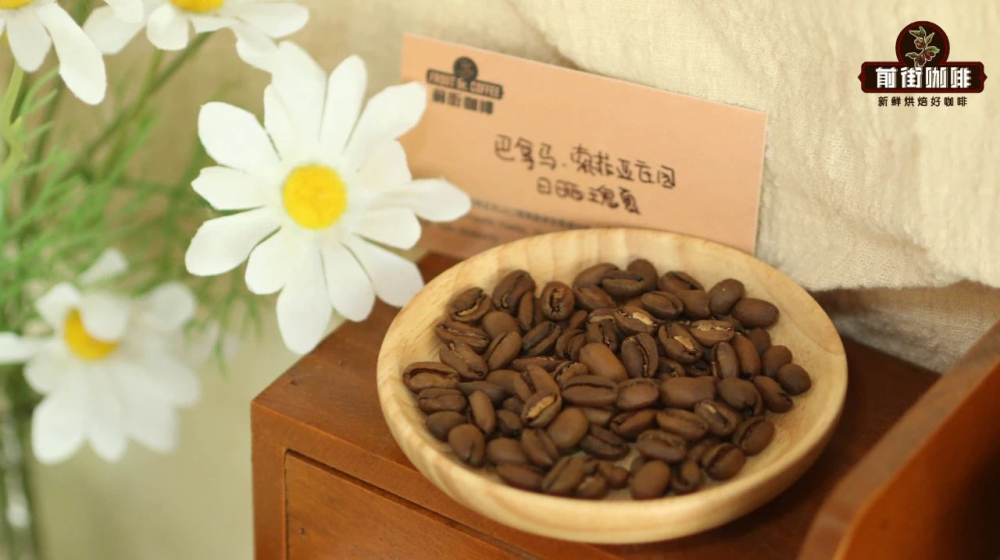
Is Geisha coffee bean actually suitable for light roast or dark roast? A full analysis of flavor description and taste characteristics
CUPPING 10-10-11
Equipment: Hario V60 pour-over dripper
Medium grind (slightly finer), because the roast level is lighter, grinding finer helps reduce acidity.
Water temperature: 91°C. The wet aroma is extremely prominent, and when fingers偶然 touch the coffee grounds, a residual hint of sweetness can be felt. Overall, just like SM's cupping evaluation, the floral aroma is abundant and delightful, the fruit acidity is bright, and the body is on the thinner side.
Geisha coffee is usually presented as pour-over. The reason this coffee bean has become globally famous lies in its rich floral aroma, citrus and berry tonality, and juice-like mouthfeel; as the temperature drops, the acidity becomes more delicate, and the overall layering is extremely rich. Panama's coffee-growing regions are almost entirely concentrated around the Chiriquí volcano. Geisha's requirements for growing conditions are extremely demanding: it must be planted at high altitudes, protected by cloud cover or abundant shade trees, and grown in fertile soil to produce its captivating floral aroma, refined fruit acidity, and multi-layered flavor expression.
The three roast levels of coffee beans
A cup of coffee contains multiple layers such as acidity, sweetness, bitterness, and saltiness. To achieve a good-tasting coffee with balanced acidity and bitterness, the roasting stage plays a decisive role. As time passed and the third wave coffee revolution arrived, the new landscape of specialty coffee was already different. Dark beans are no longer regarded as the optimal choice, and light roast and medium roast have gradually become mainstream.
Light roast characteristics: Light roast coffee appears light brown, with no oil exuding on the bean surface. The beans are hard, the acidity is bright, the mouthfeel is full-bodied, and the flavor is vivid.
Flavor: Coffees with fruity and floral notes usually belong to light roast. As long as the beans are well handled in cultivation, processing, and roasting, they can present rich and varied tastes, aromas, and aftertastes. For example, coffee beans from Ethiopia and Kenya are mostly light roasted to fully bring out floral-fruity aromas and juice-like qualities. Front Street carries more than a dozen single-origin beans from Ethiopian regions, because the flavors of Ethiopia's various regions differ.
Medium roast characteristics: Medium roast coffee is brown, and a small amount of oil begins to appear on the bean surface. This type of coffee has moderate acidity, red wine tonality, and a rounded mouthfeel.
Flavor: At this roast level, many of the coffee's unique flavors are still retained. Heat begins to penetrate the interior of the beans and triggers caramelization reactions, and sweetness emerges accordingly. Therefore, various indicators are relatively balanced: it is more intense and sweeter than light roast, but some acidic fresh notes may dissipate. Examples include Costa Rica's Tarrazú and Mozart. This is the roast level favored by roasters, and it is more approachable for the general drinker, achieving a balance between acidity and bitterness while still showcasing the coffee's natural flavors.
Dark roast characteristics: Dark roast coffee is dark brown, with abundant oil on the surface, low acidity, heavy red wine notes, and a more bitter and full-bodied taste. Flavor: Coffee roasted to this level is basically difficult to identify by origin, but that does not mean it tastes bad. Some coffees are very suitable for dark roasting and will present the characteristic flavors of chocolate, nuts, and caramel. Examples include Mandheling coffee, Blue Mountain coffee, Brazil coffee, and so on.
Geisha coffee
In 1931, Geisha was quietly exported from Geisha Mountain in southwestern Ethiopia (the pronunciation happens to be the same as the Japanese word "geisha") to Kenya, then went through Tanzania and Costa Rica, was transplanted to Panama in the 1960s, and after nearly half a century of obscurity, it finally rose to fame, defeating consistently winning varieties such as Bourbon, Caturra, Catuai, and Typica, and consecutively won the championship in the Panama National Treasure Bean Cup Tasting Competition in 2005, 2006, and 2007.
Geisha (pronounced the same as the Japanese word "geisha," hence also called geisha coffee) was initially planted only in a small area within the estate and used as a windbreak because the tree is taller than ordinary coffee trees. The estate owner's son, in order to participate in the annual Panama Best Coffee competition, tested all the coffee tree varieties on the estate one by one, which gave Geisha the opportunity to stand out; afterward it also participated in many international coffee competitions and won a total of eleven championships.
Geisha coffee
The Geisha coffee produced by Panama Hacienda La Esmeralda is recognized as the finest, thanks to Panama's microclimate environment creating Geisha's unique flavor. After Geisha became popular, estates everywhere began planting it. FrontStreet Coffee has acquired not only Panama Geisha, but also Geisha from Colombia, Guatemala, and Costa Rica. Although Panama Geisha performs excellently, Geisha from other regions is also worth trying.
Front Street's approach to roasting Geisha coffee
Among the many factors affecting the taste of a cup of coffee, green beans account for 60%, roasting 30%, and extraction 10%. Good roasting can bring out the personality of the green beans to the fullest while minimizing the appearance of defective flavors; conversely, improper roasting can completely ruin good beans.
From the perspective of roast level: the darker the roast, the stronger the bitterness; the lighter the roast, the more prominent the acidity. Which roast level to choose depends on the characteristics of the coffee bean itself. For coffee beans with stronger bitterness and lighter acidity, a medium-light roast level is usually chosen.
Generally speaking, deeply roasted beans show more of their mouthfeel, and their flavors are usually richer; smokiness, chocolate, and woody notes are the flavor labels of such beans, accompanied by a heavy mouthfeel. Light roasted beans tend to highlight refreshing flavors, with very rich layering; floral notes, fruit acidity, and certain tea-like qualities are the flavor characteristics of such beans. Medium roast presents a relatively balanced performance, with both refreshing flavors and a heavy mouthfeel.
Geisha coffee green beans: They appear very beautiful blue-green, with a warm, jade-like texture. They smell of fresh grass, peach, berries, and the unique milky sweetness of oolong tea that most coffee beans do not have. Aroma and taste do require association, but the faint tea note is something we can clearly perceive.
In order to highlight the characteristics and aroma of Geisha beans, the roast level is usually controlled at the stage approaching second crack or at the first pop of second crack. As mentioned earlier, this is better able to bring out the characteristics of the beans themselves. Too light easily produces off-flavors, while too dark damages the floral aroma and fruit acidity. Front Street uses a light roast; this roast level is better able to show the characteristics of the beans themselves, while too dark will damage the floral aroma and fruit acidity. Of course, this also needs to be adjusted according to the characteristics of the coffee beans and the roaster's understanding of the beans themselves.
Geisha coffee roasted beans: After roasting, some "wrinkles" appear on the surface of the roasted beans. This "sexy wrinkling" is intended to highlight its original flavor and fruit acidity. But if the green beans themselves are not of high quality, some off-flavors will be produced, such as腐朽 earthy notes, grassy notes, and astringent dryness; these are flavors that roasters should try to avoid. Properly roasted Geisha coffee has a captivating lemon-citrus aroma and an ultra-sweet honey-cream flavor.
From the perspective of roast level, the darker the roast, the stronger the bitterness; the lighter the roast, the more prominent the acidity. Light roast coffee appears light brown, with no oil on the bean surface. The beans are hard, the acidity is bright, the mouthfeel is full-bodied, and the flavor is vivid. Dark roast coffee is dark brown, with abundant oil on the surface, low acidity, heavy red wine notes, and a more bitter and full-bodied taste.
Front Street's brewing parameters for Panama Geisha coffee beans
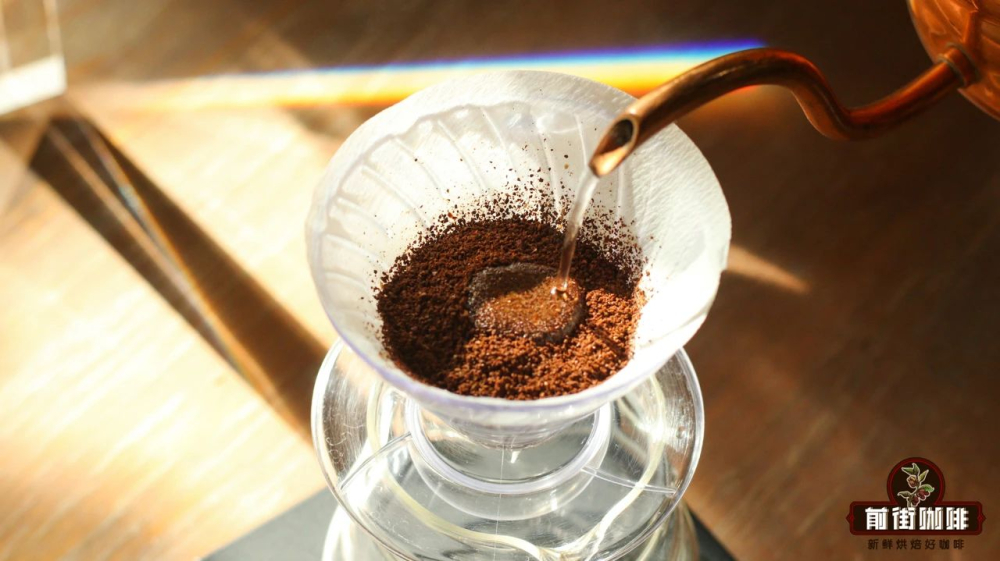
Front Street recommends drip brewing, that is, pour-over coffee. If you want to drink a rich layered cup, you can brew with a V60 dripper, while if you want a fuller coffee flavor, you can brew with a cake dripper. Front Street's daily service mostly uses the V60 dripper, because the 60-degree angle design plus the spiral rib structure allows full extraction of the essence of Geisha coffee by controlling the water flow and number of pours, while the large outlet design avoids over-extraction.
The V60 dripper body has guide ribs connecting the top and bottom as well as a large central hole, which can speed up the flow of water downward. The spiral-shaped exhaust groove design lengthens the water flow path, increasing the contact time between coffee grounds and hot water. Each stream of water converges along the grooves toward the center point of the dripper, concentrating the pressure on the coffee grounds and making the extracted coffee richer in layering.
Dripper: Hario V60, water temperature: 91°C, dose: 15g, coffee-to-water ratio: 1:15, grind level: 80% passing a Chinese standard No. 20 sieve
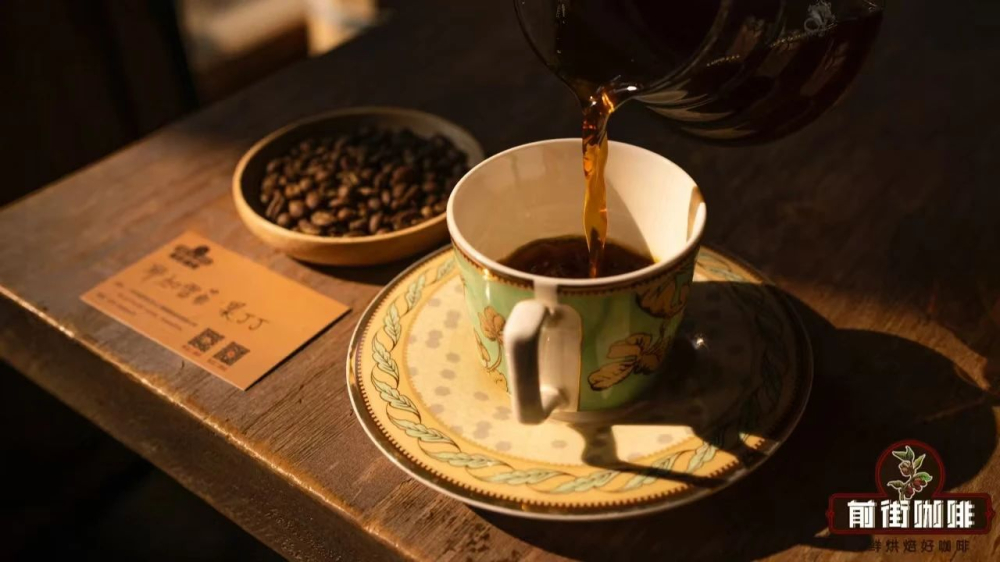
【Panama Washed Boquete Geisha coffee flavor characteristics】 : It has clear acidity of citrus, lemon, and bergamot, a creamy smooth mouthfeel when swallowing, and a finish of green tea and honey sweetness.
Front Street's coffee brewing suggestions:
Regarding coffee brewing, Front Street has always believed that the freshness of coffee beans has a huge impact on flavor. Therefore, the coffee beans shipped by FrontStreet Coffee are all within 5 days of the roast date. Front Street's roasting principle is "freshly roasted good coffee," so that every customer who places an order receives the coffee in its freshest state. The resting period of coffee is about 4 to 7 days, so when customers receive it, it is exactly at its best flavor.
For friends who need ground coffee, Front Street warmly reminds: once coffee beans are ground in advance, they no longer need to be rested, because during transportation the pressure generated by carbon dioxide inside the package can also make the coffee flavor rounder, so you can brew a cup immediately upon receiving the ground coffee. However, ground coffee needs to be brewed promptly, because after contact with air it oxidizes faster and its flavor dissipates more quickly, so the coffee's flavor will not be as good. Therefore, Front Street recommends buying whole beans and grinding fresh before brewing, so that you can better taste the coffee's flavor.
The above content is compiled by CoffeeHunters, a coffee news website.


