







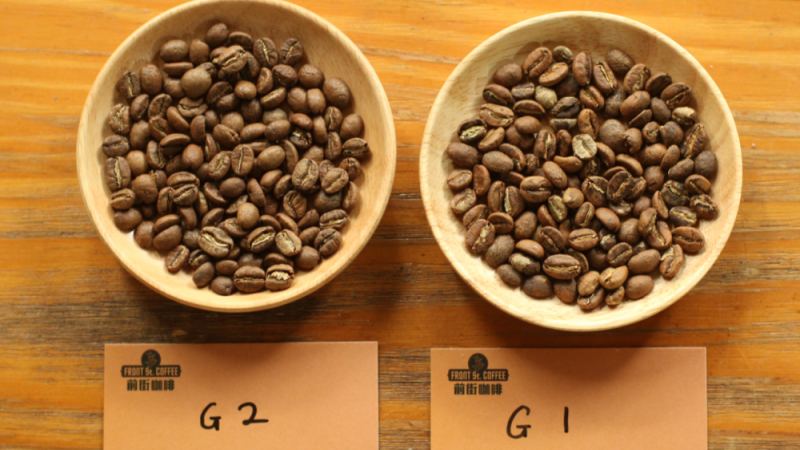
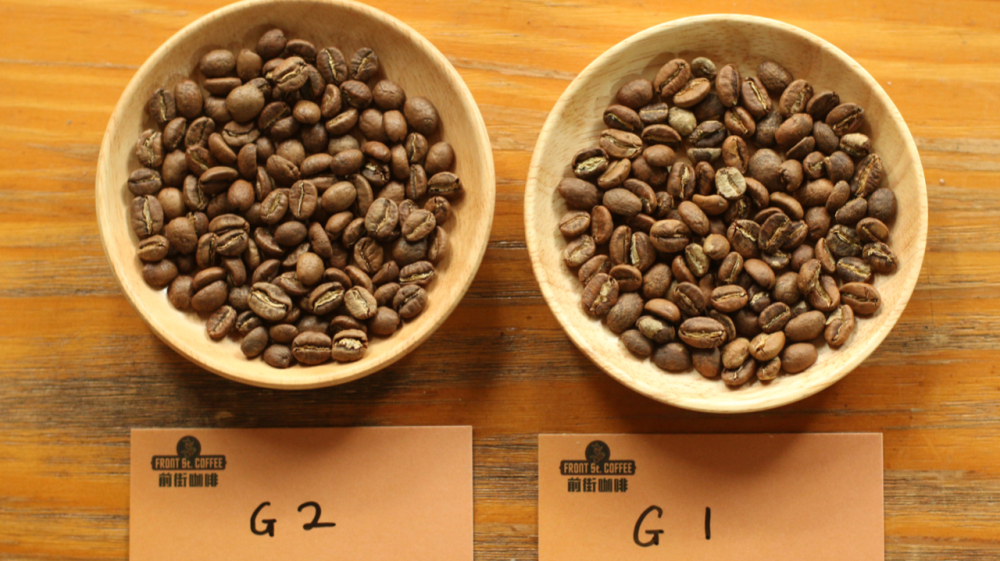
How does the coffee bean process shape Yirgacheffe G1 and G2?
Ethiopia's Yirgacheffe region grades its coffee as G1 and G2, and the difference comes down to how the coffee bean process handles defects and screen size. Ethiopia counts roughly 1,927 native varieties plus 128 introduced ones, collectively called local heirloom varieties, so beans rarely look uniform. G1 is the higher grade, with fewer defects and more consistent preparation; G2 allows a slightly higher defect count.
Washed processing tends to highlight Yirgacheffe's floral and citric character, while natural processing pushes fruitier, sweeter notes. Because heirloom genetics vary, grading cannot rely on variety alone, so screen size and defect counts carry much of the weight in sorting lots for export.
Ethiopian Yirgacheffe is a shining star in specialty coffee, but do you understand the logic behind its G1 and G2 grading? This article, from the perspective of Front Street Coffee, takes you deep into Yirgacheffe's variety system and grading standards, and compares how the washed and natural processing methods shape two completely different flavor profiles. Whether you are a coffee enthusiast just starting out or a seasoned taster looking to refine your cupping experience, you will find useful reference information here.
For more specialty coffee knowledge, please follow our WeChat official account: Front Street Coffee
Friends who often buy Ethiopian Yirgacheffe coffee beans from Front Street Coffee may have noticed that the beans are not uniform in size. The reason behind this is that Ethiopia, as the birthplace of coffee, possesses an extremely rich resource of coffee varieties. Because the number of varieties is so vast, locals collectively refer to them as “local heirloom varieties.” It is precisely for this reason that Yirgacheffe coffee beans need to be graded according to specific standards. Next, Front Street Coffee will provide a detailed explanation of the Yirgacheffe coffee bean grading system.
What Are Local Heirloom Varieties?
As is well known, Ethiopia is the birthplace of coffee. To date, nearly 2,000 varieties have been recorded, of which 1,927 are native varieties and the other 128 are introduced from outside. However, most Ethiopian coffee beans currently circulating in the market are labeled as Heirloom native varieties, which is what Front Street Coffee referred to earlier as local heirloom varieties.
After consulting the Oxford English Dictionary, Front Street Coffee learned that the term “Heirloom” refers to “a valuable item passed down through a family for generations,” which is why some also translate this variety as “heirloom.”
According to information obtained by Front Street Coffee, there are currently approximately 10,000 to 15,000 heirloom varieties in Ethiopia, the vast majority of which have not undergone formal genetic identification. It is precisely because the number of varieties is so astonishing that, on the one hand, identification and classification are extremely difficult, and on the other hand, the Ethiopian government, out of consideration for variety protection, is unwilling to disclose this information, so they are collectively referred to as “native varieties.”
Yirgacheffe Coffee Bean Grading Standards
As Front Street Coffee mentioned above, because the number of coffee varieties is so vast, local coffee is collectively called native varieties, so the Yirgacheffe coffee beans you receive are naturally uneven in size. Therefore, Ethiopia locally determines grades based on the defect rate of coffee beans.
Before the establishment of the Ethiopian Commodity Exchange (ECX), coffee export grades were formulated by the CLU department under the Ministry of Agriculture, mainly based on the number of defective beans contained in 300 grams of green coffee beans. The specific standards are shown in the table below. Generally, washed beans are Grade G1 to G2; because early natural processing techniques were not mature enough, natural green beans had more defects and generally fell between G3 and G5. However, with the continuous advancement of natural processing techniques, natural beans can now also reach G1 to G2 levels.
Among these, the two categories of specialty and commercial are for the international export market. ECX divides green coffee beans into nine grades based on the total score of physical attribute characteristics and cup profile characteristics, with physical characteristics accounting for 40 points and cup quality accounting for 60 points.
Physical Characteristics (40%):
Washed processing: number of defects (20%), appearance size (10%), color (5%), odor (5%)
Non-washed processing: number of defects (30%), odor (10%)
Subsequently, G1 to G3 grades are cupped again according to SCAA standards to more meticulously assess their flavor attributes. Among them, G1 and G2 with a score of no less than 85 points are rated as Q1 grade; G1, G2, and G3 with scores between 80 and 85 points are rated as Q2 grade; all G1, G2, and G3 with scores below 80 points are classified as G3 grade.
Q1 and Q2 are classified as specialty grade for export, while G4 to G9 maintain their original grading and are exported together with G3 as commercial grade.
Therefore, all Ethiopian coffee beans currently in Front Street Coffee's store are G1 grade, and Yirgacheffe coffee beans are naturally no exception. Next, Front Street will share the characteristic story of Yirgacheffe coffee beans and their processing methods.
Yirgacheffe Coffee Bean Producing Region
Yirgacheffe has always been one of the most important coffee producing regions in Ethiopia. It was once part of the Sidamo coffee producing region, and later became an independent coffee producing region because Yirgacheffe coffee beans exhibited a unique flavor. Therefore, in the specialty coffee market, Yirgacheffe is not just a region name but represents the classic style of citrus lemon acidity.
According to Front Street Coffee's understanding, Yirgacheffe is the highest-altitude coffee producing region in Ethiopia, with an altitude of about 2,000 meters. Currently, this region has more than 40 cooperatives, mainly managing coffee cultivation through family-run operations. In addition, the Yirgacheffe region also includes many well-known micro-regions, such as Kochere, Misty Valley, Gedeb, and others. These micro-regions all have excellent cooperatives, and the Yirgacheffe coffee beans they produce each have unique flavor characteristics.
Secondly, when selecting Yirgacheffe coffee beans, Front Street Coffee not only values their unique flavor and excellent quality but also pays special attention to their distinctiveness. Front Street Coffee believes that each Yirgacheffe has its own unique flavor expression. For example, Yirgacheffe Gutingting has a very prominent tea aroma, while Yirgacheffe Red Cherry focuses on berry notes. Therefore, every coffee bean Front Street Coffee offers, even if from the same producing region, as long as the microclimate, management techniques, cultivation, and processing methods differ, the flavors presented will also have subtle differences. This is also one of the purposes of Front Street Coffee's coffee selection.
| Grade | Number of Defective Beans (per 300g) |
| Grade1 | Less than or equal to 3 |
| Grade2 | 4-12 |
| Grade3 | 13-25 |
| Grade4 | 26-45 |
| Grade5 | 46-90 |
Yirgacheffe Coffee Processing Methods
Yirgacheffe coffee became famous precisely because of the washed processing method. In the early days, Yirgacheffe, like other Ethiopian producing regions, used the oldest natural processing method. It was not until 1972 that Ethiopia introduced washed processing technology from Central and South America to improve coffee bean quality. This measure amplified the citrus lemon aroma of Yirgacheffe coffee beans themselves and made the mouthfeel fresher and brighter.
It is precisely for this reason that Yirgacheffe leaped to become one of the representatives of the world's specialty coffee. After that, this producing region was mainly known for washed coffee beans. It was not until the 21st century that natural processing techniques also began to improve, and technological advancement brought stunning natural beans to the specialty coffee market. At that time, a Yirgacheffe coffee trader named Bagersh, nostalgic for the flavor of traditional natural coffee beans, began improving natural processing techniques and launched several outstanding natural coffee beans, thereby restoring the important status of natural coffee beans in the Yirgacheffe producing region. For example, the Yirgacheffe Natural Red Cherry coffee beans in Front Street Coffee's store are deeply loved by coffee enthusiasts.
In other words, Yirgacheffe coffee beans currently perform excellently whether washed or natural processed. Next, Front Street will explain the difference between these two processing methods.
Natural Processing Method
As Front Street Coffee mentioned above, the natural processing method is the oldest coffee bean processing method, also known as the “natural drying method.” The natural processing method does not require high-end equipment; it only needs consecutive sunny days to operate, and the sun-drying process takes 27 to 30 days. Therefore, it has relatively strict requirements for climate conditions and is suitable for countries in arid regions.
| Grade | Washed/Non-washed Score |
| Grade1 | 91-100 |
| Grade2 | 81-90 |
| Grade3 | 71-80 |
| Grade4 | 63-70 |
| Grade5 | 58-62 |
| Grade6 | 50-70 |
| Grade7 | 40-49 |
| Grade8 | 31-39 |
| Grade9 | 20-30 |
For example, Ethiopia, which Front Street Coffee just mentioned, is itself a coffee-producing country that widely uses the natural processing method, because the country has high altitudes, a dry climate, and relatively scarce water resources. The reason the Yirgacheffe producing region widely uses the washed processing method is that the area itself is a wetland and is the most water-rich region in Ethiopia.
But it is worth noting that although the natural processing method is relatively simple to operate, precisely because of this, coffee beans processed naturally do not look attractive, with some cracks on the surface, so they are not very pleasing to the eye.
Flavor Expression of Natural Coffee Beans
Because they are exposed to the sun for a long time, natural coffee beans have a more intense flavor and richer layers, with winey fermented notes, and relatively higher sweetness.
Washed Processing Method
The second common coffee processing method is the washed processing method. Most of Front Street's coffee beans from different producing regions also use washed processing, especially Front Street's everyday beans. This is because washed coffee beans are cleaner and have a more transparent flavor expression, able to present the most original taste of the coffee fruit. Therefore, Front Street also often says that the flavor of washed coffee beans is the guiding light for understanding a producing region's flavor.
Flavor Expression of Washed Coffee Beans
As Front Street mentioned above, washed coffee beans have a cleaner and more transparent flavor, with acidic and fruity aromas, a bright mouthfeel, and slightly lower sweetness and body.
Differences Between Washed and Natural Coffee Beans
The most essential difference between the natural processing method and the washed processing method is that the natural processing method retains the flavor of the fruit pulp, while the washed method removes the flavor of the fruit pulp and represents the most essential flavor of the coffee bean. An obvious difference can be felt in the mouthfeel: washed is cleaner and more transparent, while natural has a richer mouthfeel. Precisely because the washed method can express the most essential flavor of coffee beans, whenever Front Street Coffee recommends coffee beans, if the customer is tasting coffee beans from that producing region for the first time, Front Street Coffee will prioritize recommending washed coffee beans, so that people can more clearly understand the flavor characteristics of that producing region.
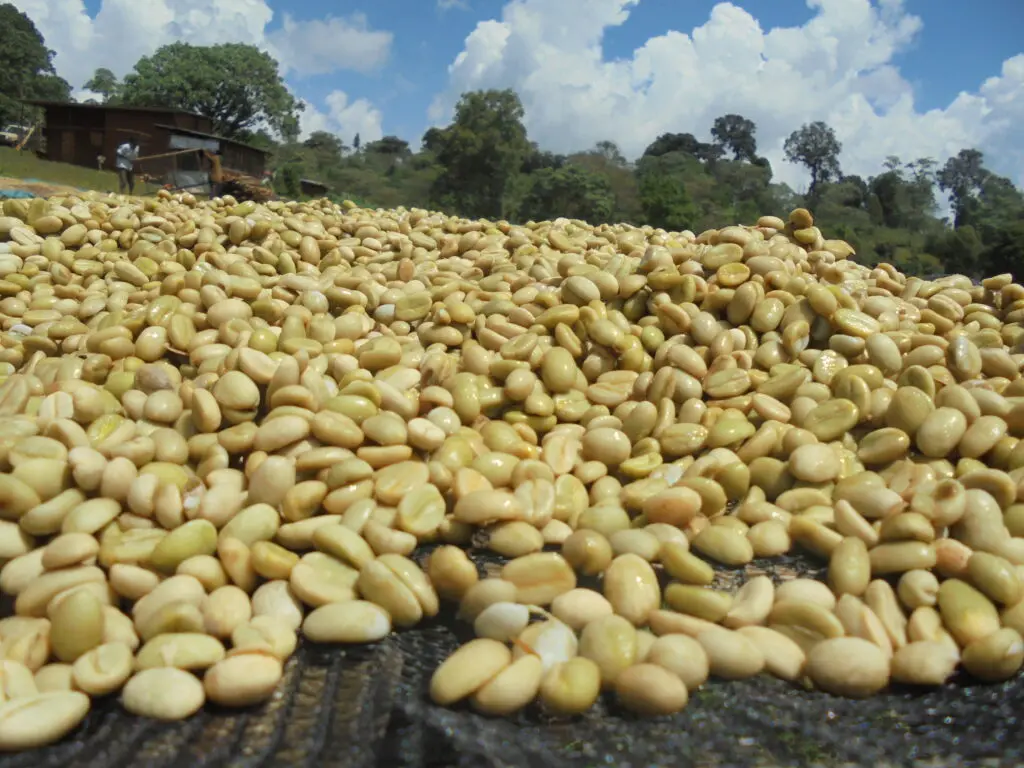
At the same time, natural beans and washed beans are also very easy to distinguish in appearance. In terms of green beans, washed coffee beans are generally blue-green, while natural ones are yellow-green. Roasted washed coffee beans have very obvious silver skin, while natural coffee beans have almost no residual silver skin, and the bean surface is relatively smooth. Now, Front Street Coffee will introduce which coffee beans Front Street has among its natural and washed beans.
Front Street Coffee Ethiopian Yirgacheffe Natural Red Cherry Coffee Beans
Country: Ethiopia
Region: Yirgacheffe
Altitude: 2300m
Variety: Local heirloom varieties
Processing Method: Natural processing
Flavor: Berry, lemon, strawberry, fermented wine aroma
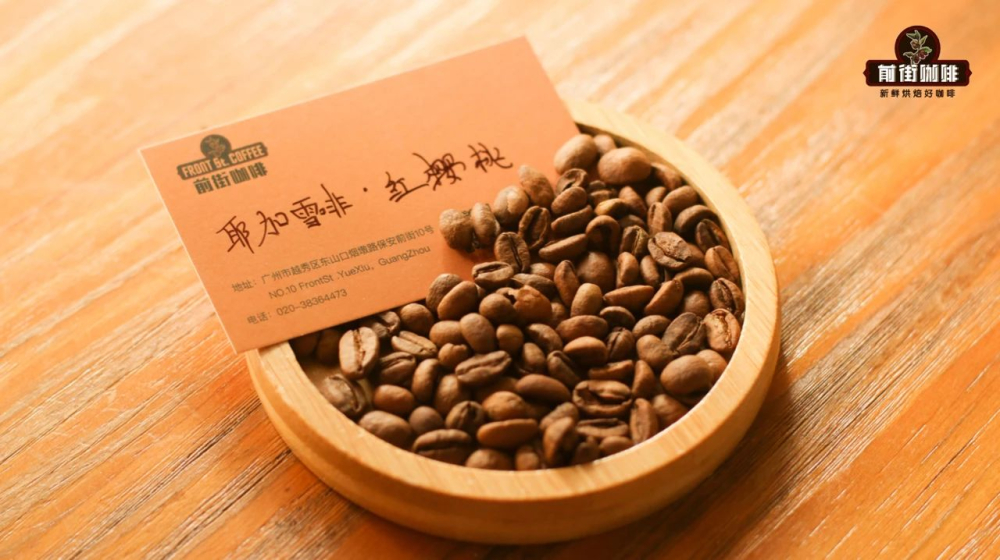
Front Street Coffee's Natural Red Cherry coffee beans are made by sun-drying 100% ripe coffee beans, so they are full of aroma, rich in sweetness, and carry a fermented note. The origin of this coffee bean is the “Red Cherry Project” jointly initiated by local Ethiopian coffee farmers and the Dutch trader Trabocca, aimed at improving the quality of coffee from small-scale farms and increasing farmers' income. Picking fully ripe coffee cherries requires not only picking fully red, highly ripe fruit but also hand-picking entirely, yet this is only the most basic requirement. There are also corresponding requirements for the coffee bean processing method.
Front Street Coffee Yirgacheffe Gutingting Cooperative Coffee Beans
Country: Ethiopia
Region: Yirgacheffe
Altitude: 1900-2300m
Variety: Local heirloom varieties
Processing Method: Washed processing
Flavor: Tropical fruit, cream, honey, berry, citrus
According to Front Street's understanding, the Gutingting Cooperative was originally part of the Worka Cooperative under the Yirgacheffe Coffee Farmers Cooperative Union (YCFCU) and became independent as the Gutingting Cooperative in 2012. It currently has more than 300 smallholder members. At the same time, precisely because Gutingting village was the earliest village area to become independent, many small farmers were also members of the original Worka Cooperative, so their coffee production techniques are beyond question. The coffee beans produced naturally have excellent flavor.
Front Street Coffee Ethiopian Natural Huakui Coffee Beans
Country: Ethiopia
Region: Sidamo
Altitude: 2250-2350m
Variety: Local heirloom varieties
Processing Method: Natural processing
Flavor: Berry, floral tea, honey, lemon, black tea
This is because this bean itself was still an unnamed little bean. In 2017, the Ethiopian green bean trader DW Company sent this coffee bean to the TOH (the Taste Of Harvest) green bean competition held by the African Coffee Association, and a natural batch from the Buku Abel processing station won the TOH Ethiopia championship with its strong strawberry and cream aroma. This bean is also the English transliteration Hambela. The reason it is called Huakui in China is that this batch of green beans was imported by a Beijing green bean trader that year, and because of its champion status, it was given the name “Huakui.”
Front Street Coffee Ethiopian Yirgacheffe Red Honey Red Cherry Coffee Beans
Country: Ethiopia
Region: Yirgacheffe
Altitude: 2000-2200m
Variety: Local heirloom varieties
Processing Method: Red honey processing
Flavor: Jasmine, citrus, honey, berry, almond, fermented red wine
Front Street Coffee's Yirgacheffe Red Honey Red Cherry uses the red honey processing method. In fact, so-called honey processing refers to the process of making green beans by sun-drying them with mucilage still attached. After the coffee beans have their outer fruit pulp removed, there is a sticky gelatinous substance. Traditional washed processing uses clean water to wash it off, but because some high-altitude producing regions have water resource limitations, this direct drying method was born.
The pectin mucilage part is the part of the coffee fruit with the highest sugar content and is also an important component of coffee processing fermentation. It can be said that this part determines 80% of the nutrient supply during the processing. Red honey retains 75% of the pectin, so Front Street Coffee believes that red honey processed coffee beans smell of ripe fruit and have a faint red wine fermentation note.
Front Street Coffee Yirgacheffe Aricha Coffee Beans
Country: Ethiopia
Region: Yirgacheffe
Altitude: 1900-2100m
Variety: Local heirloom varieties
Processing Method: Natural processing
Flavor: Light fermented wine aroma, sweet orange, spice, honey sweetness
Aricha is produced at the Kebel Aricha processing station, with about 650-700 small coffee farmers nearby. Farmers deliver ripe coffee cherries here for processing and receive cash in return. After the processing station screens the usable cherries, they are placed directly on raised drying beds for sun exposure. In the first few days of drying, they are turned every 2-3 hours to prevent over-fermentation. After four to six weeks of sun drying, workers remove the outer fruit pulp with machines depending on weather and temperature conditions, then transport it to Addis for storage. Usually, naturally processed beans are stored in parchment form and only hulled before export to ensure green bean quality.
Front Street Coffee Yirgacheffe Kochere Coffee Beans
Country: Ethiopia
Region: Yirgacheffe
Altitude: 2000m
Variety: Kochere
Processing Method: Washed processing
Flavor: Jasmine floral aroma, lemon, bergamot, honey, black tea
Kochere is a small producing region 25 kilometers southeast of Yirgacheffe, Ethiopia. It is a wealthy area that produces coffee and is also one of the three famous micro-regions of Yirgacheffe. The local population is about 100,000, and coffee beans are the main source of income. The local standard of living is considerably better than many Ethiopian villages, with well-established health facilities and higher schools. Advanced processing equipment has allowed Kochere's coffee to consistently perform at a high level in washed processing, with a clean sweetness carrying complex notes of molasses and citrus.
And according to Front Street's understanding, the well-known coffee review website Coffee Review gave Kochere washed coffee beans a high score of 94 points.
Front Street Coffee Yirgacheffe Worka Coffee Beans
Country: Ethiopia
Region: Yirgacheffe
Altitude: 1650-1800m
Variety: Local heirloom varieties
Processing Method: Washed processing
Flavor: Lemon, jasmine tea, black tea, cane sugar
Worka is located in the Yirgacheffe producing region at an altitude of 1,800 to 2,000 meters. The Worka Cooperative was established in 2005 and joined the famous Yirgacheffe Coffee Farmers Cooperative Union that same year, and is known for producing high-quality natural Yirgacheffe.
Front Street Coffee Yirgacheffe Everyday Beans
Country: Ethiopia
Region: Yirgacheffe
Altitude: 1600-2500m
Variety: Local heirloom varieties
Processing Method: Washed processing
Flavor: Jasmine, orange, berry, lemon, caramel
This washed Yirgacheffe is one of the seven everyday beans launched by Front Street Coffee, and it also presents a very good citrus lemon flavor. Therefore, Front Street Coffee believes this everyday bean is very suitable for coffee enthusiast friends to use as an introduction to the original coffee flavor of the Yirgacheffe coffee producing region.
The above content is compiled by CoffeeHunters, a coffee news website.


