







Peruvian coffee has long played a low-key role on the international stage, yet it possesses the unique growing conditions of the Andes Mountains and abundant resources of old varieties. This article systematically reviews the historical context of Peruvian coffee, the distribution of its three major producing regions in the north, center, and south, the altitude and variety structure, washed processing and grading systems, and provides an in-depth introduction to the terroir advantages of the Cajamarca region. Finally, the article presents the Peru · Cajamarca Washed Geisha sourced by Front Street Coffee, from the roasting curve to the cupping flavors, fully showcasing this bean's white floral aroma, prunes, citrus, and black tea finish, offering coffee enthusiasts a practical reference for purchasing and tasting.
For more specialty coffee knowledge, please follow: Front Street Coffee (Frontsteet Coffee)
In the landscape of specialty coffee, Peru has always been a quiet presence. It is rarely mentioned on its own, yet often appears as a blending component, providing solid body to blended coffees and bringing a distinctive touch of sweetness and roundness.
To understand Peru's coffee today, we must first rewind to its historical starting point:
Before the 1880s, the intertwining of political turmoil, economic hardship, and social problems brought Peruvian coffee cultivation to a near standstill, with only a negligible amount exported to the international market, and this producing country gradually faded from people's memory. It was not until the mid-1990s that Peruvian coffee returned to the spotlight. Because previous cultivation activities had been interrupted, many coffee farms retained old tree varieties from bygone eras, with Typica being the most common.
Peruvian coffee farms generally adopt shade cultivation, and green beans follow the washed processing route. Combined with the fact that most producing regions complete cultivation under natural conditions, Peru has thus become one of the origins with extremely outstanding organic coffee and environmental credentials. In recent years, Peruvian coffee has frequently won gold at international competitions, and its rich aroma and delicate acidity have won the favor of many consumers.
Peru is located in western South America, with a coastline stretching 2,254 kilometers. The Andes Mountains run through the entire country from north to south, with mountainous terrain accounting for one-third of the national territory. The overall climate is a tropical desert climate, dry and mild.
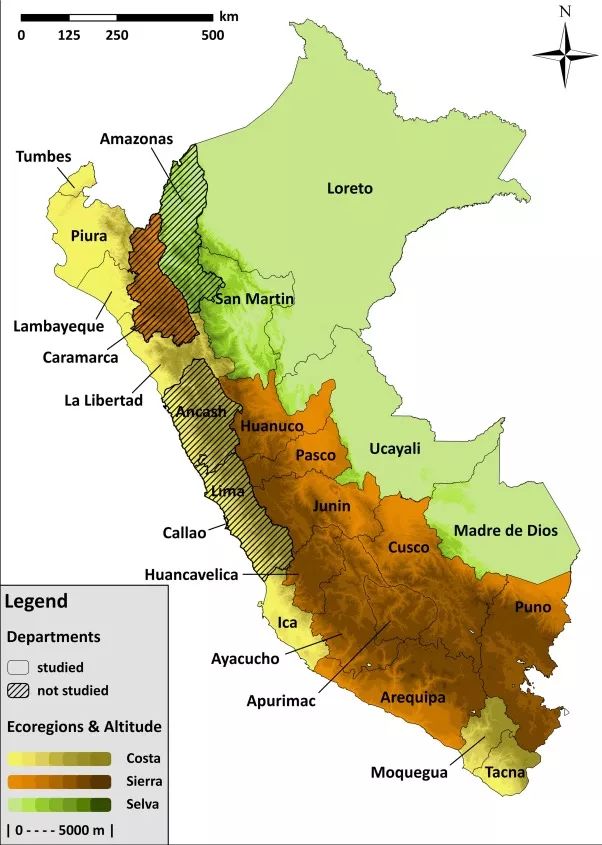
Most Peruvian coffee trees are rooted at the foot of the Andes Mountains, and this land also nurtures top-quality Central American coffee beans with a traditional reputation. Peru's natural landscape is richly layered, with tropical rainforests, hills and mountains with peculiar terrain, and extremely dry deserts. Coffee is cultivated along the eastern side of the Andes, at altitudes ranging from 1,300 to 1,850 meters; the best-performing Peruvian coffees grow in the high-altitude zones of the Andes, reaching up to 2,000 meters.
Peruvian Coffee Producing Regions
Peruvian coffee is mainly concentrated in three major regions: the north, center, and south. In terms of variety structure, about 70% is Typica, 20% is Caturra, and the rest is Catimor and other varieties. The complex and diverse natural resources and multicultural background give coffee beans from different producing regions their own distinct personalities.
Cajamarca Producing Region CAJAMARCA
Located in northern Peru, named after the capital city, covering the northern end of the Andes Mountains. The unique advantage of this region lies in its equatorial climate and soil conditions suitable for coffee cultivation. Producers are mostly smallholders, but they are highly organized, belonging to various associations and cooperatives. These organizations provide farmers with technical assistance, training, and loans to help improve production quality. Among them, CENFROCAFE is an important organization with 1,900 smallholder households. It not only promotes coffee roasting but also opens local cafes, helping farmers achieve diversified operations.
Altitude: 900-2050m
Harvest: March-September
Varieties: Typica, Caturra, Bourbon, Pache, Mondo Novo, Catua
Junin JUNIN
This region produces about 20%-25% of Peru's coffee, with coffee farms distributed within tropical rainforests. From the 1980s to the 1990s, this area suffered guerrilla attacks and the spread of plant diseases, and the coffee industry once fell into a trough. It was not until the late 1990s that the coffee industry formally embarked on the path of recovery.
Altitude: 1,400-1,900m
Harvest: March-September
Varieties: Bourbon, Typica, Caturra, Pache, Mondo Novo, Catuai
This region is located in central Peru. The outstanding characteristics of its coffee lie in just-right acidity, light and mild aroma, and soft mouthfeel.
Cusco Producing Region CUSCO
This producing region is located in southern Peru, and most coffee is grown by smallholder farmers rather than large estates. The region has a developed tourism industry, and many tourists depart from Cusco city to visit Machu Picchu.
Altitude: 1,200-1,900m
Harvest: March~September
Varieties: Bourbon, Typica, Caturra, Pache, Mondo Novo, Catuai, Catimor
Peruvian Coffee Production
Peru is also a major coffee producer. As much as 98% of Peruvian coffee is grown in forest areas, and most producers are small farmers. Peru has a sound economic environment and a stable political situation, which provides a strong guarantee for quality coffee production.
However, the country also faces some local problems, including guerrilla warfare, drug trafficking, and a cholera outbreak in coastal areas in the mid-1990s. These problems led to economic depression, and in some periods annual inflation reached as high as 7,000%.
In the mid-1970s, Peru's annual coffee production was about 900,000 bags. Subsequently, production continued to grow steadily, reaching an annual level of 1.3 million bags. Although private exporters purchased coffee from remote areas through intermediaries, the main market was still controlled by the government. Over time, the private Peruvian Coffee Exporters Association (Comera de Exportadores de Cafe del Peru) was established, focusing on improving coffee quality, with its primary task being to set standards and eliminate inferior products.
Later, the magnitude of price increases also encouraged farmers to plant more coffee instead of the traditional cash crop (cacao). The quality of Peruvian coffee can rival any coffee from Central and South America. Peru's excellent coffee beans are first shipped to Germany for blending, and then transshipped to Japan and the United States.
Peruvian Coffee Grading System
In Peru, coffee beans are graded differently according to altitude and green bean size. For high-grown beans, grading is mainly based on cultivation altitude, while beans from medium and low altitudes are graded according to green bean size. In addition, the "defect count" of the origin is also one of the auxiliary grading factors. For buyers, they usually use their own "cupping quality" standards as an auxiliary grading method. Specifically: Strictly High Bean (SHB): altitude above 1,350 meters; High Bean (HB): altitude between 1,200-1,350 meters.
Peruvian Coffee Processing Methods
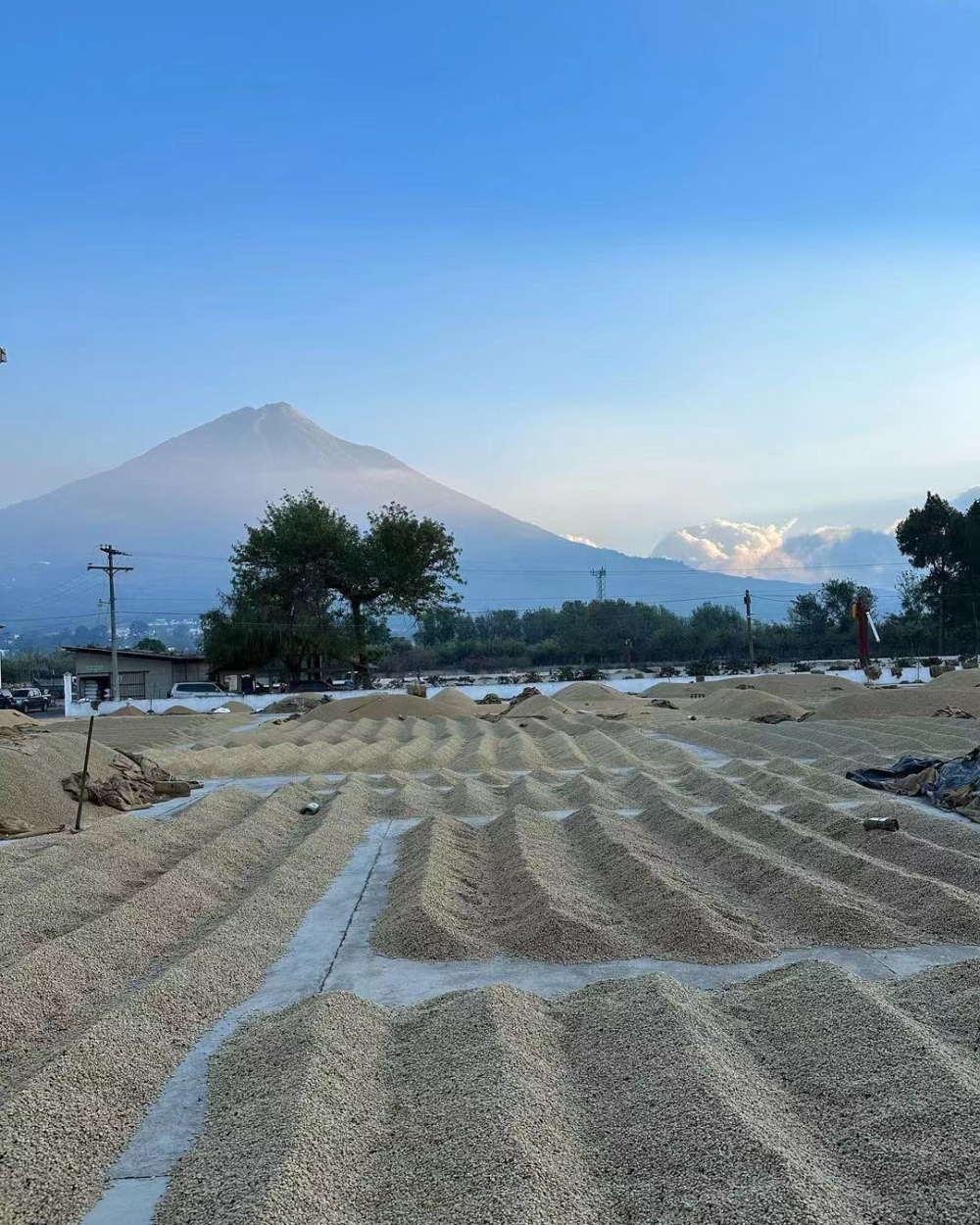
Because Peru has abundant water resources, traditional washed processing is the main method. Harvested coffee cherries are first floated to remove cherries with insufficient density. Then the skin and pulp are removed by machine, after which they are placed in tanks for fermentation with or without water, using fermentation to break down the mucilage layer. After fermentation is complete, the coffee beans are washed with clean water to remove the mucilage. Finally, the coffee beans with the mucilage layer removed are sun-dried to reduce moisture content to between 11% and 13%. The coffee beans are stored with parchment, and the parchment is only removed before export.
Peruvian Coffee Flavor Characteristics
In addition to old varieties like Typica, Cajamarca also grows popular varieties such as Geisha. So for this Peruvian coffee sourced by Front Street this time, we chose a washed Geisha from the Cajamarca producing region! In order to highlight this Geisha's floral aroma and regional flavors, Front Street chose a medium-light roasting curve to present it.
Front Street Coffee: Peru · Cajamarca Geisha Country: Peru Region: Cajamarca Altitude: 1,800~1,950 meters Variety: Geisha Processing Method: Washed Grade: SHB
Flavor: White floral, prunes, citrus, juicy, black tea
During cupping, Front Street found that the dry aroma of this Peruvian Geisha was very rich, with clearly perceptible aromas of white flowers, berries, preserved plums, and citrus. After pouring in hot water, one can smell sweet aromas like peach and caramel.
When the coffee enters the mouth, what Front Street first perceives is the elegant white floral aroma, followed by the full acidity of grapes, citrus, and prune juice. After swallowing, the mouth still retains a finish reminiscent of black tea and caramel. The mouthfeel is substantial yet very clean, with a unique sensation like holding a preserved plum candy in the mouth. As the temperature drops slightly, the bright acidity begins to release, the juicy quality becomes more and more obvious, and one can taste the round sweetness of apricot, very comfortable! Everyone can purchase it at the Front Street flagship store or Front Street Taobao store.
The above content is compiled by CoffeeHunters, a coffee news website.


