







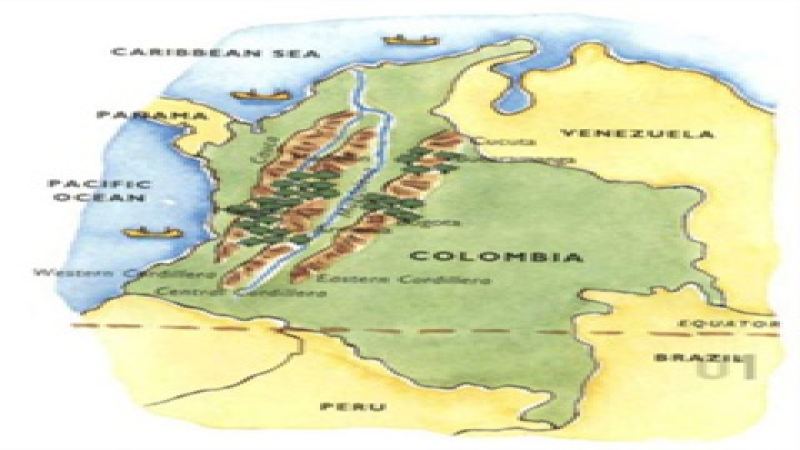
In the coffee world, categories named after countries are everywhere, but what truly makes each bean unique is the specific region and estate behind it. Just as Ethiopia has Yirgacheffe and Sidamo, Colombia also has renowned names like Narino and Huila. Today we're going to talk about specialty coffee from Colombia's Huila region. This land, embraced by mountains and canyons, with its high altitude, suitable temperatures, and ample rainfall, nurtures high-quality Arabica beans interwoven with nutty, chocolate, and caramel flavors. Combined with hand-picking and washed processing, Huila coffee presents a full, smooth mouthfeel and a gentle, pleasant fruit acidity, earning it the reputation as Colombia's "green gold." The following will walk you through its terroir conditions and share a Front Street-style pour-over brewing record.
The coffee varieties we encounter in daily life are quite diverse—such as Brazil, Costa Rica, Ethiopia, and Colombia—and they are usually identified directly by country name.
However, under each coffee-producing country, there are many regions and varieties, and within those regions are well-known growing areas and estates. As a result, these place names and estate names have gradually evolved into coffee brand names widely used in the market. Take Ethiopia, for example—it has famous regions like Yirgacheffe, Sidamo, and Harar. Then look at Colombia's Narino region, where the local coffee is simply called "Colombia Narino."
This time we're going to talk about beans that also come from a well-known Colombian region—Colombia Huila. Some vendors on the market translate it as "Huilana," "Wuyila," or "Hula," but ultimately these are just different transliterations of the place name Huila.
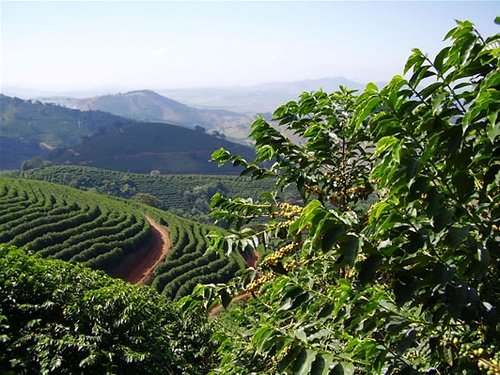
The Huila area features mountainous terrain, and coffee trees are mostly planted on canyon slopes, which gives them the high altitude and suitable temperatures needed to grow quality Arabica beans. The canyon slope climate brings another advantage: cold winds are blocked outside, while mountain breezes provide cooling without causing high temperatures. Combined with abundant rainfall, it is truly a blessed coffee-growing environment.
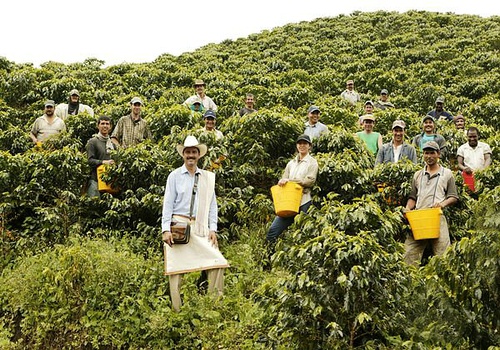
In addition, Colombian coffee workers are accustomed to going up into the mountains to hand-pick coffee cherries, allowing them to carefully select and pick only the ripest, fullest ones. The vast majority of beans are then processed using the washed method. After medium roasting and brewing, the result is a light, silky mouthfeel, sometimes with a hint of acidity—not as intense as Brazilian coffee or Italian Espresso—and it is hailed within Colombia as "green gold."
For this reason, coffee from Huila has a full body and heavier texture, with aromas of nuts, chocolate, and caramel, along with a smooth, pleasant fruit acidity. It is widely recognized as specialty coffee. This is due not only to its superior geographical conditions but also to the selective cultivation of Arabica varieties, and the meticulous sorting enabled by hand-picking plays an indispensable role as well.
Next, I'd like to share my brewing process for Huila. The beans used are Front Street's medium-dark roasted Huila, the brewer is a Hario V01, and the coffee-to-water ratio is set at 1:12 (that is, 25 grams of coffee grounds to extract 300 milliliters of coffee). During the pour-over, I use a fast-then-slow pouring rhythm. It may look casual, but it's actually adjusted according to the bean's roast level—the good flavor compounds in the coffee grounds release quickly and abundantly, so they are extracted first, and then the flow is gradually slowed to reduce the extraction of defective flavors. The flavors I tasted this time were: nutty aroma, chocolate notes, full body, caramel sweetness, and a smooth, pleasant fruit acidity with a vinous charm. Finally, I hope such delicious coffee can be enjoyed by more enthusiasts. Thank you all for reading.
Please credit the author and source when reposting. Thank you.
The above content is compiled by CoffeeHunters, a coffee news website.


