







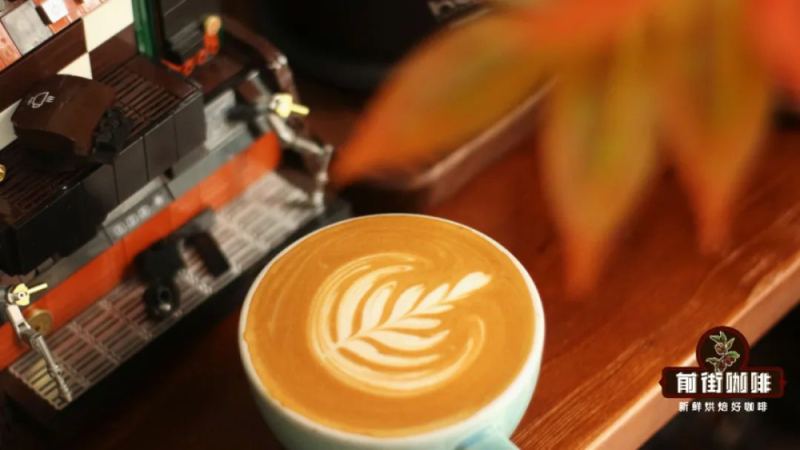
Latte is practically a standard offering at almost every coffee shop, yet even though it's all called "latte," the cup size and flavor vary greatly from one store to another. This article traces the historical origins of latte: from the 17th-century European habit of mixing coffee with milk, to the first appearance of the term "Caffe e latte" in an American writer's travelogue in 1867; from the invention of the espresso machine and steam wand, to Italian immigrants in California in the 1950s and 60s renaming the milkier cappuccino as latte. The article also explores latte's development in the Chinese market, and how Front Street stores adjust espresso recipes and serving sizes based on coffee bean characteristics, giving you a comprehensive understanding of this classic milk coffee's past and present.
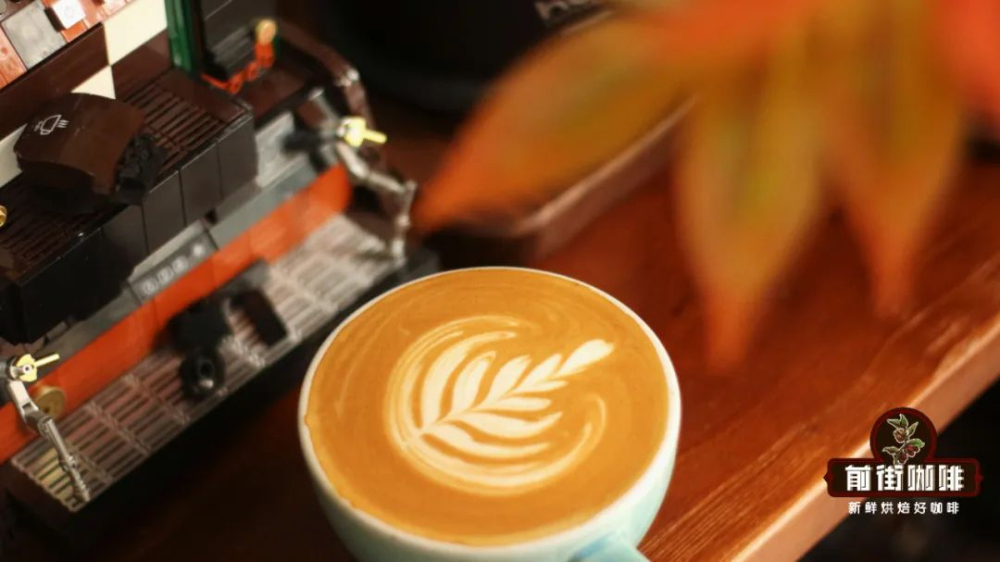
Among the many coffee drinks, latte's popularity has always remained high, and its name is indispensable on the menu of almost every café. Whether it's a multinational chain giant or a small independent shop on the street corner, latte is undoubtedly a permanent fixture.
Most enthusiasts are already familiar with the composition and flavor of this espresso drink. The method isn't complicated to describe: mix milk into espresso in proportion, then use steaming temperature and latte art techniques to enhance both appearance and mouthfeel.
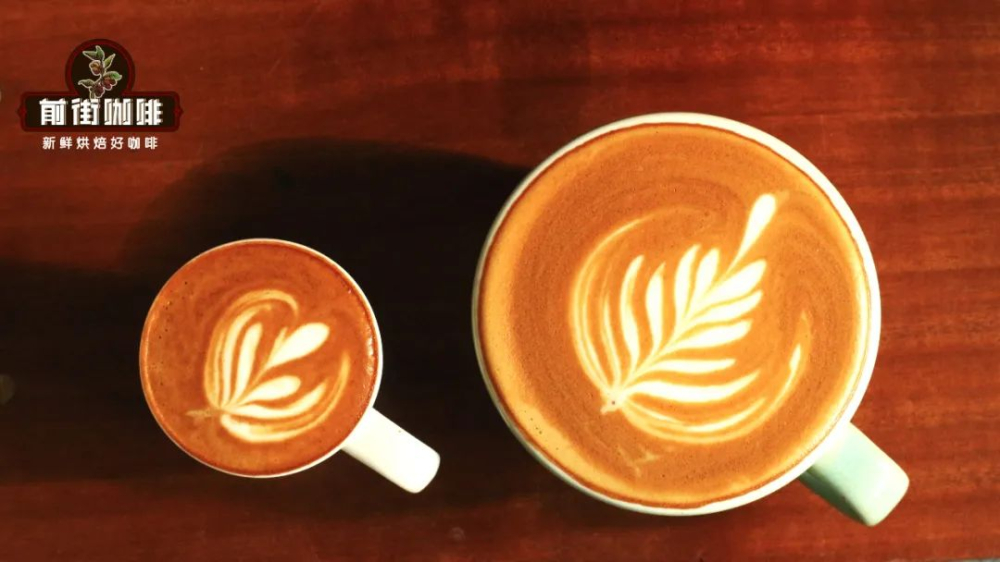
However, although latte is widely favored, its recipe and proportions have never had a unified standard. Walking into different coffee shops, the same cup of "latte" often varies greatly in volume. Some are like what Front Street serves—a full "big bowl"; others are small and delicate, gone in three or five sips. This inevitably raises the question: since they're all called "latte," why is the difference so vast?
In a broad sense, latte is a drink made by mixing milk with espresso as the base. Although the practice of "coffee plus milk" has continued for several centuries, influenced by multiple factors such as geography, cultural traditions, dietary preferences, and industry evolution, it remains difficult to give it a precise definition even today.
While researching materials, Front Street found that across Europe, there are various forms of classic milk-based coffee drinks, such as Italy's caffè latte, Germany's Milchkaffee, Spain's café con leche, and France's café au lait. Although Europeans developed the habit of drinking coffee with milk as early as the 17th century, the first simultaneous appearance of the words "coffee" and "latte" in historical documents had to wait until the 1860s.
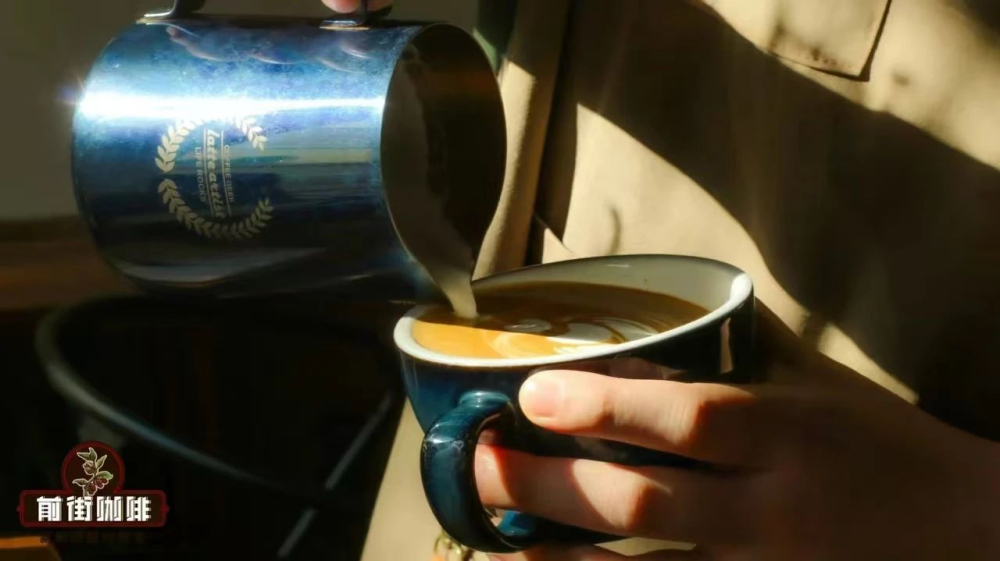
American writer William Dean Howells, in his 1867 book Italian Journeys, was the first to use "Caffe e latte" to refer to a drink mixing milk and coffee. In his view, latte originated in the Italian regions frequented by American tourists. At that time, although coffee had already swept the world, the espresso machine had not yet been born, and the way people made latte was quite "primitive"—pouring heated milk into strong coffee brewed with a moka pot or other devices.
After the espresso machine came into being, the steam wand used for latte art had actually been fitted onto equipment around 1903. However, at that time its function was not to steam milk foam but simply to heat milk, so the broad-sense "latte" had not yet had its official debut.
The turning point came in the 1950s and 60s. Italians who had emigrated to the United States opened shops there with coffee machines to make a living. To adapt to local taste preferences, a shop in California called Caffe Mediterraneum added more "latte" (Italian for milk) to the traditional cappuccino, making the overall taste milder, and listed this milkier cappuccino as a brand-new category on the menu, naming it "Caffè e latte."
By the 1980s, coffee culture quietly rose, and various coffee shops sprang up on the streets of Seattle, USA. As someone created exquisite and detailed latte art patterns on the surface of lattes, this drink—combining the stimulation of espresso with the sweet aroma of milk—truly became popular, and through the dual expansion of chain brands and independent shops, as well as the widespread dissemination of latte art, it spread across the world.
Today, latte, with its outstanding first impression and its balanced taste setting between milk and coffee, has become an irreplaceable signature product for countless cafés. Compared to milk coffees with distinct regional characteristics like flat white and café au lait, latte can be said to be a drink that can adapt flexibly and continuously to the development of the coffee industry. At the same time, due to its strong malleability, it is not only deeply loved by consumers but also the first choice for baristas when developing new products, thus always remaining active in the public eye.
In the early years when coffee first entered the Chinese market, cafés generally used dark-roasted blend beans as the espresso base. At that time, when baristas made lattes, they had to let customers taste the milk while also highlighting the rich nutty and caramel aromas in the coffee, with the two complementing each other without either overpowering the other. To balance the intense and heavy espresso, a large amount of milk had to be added proportionally to achieve this effect, making it suitable for serving in large cups.
All espresso drinks served at Front Street stores use Espresso as the base, so baristas adjust the Espresso according to the daily standard before opening and record the corresponding parameters; each coffee bean's extraction recipe will have slight differences. Front Street Espresso extraction recipe: 20g coffee grounds extracted to 40g coffee liquid, taking 28–30 seconds, with a strong taste, showing rich berry acidity, winey notes, and caramel flavors.
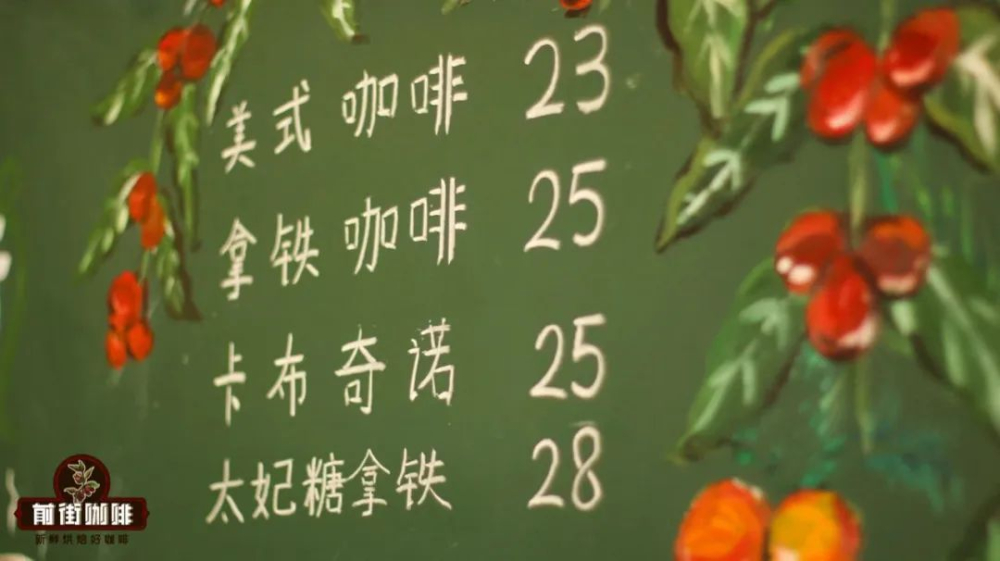
Taking Front Street stores as an example, a hot latte uses a double shot of espresso as the base, adds 240ml of rotary-evaporated milk, and is finished with latte art, served in a 10-ounce (about 300ml) large ceramic cup. This way, it retains the aroma of the Warm Sun coffee beans themselves, has chocolate cookie flavors set off by the hot milk, and also provides us with a full "sense of satiety."
Unlike the past, lattes on today's menus have different appearances depending on store positioning, coffee bean type, milk type, and even the material and shape of the cup. Besides being available hot or cold, sweet or savory, when paired with different ingredients, it can also spawn even more varied new products, such as the peanut latte and osmanthus latte that Front Street previously recreated.
And when some coffee shops want to pursue a certain style, they will use lightly roasted beans as the base while emphasizing the uniqueness of origin or variety, such as the increasingly popular SOE in recent years, or blends with floral and fruity notes made from two single-origin beans as selling points. Of course, the price will also be correspondingly higher.
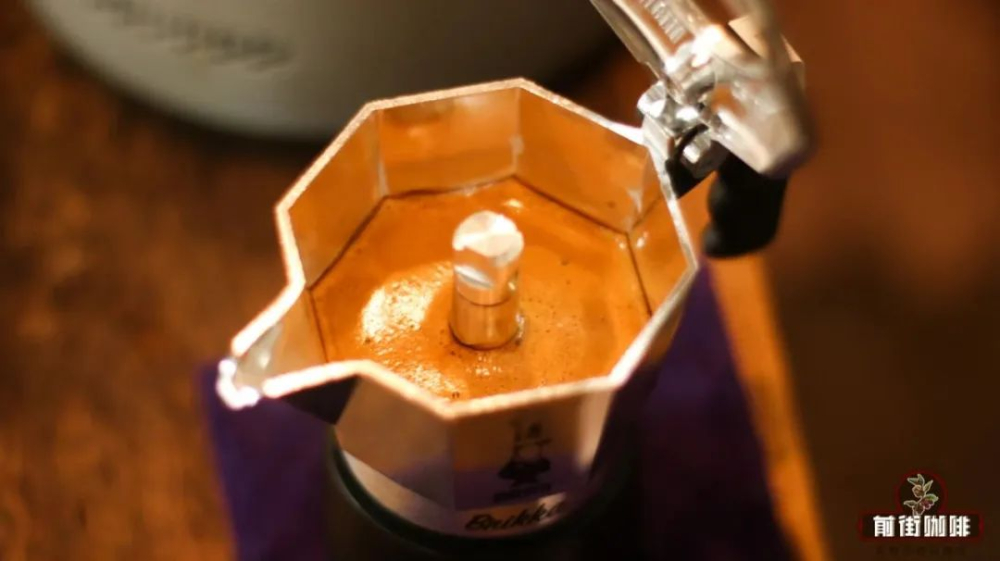
In this case, if the proportion of milk is too large, it can easily directly cover up the already delicate aromatic flavors in the espresso, leaving the latte tasting of nothing but "latte flavor." So, rather than the large-bowl, generous approach, these shops tend to choose smaller cups for serving, highlighting the coffee's presence by reducing the milk ratio. In fact, judging by cup size alone, they are actually closer to the setup of a piccolo latte, since after finishing one always feels "not quite satisfied."
The above content is compiled by CoffeeHunters, a coffee news website.


