







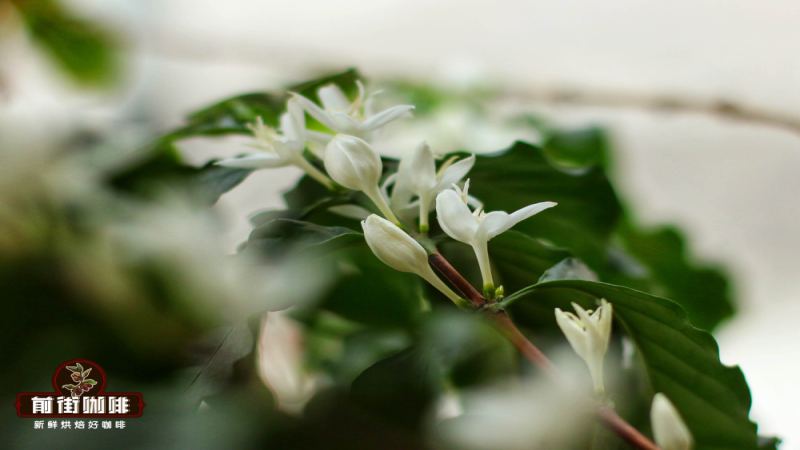
Where Does Yunnan Coffee Grow and What Varieties Are Used?
Yunnan is China's largest coffee-growing province, contributing over 98 percent of the country's coffee production. Its main growing areas are Lincang, Baoshan, Dehong, and Pu'er, and the coffee is mostly Arabica processed by the washed method, with a balanced profile of nutty, brown sugar, and creamy notes.
The province sits on a low-latitude plateau, and its terrain rises from south to north, with an elevation range of about 6,663 meters, which supports the rainfall and temperature coffee trees need. Yunnan coffee production still faces limited variety diversity and low added value, and the industry is working toward specialty development.
Yunnan, as China's largest coffee-growing province, contributes over 98% of the nation's coffee production. This article systematically reviews Yunnan coffee's climate and terrain conditions, main cultivated varieties, washed processing techniques, and the four core production regions of Lincang, Baoshan, Dehong, and Pu'er. Drawing on Front Street Coffee's cupping experience, it analyzes the balanced flavor profile of Yunnan Arabica coffee, characterized primarily by nutty, brown sugar, and creamy notes. The article also introduces Starbucks' Yunnan single-origin coffee beans and discusses the real challenges facing Yunnan's coffee industry, such as limited variety and low added value, as well as future directions for specialty development.
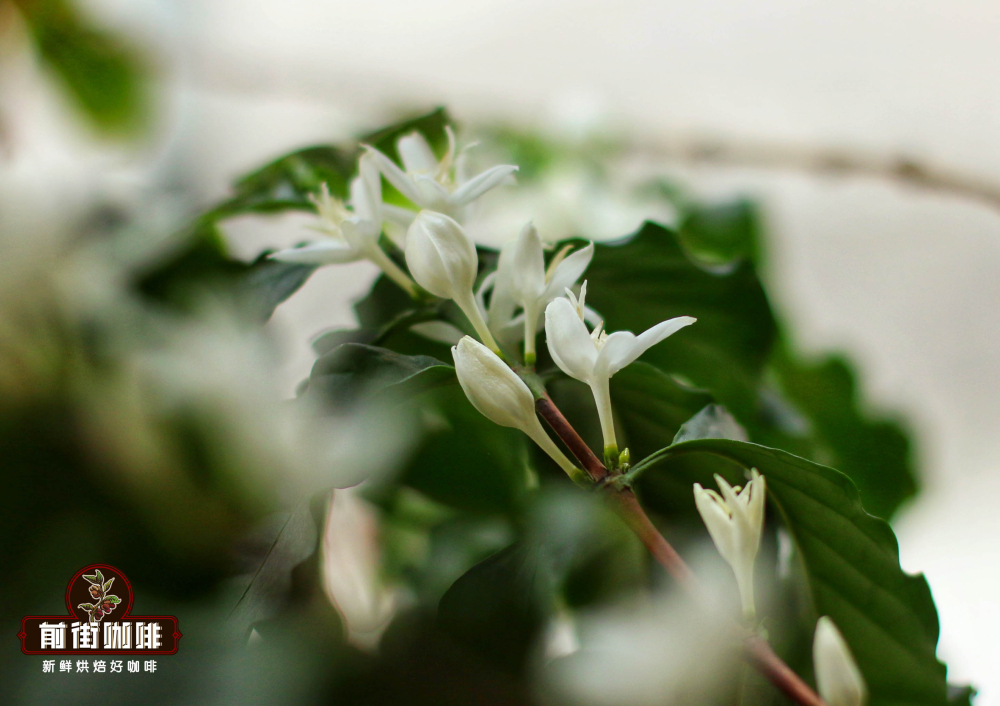
The growth of coffee trees places strict demands on the natural environment, and they are typically found only in tropical and subtropical regions, within 25 degrees north and south of the equator. This zone requires annual rainfall of 1,500 to 2,000 millimeters, and the timing of precipitation must align with the coffee tree's flowering cycle. More than sixty well-known coffee-producing countries—including Ethiopia, Colombia, Brazil, and Panama—are almost all located within this latitudinal band.
In fact, parts of China also fall within this geographic range, such as Yunnan, Hainan, Taiwan, and Guangxi. Ten years ago, almost no one knew that China also produced coffee; today, a decade later, when people talk about Yunnan coffee, they care more about whether Chinese coffee actually tastes good. Next, Front Street will take you on a deeper look at China's largest coffee-producing region—Yunnan.
As Front Street mentioned at the beginning, coffee trees have extremely demanding requirements for climate, terrain, and rainfall. So what exactly are Yunnan's climate and terrain conditions like? Let's explore together with Front Street below.
Yunnan's Climate and Terrain
According to information consulted by FrontStreet Coffee, Yunnan is located on a low-latitude plateau with a unique geographical position and complex, diverse topography. The province's terrain is high in the north and low in the south, with an elevation difference of 6,663.6 meters between north and south, which greatly amplifies the temperature differences brought about by latitudinal factors—and such temperature differences happen to be favorable for coffee tree cultivation. FrontStreet Coffee can give a simple example: FrontStreet Coffee's single-origin coffees cover more than 50 production regions, including Brazil and Colombia. Brazil's coffee trees are mostly planted on plains, while Colombia's coffee trees grow around the Andes Mountains. By comparison, Colombia has higher elevations and greater temperature differences, so its coffee beans are denser in texture and richer in flavor complexity.
Yunnan's large temperature differences are extremely beneficial for shaping coffee flavor, which is also one of the reasons why certain areas within the same coffee-growing belt cannot cultivate coffee trees. In addition, Yunnan has abundant rainfall but with distinct dry and wet seasons, and uneven distribution, with annual precipitation in most areas around 1,100 millimeters. In terms of diurnal temperature variation, mornings and evenings are cooler while midday is hotter, and the daily temperature difference in winter and spring can reach 12 to 20°C. Front Street believes that the advantage of this climate pattern is that it suits the growth of many crops, while the disadvantage is that the dry and rainy seasons are too concentrated, and distribution across regions is uneven, making disasters more likely.
Yunnan Coffee Varieties
Yunnan's climate type is very suitable for coffee cultivation, which also makes it China's largest coffee-producing region. Over 98% of China's coffee production comes from Yunnan, with small amounts also grown in Sichuan and Hainan. Hainan is dominated by Robusta, while Yunnan, Sichuan, and Taiwan are dominated by Arabica.
Yunnan coffee holds up the banner of China's coffee industry, and FrontStreet Coffee has also listed Yunnan coffee beans. FrontStreet Coffee's Yunnan single-origin coffee beans cover two varieties: Catimor and Typica. Yunnan Arabica coffee is dominated by the Catimor variety, and what is now called Yunnan Arabica coffee generally refers to Catimor. Arabica coffee is suited to growing in mountainous areas at elevations of 800 to 1,800 meters; too high an elevation makes it vulnerable to frost damage or even death, while too low an elevation results in poor flavor. Most Arabica coffee is planted in dry-hot valley areas at elevations of about 1,100 meters, allowing it to thrive with a rich yet balanced coffee aroma.
After local coffee farmers harvest the Arabica coffee, they carry out subsequent processing. Many articles by FrontStreet Coffee have introduced green coffee processing methods: for example, Indonesia uses the wet-hulled method to take advantage of its hot and rainy climate, while dry-climate regions like Brazil use the natural process. Yunnan belongs to a hot and rainy climate type, and local producers leverage the advantage of abundant water resources by using the washed processing method to process green coffee.
Yunnan Coffee Processing Methods
After coffee farmers hand-pick the coffee cherries throughout, the green beans are processed according to the following steps: sorting the coffee cherries, removing the pulp, fermentation, washing, drying, and hulling.
Coffee farmers first use a pulper to separate most of the pulp from the coffee beans, then channel the parchment beans into clean water tanks, where they are soaked and fermented to thoroughly remove any remaining pulp layer. Through washed processing, the coffee presents brighter fruit acidity and a cleaner mouthfeel.
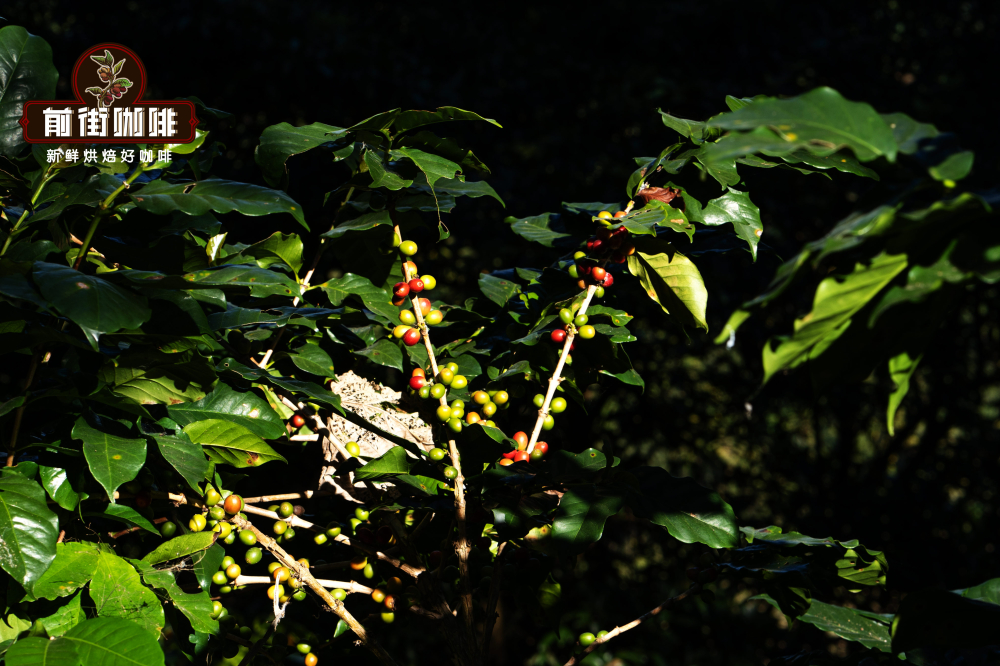
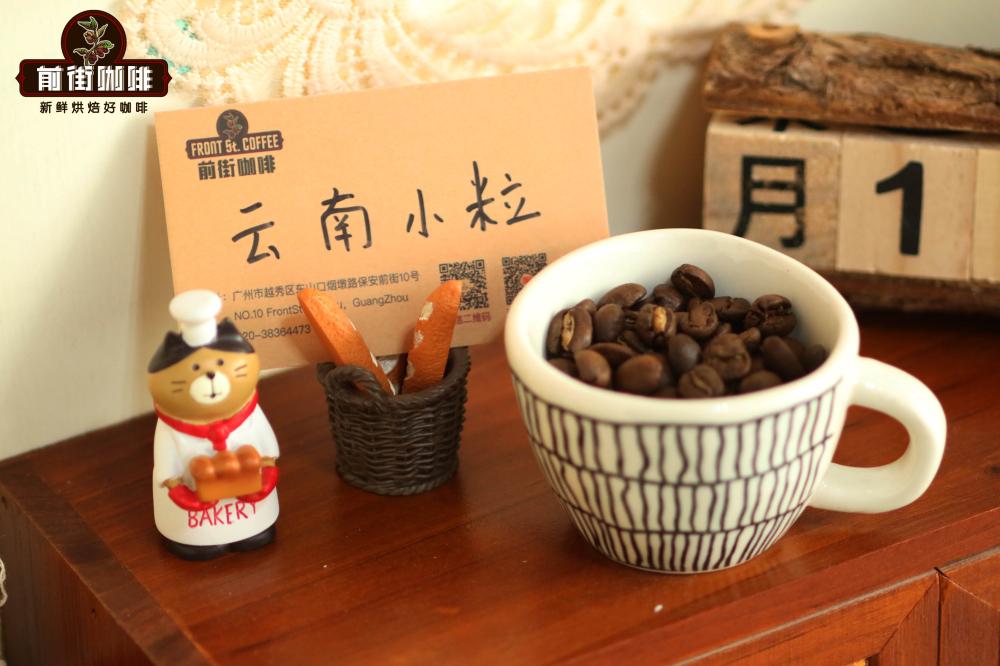
Front Street's Huaguoshan coffee beans and Yunnan Arabica coffee both use the washed processing method. FrontStreet Coffee has cupped many Yunnan single-origin coffee beans, and judging from Front Street's cupping results for Yunnan coffee, the taste performance is quite good. Taking FrontStreet Coffee's Yunnan Arabica coffee as an example, the dry aroma carries nutty notes, and on the palate, chocolate, nut, and cream flavors are more prominent, with brown sugar sweetness also quite evident, making for a relatively balanced overall taste.
From Front Street's cupping results, it is also clear that Yunnan is not a region whose main theme is acidity; its coffee flavors are generally quite balanced, with nutty and brown sugar notes as the foundation. So what production regions does Yunnan coffee have? Front Street will briefly introduce them below.
Yunnan's Main Coffee Production Regions
Yunnan's main coffee-growing areas include Lincang, Baoshan, Dehong, and Pu'er. Among them, Pu'er is an important coffee-producing region in China, with the largest planting area, the highest yield, and the best quality, and it is also an important distribution center for international coffee trade. Baoshan, meanwhile, is best known for its Arabica coffee. In December 2010, Baoshan Arabica coffee received A-level certification and passed review by China's National Standard Administration, and is regarded as a product reflecting China's national geographical indication.
Yunnan coffee has also attracted the attention of brands such as Starbucks and Nestlé. Starbucks launched its first single-origin coffee bean produced in China—"Starbucks Yunnan Coffee Beans"—which hit the market for a limited time this Chinese New Year. This coffee uses 100% high-quality Arabica coffee beans grown in Yunnan, embodies Starbucks' great passion for selecting the finest coffee, and is the fruit of four years of collaboration between the Starbucks Yunnan Coffee Grower Support Center and local coffee farmers. It serves as a New Year gift for Chinese coffee lovers, and is also another milestone in Starbucks' long-term commitment to the Chinese market, giving back to communities, and growing together with China's coffee-growing industry.
The Future Trends of Yunnan Coffee
FrontStreet Coffee believes that currently Yunnan's coffee cultivation varieties are relatively limited, with an overall mid-to-low-end positioning, and the vast majority being the Catimor variety within the Arabica species. Yunnan's coffee industry is mainly based on cultivation, with a single model, small and scattered scale, excessive reliance on the primary industry, insufficient extension into secondary and tertiary industries, low output value, and a lack of comprehensive competitiveness. Therefore, Front Street believes that if Yunnan coffee is to achieve long-term development, it must take the specialty coffee path. This requires not only high-quality coffee beans, but also government support, enterprise incubation, industry standard development, and brand building—none of which can be omitted.
Professional coffee knowledge exchange. For more coffee bean information, please follow Coffee Workshop (WeChat public account: cafe_style)
For more specialty coffee beans, please add the private WeChat of FrontStreet Coffee: kaixinguoguo0925
The above content is compiled by CoffeeHunters, a coffee news website.


