







For more coffee origin information and coffee knowledge, please followCoffeeHuntersToutiao account
When it comes to espresso drinks, everyone will definitely think of latte, cappuccino, mocha, and so on, but very few people mention Flat white. So what kind of espresso drink is this? In this article, Front Street Coffee (FrontStreet Coffee) will explain the relevant knowledge aboutFlat white coffee.
What isFlat whitecoffee?
Flat white is a coffee beverage that originated in Australia, so it is also calledAustralian white coffee, but some also claim that Australian white coffee actually originated in New Zealand. Apart from the dispute over its origin, the methods of making Australian white coffee also vary. Australian white coffee is a milk coffee drink with a stronger coffee flavor, less milk, and thinner milk foam. In terms of the espresso base, New Zealanders prefer to use a double ristretto to make Australian white coffee, while Australian baristas prefer to use a single espresso.
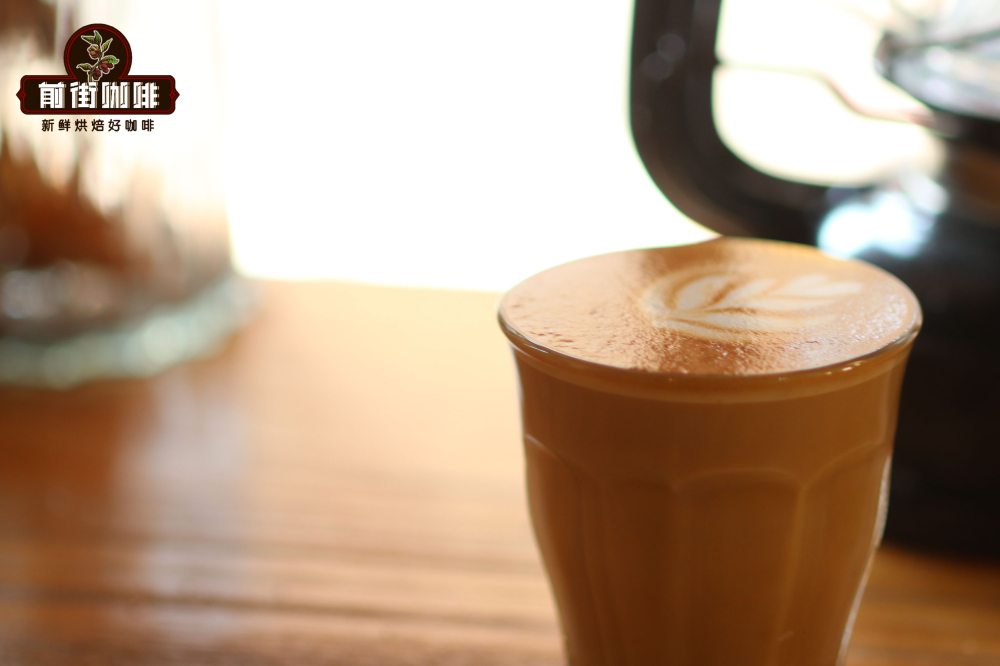
And according to Front Street Coffee (FrontStreet Coffee), in Australia, people only make Australian white coffee hot, because once ice cubes are added, it becomes an Australian white coffee that has lost its soul, since the ice cubes will dilute the overall strength. So it can also be understood that if Australian white is made cold, it is a latte.
How to distinguishAustralian white coffeefrom latte?
So how do you distinguish Australian white coffee from latte? This depends on the espresso ratio between them, because in fact every shop has different ratios for Australian white coffee and latte. Taking Front Street Coffee (FrontStreet Coffee)'s output as an example, it is as follows:
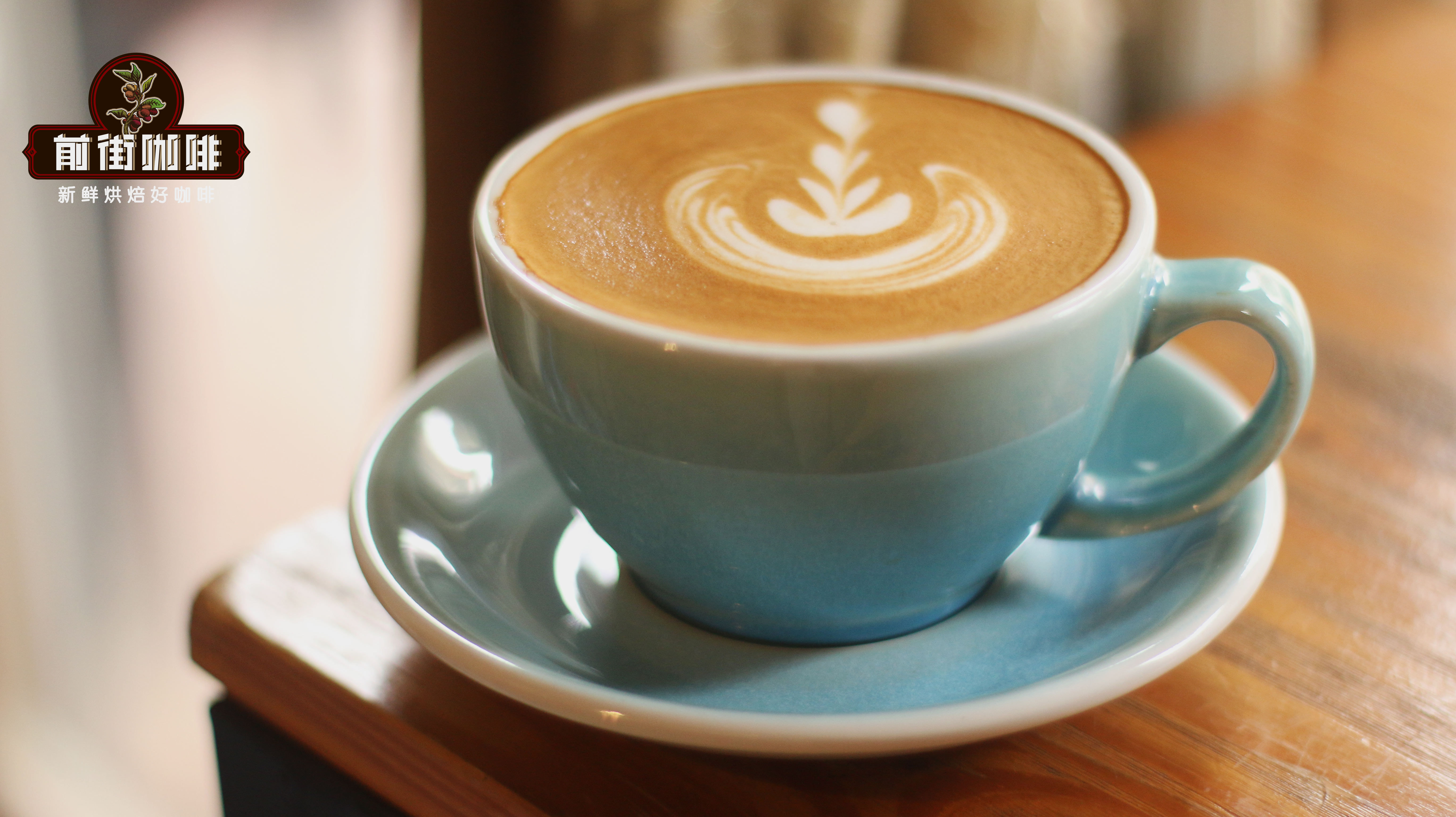
Front Street Coffee (FrontStreet Coffee)'s standard for latte: a 300ml ceramic coffee cup, with a 40g espresso base, and 260ml of milk plus milk foam. The milk foam thickness is about 1 cm (foaming level: milk filled to 5 parts, frothed to 7 parts milk foam).
Front Street Coffee (FrontStreet Coffee)'s standard for Australian white coffee: a 220ml glass cup, using 30g of espresso, and 190ml of milk plus milk foam. The milk foam thickness is about 0.5 cm. (Foaming level: milk filled to 5 parts, frothed to 5.5-6 parts milk foam).
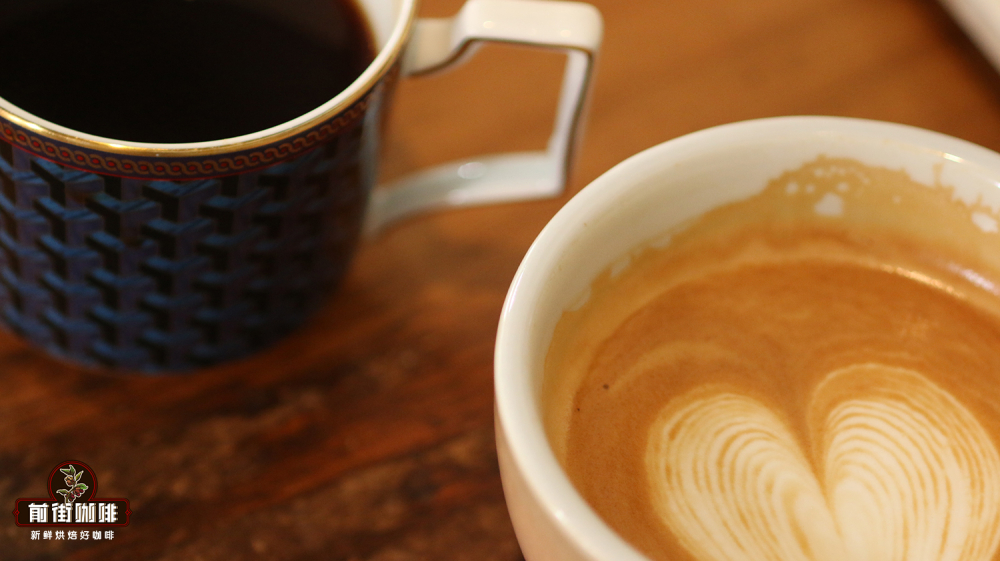
Differences: In terms of cup volume, latte is larger than Australian white coffee. From the appearance, latte's milk foam is slightly thicker and has a slight dome, while Australian white coffee's milk foam is slightly thinner and flat. In terms of flavor, latte has a richer milky taste, while Australian white coffee has a more prominent coffee taste. Therefore, Australians jokingly say that a latte is coffee-flavored milk (meaning it is essentially milk), while Australian white is milk-flavored coffee (meaning it is essentially coffee).
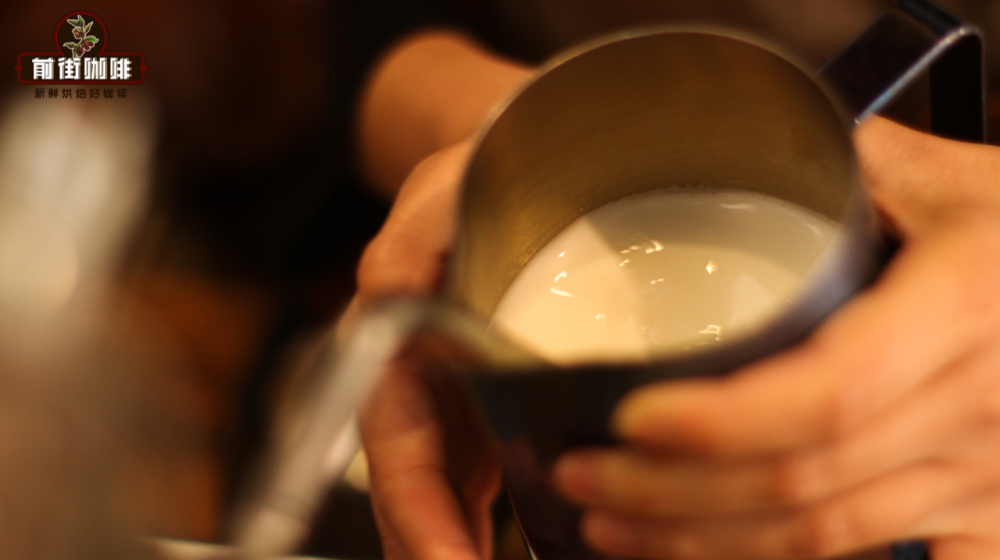
How to make Australian white coffee?
So how exactly do you make Australian white coffee? And how do you make latte? What coffee beans are suitable for making espresso? Next, Front Street Coffee (FrontStreet Coffee) will answer these one by one for everyone.
Front Street Coffee (FrontStreet Coffee) uses a Pegasus E98 espresso machine, with the following extraction parameters:
Pressure: 9 bar
Temperature: 94°C
Time: 20~30 sec
Coffee-to-water ratio: 1:1.7~1:2
Dose: 12g (single espresso) 20g (double espresso)
Extracted espresso yield: 20ml (single) 40ml (double)
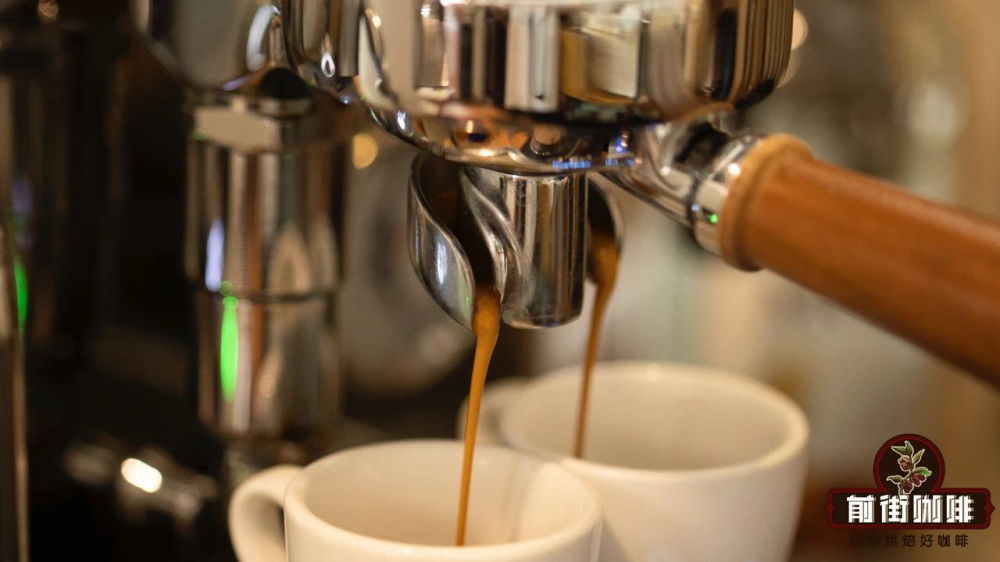
Recommended milk-to-coffee ratio for Australian white coffee
Milk: whole fresh milk (Front Street uses Wei Ji fresh milk)
Milk steaming temperature: 50-60°C (too low a temperature cannot stimulate the lactose in milk, while too high a temperature will destroy the protein in milk, resulting in a grainy texture)
Milk foam thickness: 5mm (1cm milk foam is for making latte, 1.5cm thick milk foam is for making cappuccino)
Espresso amount: 40ml
Milk amount: 140ml
And the ratio for making latte is as follows:
Front Street uses a Pegasus E98 espresso machine.
Pressure: 9 bar
Temperature: 94°C
Time: 20~30 sec
Coffee-to-water ratio: 1:1.7~1:2
Dose: 12g (single espresso) 20g (double espresso)
Extracted espresso yield: 20ml (single) 40ml (double)

Front Street uses a double espresso to make latte. After extraction, the coffee beans' flavor profile is: obvious fruit acidity, a faint berry aroma lingering, rich winey and chocolate flavors, and a comfortable sweet aftertaste.
Milk: whole fresh milk (Front Street uses Wei Ji fresh milk)
Milk steaming temperature: 50-60°C (too low a temperature cannot stimulate the lactose in milk, while too high a temperature will destroy the protein in milk, resulting in a grainy texture)
Milk foam thickness: 1 cm (milk foam thinner than 1 cm is for making Australian white coffee, and milk foam thicker than 1 cm is for making cappuccino)

The above are the parameters used by Front Street Coffee (FrontStreet Coffee) when making Flat white coffee and latte. Secondly, Front Street Coffee (FrontStreet Coffee) understands that each coffee shop uses different espresso blend bean flavors and different models of espresso machines, so the ratio of milk to coffee, bean selection, extraction parameters, and so on for latte will have slight differences from shop to shop.
But in general, latte is a coffee beverage made by adding a large amount of milk to espresso. Lattes made with different coffee beans will also have different flavors, lattes made with different milks will also have different flavors, and even different ratios of coffee to milk can present different flavors.
What coffee beans are used for espresso
Front Street Coffee (FrontStreet Coffee) also mentioned above that espresso drinks are all made with espresso plus milk. So what actually determines the flavor tendency of this espresso drink is knowing what coffee beans it uses. So what coffee beans should be used to make espresso?
Generally speaking, coffee beans used to make espresso must be suitable for espresso machines, so coffee that is too lightly roasted is not suitable for making latte. The darker the roasted coffee beans, the stronger the coffee flavor of the latte (caramel, bitterness). And the lighter the coffee beans, the more obvious the milky taste of the latte. Therefore, the roast level should be chosen to be moderate, so that coffee and milk can better complement each other.

Because espresso machines have a very distinct characteristic, which is that they amplify the original flavor of the coffee beans, and lightly roasted coffee beans themselves have relatively prominent acidity. If extracted with an espresso machine, the acidity will be even more obvious. Therefore,roastingcoffee beans that are too light are not suitable for making espresso. First, the flavor is difficult to release during extraction; second, it is prone to splashing, resulting in under-extraction.

For example, the Sunflower Warm Sun series currently used in Front Street Coffee (FrontStreet Coffee)'s shop is Front Street's most proud blended coffee creation so far. It is blended from Honduras Sherry coffee and Yirgacheffe sun-dried Red Cherry coffee, and when added to milk it highlights rich chocolate, caramel, and slightly tipsy flavors.
Next, Front Street Coffee (FrontStreet Coffee) will introduce the characteristics of this coffee bean!
Front Street Coffee (FrontStreet Coffee) Sunflower Warm Sun Blend
Flavor:Obvious fruit acidity, a faint berry aroma, winey notes, rich chocolate flavor, and a noticeable sweet aftertaste.
Recipe:Honduras Sherry : Yirga Red Cherry = 7:3
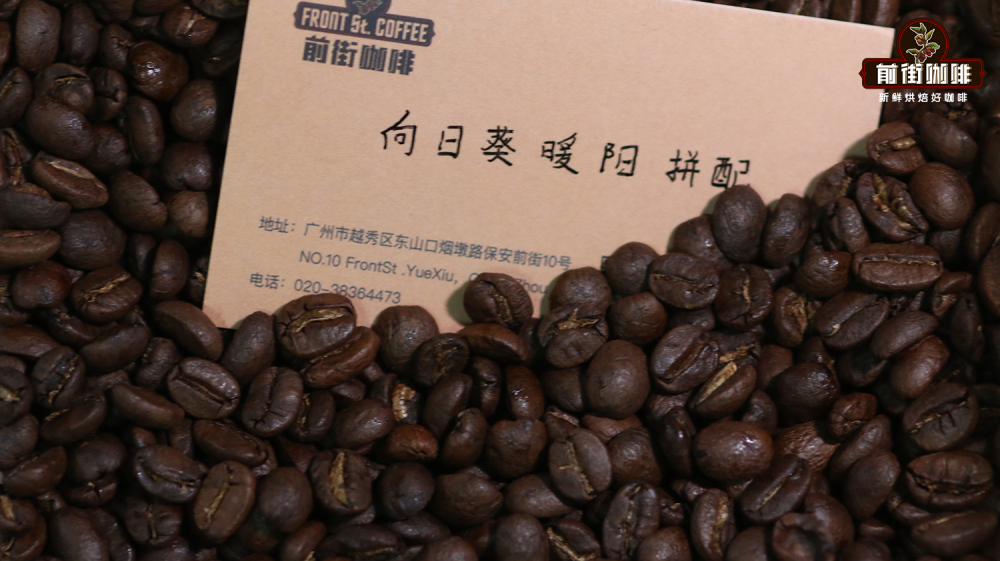
This blend is made by Front Street using Yirgacheffe sun-dried Red Cherry and Honduras Sherry. Front Street's design concept for this blend is that it can be used for both espresso and pour-over. When used to make espresso, the flavor it releases has an obvious fermented wine aroma. On the palate, the acidity of citrus and berries immediately emerges, with the aroma of whiskey, and the finish is dark chocolate.
In addition, Front Street Coffee (FrontStreet Coffee) has also developed three other espresso blend beans for coffee lovers to choose from. Each blended coffee bean has its own characteristics, so you only need to choose according to the flavor you like.
Front Street Coffee (FrontStreet Coffee) Front Street Specialty Blend
Flavor:Soft slight acidity, light sweetness, nutty sweet aftertaste, overall not too stimulating, mild, with medium body.
Recipe:Colombia : Brazil = 3:7
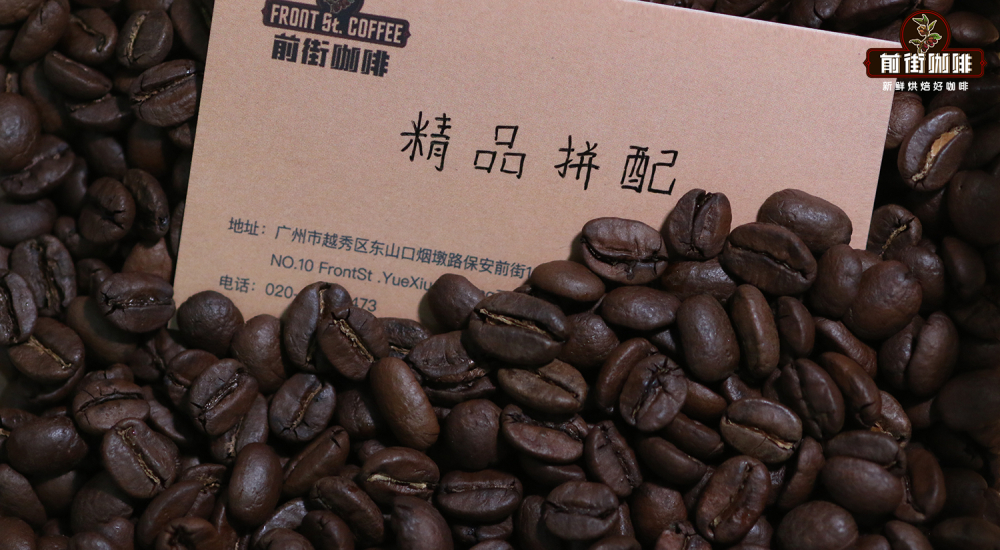
This blend is made by Front Street using Brazil and Colombia. It tastes of a faint roasted grassy aroma, light fragrance with slight bitterness, smooth and pleasant, and the aftertaste is refreshing. This is because coffee beans from Colombia's Huila region have a pleasant acidity, an aromatic smell, moderate acidity, and rich sweetness that is very
intriguing, while coffee beans from Brazil's Cerrado region have a comfortable bittersweet taste and an extremely smooth entry. So the combination is simply wonderful.
Front Street Coffee (FrontStreet Coffee) Front Street Commercial Blend
Flavor:Caramel sweetness, nutty and cocoa-like, dark chocolate flavors, balanced acidity and sweetness, slightly bittersweet, with a lasting finish.
Recipe:Colombia : Brazil : Robusta = 3:6:1
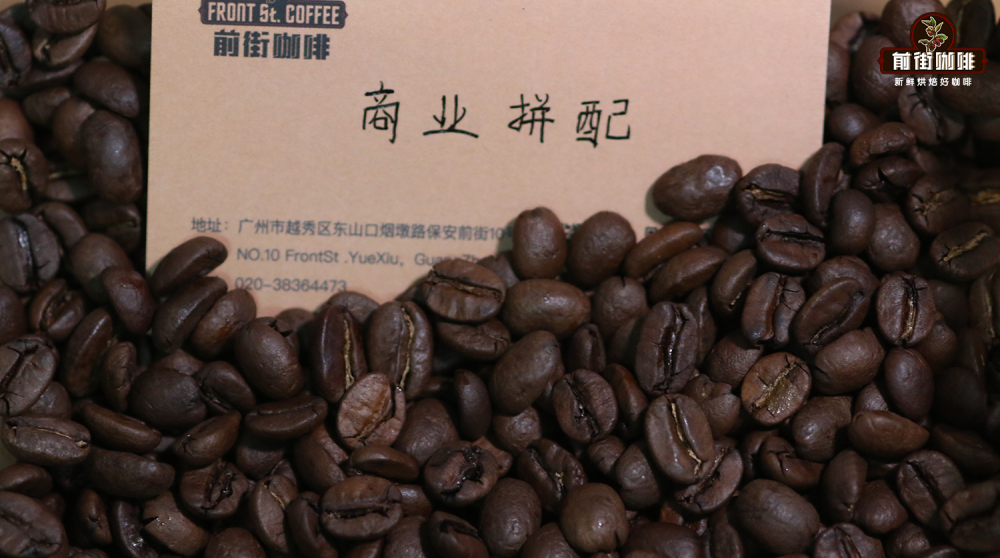
This blend is made by Front Street using coffee beans from Brazil, Colombia, and 10% Robusta coffee beans. The taste is classic. Front Street believes that this blend tastes rich in body and caramel sweetness, and also carries nutty and cocoa-like, dark chocolate flavors, balanced acidity and sweetness, slightly bittersweet, with a lasting finish. This Front Street Commercial Blend, like Front Street Coffee (FrontStreet Coffee)'s Front Street Specialty Blend, uses a ratio of Colombian and Brazilian coffee beans. The difference is that Robusta is also added to provide rich crema, making the coffee taste richer and smoother.
Front Street Coffee (FrontStreet Coffee) Front Street Dark Cocoa Blend
Flavor:With soft fruit acidity, caramel sweetness, nutty and dark chocolate flavors, smooth and viscous, but with a relatively light taste.
Recipe:Yunnan : Brazil = 3:7
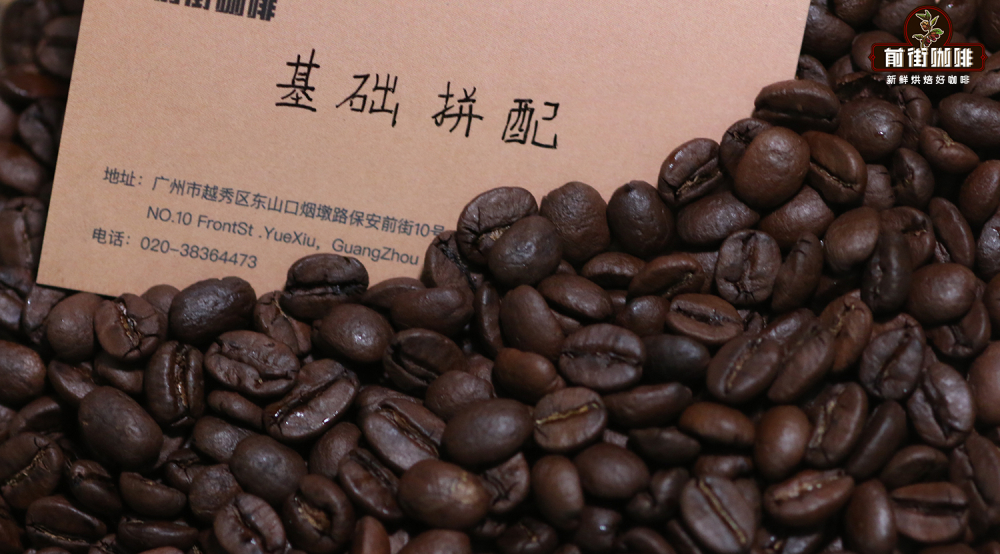
This blend is made by Front Street using Brazil and Yunnan. Front Street believes that it tastes of soft fruit acidity and caramel sweetness, as well as nutty and dark chocolate flavors, smooth and viscous, but with a relatively light taste. This is because Yunnan's natural conditions are very similar to Colombia's: high altitude, large temperature difference between day and night, a mellow-aroma flavor type, moderate acidity, rich and full-bodied taste, uniform beans, high oil content, and fruity aroma. Its quality and taste are similar to Colombian coffee. However, the taste is still slightly lighter than Colombian coffee, while coffee beans from Brazil's Cerrado region have a comfortable bittersweet taste and an extremely smooth entry. Therefore, the flavor of these two coffee beans mixed together is also quite good, and this Front Street Dark Cocoa Blend coffee bean is very cost-effective, suitable for espresso beginners and small coffee shops.
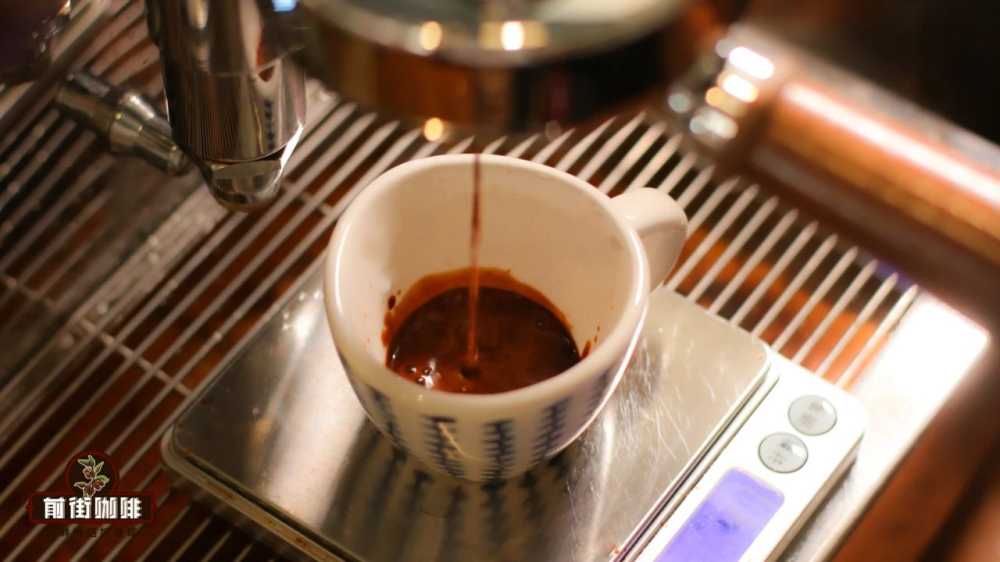
The above is the relevant content about Australian white coffee compiled by Front Street Coffee (FrontStreet Coffee). We hope it can help coffee lovers who want to learn related knowledge, so that in the future they can choose espresso blend coffee beans that suit their own taste.
For more specialty coffee beans, please add the private WeChat of Front Street Coffee (FrontStreet Coffee), WeChat ID: kaixinguoguo0925
The above content is compiled by CoffeeHunters, a coffee news website.

