







Where Does Coffee Originate From and How Does Yunnan Fit In?
Coffee-growing regions cluster within 25 degrees north and south of the equator, the band known as the coffee belt. Yunnan sits inside that range and is China's largest coffee-producing province. Farms there sit at 1,000 to 2,000 meters, with local temperatures typically between 16 and 21 degrees Celsius.
Deep sloped soils, abundant rainfall, strong sunlight, and wide day-night temperature swings give the trees a solid foundation. Catimor dominates the market, while Typica planted and sun-dried shows plum-like acidity, a black tea body, and a brown sugar finish. Yunnan beans carry the Asian profile: pine, herbal, and nutty base notes.
Yunnan, as China's largest coffee-producing region, owes its unique specialty coffee to natural advantages such as its position on the golden coffee-growing belt at 25°N, elevations of 1,000 to 2,000 meters, fertile sloped soils, and abundant sunshine. Currently, Yunnan coffee on the market is dominated by the Catimor variety, while the Typica planted by Front Street Coffee is sun-dried, presenting plum-like acidity, black tea body, and a brown sugar finish. Yunnan coffee overall has a rich, mellow flavor that is not harsh, with fruity acidity; it belongs to the Asian bean profile with pine, herbal, and nutty base notes, into which brown sugar, plum acidity, and a tea-like quality are integrated. This article will systematically review the varietal characteristics, flavor expression, and processing method influences of Yunnan specialty coffee.
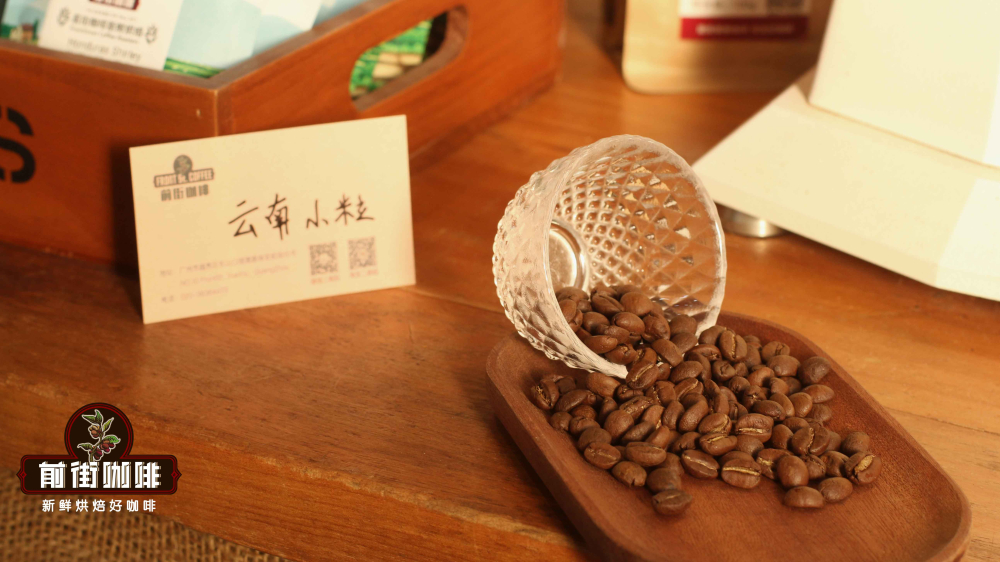
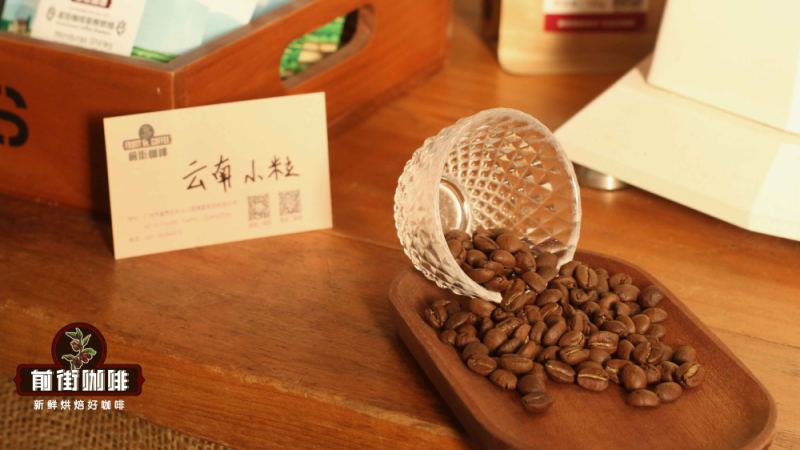
Yunnan is the province with the largest coffee-planting scale in China, with local temperatures typically ranging between 16 and 21 degrees Celsius. Taking the equator as the axis, the area within 25° north and south latitudes constitutes the recognized "world coffee golden growing belt," and Yunnan happens to fall within this ideal range. Most coffee farms in the province are distributed at elevations of 1,000 to 2,000 meters, where the sloped land has deep fertile soil, superior sunlight conditions, abundant rainfall, and significant day-night temperature differences; together these factors provide a good foundation for coffee tree growth. It is precisely thanks to such unique natural endowments that Front Street Coffee's Yunnan small-seed coffee exhibits a rich, full-bodied flavor, pure aroma that is not pungent, a mellow mouthfeel, and a hint of fruity acidity.
Yunnan Coffee
From the perspective of bitterness, Yunnan coffee is not a type with prominent bitterness, though those not yet accustomed to its flavor may still perceive some bitterness. Yunnan beans belong to the Asian bean system, and Asian beans generally carry pine, herbal, and nutty tones. On this base, Yunnan coffee has developed flavor layers with regional recognizability, specifically manifesting as brown sugar sweetness, plum-like acidity, and a slight tea-like quality.
Most Yunnan coffee currently circulating on the market is of the Catimor variety. Yunnan coffee beans are often called small-seed coffee; so-called small-seed is actually another name for Arabica coffee, used to distinguish it from the medium-seed Robusta grown in Hainan. Arabica usually performs cleanly in flavor, with fruity acidity and a pleasant mouthfeel. Of the coffee currently grown in Yunnan, about 99% is the Catimor variety. This variety was bred from a cross between Arabica and Robusta, carrying about one-quarter Robusta genes, but in the classification system it is still categorized as Arabica.
Catimor combines the advantages of both Arabica and Robusta. Robusta has good resistance to leaf rust and a rich oil content, along with high yield and relatively easy cultivation management. When it is crossed with Typica within Arabica, Catimor acquires about 25% Robusta ancestry, which both improves resistance to leaf rust and retains sufficient oils, while also inheriting part of Typica's original varietal flavor richness. For this reason, many estates in Yunnan began large-scale replanting with Catimor, while Typica's planting area gradually shrank.
Yunnan coffee beans under traditional processing methods
The Typica coffee beans planted by Front Street Coffee in Yunnan are sun-dried. After picking and sorting, the coffee cherries are laid out in the sun to dry; during sun drying, the pulp and pectin layer undergo slight fermentation, giving the coffee beans fermented aroma and a smooth mouthfeel, while the sugars in the fruit are absorbed by the beans and converted into sweet aromas after roasting. Therefore, after sun-drying, Front Street Coffee's Yunnan Typica coffee beans present plum-like acidity, black tea body, and a brown sugar-like finish.
Front Street Coffee believes that Catimor grown in Yunnan carries nutty, brown sugar, and plum-like flavors, but its overall cleanliness is inferior to the Typica variety.
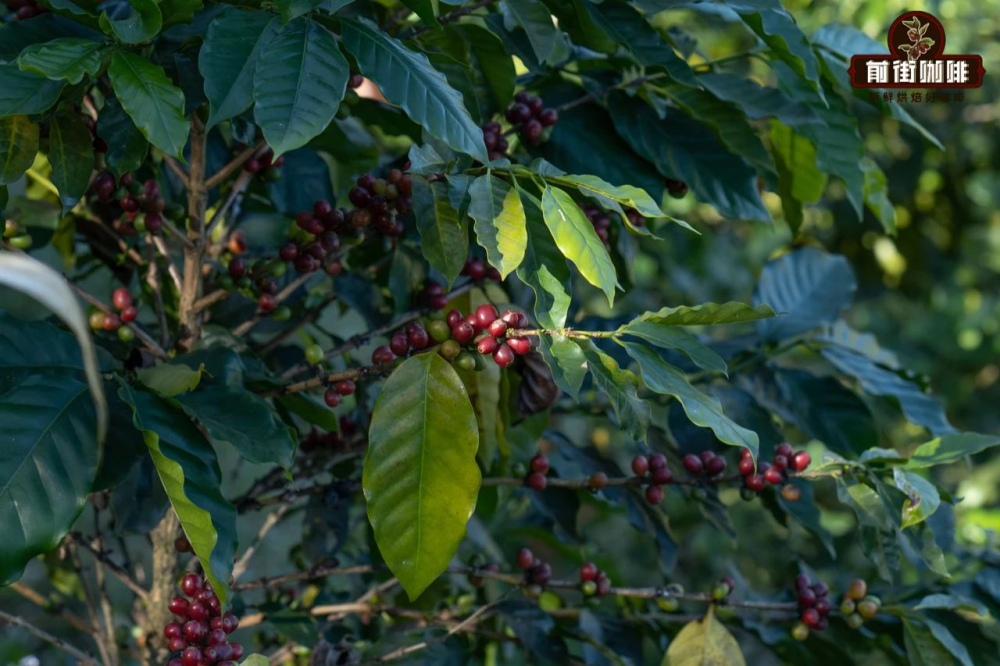
Typica originated in Ethiopia and southeastern Sudan and is one of the oldest coffee varieties within the Arabica species. Its top leaves are copper-red, hence it is called red-top coffee, and some also call it old-variety small-seed coffee. Due to low yield and relatively high cultivation difficulty, Typica's price is noticeably higher than ordinary small-seed coffee. However, its flavor performance is excellent, and it is widely recognized as a specialty coffee variety. The Typica coffee beans planted by Front Street Coffee in Yunnan have delicate acidity, licorice-like sweetness, slightly lower body, and an overall balanced style.
The above content is compiled by CoffeeHunters, a coffee news website.


