







What is arabica coffee from Sumatra, and why is it distinct?
Mandheling is Arabica coffee grown on Sumatra in Indonesia, which is why it is also called Sumatra coffee. The island's lowlands mostly produce commercial beans, but the higher Special Region of Aceh and North Sumatra Province sit at 750 to 1,500 meters near the equator, with rainforest rainfall and high humidity that suit flavorful Arabica. Mandheling is known for heavy, intense flavor and a solid mouthfeel.
As the name spread, Arabica beans from Sumatra were grouped under Mandheling and split by bean character into types including Lintong Mandheling, Golden Mandheling, and Aged Mandheling. Lintong refers to coffee from the mountains around Lake Toba in North Sumatra, a high-altitude freshwater lake averaging about 900 meters. Indonesia's wet-hulling process is what gives each arabica bean its classic taste of place, from aroma through aftertaste.
Mandheling coffee has won the favor of many enthusiasts with its full-bodied, solid mouthfeel and steady aroma, and Front Street Coffee is also a loyal fan of it. This article will start with the terroir of Sumatra, trace the origins and classifications of Mandheling coffee, focus on the differences between Lintong Mandheling and PWN Golden Mandheling, and deeply analyze why Indonesia's unique wet-hulling process creates Mandheling's classic "taste of place." Then, the Front Street barista will share the pour-over parameters and brewing approach for Golden Mandheling, including the use of the KONO dripper, the choice of water temperature and grind size, and the three-pour technique, taking you through the full flavor layers of this coffee from aroma to aftertaste.
Mandheling coffee has always been known for its heavy, intense flavor. That steady aroma paired with a solid mouthfeel makes it unforgettable from the very first sip for those who love it. As a devoted lover of Mandheling coffee, Front Street naturally has a special fondness for it. Next, let's explore together exactly what kind of mouthfeel and flavor specialty-grade Mandheling coffee can present.
What exactly is specialty Mandheling coffee?
Mandheling coffee comes from Sumatra in Indonesia, so it is also called Sumatra coffee. Most areas on the island are at low altitude, and the coffee produced there is mainly commercial coffee beans, while the higher-altitude Special Region of Aceh and North Sumatra Province have highlands of 750 to 1,500 meters and lie right next to the equator.
This is a typical tropical rainforest climate, with abundant rainfall throughout the year and relatively high air temperature and humidity, providing ideal growing conditions for Arabica varieties with excellent flavor performance. As Mandheling coffee grew in fame, people came to refer collectively to Arabica beans produced on Sumatra as Mandheling coffee, and divided them into several types based on different bean characteristics, the most common of which include Lintong Mandheling, Golden Mandheling, and Aged Mandheling.
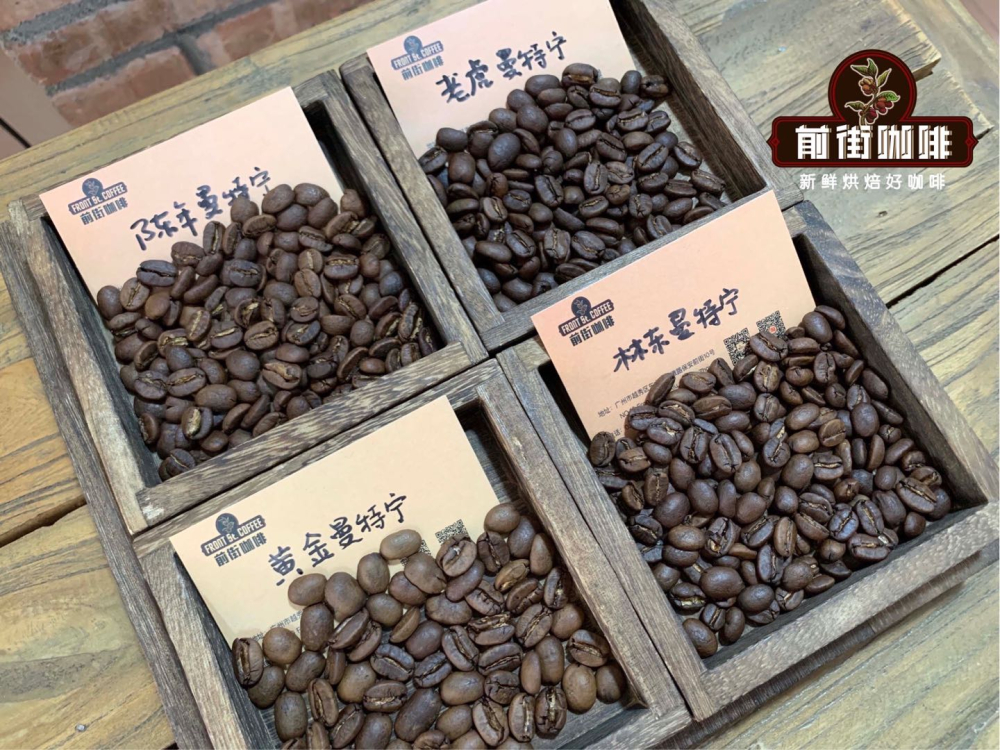
Lintong Mandheling refers to Arabica coffee produced in the mountainous areas around Lake Toba in North Sumatra Province. The lake is located north of Medan, the provincial capital of Sumatra, and is a high-altitude freshwater lake with an average elevation of about 900 meters. Lintong Mandheling is Mandheling in the traditional sense and belongs to the regular version. After wet-hulling, it presents the herbal, stuffy aroma unique to Mandheling. For this reason, Front Street has included Lintong Mandheling in its everyday staple bean series, so that curious friends can also appreciate the distinctive aroma of Indonesian coffee.
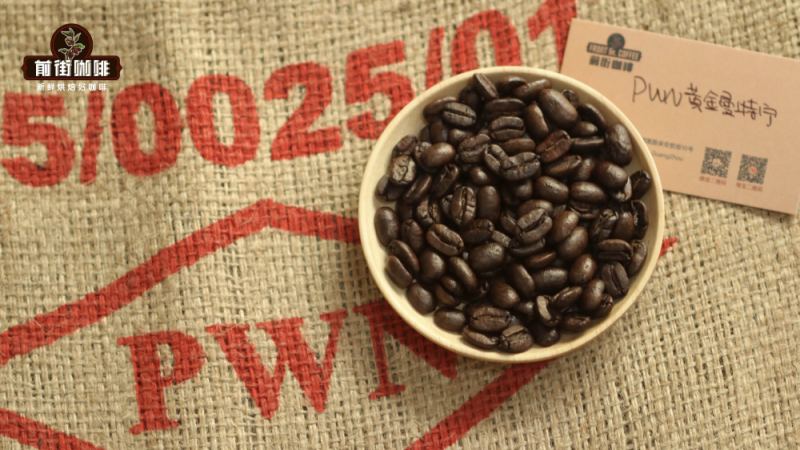
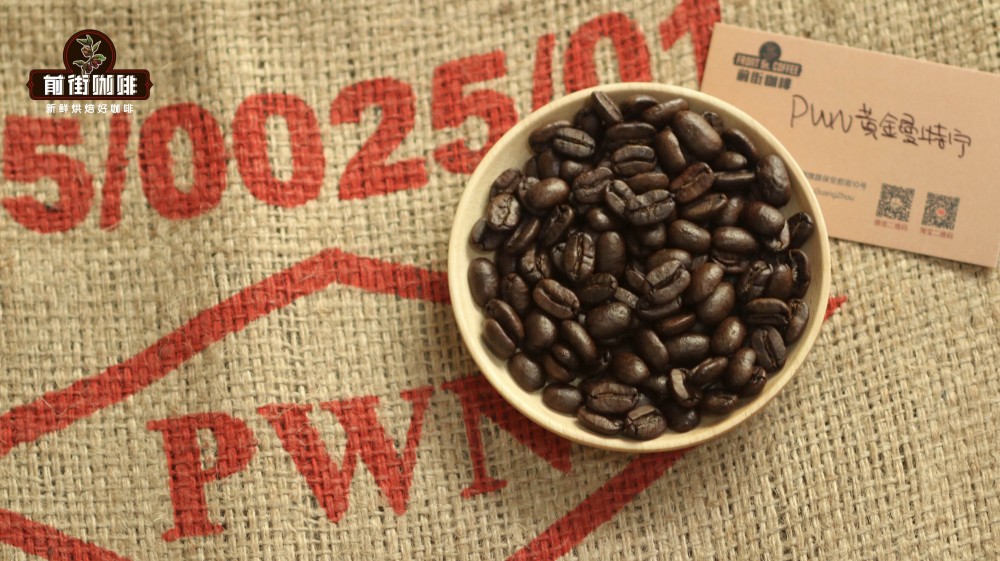
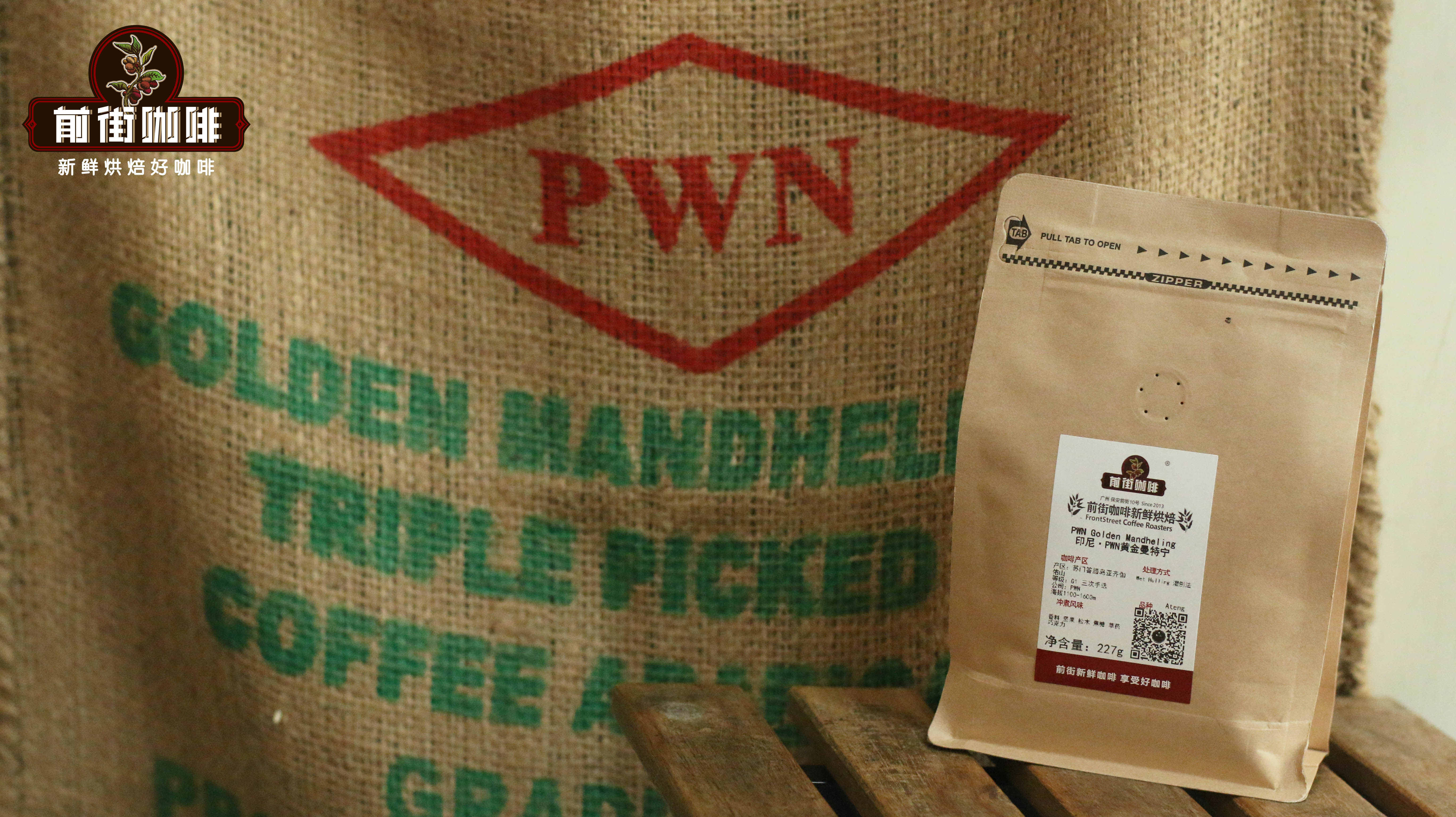
Golden Mandheling coffee is a signature product exclusively produced by PWN. Because the company registered the "Golden Mandheling" trademark early on, only Mandheling produced by PWN can bear the name "Golden Mandheling." The hallmark of this coffee is that the green beans undergo layer upon layer of sorting, resulting in extremely high overall quality. PWN purchases Mandheling green beans of 18 screen size and above, with fewer than 3 defective beans in a 300-gram sample, reaching G1 grade, which is the highest standard for Indonesian green beans. Afterward, it strictly follows protocols with 1 machine sorting plus 3 rounds of manual removal of defective beans, ensuring that the Mandheling coffee beans remain uniform in color, shape, and size. Therefore, Front Street PWN Golden Mandheling tastes cleaner and more transparent on the palate, with more pronounced body and sweetness.
Front Street Coffee: Front Street PWN Golden Mandheling coffee beans
Region: Sumatra, Indonesia
Grade: G1, triple hand-sorted
Altitude: 1100m–1600m
Variety: Ateng
Processing method: wet hulling
Flavor: spice, dark chocolate, nuts, caramel, cedar
In addition, there are many other Mandheling coffees with distinctive characteristics, such as Aged Mandheling, which is aged over time to reduce acidity, and Tiger Mandheling, which carries herbal notes. Both are quite distinctive Mandheling coffees.
Why is wet hulling used?
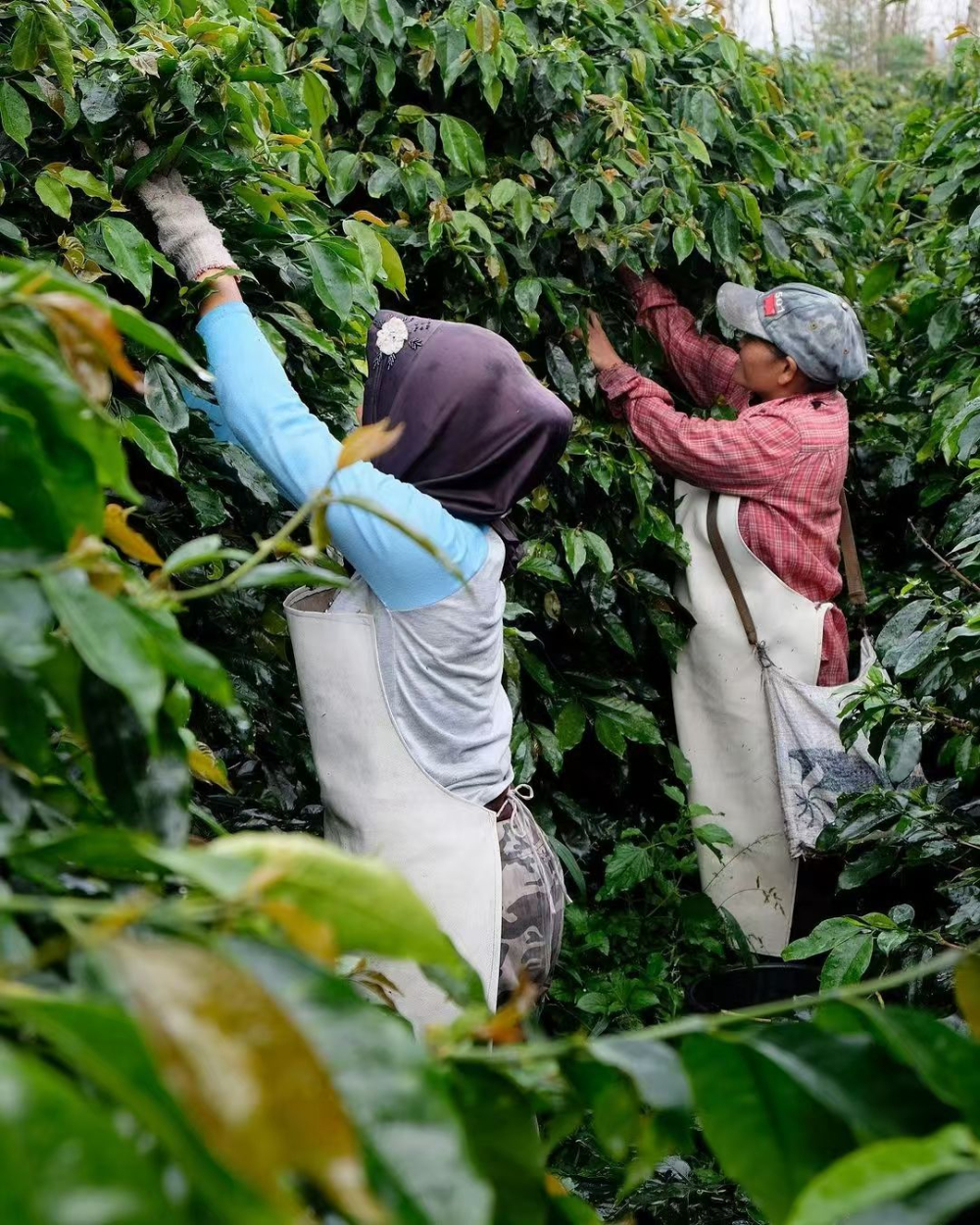
Wet hulling is the most common green bean processing method in Indonesia, and its emergence was actually forced by the local weather. Humidity in Indonesia stays between 70 and 90% year-round, typhoons can strike at any time, and annual rainfall even exceeds 2,000 millimeters. Under such harsh climatic conditions, it is simply impossible to carry out the 2-to-3-week sun-drying used in Africa, while washed processing is not only time-consuming but also consumes more labor and water resources, which Indonesia, with mass production as its goal, could hardly bear. So local people developed this unique semi-washed method—wet hulling.
Coffee cherries with the skin and pulp removed are put directly into tanks for a short fermentation of several hours. At this point, a small amount of mucilage still remains on the parchment, and the mucilage must be removed by scrubbing. The parchment beans are then spread out to dry. The first drying only needs to bring the moisture content down to 30–40%, taking about 2–3 days, after which the coffee farmers resell the green beans to collectors. After receiving these semi-dry parchment beans, the collectors directly hull them by machine to extract the innermost green beans.
Because the hulling machine generates considerable friction during operation, it tears open the parchment layer clinging tightly to the green beans. During the friction and stirring process, the green beans are also more likely to be crushed or bruised, especially at both ends, forming small chips and producing peaberry-like broken beans. The "naked beans" with the parchment layer removed dry extremely quickly, and once the moisture content drops to 12–13%, they can be bagged. Because the drying time is compressed, the degree of fermentation and acidity of the coffee beans are greatly reduced, but the body increases accordingly, with pronounced caramel and fruity notes and a slight woody and herbal flavor. This is exactly the classic "taste of place" of Sumatra coffee.
How should specialty Golden Mandheling coffee be brewed?
In order to highlight the high body of Golden Mandheling while preserving more herbal spice notes, the Front Street roaster chooses a medium-dark roast. Freshly roasted Mandheling coffee needs 7–10 days of degassing and resting before it enters its optimal flavor window. Front Street hopes that every customer who places an order can taste the coffee's full aroma, so it only ships coffee beans freshly roasted within 5 days, ensuring that everyone receives them within the complete flavor window.
After roasting, the coffee beans expand in volume and become porous, making them prone to absorbing more water after grinding and also accelerating the release of various substances. To avoid over-extraction, Front Street uses a medium grind and slightly lowers the water temperature, reducing the release of bitter large molecules during extraction.
For this brew, the Front Street Coffee barista wants to highlight the full-bodied, clean, and richly aromatic character of Golden Mandheling, so the KONO dripper is used for extraction. Also a conical dripper, the KONO dripper has far fewer diversion ribs than the v60, and its upper part is a smooth curved surface, allowing the filter paper to fit more tightly. As a result, upward airflow is restricted, and hot water can only flow downward, creating a siphon-like extraction effect that allows the coffee grounds' aromatic substances to be released more fully, thereby enhancing the full-bodied mouthfeel.
Golden Mandheling coffee pour-over parameters: 87–88°C water temperature, medium grind (70% passing a Chinese standard No. 20 sieve), coffee grounds: 15g, coffee-to-water ratio 1:15, three-pour technique
First, use twice the coffee grounds' weight in water to wet the coffee bed. After it forms a dome, bloom for 30 seconds. Then pour in a thin stream in a circular motion from the inside outward. At 125g, pause in stages. Wait until the coffee bed drops to half the height of the dripper, then pour the third stage in the same thin stream until 225g. Once all the coffee liquid has drained, remove the dripper. The whole process takes about 2 minutes. Finally, swirl the coffee liquid in the server to mix it evenly, and it is ready to enjoy~
Specialty Golden Mandheling coffee flavor description
After Golden Mandheling coffee is ground, you can immediately smell a full roasted hazelnut aroma. When hot water is poured for the bloom, the caramel note stands out especially. On the palate, the coffee presents flavors of dark chocolate, nuts, caramel, and sweet fruit. As the temperature gradually drops, various spice notes begin to fill the mouth. The aftertaste is long-lasting, the balance is excellent, and the overall cup is richly layered, full-bodied, and clean.
The above content is compiled by CoffeeHunters, a coffee news website.


