







Yunnan coffee has gradually come into public view in recent years, but many people are still curious: does Yunnan coffee actually taste good? In fact, the flavor of a cup of coffee is influenced by multiple factors such as variety, growing region environment, processing method, roasting, and brewing. This article will focus on Yunnan Catimor coffee beans, sorting out their varietal origins, main growing regions, and washed processing characteristics, and share Front Street Coffee's roasting curve and brewing parameter recommendations, helping coffee enthusiasts gain a comprehensive understanding of Yunnan small-bean coffee's flavor characteristics and production key points, while also comparing flavor differences with the Typica variety.
People often raise this question: what conditions determine whether a cup of coffee tastes good or bad? In reality, there are many variables that influence coffee flavor, including green bean variety, the natural environment of the growing region, climate characteristics, post-processing techniques, roasting curves, and even the barista's extraction method—every single step can have a critical impact on the final taste. An excellent cup of coffee often requires all these conditions to come together perfectly.
Yunnan coffee has now appeared on the menus of many coffee shops, but some consumers still have doubts: what does coffee produced in Yunnan actually taste like? As Front Street has said before, the factors that determine coffee flavor are quite complex. Among them, coffee variety is the most fundamental element, as it directly determines the flavor direction of the coffee. So, what variety is the coffee grown in Yunnan?
Yunnan Coffee Varieties
Yunnan coffee and Mandheling both fall under the category of Asian beans and share a certain genetic relationship in variety, so both exhibit a foundation of pine and nut notes in their flavor. However, Yunnan coffee also incorporates local characteristics, presenting plum-like acidity and a black tea-like finish.
Looking back at history, the coffee variety planted in Yunnan in the early days was actually Typica. With the advancement of reform and opening up, a large number of international coffee brands entered Yunnan. Because Typica trees are susceptible to coffee leaf rust and have relatively low yields per unit, local growers had no choice but to cut down this elegant-flavored variety and switch to planting Catimor, which has higher yields and stronger disease resistance.
According to the records on China's coffee-producing regions in Han Huaizong's "The Craft and Science of Coffee," by 1998, over ninety percent of Yunnan coffee was of the Catimor variety.
Catimor is a hybrid variety developed in 1959 by CIFC, the Portuguese Coffee Leaf Rust Research Center, with parents being Timor and Caturra. Its advantages lie in high productivity, a short tree shape suitable for dense planting, and strong disease resistance. However, because Catimor carries Robusta genes, its bitterness and grassy notes are more pronounced than pure Arabica, and it falls somewhat short in cleanliness, fruit-toned character, and flavor complexity.
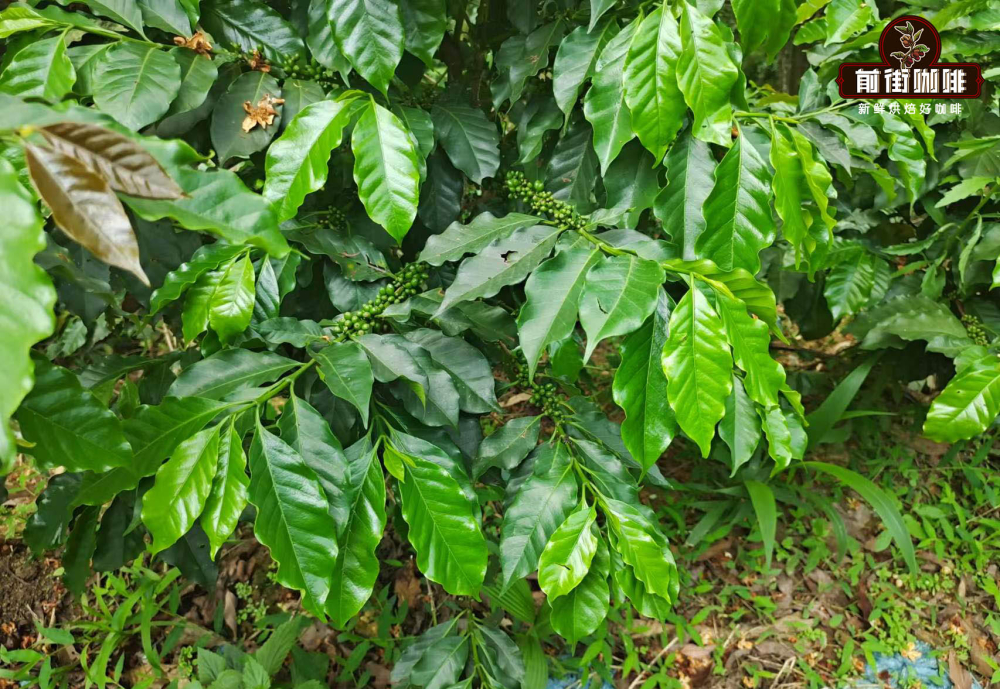
The Robusta species possesses excellent resistance to leaf rust and rich oil content, with high yields and easy cultivation. When it is hybridized with the Arabica species Typica, Catimor acquires approximately 25% Robusta genes, which not only enhances leaf rust resistance and preserves abundant oils but also inherits some of Typica's quality flavor. According to Front Street's understanding, most estates in Yunnan are currently planting Catimor on a large scale, while Typica's planting range is increasingly shrinking.
What Front Street plants in Lincang, Yunnan is precisely the Typica variety. Most Yunnan coffee circulating on the market is of the Catimor variety, but at Front Street Coffee, you can find two Yunnan coffee beans: one is washed Typica, and the other is Catimor. Yunnan Typica is classified as Yunnan specialty coffee, while Yunnan Catimor is labeled as Yunnan small-bean coffee according to market convention. Front Street's everyday-drink bean, Yunnan small-bean coffee, is precisely the Catimor variety and is also Front Street's top choice for representing Yunnan coffee.
Yunnan Coffee Growing Regions
Coffee flavor is closely related to the local climate and environment. Yunnan is an important coffee bean-producing region in China, located south of the Tropic of Cancer, belonging to a subtropical mountainous climate zone, with unique plateau red soil that is fertile and loose, and a mild climate, making it very suitable for growing small-bean coffee. According to information that Front Street Coffee has, Yunnan coffee cultivation is mainly distributed across Pu'er, Dehong, Baoshan, and Lincang.
【Baoshan】
Yunnan small-bean coffee is suitable for planting in mountainous areas at altitudes of 800 to 1,800 meters; too high an altitude tends to make it sour, while too low tends to make it bitter. Small-bean coffee is mostly planted in dry-hot river valley zones at altitudes of around 1,100 meters, so its acidity is moderate, its aroma is rich, and its mouthfeel is mellow. Many areas in Yunnan possess ideal conditions for growing small-bean coffee, and the small-bean coffee produced is of superior quality. Tasting experts from the International Coffee Organization once classified Yunnan coffee in the same category as Colombian wet-processed small-bean coffee, placing it among the highest-quality coffees in the world.
【Lincang】
With its unique geographical location and climate conditions, Lincang has become a focus of attention for many coffee enterprises. The area has successively established 200-mu and 100-mu high-quality coffee seedling bases in Mengding Town of Gengma Autonomous County and Lincang Happiness Farm, and has carried out cultivation in Gengma, Zhenkang, Yunxian, Cangyuan, Yongde, and other places. Front Street Coffee's estate is located in Lincang.
Yunnan Coffee Processing Methods
The flavor characteristics of coffee beans are inseparable from their processing method, and the most suitable method must also be chosen in conjunction with the local climate. Yunnan's weather is rainy and foggy, so washed processing has become the most common local choice. Yunnan coffee is mainly washed, and the characteristics of washed beans are cleanliness, stability, and bright acidity. Washed Yunnan coffee does not have the off-flavors commonly found in natural-process beans; instead, it displays distinct fruity acidity. After drying is completed, the coffee beans can be stored, waiting to be shipped to various places.
Almost all of Front Street Coffee's everyday-drink beans use washed processing, because the washed method has stable steps, high yield, and fewer defects, and can present the flavor characteristics of coffee beans to the greatest extent—this is also one of the processing methods that Front Street Coffee prefers. Later, in order to present richer flavors, processing methods also continued to innovate on the basis of traditional natural and washed methods.
Front Street Coffee Roasting Demonstration
Charge at a drum temperature of 190°C, set the gas to 120, and open the damper to 3; the turning point appears at 1 minute 40 seconds, and when the drum temperature reaches 145°C, adjust the damper to 4 while keeping the gas unchanged; when the drum temperature rises to 166°C, the bean surface turns yellow, the grassy smell completely dissipates, and the dehydration stage begins; when the drum temperature reaches 188°C, lower the gas to 60°C and adjust the damper to 5; at 8 minutes 37 seconds, wrinkles and dark spots appear on the bean surface, and the toasty bread aroma clearly transforms into coffee aroma—this can be regarded as the prelude to first crack, and one must listen carefully for the cracking sound of first crack; first crack begins at 9 minutes 00 seconds, the damper remains unchanged, and after first crack development continues for 3 minutes, dropping at 198°C.
Front Street Coffee Brewing Recommendations
Regarding brewing, Front Street recommends using freshly roasted coffee beans, as this allows you to experience the coffee's rich flavors to the greatest extent. The coffee beans shipped by Front Street Coffee are all within 5 days of roasting, because Front Street deeply understands that freshness has a huge impact on flavor. Front Street's roasting motto is "Freshly roasted good coffee," ensuring that every customer receives the freshest state when they get their coffee. The resting period for coffee is about 4 to 7 days, so when customers receive it, it happens to be at its flavor peak.
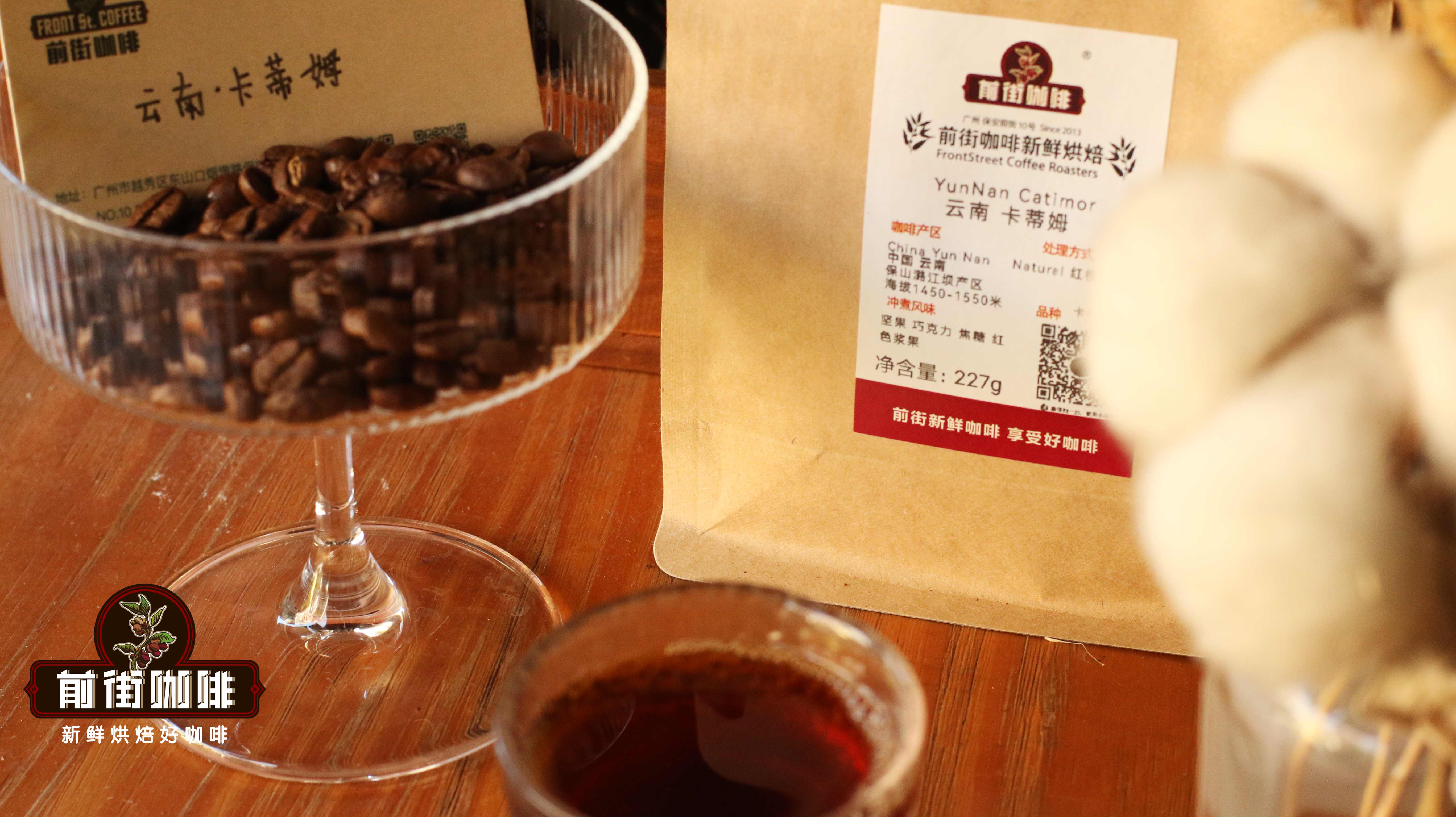
Of course, some customers need Front Street to grind the coffee on their behalf, which is also feasible, but Front Street needs to remind them: once coffee beans are ground into powder in advance, there is no need to rest them, because the pressure formed by carbon dioxide inside the packaging during transportation can also make the flavor rounder, so the coffee powder can be brewed immediately upon receipt. However, coffee powder should be used up as soon as possible, because after contact with air it oxidizes quickly, and the flavor dissipates faster, making the taste less good than before. Therefore, Front Street recommends buying whole beans and grinding fresh for each brew, so you can better taste the coffee's flavor.
Front Street Brewing Parameters for Yunnan Coffee:
In order to preserve Yunnan coffee's sweet-and-sour sensation and tea-like characteristics, Front Street Coffee uses a medium roast. For brewing, you can use a V60 dripper, with a coffee-to-water ratio of 1:15, medium grind (about the size of coarse granulated sugar / 75% passing rate on the China No. 20 standard sieve), and a water temperature of 88 degrees.
Front Street Washed Yunnan Small-Bean Coffee Flavor: nuts, chocolate, spices, caramel, plum acidity.
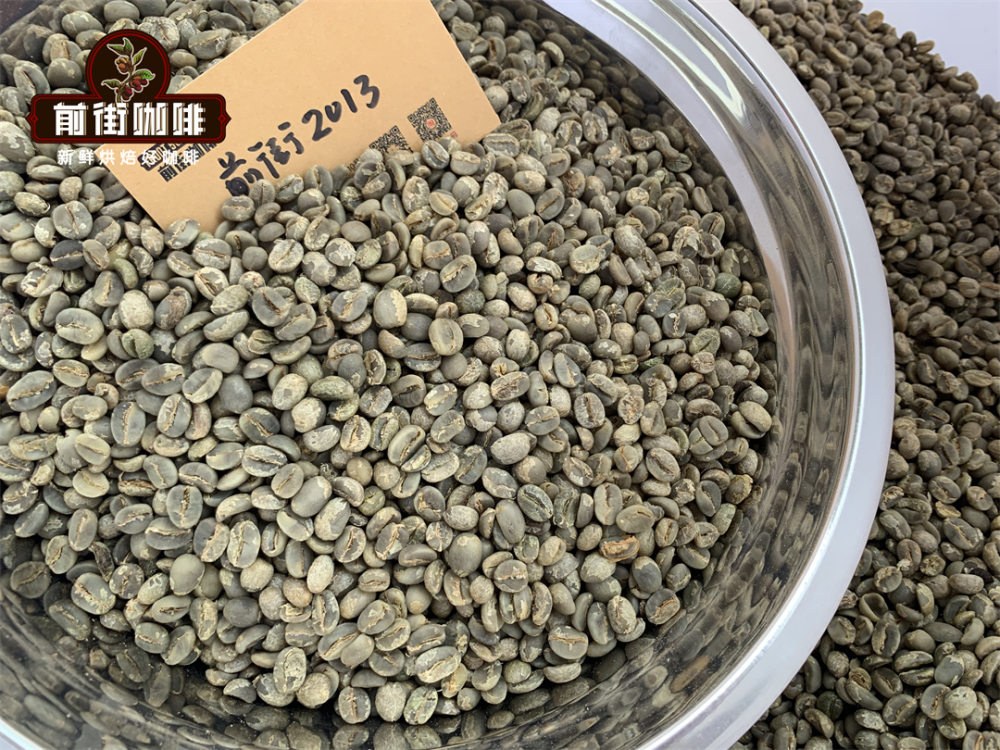
Front Street 2013 Natural Typica Coffee Flavor: plum, berries, brown sugar, black tea, nuts.
Of course, the coffee flavor of each growing region is different. Front Street has more than fifty single-origin coffees from different growing regions, so no matter what flavor you prefer, you can find a choice at Front Street that satisfies your taste needs.
For professional coffee knowledge exchange and more coffee bean information, please follow Coffee Workshop (WeChat public account: cafe_style)
For more specialty coffee beans, please add the private WeChat of Front Street Coffee, WeChat ID: qjcoffeex
The above content is compiled by CoffeeHunters, a coffee news website.


