







Why Does Coffee Grind Level Need Adjusting Every Day?
Coffee grind level is adjusted daily in cafés because bean condition, air pressure, temperature, and humidity keep changing, and espresso is extracted under high pressure, which amplifies those variables. Regular calibration keeps the grounds in an ideal state. Grinders may need resetting roughly every five hours when extraction results are held to strict standards.
Burr distance sets particle size. A smaller gap yields finer particles that pack densely, raising resistance and lengthening extraction time; a wider gap yields coarser particles, so water passes faster and extraction speeds up. Think of water flowing through stones versus fine sand. Coffee powder preparation also involves judging powder quality and the link between output and grind degree.
Why does a café need to adjust the grinder every day? How does grind size affect extraction? Starting from the principles of grinding, this article systematically explains how to adjust the settings on an espresso electric grinder, including judging powder quality, specific operating steps, the interconnected relationship between output and grind degree on electronic grinders, and practice suggestions for water-to-coffee ratios. Whether you are a novice barista or a seasoned enthusiast, you can find practical adjustment ideas here to make every espresso consistently excellent.
Why do cafés need to adjust the grinder every day?
In a café, dialing in the grind is a daily required course, and some stores even recalibrate every few hours. If there are strict requirements for extraction results, in theory it should be adjusted every 5 hours, because the condition of coffee beans constantly changes, and factors such as air pressure, temperature, and humidity also affect extraction. Espresso is extracted under high pressure, so the impact of these variables is further amplified. Knowing how to adjust is a basic skill of an excellent barista.
The significance of adjusting the grinder
The moisture and storage time of coffee beans continuously change, and the wear level of the grinder burrs also changes over time. Therefore, baristas need to calibrate the grinder regularly to ensure that the ground coffee powder always remains in an ideal state.
After coffee beans enter the grinder, the burrs crush them into powder. The smaller the distance between the two burrs, the finer the particles the coffee beans are ground into. The finer the particles, the tighter and denser they pack, the greater the resistance when water passes through, and the extraction time also noticeably lengthens. Conversely, if the burr distance is increased, the particles become coarser, water penetrates more easily, and the extraction speed accelerates. To use a simple analogy, it is like stones and fine sand: water passes through stones much faster than through fine sand, because there are larger gaps between the stones for water to flow through quickly. It can thus be seen that the correct grind setting is crucial, and particle size directly determines extraction quality.
How to judge powder quality
Observe the coffee powder: high-quality powder should appear powdery with a gritty, sand-like texture. If the powder feels soft, like flour, it indicates the grind is too fine. Conversely, if the powder feels tough and rough, it indicates the grind is too coarse.
Grinder adjustment tutorial
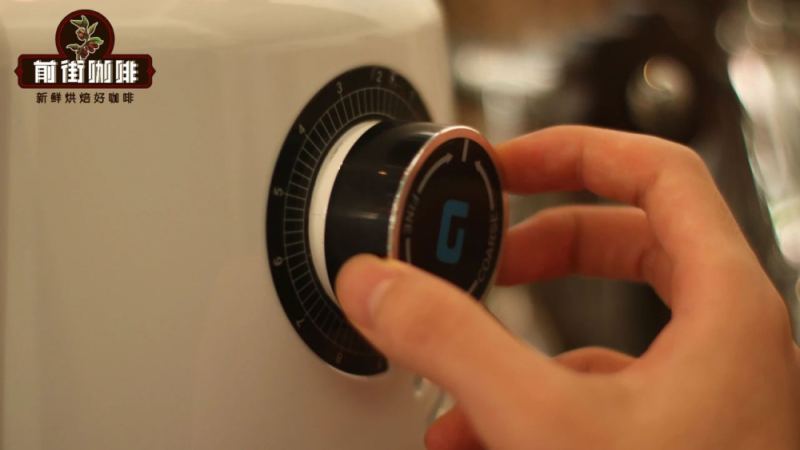
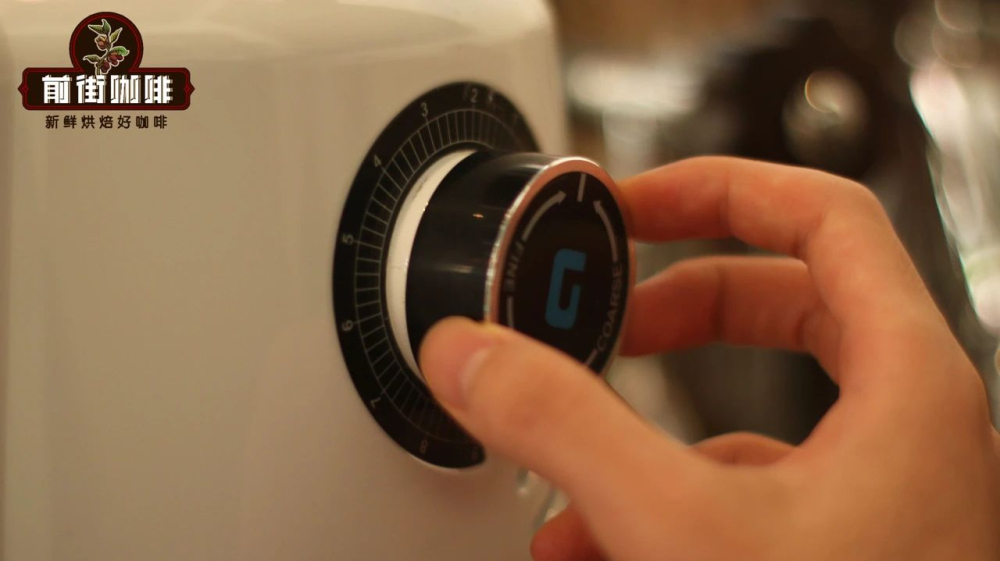
Different models of grinders are equipped with different adjustment dials, so you should first confirm the grinder model and carefully read the manual to understand the adjustment direction and force of the dial. Generally speaking, if you have always been in the habit of checking the grinder settings, then each time you only need to make very slight adjustments.
Moving the dial setting by less than 3 millimeters can change the coarseness of the powder. Although 3 millimeters may seem insignificant, the grinding time for the same coffee beans will change by 3 to 5 seconds because of it.
Specific operating steps
First determine the direction you need to adjust (finer or coarser). Make sure there are enough coffee beans in the hopper, and that the valve between the hopper and the grinding burrs is open, so that coffee beans can smoothly fall into the grinding area.
Start the grinder and run it for 10 seconds, then discard the ground coffee powder (the grind setting of this powder has not yet been adjusted in place).
Use the resulting coffee powder to make a cup of coffee, ensuring that the dose, leveling, and tamping steps are accurate.
The traditional Italian Ristretto preparation method uses a water-to-coffee ratio of 1:1 (that is, 18 grams of coffee powder to make 18 grams of coffee) or 1:2 (that is, 18 grams of coffee powder to make 36 grams of coffee), while ordinary Italian espresso uses a water-to-coffee ratio of 1:2 (that is, "Normale").
Test the quality of the coffee as well as the extraction time. Keep adjusting the dial until the powder reaches the ideal degree of coarseness.
Adjusting an electronic grinder
Adjusting an electronic grinder mainly revolves around two variables: output and grind degree. These two variables are interrelated; change one, and the other changes accordingly.
An ordinary electronic grinder adjusts grinding and output time according to a preset output amount (please note that the grinder adjusts output based on time rather than weight). If you are not satisfied with the coffee quality, the first thing to do is determine whether the problem lies in the output amount or the grind degree.
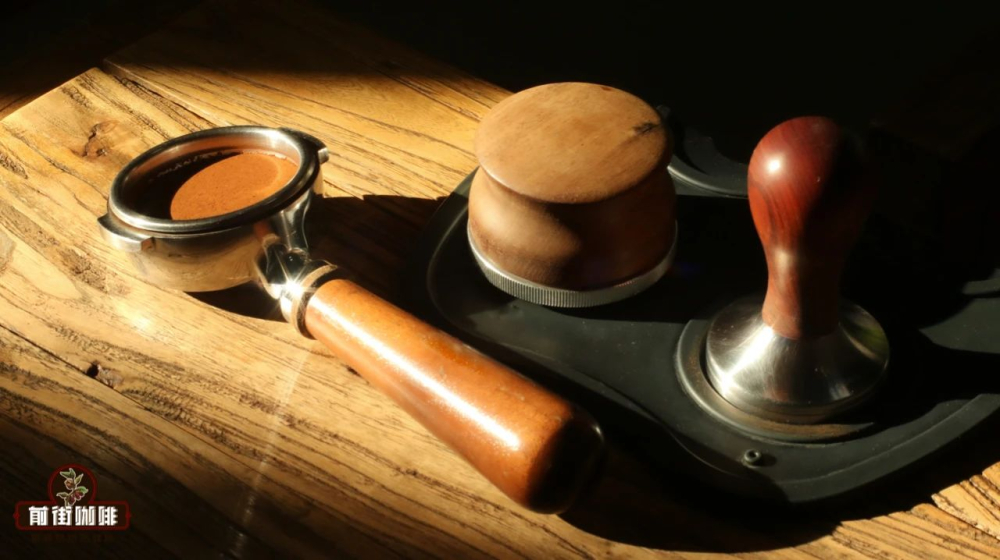
Normally, after correct dosing, leveling, and tamping, the distance between the puck and the water outlet should remain between 5 and 6 millimeters. If the puck height is not within this range, you should try adjusting the grinder's output amount (that is, the grinding and output time).
When adjusting the output amount, each adjustment should be controlled within 0.2 to 0.3 seconds, and after each adjustment the coffee quality needs to be retested.
The hardest part of adjusting an electronic grinder is that when you change the grind parameters, the distance between the burrs changes accordingly, and this change directly affects the grinder's output amount, that is, the grinding and output time. If you want to make the grind finer, the burr distance will shrink, and the number of coffee beans passing through the burrs in the same amount of time will decrease. Conversely, if the burr distance increases, more coffee beans will pass through in the same amount of time.
Therefore, when adjusting an electronic grinder, we should first clarify the relationship between output amount and grind degree. Since these two variables change when one of them is changed, we need to continuously adjust and test to achieve the best result.
Every tiny change to the grinder will have a huge impact on the overall quality of the coffee. So, as a barista, you should re-measure and adjust the grinder every day to ensure perfect coffee quality.
If you want to master the water-to-coffee ratio, you can use a constant amount of coffee powder in practice (take 18 grams as an example), try pairing it with different total coffee weights, and then compare the differences among various ratios in taste, clarity, and body. The final water-to-coffee ratio needs to be decided according to personal preference.
Only through continuous practice and exploration can you make an Italian espresso that truly suits you.
The above content is compiled by CoffeeHunters, a coffee news website.


