








What Are the Characteristics of Colombian Coffee?
Colombian coffee grows on the three parallel ranges of the Andes at altitudes between 800 and 2,300 meters, where temperatures drop about 0.6°C for every 100 meters of elevation. That slow ripening makes denser beans with more stored sugars. The country's diverse mountain climates let harvests occur almost year-round, and the coffee is entirely Arabica, managed under the FNC system and graded before export.
Growers commonly plant coffee trees under shade trees such as tall canopy species or banana trees, and build arbors at the seedling stage to hold humidity. Variety, altitude, field management, picking method and post-processing all shape the final cup, which is why Colombian coffee differs in character from Brazilian coffee. The Caturra variety in Huila is a common regional reference for flavor and brewing.
Colombia, with the high altitude of the Andes and its diverse climate, nurtures outstanding Arabica coffee. This article systematically reviews the core characteristics of Colombian coffee, from growing environment, variety composition, and the FNC management system to green bean grading standards, and explains in detail the flavor performance and brewing parameters of the Caturra variety in the Huila region, providing coffee enthusiasts with comprehensive regional knowledge and tasting reference.
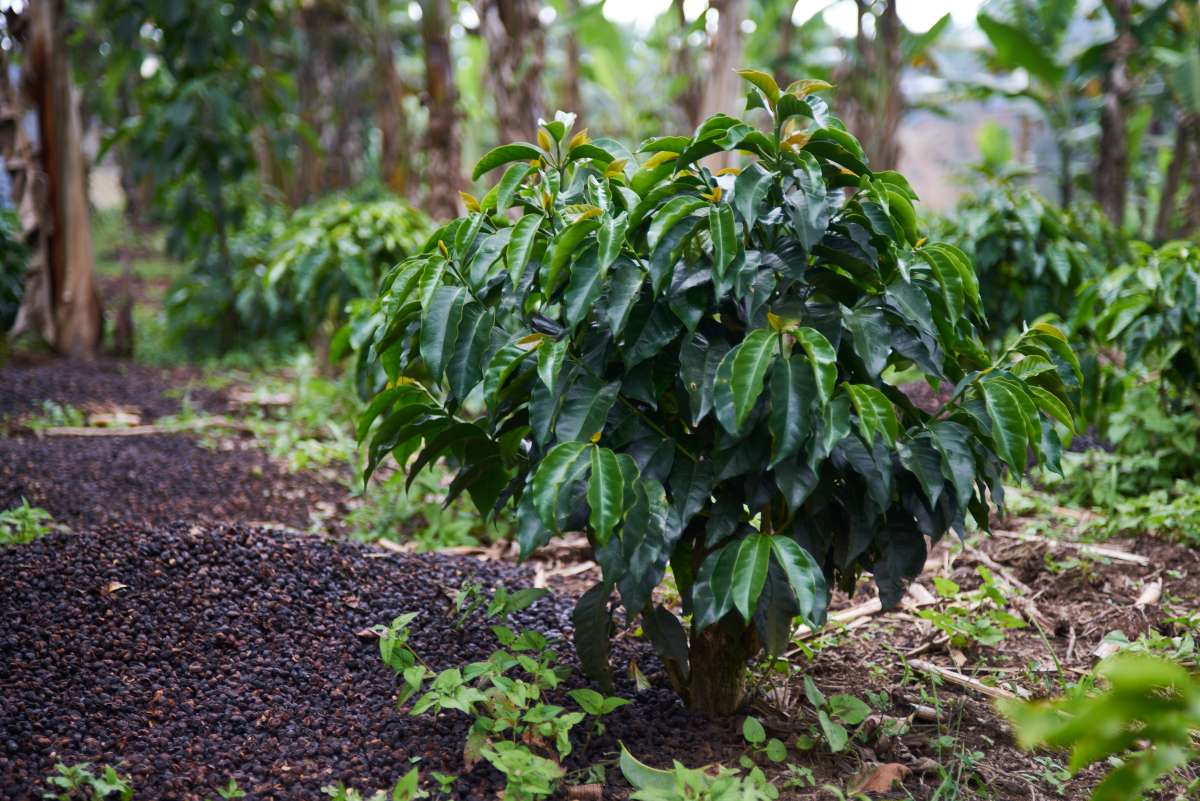
Colombian coffee is completely different in character from Brazilian coffee. The country has extremely high altitudes and a unique combination of climates, creating natural growing conditions for coffee trees that are difficult to replicate. Every harvest season, the forests of the Andes are filled with ripe coffee cherries, forming a magnificent mountain landscape.
The quality of coffee beans is not determined by a single factor; variety, climate, altitude, field management, picking methods, and post-processing all have an impact. As a tropical cash crop, the coffee tree prefers high-altitude areas without frost. For every 100 meters of elevation gain, the temperature drops by about 0.6°C. Low temperatures and lower oxygen content make coffee cherries develop more slowly. During this period, the plant transports more nutrients to the cherries, making the beans denser and harder in texture, while also having more ample time to accumulate and store nutrients in the form of sugars. The Andes within Colombia happen to meet these seemingly harsh conditions.
The Andes are located in western Colombia and consist of three parallel mountain ranges. These mountains are covered with fertile soil rich in organic matter. Coffee trees are distributed at altitudes ranging from 800 to 2,300 meters, receiving sunlight while also benefiting from moderate shade provided by clouds. The climate types among the mountain ranges are diverse, allowing harvest activities to occur almost year-round. Different varieties of coffee mature at different times, so scenes of busy picking in the forests can be seen in every season. Local growers are accustomed to cultivating coffee trees under shade trees, commonly tall trees or banana trees. At the seedling stage, arbors are built to ensure the cool and humid environment needed for coffee growth. In the coffee forest, humidity is higher and temperature differences are smaller, slowing the ripening speed of the cherries, which is conducive to the accumulation of caffeine and aromatic substances, thus creating excellent coffee quality.
In the early days, Colombian coffee was exported under the name of its producing region. Even if specialty-grade beans existed, they circulated only as local micro-lots. Smallholder farming scale is generally limited, and very few farmers have independent processing equipment. After entering the twentieth century, the local coffee industry experienced rapid development, thanks to the establishment of Federación Nacional de Colombia (FNC, the Colombian Coffee Growers Federation).
The FNC is Colombia's only official professional coffee association, representing more than 560,000 coffee farming families, and has now developed into one of the largest agricultural non-governmental organizations in the world. The organization promotes the brand image of Colombian coffee globally and supervises the quality of every exported coffee bean. In addition to publicity and promotion in international markets, the FNC also invests substantial resources domestically in Colombia to support farmers' cultivation, production, management, and continued operations.
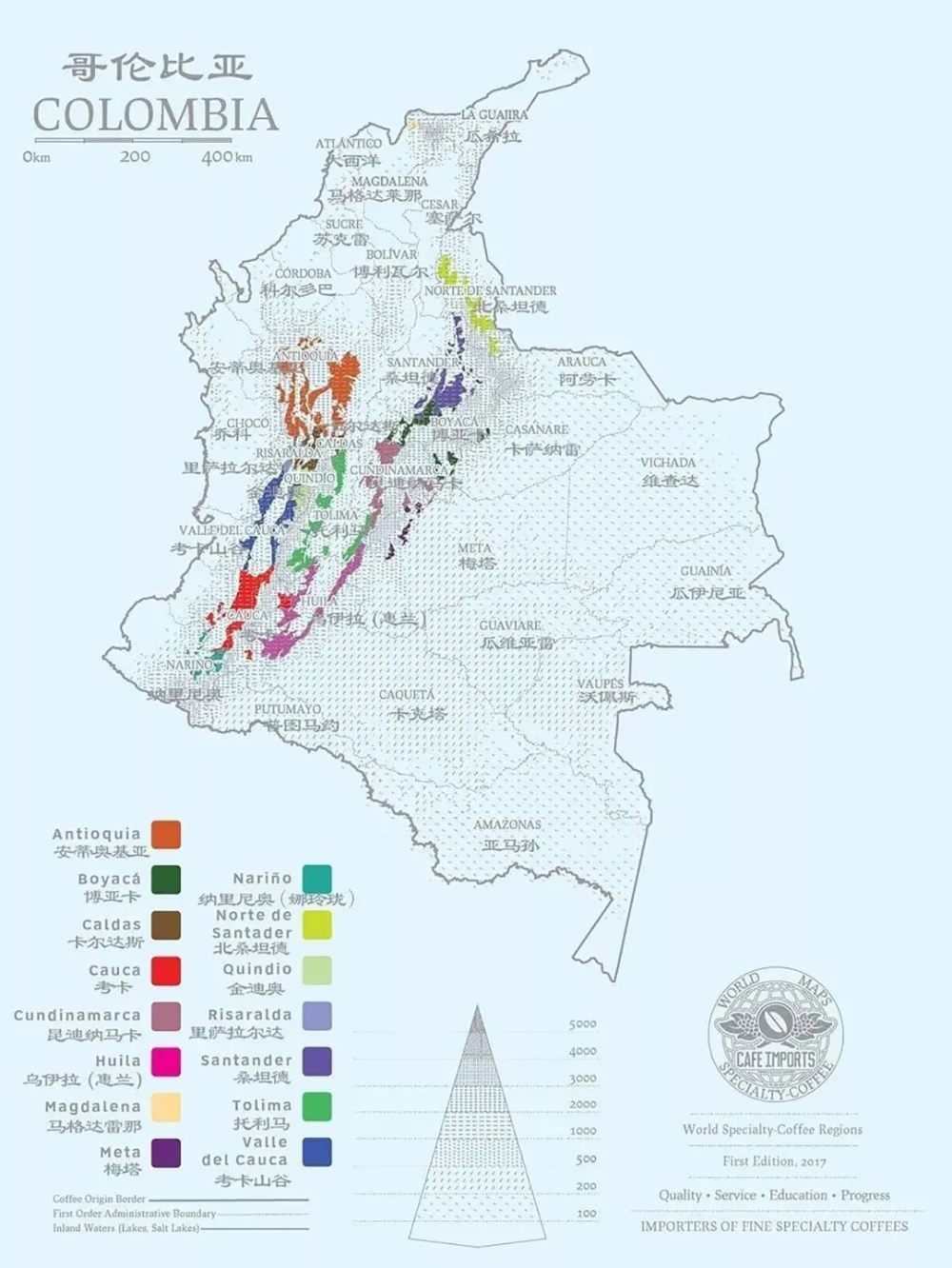
Under the management and protection of the FNC, 590 municipalities and 14 coffee-growing regions in Colombia carry out coffee cultivation, with a total area of about 875,000 hectares, most of which comes from small farms. Smallholder plots are usually around 2 to 3 mu. After harvest, the coffee is sent to community coffee processing stations for washed processing, or green bean processing is completed using processing equipment built by the farmers themselves, and finally sent for inspection and grading.
Before export, Colombian green beans are graded by screen size, usually using fixed-size screens, with different specifications corresponding to different hole diameters. For example, when the screen aperture is 17 mesh, beans larger than that size cannot pass through, so the larger the screen number, the larger the beans retained on the screen. The most common export grades include UGQ, EP, and Supremo.
Regardless of which grade the green bean screen size belongs to, as long as it is for export it belongs to the Excelso grade. In other words, most jute bags of Colombian green coffee exported around the world today must be marked with the word Excelso. Excelso is currently the most widely used export standard grade adopted by the FNC, and is also the best grade for Colombian green bean exports. Excelso-grade coffee must meet the following conditions: in 500 grams of green beans, the size must be above 14 mesh; no more than 5% of green beans may be between 12 mesh and 14 mesh; overall, at least 50% of the green beans must be larger than 15 mesh; free of insect damage, uniform in color, free of off-flavors, and clean in flavor; moisture content not exceeding 12.5%, and cumulative defects not exceeding 24 points.
Each farmer must report a number and enter green bean information so that green bean traceability can be carried out later. The naming of Colombian exported green coffee usually adopts the format of country + region + grade + other, for example, the green bean name of Front Street Huila daily beans is Colombia Huila Supremo SC17/18 FNC.
Colombia grows a rich variety of coffee, mainly traditional Arabica varieties, including Caturra, Bourbon, Typica, Pacamara, etc. There are also some popular rare varieties, such as Gesha, which have been appearing on the market in small batches in recent years. The Colombian daily beans selected by Front Street come from the Huila region. The variety is Caturra, which is widely planted locally, and it undergoes natural washing. After roasting, it presents a balanced taste of acidity, sweetness, and bitterness.
Brewing parameters: KONO dripper, 90°C water temperature, No. 20 standard sieve with 75% passing grind size, 1:15 coffee-to-water ratio, 15 grams of coffee, three-stage extraction.
Pour the ground coffee into the V60 dripper, wet the coffee bed with twice the amount of water as the coffee grounds to form a dome and bloom for 30 seconds, then pour in a thin stream in a circular motion from the inside out until 125 grams and pause. When the coffee bed drops to half the height of the dripper, continue pouring the third stage with the same thin stream until 225 grams, until all the coffee liquid has filtered through, then remove the dripper. The time is about 2 minutes.
This Colombian Huila daily bean has obvious roasted aromas of chocolate, nuts, and caramel on the palate, smooth and sweet, with moderate body and a clean mouthfeel. As the temperature drops, a pleasant soft acidity can be felt.
For professional coffee knowledge exchange and more coffee bean information, please follow Coffee Studio (WeChat public account: cafe_style).
For more specialty coffee beans, please add the private WeChat of Front Street Coffee (FrontStreet Coffee), WeChat ID: qjcoffeex.
The above content is compiled by CoffeeHunters, a coffee news website.


