







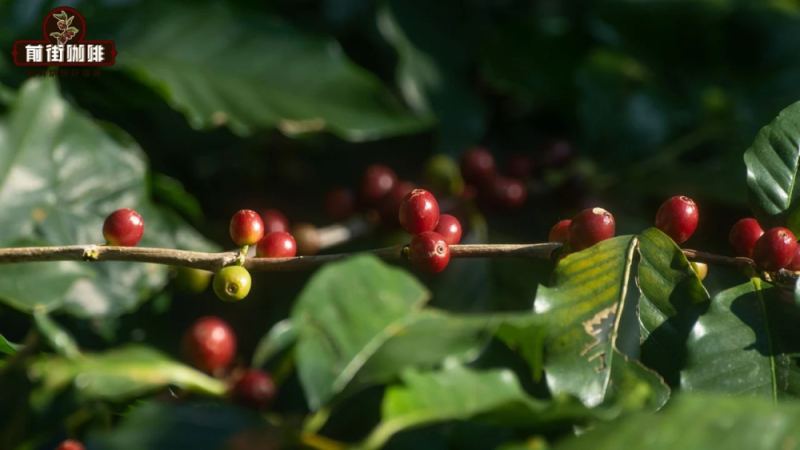
Yunnan coffee enters its December harvest peak, while high-altitude areas are slightly later. Front Street Coffee grows Typica in a semi-primitive forest estate at about 1,300 meters in Lincang, taking eight years from seedling to mass production. This article reviews the origin and growing altitude of Catimor, the main variety of Yunnan small-bean coffee, compares Front Street's sun-dried Typica processing and roasting approach, and provides V60 pour-over parameters and flavor descriptions to help coffee lovers understand the current state and cup performance of Yunnan specialty coffee.
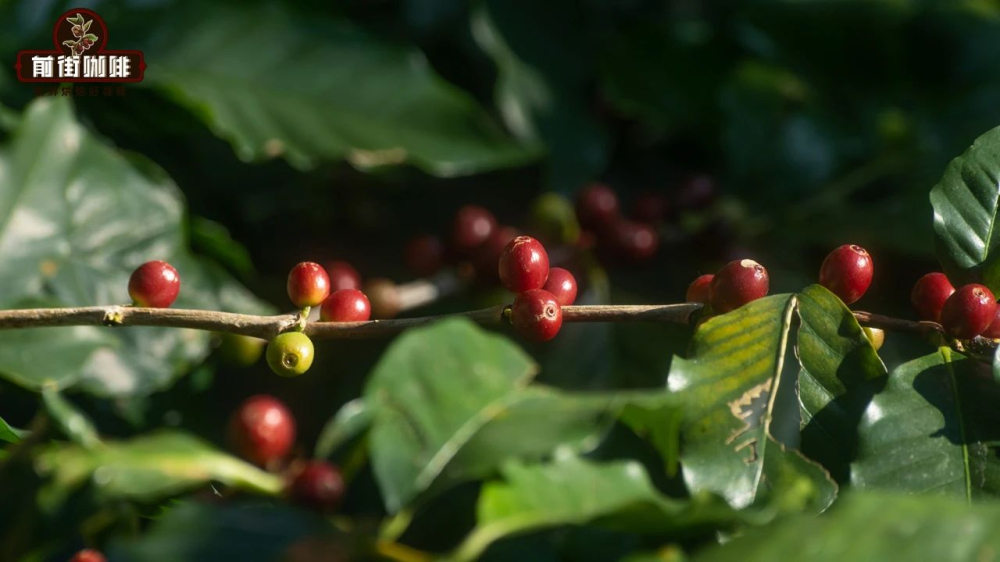
Every year in mid-December, Yunnan welcomes its peak harvest season, and higher-altitude areas also begin picking one after another, as is the case with Front Street's estate in Yunnan. Last year, Front Street released a batch of sun-dried Typica grown and processed by itself in Yunnan, named "Front Street 2013," with a total volume of just over 200 kilograms, which received unanimous praise from customers. This November, many customers asked whether the self-produced Yunnan beans had arrived, and the baristas at Front Street Coffee could only reply with a smile: "They're still hanging on the trees!"
Right now Yunnan has entered the harvest period. Fruit ripens faster in low-altitude areas, while high-altitude areas are relatively slower. Front Street's estate is located in a semi-primitive forest near Myanmar in Lincang, at an altitude of about 1,300 meters, so picking does not begin until mid-December.
Looking back at Front Street's arduous journey of growing coffee in Yunnan
If one merely wanted to have a ready-made estate in Yunnan, it would not actually be difficult. Local coffee farmers have long been unwilling to grow coffee because the picking labor cost for one kilogram of fresh fruit is even higher than its selling price; unless there is surplus labor at home, they cannot be bothered to pick even when the fruit is ripe. So some people buy a small plot from coffee farmers before the harvest, do some sun-drying, try some honey processing, and Yunnan specialty coffee can be brought to market in two or three months. Front Street Coffee is not sure whether this controversial approach is appropriate, just as the former director of a Yunnan coffee factory commented: the current state of more than one million mu of Catimor in Yunnan's production areas is the core problem urgently in need of transformation and upgrading. Debate is a good thing, but it cannot negate all current efforts. Front Street Coffee instead chose the most difficult path: selecting highlands, cultivating Arabica varieties, planting rationally, and growing coffee seedlings from scratch.
This year is Front Street Coffee's twelfth year. What many people do not know is that Front Street actually started growing coffee half a year earlier than roasting. Front Street Coffee's predecessor was called "Dazhen Coffee," named in the hope of growing coffee in a place in Guangdong called Dazhen. Back then, after Catimor seedlings were grown to 20 centimeters, it took more than half a year to figure out the relationship and proper sequence among variety, altitude, and processing method.
First choose the right variety, plant it at a suitable altitude, and after maturity experiment with processing methods that can express its unique flavor. This is the only logic by which Front Street believes specialty coffee can present a distinct regional flavor.
So we gave up the plan to grow coffee in Guangdong. Because the place where we first roasted coffee was opened on Bao'an Front Street, "Dazhen Coffee" was renamed "Front Street Coffee." At Front Street, while roasting, we continued exploring with the idea of growing specialty coffee, successively visiting the Tropical Crops Genetic Resources Institute, which has conducted in-depth research on coffee cultivation, and the few coffee farmers growing specialty coffee; we clarified the reasons why Yunnan does not grow mainstream specialty varieties such as Typica and Bourbon, and by chance also found land suitable for cultivation.
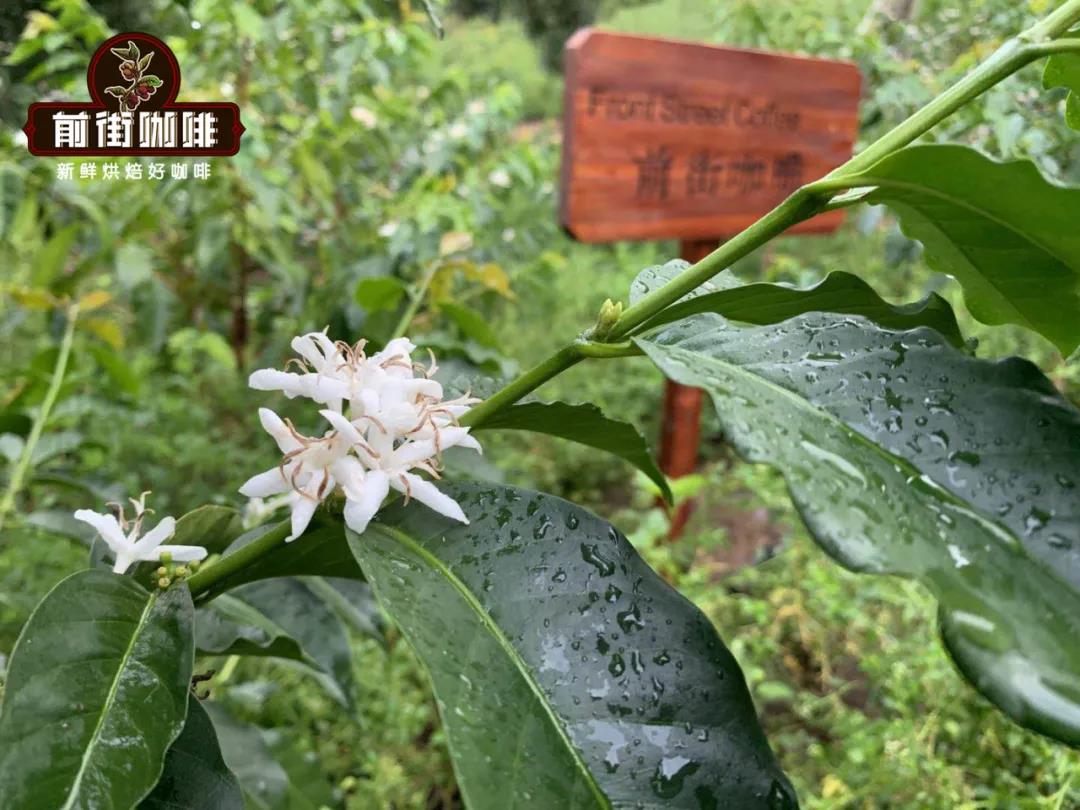
Arabica has altitude requirements and needs to be above 1,000 meters; if better flavor is desired, the altitude must be even higher. Most mountains in Yunnan only barely meet the standard, which is a shortcoming of Yunnan coffee. To compensate for the altitude disadvantage, on the premise of excellent varieties, even better agronomic management must be invested.
Front Street did not buy a ready-made estate, but instead bought a mountain plot suitable for growing coffee. Front Street knows well that no matter how good the land is, if the variety is wrong, the flavor will not be good either (at that time Yunnan was generally planted with Catimor). Therefore it chose to grow coffee from scratch. Front Street grows Typica, an Arabica variety with excellent flavor. Typica has extremely low yield, only one-third that of Catimor, so its price is naturally higher. At the same time, Typica and Bourbon are highly susceptible to coffee leaf rust, which is also one reason farmers are unwilling to grow Arabica.
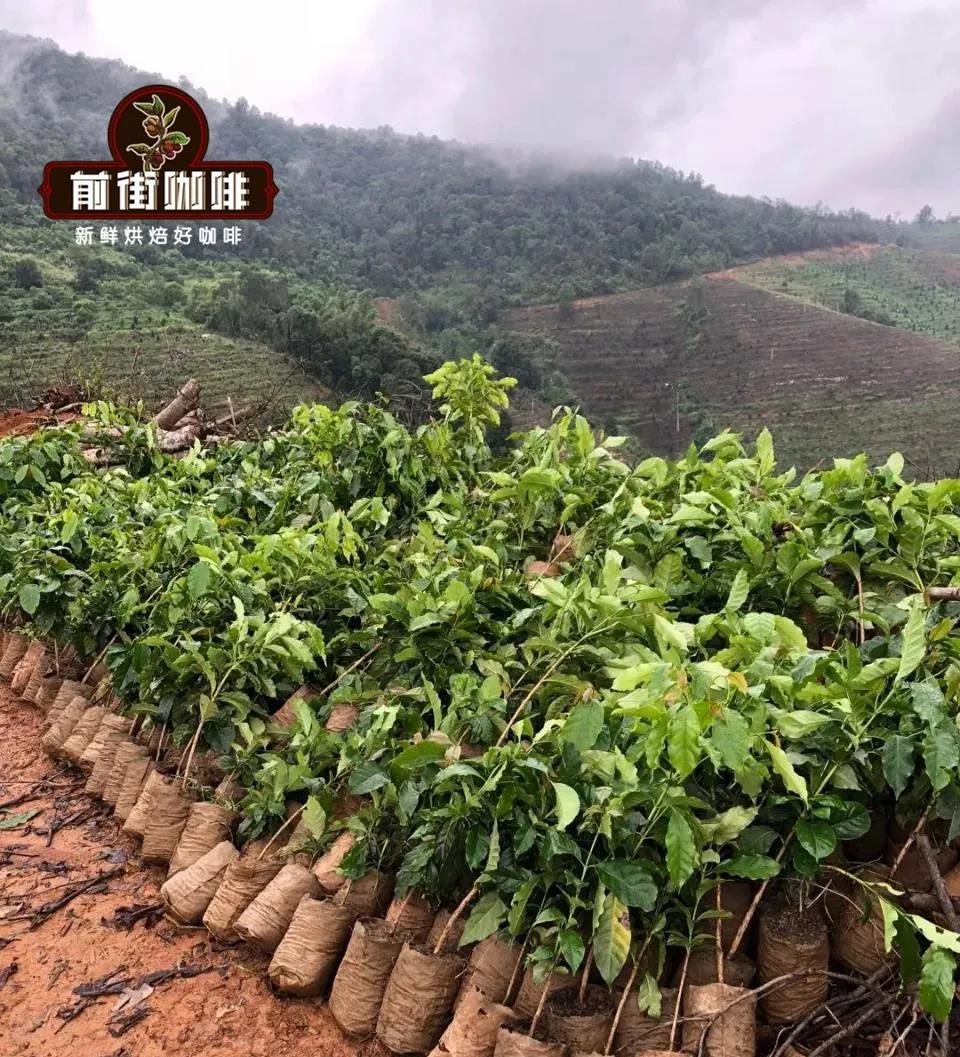
Yunnan has no four seasons, only a dry season and a rainy season; most coffee production areas are similar, which is also the fundamental reason some production areas adopt the sun-dried method. Entering June, the rainy season begins in the production areas, followed by three or four months of continuous rain, which is the most favorable period for growing coffee. Only by planting seedlings at this time, nourished by several months of rain, can they develop a well-developed root system and survive the first dry season, which lasts as long as half a year.
The time cost of growing coffee from scratch is also very high. Coffee takes three to four years from seedling to first fruiting, and then testing suitable processing methods and finally reproducing them means that at the fastest it takes five years to obtain the first batch of coffee. No one can guarantee producing excellent specialty coffee right away, and Front Street firmly believes there is no such easy thing in the world. After multiple rounds of variety selection and breeding, and experiments in refined processing after fruiting, several more years passed. It was not until the eighth year that the coffee Front Street grew in Yunnan welcomed its first batch of mass production.
The variety of Yunnan small-bean coffee — Catimor
Although Front Street's estate in Yunnan grows Typica, most of Yunnan's output is still dominated by Catimor, commonly known as Yunnan small-bean coffee. In 1959, the Portuguese brought the Brazilian Bourbon mutant Caturra to East Timor and crossed it with Timor, which carries Robusta lineage, successfully cultivating Catimor with superstrong disease resistance and productivity. Because leaf rust affected coffee-producing countries worldwide, with the assistance of international organizations, producing countries vigorously promoted Catimor to resist leaf rust and increase productivity.
The growing altitude of Yunnan small-bean coffee
Yunnan small-bean coffee growing areas are mainly distributed in Lincang, Baoshan, Simao, Xishuangbanna, Dehong and other prefectures. Baoshan is above 1,200 meters in altitude, with an average temperature of 21.5°C and a maximum of 40.4°C, basically frost-free all year round, and is recognized as the best producing area for Yunnan small-bean coffee. The small-bean coffee cultivated here is rich but not bitter, fragrant but not harsh, with small and uniform beans, a rich and mellow aroma, and a fruity note.
For Arabica, 1,200 meters is the quality watershed. North of Baoshan in Yunnan lies the Gaoligong Mountains, which block the Siberian cold current sweeping straight down in winter. June to August is the rainy season, often sunny for a few minutes and rainy for half an hour, shrouded in clouds and mist, with many mountains, forming a microclimate that protects coffee growth.
Front Street sun-dried processing
In the past, Colombian coffee farmers were paid by daily weight for picking, and to earn more they could only increase efficiency. They did not pick selectively but stripped the fruit off in handfuls; because coffee cherries grow in clusters, they stripped them all regardless of ripeness, and only afterward removed unripe and overripe fruit, which greatly affected quality.
Because Front Street's scale is not large, daily maintenance workers are responsible for harvesting, picking only fully red cherries one by one. Then 2-3 layers are spread on drying nets, and the fully red cherries are spread flat to dry until they become purplish red. The mesh holes of the drying bed help with ventilation and avoid negative over-fermentation notes, making this Front Street sun-dried Typica fuller in body, with citrus and berry tones, and a hint of fermented wine aroma and caramel sweetness.
Front Street Coffee roasting
For roasting, Front Street refers to the characteristics of the corresponding production area and decides to use a medium roast to highlight the sweetness of this coffee bean.
Flavor comparison
Parameters:
Dripper: Hario V60; dose 15 grams; water temperature 90°C; grind size: medium-fine (80% passing a Chinese standard No. 20 sieve); coffee-to-water ratio: 1:15; staged extraction.
The ribs of the V60 dripper are distributed in curved shapes from top to bottom and vary in length. During brewing, air escapes smoothly and the flow rate is relatively fast, so the extracted coffee has more obvious flavor layers.

First bloom with 30 grams of water for 30 seconds, then pour in a small stream at the center to 125 grams as the first stage; when the water level drops and is about to expose the coffee bed, continue pouring to 225 grams and stop; when the water level drops and is about to expose the coffee bed, remove the dripper. (Start timing from the beginning of blooming.) The extraction time is 2 minutes.
The flavor performance of Front Street's self-produced Yunnan Front Street 2013 coffee beans: the dry aroma has faint caramel and nut aromas; on the palate, chocolate is the main note, with brown sugar sweetness and slight fruity acidity, and the finish has some black tea character. The overall flavor layers are relatively rich.
The above content is compiled by CoffeeHunters, a coffee news website.


