







Geisha coffee holds a unique and lofty position in the specialty coffee world, with its price consistently sitting at the top of menus year-round. From the perspective of Front Street, this article systematically sorts through Geisha's varietal origins and rise to fame, analyzing the deep reasons behind its high price, including its strict requirements for growing conditions such as altitude, soil, and shade, as well as varietal characteristics like thin leaves, weak roots, and low yield. It also introduces the Best of Panama (BOP) competition and Hacienda La Esmeralda's grading system, details the flavor differences between washed and natural processing methods, and offers red label, green label, and affordable alternative options from the Front Street bean list. Finally, it includes brewing parameters and flavor descriptions for the washed green label, helping enthusiasts fully understand Geisha's value and charm.
For more specialty coffee knowledge, please follow the WeChat public account: Front Street Coffee (FrontStreet Coffee)
Open a coffee shop's menu, and Geisha is usually placed in the mid-to-high price range, sometimes even marked at the highest price. What exactly is the magic of this coffee that has captivated countless people? Today Front Street will talk about why Geisha sells for so much.
Geisha Coffee Beans' Rise to Fame
In 1931, Geisha was discovered in the Geisha forest of Ethiopia, then introduced to Kenya, and later passed through Tanzania and Costa Rica, until it was transplanted to Panama in the 1960s. After lying dormant for nearly fifty years, starting in 2004 it continuously defeated traditional winning varieties such as Bourbon, Caturra, Catuai, and Typica at the BOP (Best of Panama) cupping competition, taking the championship in 2005, 2006, and 2007 in one fell swoop, and from then on rose to fame in the specialty coffee market.
When Hacienda La Esmeralda's Geisha won the championship in 2004, the auction price of a pound of high-quality specialty Geisha had already reached $15; by 2013 it climbed to $350; by 2017 it reached $601. By 2025, the Hacienda La Esmeralda Geisha lot that won the washed category of the Best of Panama competition had an auction price that directly surpassed $30,000 per kilogram.
Faced with such prices, many people wonder: as top-quality Geisha becomes more and more expensive, is it commercial hype, or is it truly worth the money? Below we will analyze Geisha's uniqueness from several angles.
Growing Conditions for High-Quality Geisha Coffee
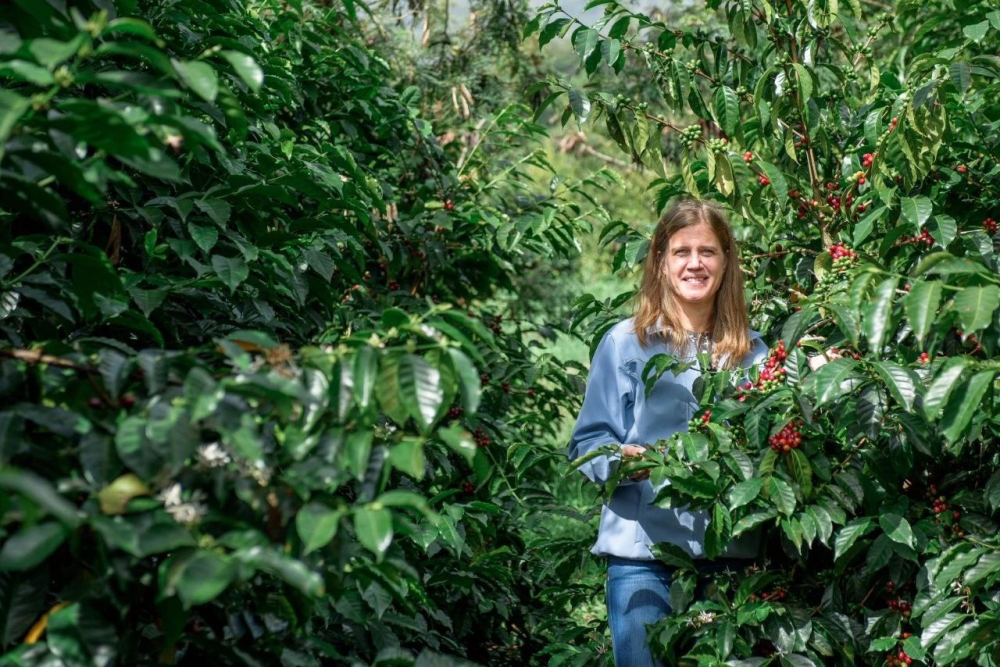
Geisha is extremely picky about its growing environment, requiring high altitude, fertile soil, and also cloud cover or plant shade, and cannot be directly exposed to the sun. The owner of Hacienda La Esmeralda once said that a large number of shade trees must be planted in the estate to shield the delicate Geisha from sunlight, and traditional pruning must also be used in the early planting stage, otherwise the plants are prone to dying. The higher the planting altitude, the longer the coffee fruit takes to mature, and the more complex and unique the flavor expression.
Unlike other coffee varieties, Geisha's leaf system is very thin, its photosynthetic efficiency is very low, and its roots are also very fragile, absorbing water and nutrients slowly, so its yield is extremely small. Combined with the high-altitude growing environment, the fruit also matures relatively late. A single Geisha coffee tree produces only half the fruit of a Caturra variety, which is also one of the reasons for Geisha's high price.
Best of Panama (BOP)
This is the earliest-established green coffee competition in the world, and can also be called a coffee bean "auction"—the Best of Panama. Estate owners submit high-quality coffee lots produced locally, the highest-quality and highest-scoring ones are selected, and then global buyers bid according to the evaluation scores, with the highest bidder winning. In recent years, the bidding price for BOP champion beans has reached as high as over a thousand dollars, becoming a focal event in the coffee industry.
Unlike major producing countries such as Brazil and Vietnam, Panama takes the route of low-volume, high-end specialty coffee. In the 1990s, facing a low period in Panama's coffee industry and a global green bean price crisis, coffee people found it difficult to stay in business, so the Specialty Coffee Association of Panama (SCAP) organized local farm owners to unite and held the first Best of Panama green coffee competition in 1996, selling specialty coffee beans through bidding. This greatly transformed Panama's coffee industry and also influenced the direction of the world specialty coffee market.
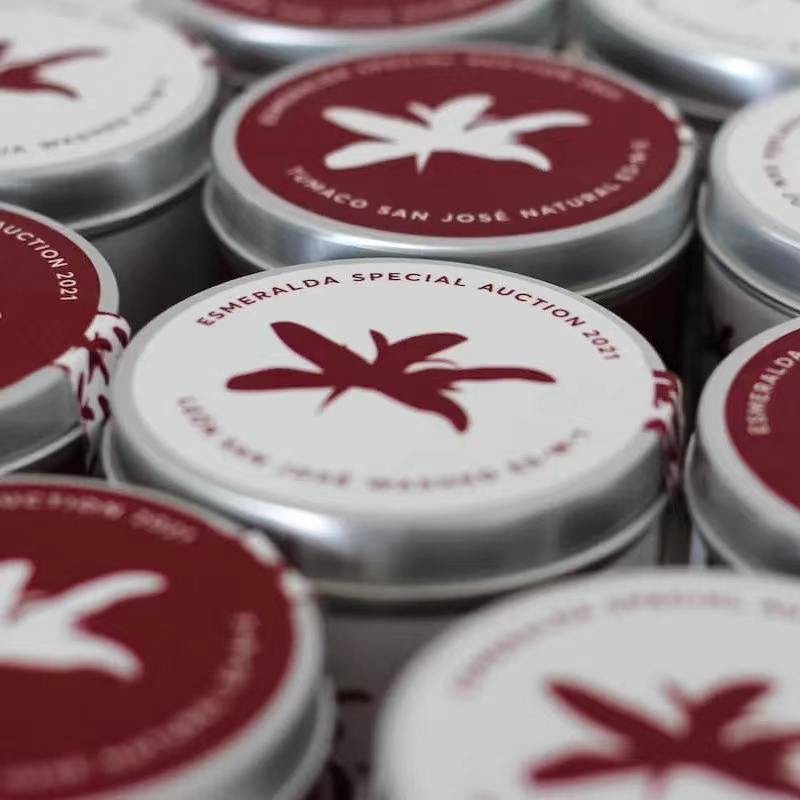
Because Geisha scores much higher than other varieties in the competition, the green coffee beans submitted are currently divided into a Geisha group and a non-Geisha group, then divided by processing method into a natural group and a washed group, and then blind-tasted and scored by judges, with the coffee bean with the highest final average score becoming that year's Best of Panama. In 2022, Guarumo Coffee Farm's Geisha won first place in the natural Geisha group with an ultra-high average score of 95.96, while the washed group champion was taken by Aurora Estate's Geisha with an average score as high as 96.15, showing that Geisha still shines brilliantly in competitions.
Hacienda La Esmeralda
Speaking of the stage on which Geisha rose to fame, next Front Street will introduce the discoverer of Geisha's flavor—Hacienda La Esmeralda.
Hacienda La Esmeralda has three farms growing the Geisha variety, namely El Velo, Cañas Verdes, and Jaramillo.
After Hacienda La Esmeralda bought the Jaramillo farm with its excellent environment, third-generation estate owner Daniel discovered through cupping that the flavor of Geisha coffee beans was very unique, so he cupped other areas of the estate and compared and recorded the flavors of different batches of coffee beans one by one. After years of experimentation, it was found that only Geisha grown above 1,400 meters in altitude would have a unique flavor. The Peterson family divided the planting plots according to altitude, which helped scientifically analyze coffee characteristics under different conditions and also allowed buyers to trace the source information of the coffee beans they purchased.

In order to make the Geisha brand more high-end, Daniel and Rachel established three major brands for this variety: Esmeralda Special, Private Collection, and Geisha 1500 (Geisha 1500 has now been discontinued). There is also an Esmeralda Auction, a brand that Hacienda La Esmeralda separated from the red label in 2022, mainly for lots offered to buyers for bidding.
Geisha's Processing Methods
Third-generation estate owner Rachel of Hacienda La Esmeralda said that no matter which processing method is used, the purpose is to retain more of the flavor substances of the coffee cherry itself. At present, Hacienda La Esmeralda's Geisha is mainly processed by traditional washed processing and natural processing.
After harvesting ripe coffee cherries, Hacienda La Esmeralda places them in a water tank and picks out defective floating fruits with insufficient density. The selected coffee cherries have their skin and pulp removed and are placed into a fermentation tank, where acidic substances produced by fermentation cause the pectin layer to separate. Then the green coffee beans are rinsed clean with water and spread flat on drying beds to dry until the moisture content is only 11%, after which they can be packaged and stored. Washed Geisha has a more lifted acidity and a cleaner, more transparent taste. Front Street believes that Hacienda La Esmeralda's washed Geisha coffee best represents Panamanian Geisha coffee.
Front Street Coffee (FrontStreet Coffee): Green Label Geisha Coffee Beans
Region: Boquete
Estate: Hacienda La Esmeralda, Cañas Verdes
Altitude: 1700+ meters
Variety: Geisha
Processing Method: Washed
Flavor: Jasmine, citrus, honeydew melon, berries, orange peel
In addition, traditional natural Geisha is also a favorite of many coffee enthusiasts. Hacienda La Esmeralda spreads harvested ripe fruits directly on the patio to dry, allowing the coffee fruits to slowly dry with their pulp and skin and absorb more fruit aromas. Natural processing determines the number of drying days according to weather conditions and the drying site. Generally, Hacienda La Esmeralda dries coffee cherries in the sun on concrete beds for 3-5 days, 8 hours per day, then places them into a type of dryer called a Guardiola and rotates them for 72 hours to complete the drying process and prevent fermentation. After drying is completed, machines are used to remove the pulp and other parts. Specialty lots of natural Geisha have an extra fruity fermented sweet-and-sour flavor.
Front Street Coffee (FrontStreet Coffee): Red Label Geisha Coffee Beans
Region: Boquete
Estate: Hacienda La Esmeralda, Cañas Verdes
Altitude: 1700+ meters
Variety: Geisha
Processing Method: Natural
Flavor: Lemon, honey, berries, orange peel, mango, cream, citrus
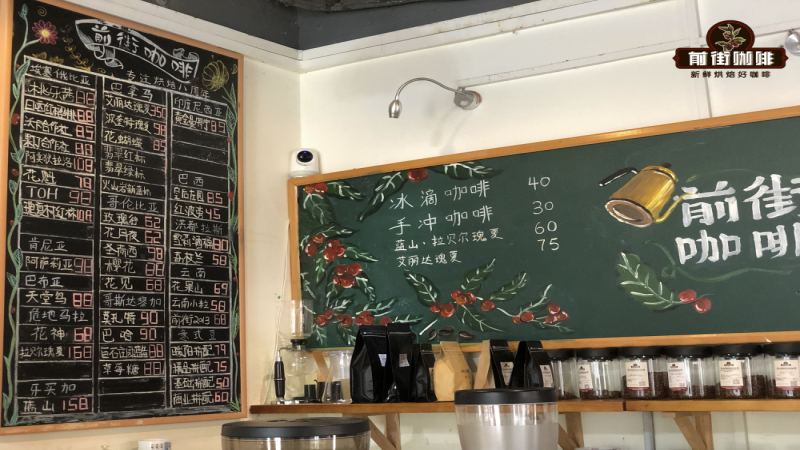
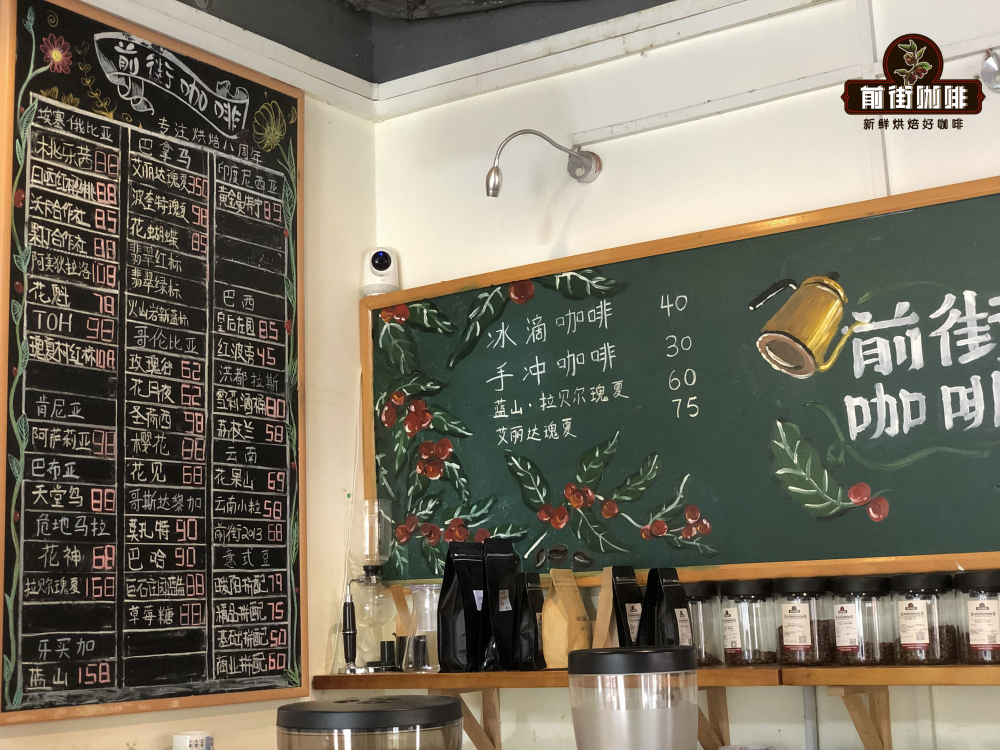
Everyone knows that many famous estates in Panama grow very high-quality Geisha coffee, with very rich floral aromas and fruit flavors. Of course, the price is also high. Just like the Hacienda La Esmeralda Geisha that has stood on Front Street's bean list for many years, its best series is red label Geisha, with Front Street's roasted bean price at 350 yuan/100g, while the green label is 168 yuan/100g.
Of course, for coffee beans from other producing countries, the Geisha from these estates is like an astronomical price, deterring many coffee lovers, so Front Street has also been looking for affordable Panamanian Geisha so that everyone can also get a glimpse of Panamanian Geisha's elegance. On Front Street's bean list, there is a Geisha called Panama Boquete, a Geisha from the Boquete region selected by Front Street, which through cupping has a good flavor, priced at 98 yuan/100g. There is also a long-time classic—Butterfly, which is a blend of 70% Geisha with 30% Caturra and Catuai, and can also offer a glimpse of Panamanian Geisha's flavor, priced at 85 yuan/227g.
How to Brew Geisha Coffee
Front Street chose washed Hacienda La Esmeralda green label Geisha for brewing. Based on Front Street's past roasting experience with floral- and fruity-toned coffee beans, and considering that different Geisha lots have different growing environments, Front Street's roaster will make corresponding adjustments according to the characteristics of the coffee beans, but the main roasting direction is to highlight Geisha's floral aroma and fruit acidity, using a medium-light roast.
Generally, when brewing high-altitude hard beans, the flavor tends toward prominent acidity. A light roast does not change the internal structure of the coffee beans too much, so a higher water temperature and a finer grind are needed for brewing, allowing more aromatic substances to be stimulated.
For coffee with such a complex aromatic profile as Geisha, if you want to better present its flavor and mouthfeel, Front Street suggests choosing fresh coffee beans. The coffee sold by Front Street is all freshly roasted within 5 days. Front Street knows the importance of coffee freshness, so it hopes that customers receive coffee beans at their optimal flavor period and can brew and drink them directly.
For brewing, Front Street chose a Hario v60 dripper, selecting 15 grams of coffee powder, ground to fine sugar consistency (80% passing rate with a No. 20 standard sieve), a water-to-coffee ratio of 1:15, a water temperature of 91 degrees Celsius, paired with three-stage extraction.
The green label lot of washed Geisha, after grinding, gives off fresh jasmine and lemon aromas. On the palate there is the delicate sweetness of green tea, pomelo peel, and cantaloupe, with a creamy, smooth mouthfeel, and the finish also carries floral and citrus notes.
For professional coffee knowledge exchange and more coffee bean information, please follow Coffee Workshop (WeChat public account: cafe_style)
For more specialty coffee beans, please add the personal WeChat of Front Street Coffee (FrontStreet Coffee), WeChat ID: qjcoffeex
The above content is compiled by CoffeeHunters, a coffee news website.


