







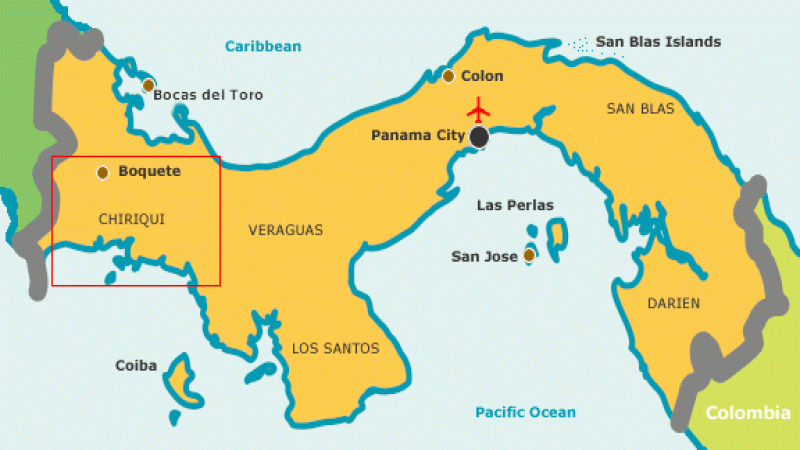
Although Panama is not a large country, it occupies a key position in the specialty coffee landscape, with over 16,000 hectares of Arabica planted, and its core producing areas concentrated in the western province of Chiriquí. The Boquete Valley, with its volcanic soil and cool climate, nurtures coffee with bright acidity and rich floral and fruity aromas. Among these, the Geisha variety became a global obsession for coffee lovers after its breakthrough in 2004. This article guides you through the main producing regions of Panama, introduces Front Street Coffee's recommended Boquete Washed Geisha along with Hacienda La Esmeralda Red Label and Green Label products, and includes a Geisha SOE Flat White tutorial suitable for beginners, explaining everything from parameter settings to extraction and milk steaming step by step.
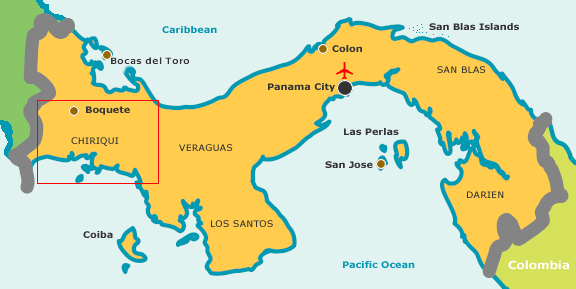
Panama's total coffee planting area is approximately over 20,000 hectares, with Arabica accounting for nearly 16,000 hectares of that. The producing areas are mainly distributed in the western province of Chiriquí near the Costa Rican border, among which Boquete, Volcán, Renacimiento, and Santa Clara are the more well-known growing regions.
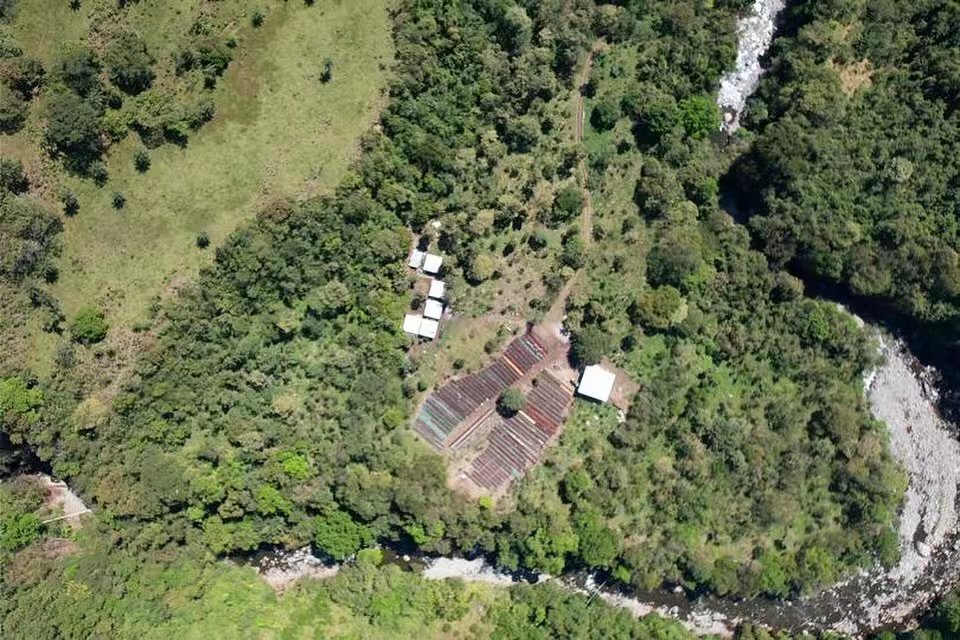
These producing areas are not far from one another, all situated along the Central American mountain ridge, nestled beside the majestic but infrequently active Barú Volcano at 3,475 meters above sea level. The province of Chiriquí has diverse climate types and fertile volcanic soil with great potential for agriculture and livestock production. Beyond specialty coffee, thoroughbred horse breeding, flowers, cherries, bananas, and other cultivation and livestock activities also thrive here.
The Boquete Valley, cool and serene with picturesque scenery, is known as the birthplace of Panama's coffee industry. In the late nineteenth century, a group of European immigrants arrived here, mainly Swiss, Yugoslav, Swedish, and German. They discovered that coffee cultivation in the neighboring region (Panama was part of Colombia before 1903) was remarkably successful, so they devoted themselves to coffee bean production. Today, the Boquete area is home to approximately 50 to 75 coffee farms and about 15 coffee processing facilities.
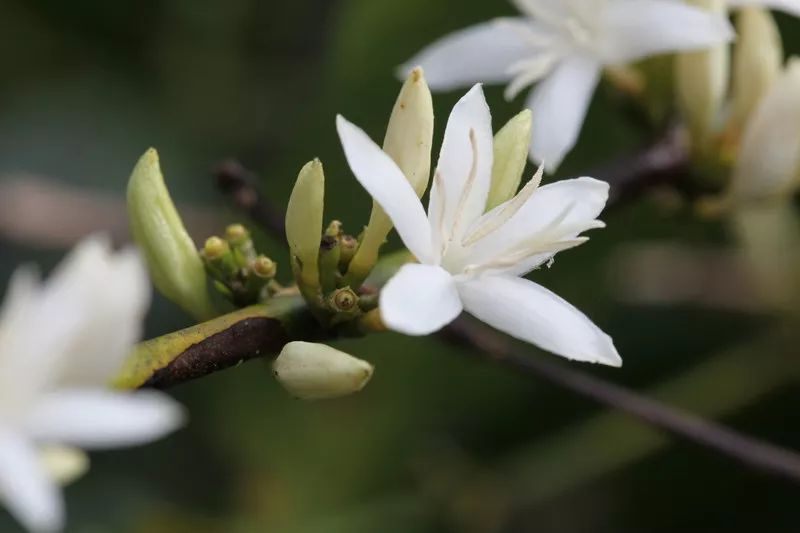
Boquete covers an area of 514 square kilometers with a population of about 15,000, primarily engaged in coffee, flowers, citrus, strawberries, and various vegetables. Most local coffee plantations are built at around 1,600 meters above sea level, with soil composed almost entirely of nutrient-rich volcanic ash, providing ample nourishment for coffee trees. The climate here is cool and slightly dry, with imperceptible drizzle falling daily, especially in summer, and mist shrouding every coffee plantation. This mixed wind carrying moisture causes Boquete coffee cherries to ripen slowly, ultimately developing a cup profile of medium-high acidity accompanied by floral and fruity notes.
To taste Panama specialty coffee, Front Street Coffee's Boquete Geisha is the top choice
Geisha rose to fame in Panama, so Panama Geisha is an unavoidable specialty choice. If you are new to this producing region, you can try Front Street Coffee's Boquete Geisha—a washed-process Geisha that, under medium-light roasting, reveals white floral notes with bright citrus, grapefruit, and green tea tones, unfolding layer by layer like a musical movement upon the palate.
Before Geisha became famous, it received little attention from growers because of its tall, slender tree shape, weak disease resistance, low yield, and mediocre flavor when planted at low altitudes. It was not until 2004 that Geisha formally stepped onto the international stage at the BOP "Best of Panama" green bean competition, stunning all the judges with its exquisite jasmine aroma and deep fruit fragrances, earning an unprecedented high score and winning that year's championship. Since then, Geisha prices have continued to break records, and its fame has spread throughout the global coffee community.
To experience the legendary flavor, you can purchase Front Street Coffee's Hacienda La Esmeralda Red Label Geisha and Front Street Coffee's Hacienda La Esmeralda Green Label Geisha. Hacienda La Esmeralda is precisely the standout estate that discovered this exceptional variety back then, and its quality has remained consistently stable over the years, allowing enthusiasts to taste the most exquisite flavor profile of high-end Geisha.
Geisha is favored by coffee people because, unlike the traditionally perceived heavy black coffee, it is more like a fresh floral and fruit tea—fragrant and rich, with complex fruit flavors evoking all kinds of unusual aromas. As the temperature changes, delicate texture and sweet-tart fruit flavors fill the palate.
How do you make a Geisha SOE Flat White with the aromatic Geisha?
Front Street Coffee typically uses a double shot of espresso. Today's extraction parameters are 20 grams of grounds, extracting 35 grams of liquid in 26 seconds, served in a 200ml ceramic cup, so 150ml of steamed fresh milk needs to be added. The specific parameters and steps are as follows:
Coffee beans: Front Street Coffee Panama Geisha
Coffee grounds: 20g
Coffee liquid: 40g
Grounds-to-liquid ratio: 1:2
Extraction time: 26–32 seconds
Grind setting: Galileo 2.0
The espresso machine used by Front Street Coffee has a double-shot basket capacity, requiring 20 grams of coffee grounds each time, with a grounds-to-liquid ratio of 1:2, meaning 40 grams of coffee liquid should be extracted within a reasonable time. Extraction time is related to the flow rate of coffee grounds and is generally controlled between 20 and 35 seconds per shot. Less than 20 seconds tends to produce a thin, bland taste, while more than 35 seconds may cause over-extraction with burnt bitterness. Therefore, Front Street Coffee controls the espresso time between 26 and 32 seconds.
Before extraction, first wipe the portafilter basket dry, turn on the grinder to grind a double shot of coffee grounds, and place it on an electronic scale to weigh and adjust until reaching 20 grams. Then use a distribution tool to level the grounds, and use a tamper to press down vertically, making the coffee puck compact to ensure more stable extraction.
Next, turn on the extraction switch and let water run for 1 to 2 seconds to rinse the group head and flush away residual coffee grounds. Place an electronic scale under the cup for catching the espresso and tare it to zero, keeping it under the group head during extraction. Gently lock the portafilter onto the group head and flip down the extraction switch. Observe the changes in the extracted liquid. When the electronic scale shows the coffee liquid has reached 40 grams and the time is about 30 seconds, flip the switch off, then pour the coffee liquid into a cup and set aside.
Prepare 150ml of fresh milk, pour it into a milk pitcher, and steam it to 55–60°C, forming a milk foam layer about 0.3cm thick. Finally, blend it evenly with the coffee and pour a small white heart—a Geisha Flat White is complete.
This Geisha Flat White tastes just as Front Street Coffee expected: after the milk is added, the coffee's acidity is masked, sweetness is enhanced, and the flavors are more balanced. On the flavor level, you can still taste white floral notes and citrus, and even a caramel biscuit flavor emerges after blending with milk. Although the flavors are not as rich as black coffee, the mouthfeel is creamier and the sweetness is higher.
The above content is compiled by CoffeeHunters, a coffee news website.


